



Safe Chemical Spraying in Processing Plants: Best Practices
Processing plants rely on chemical spraying systems for critical operations including sanitization, pest control, lubrication, and surface treatment. When spray systems fail or chemicals are misapplied, facilities face production shutdowns, contamination incidents, worker injuries, and regulatory violations. According to OSHA data, chemical exposure incidents in manufacturing facilities account for over 190,000 injuries annually, with improper spraying equipment cited as a leading contributor. You need precise control over chemical application to protect product quality, worker safety, and regulatory compliance.
This guide covers essential best practices for safe chemical spraying in processing environments, from nozzle selection and chemical compatibility to application protocols and contamination prevention. You will learn how experienced facility managers implement spray systems that deliver consistent performance while minimizing risk.
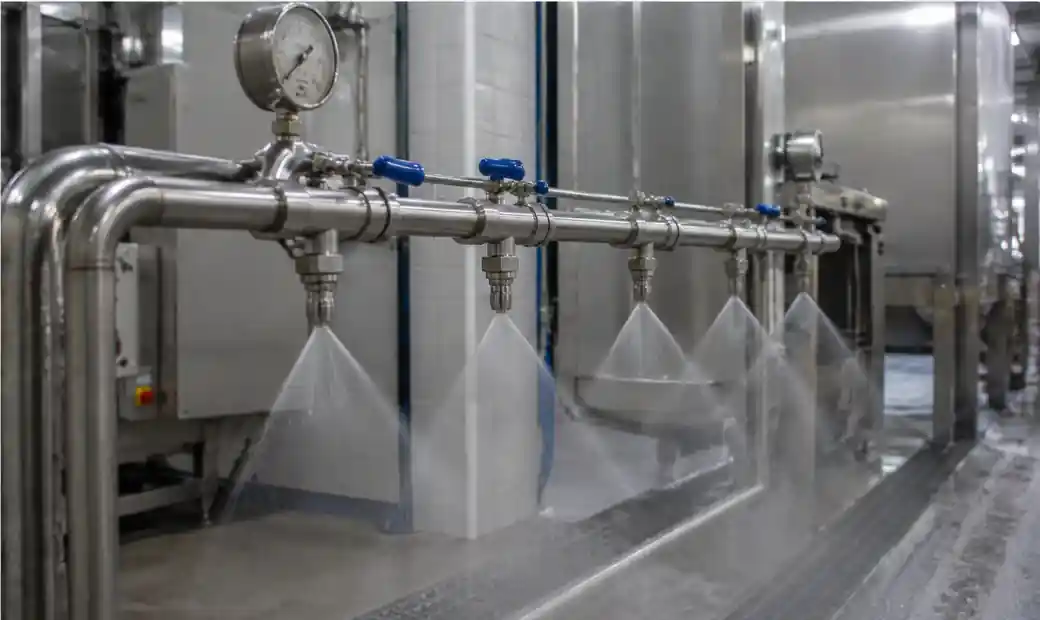 Chemical spray system in food processing facility
Table of Contents
- 1. Understanding Chemical Spray Hazards in Processing Facilities
- 2. Selecting Chemical-Compatible Spray Nozzles
- 3. Controlling Spray Droplet Size and Drift
- 4. Implementing Proper Application Protocols
- 5. Preventing Cross-Contamination Between Zones
- 6. Personal Protective Equipment Requirements
- 7. Maintaining Spray Equipment for Consistent Performance
- 8. Ventilation and Exposure Monitoring
- 9. Regulatory Compliance and Documentation
- 10. Frequently Asked Questions
- 10.1. What is the safest nozzle type for chemical sanitizer application?
- 10.2. How often should chemical spray nozzles be replaced?
- 10.3. What pressure should I use for pest control spraying?
- 10.4. Can I use the same spray equipment for different chemicals?
- 10.5. How do I verify that chemical residue is removed from food contact surfaces?
- 10.6. What ventilation is required for indoor chemical spraying?
- 11. Conclusion
Understanding Chemical Spray Hazards in Processing Facilities
Processing plants use dozens of chemical products daily, each presenting distinct hazards when aerosolized. Cleaners and sanitizers contain caustic compounds like sodium hydroxide (2-10% concentration) or quaternary ammonium compounds that cause respiratory irritation and skin burns when improperly sprayed. Pest control chemicals include pyrethroids and organophosphates requiring strict application protocols to prevent food contact surface contamination.
The primary hazards from chemical spraying include inhalation exposure to aerosol droplets, skin contact with overspray, cross-contamination between product zones, and chemical residue on food contact surfaces. Droplet size directly affects inhalation risk—particles below 10 microns penetrate deep into lungs, while droplets above 50 microns settle quickly and present lower respiratory hazards but higher surface contamination risk.
You must consider three critical exposure pathways: direct spray contact during application, drift to adjacent areas, and residual vapors in enclosed spaces. Each pathway requires specific controls through nozzle selection, pressure management, and ventilation design.
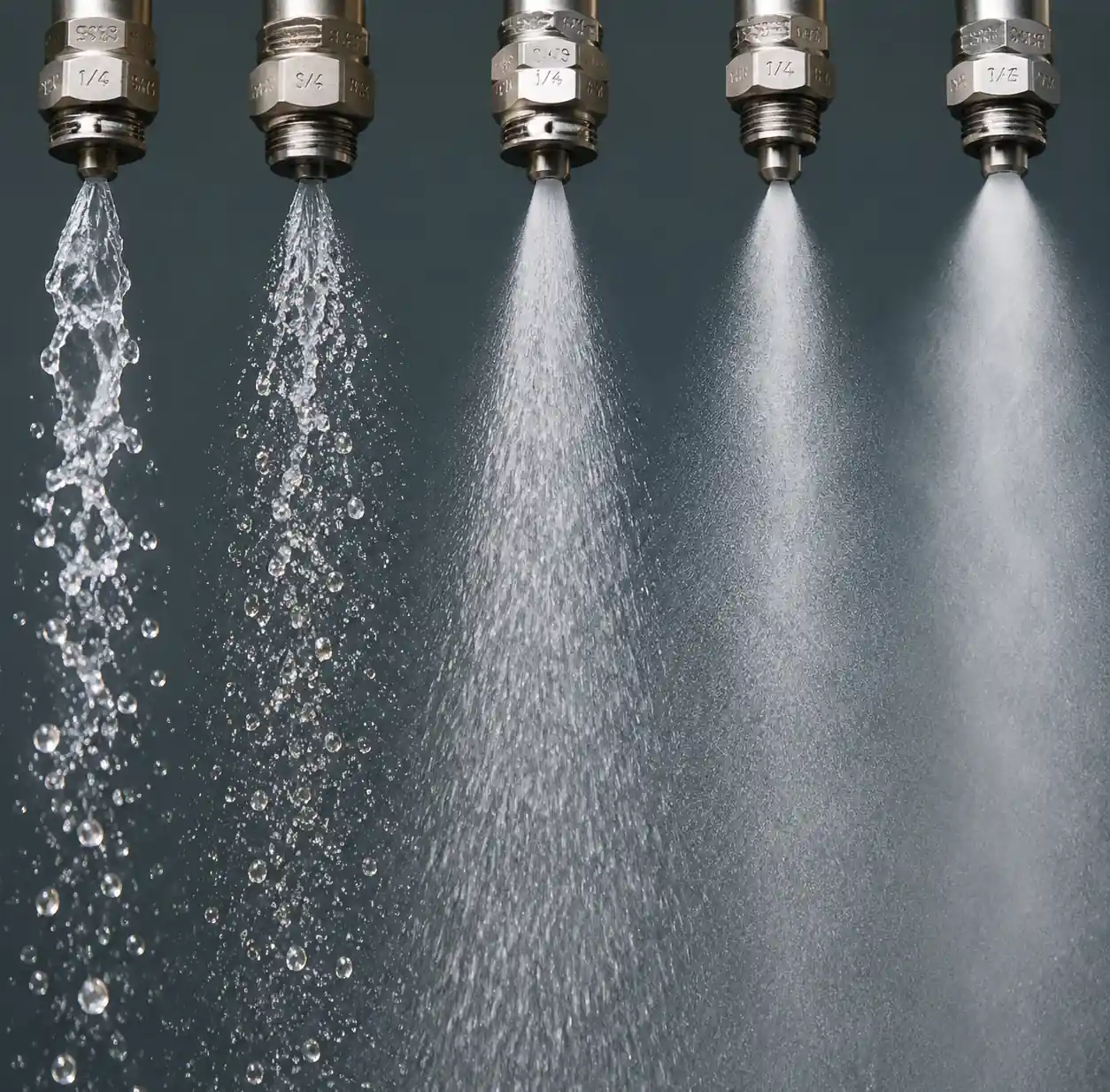 Comparison of spray droplet sizes for different nozzle types
Selecting Chemical-Compatible Spray Nozzles
Nozzle material compatibility determines spray system reliability and safety. Chemical attack causes nozzle degradation, altered spray patterns, and contamination from leached materials. You should specify nozzle materials based on chemical pH, temperature, and concentration.
| Chemical Type | pH Range | Recommended Nozzle Material | Maximum Temperature | Application |
|---|---|---|---|---|
| Alkaline Cleaners | 11-14 | 316 Stainless Steel, PVDF | 180°F (82°C) | CIP systems, equipment cleaning |
| Acid Sanitizers | 2-4 | 316L Stainless Steel, Hastelloy | 160°F (71°C) | Surface sanitization |
| Quaternary Ammonium | 6-8 | 304 Stainless Steel, Polypropylene | 140°F (60°C) | General sanitization |
| Oxidizing Agents | 3-7 | PVDF, PTFE, Ceramic | 120°F (49°C) | Disinfection systems |
| Petroleum-Based Lubricants | 7-9 | Brass, Stainless Steel | 200°F (93°C) | Lubrication systems |
Stainless steel 316 offers broad chemical resistance for most processing applications, with 316L preferred for high-chloride environments. PVDF provides excellent acid and oxidizer resistance but requires lower temperature limits. Brass nozzles work for neutral pH lubricants but corrode rapidly in acidic or alkaline solutions.
Beyond material selection, nozzle design affects safety. Full cone nozzles provide uniform coverage with controlled droplet size for sanitizer application. Flat fan nozzles deliver precise linear spray patterns for equipment rinsing with minimal overspray. You can use air atomizing nozzles for applications requiring ultra-fine mist below 50 microns, though these increase inhalation risk and require enhanced ventilation.
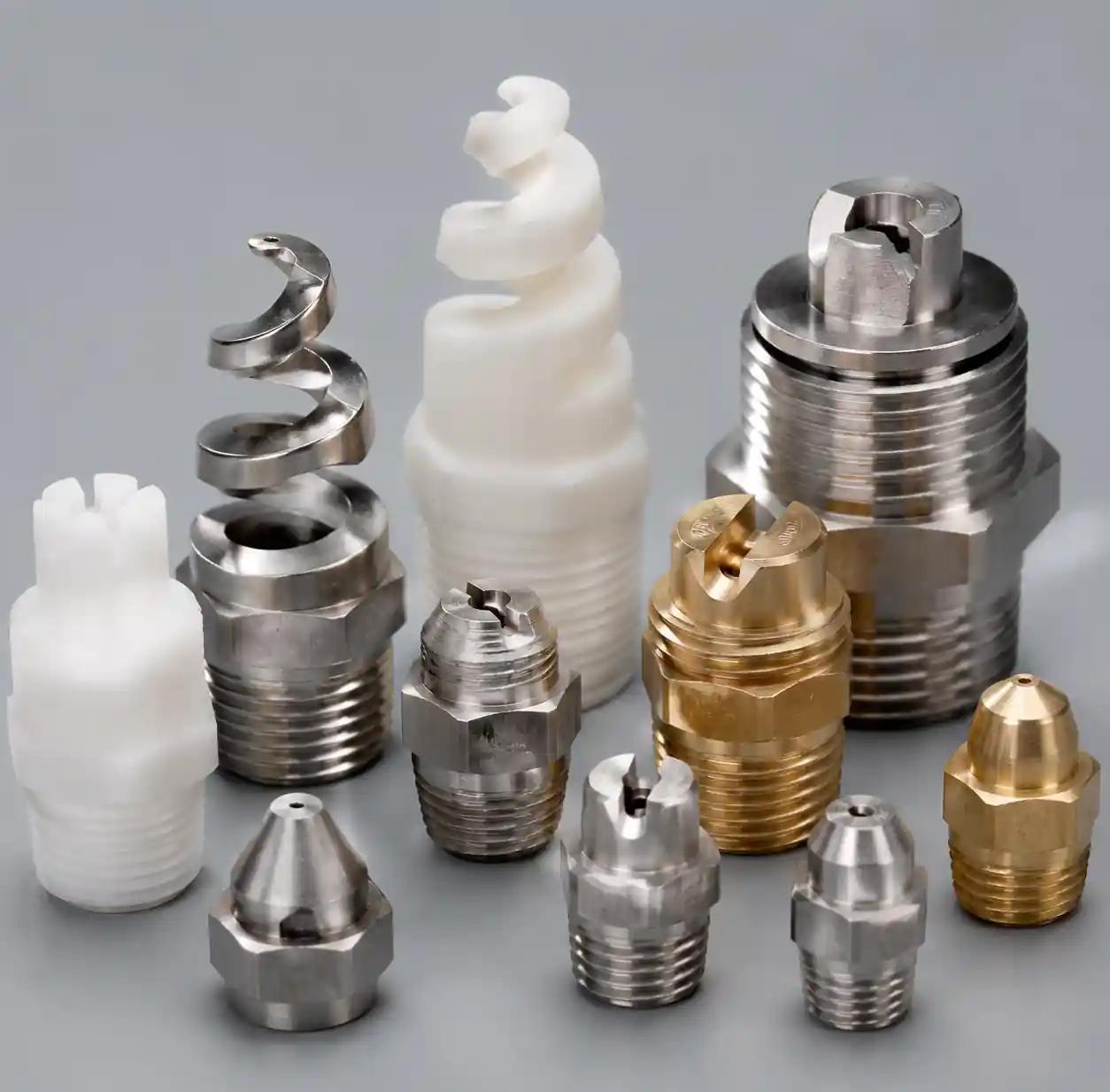 Chemical-resistant spray nozzles in stainless steel and PVDF materials
Controlling Spray Droplet Size and Drift
Droplet size control is fundamental to safe chemical spraying. Operating pressure directly affects atomization—higher pressure creates finer droplets that drift farther and penetrate deeper into respiratory systems. You should select pressure ranges that balance coverage efficiency with drift control.
For sanitizer application on food contact surfaces, target droplet sizes between 200-400 microns at 40-60 psi. This range provides adequate surface wetting without excessive mist generation. Pest control spraying requires coarser droplets (400-800 microns) at lower pressure (20-40 psi) to minimize drift into processing zones.
Air-assisted spraying systems require special consideration. These systems use compressed air to atomize liquids into droplets as small as 10-50 microns for coating and humidification applications. While providing superior coverage, ultra-fine mist creates significant inhalation hazards and requires enclosed application chambers with dedicated exhaust ventilation. Never operate air atomizing nozzles in open production areas without proper respiratory protection and ventilation controls.
Drift control depends on three factors: droplet size, spray height, and air movement. You can reduce drift by lowering spray pressure to increase droplet size, positioning nozzles closer to target surfaces (12-18 inches optimal), and scheduling chemical applications during low air movement periods. Installing physical barriers or spray curtains between application zones and production areas provides additional drift protection.
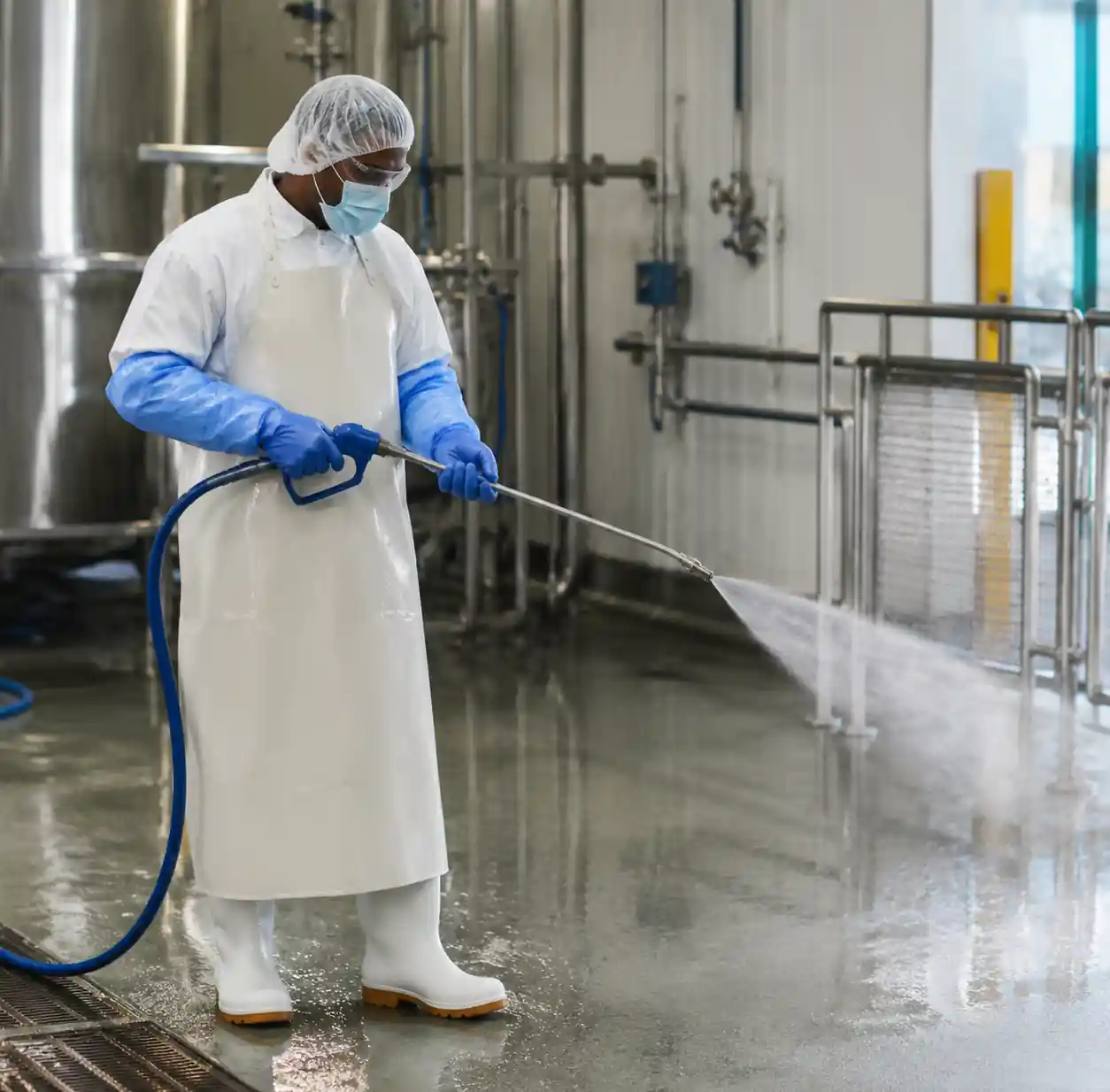 Worker applying chemical sanitizer using proper spray technique
Implementing Proper Application Protocols
Safe chemical spraying requires documented standard operating procedures covering application timing, concentration verification, and zone isolation. You must establish clear protocols that prevent chemical contact with product or food contact surfaces during active production.
Pre-Application Requirements
Before any chemical spraying operation, verify that production equipment is shut down, product is removed or protected, and non-essential personnel are excluded from the application zone. Post signage indicating chemical application in progress at all zone entry points. Check spray equipment for leaks, worn nozzles, or clogged orifices that cause irregular spray patterns.
Verify chemical concentration using calibrated test strips or refractometers. Sanitizer efficacy depends on precise concentration—quaternary ammonium compounds require 200-400 ppm for food contact surfaces, while chlorine sanitizers need 50-200 ppm depending on organic load. Under-concentration reduces efficacy; over-concentration creates residue problems and increases toxicity.
Application Technique
Maintain consistent spray distance and overlap pattern to ensure uniform coverage without pooling. For vertical surfaces, spray from bottom to top to prevent drips onto already-treated areas. Allow proper contact time before rinsing—most sanitizers require 30-60 seconds of wet surface contact for effective microbial kill.
You should hold spray wands at 45-degree angles to surfaces to maximize coverage while minimizing splash-back. Never spray directly toward drains, as this aerosolizes drain biofilm and contaminants. Instead, rinse surfaces so runoff flows naturally toward drainage points.
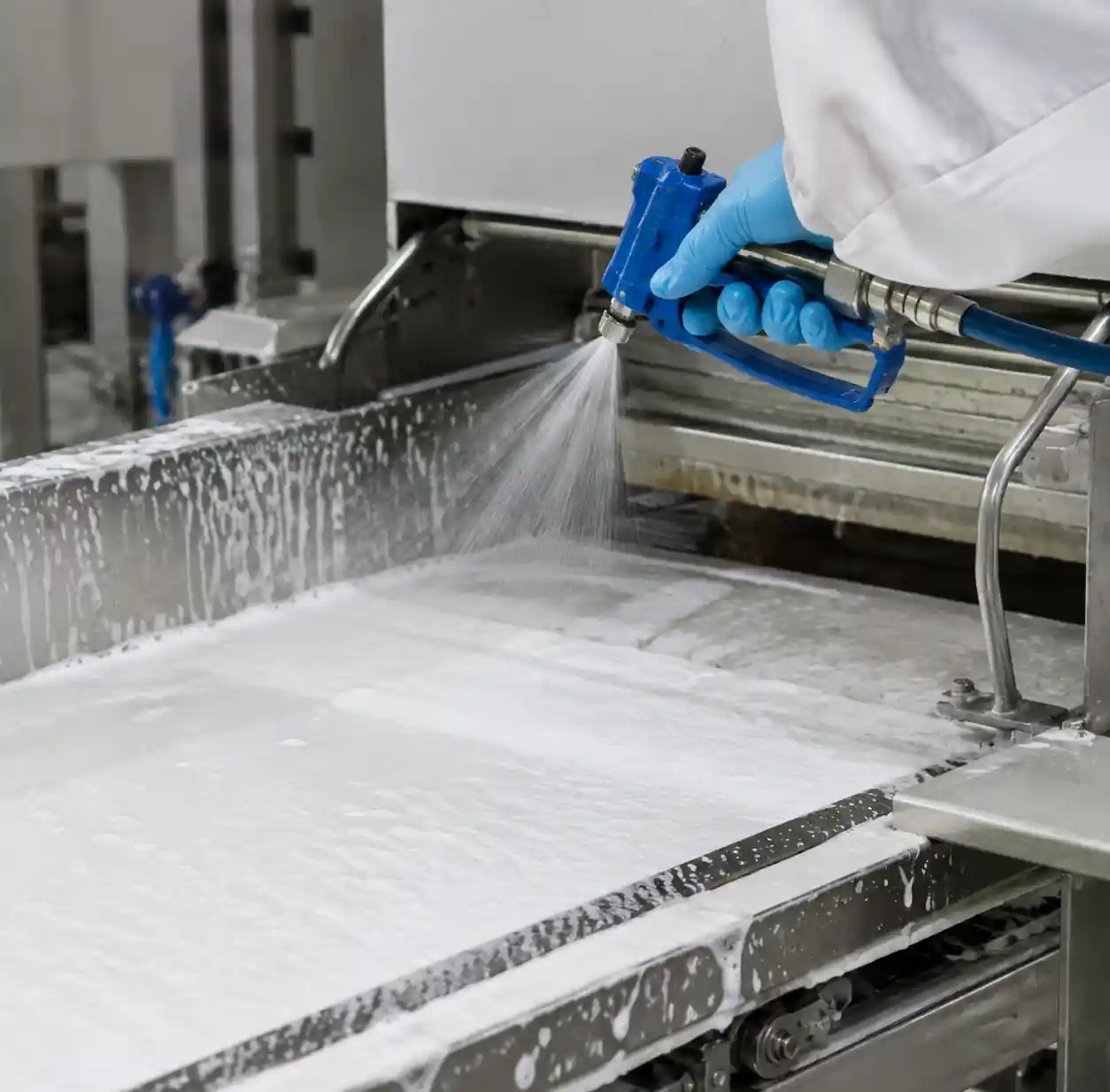 Sanitizer spray application on food processing equipment
Preventing Cross-Contamination Between Zones
Processing facilities must maintain strict separation between chemical application zones and production areas. Cross-contamination occurs through three mechanisms: spray drift, contaminated equipment transfer, and residual chemical migration on surfaces or air currents.
You can implement physical zone segregation using temporary plastic barriers or permanent walls between cleaning and production areas. Where physical barriers are impractical, establish time-based separation with minimum waiting periods between chemical application and production restart. Most facilities require 30-60 minutes after sanitizer application before production equipment contact with product.
Dedicated spray equipment prevents cross-contamination between chemical types. Color-coded spray bottles, hoses, and nozzles ensure that alkaline cleaners never contact acid sanitizers, preventing dangerous chemical reactions. Store each chemical spray system in its designated area with clear labeling indicating contents and intended use.
| Contamination Risk | Control Measure | Verification Method | Frequency |
|---|---|---|---|
| Spray drift to adjacent zones | Physical barriers, time separation | Visual inspection, air monitoring | Each application |
| Residual chemical on surfaces | Proper rinsing protocols, contact time verification | ATP testing, chemical residue swabs | Daily |
| Equipment cross-use | Color-coded dedicated systems | Equipment audit | Weekly |
| Drain splash-back | Low-pressure rinsing, drain covers during spray | Visual observation | Each application |
| Airborne transfer | Directional ventilation, application during low airflow | Smoke testing of air patterns | Monthly |
For facilities operating multiple shifts, establish clear handoff protocols documenting chemical applications completed, areas treated, and clearance status for production restart. Require supervisory verification before production equipment restart following chemical applications.
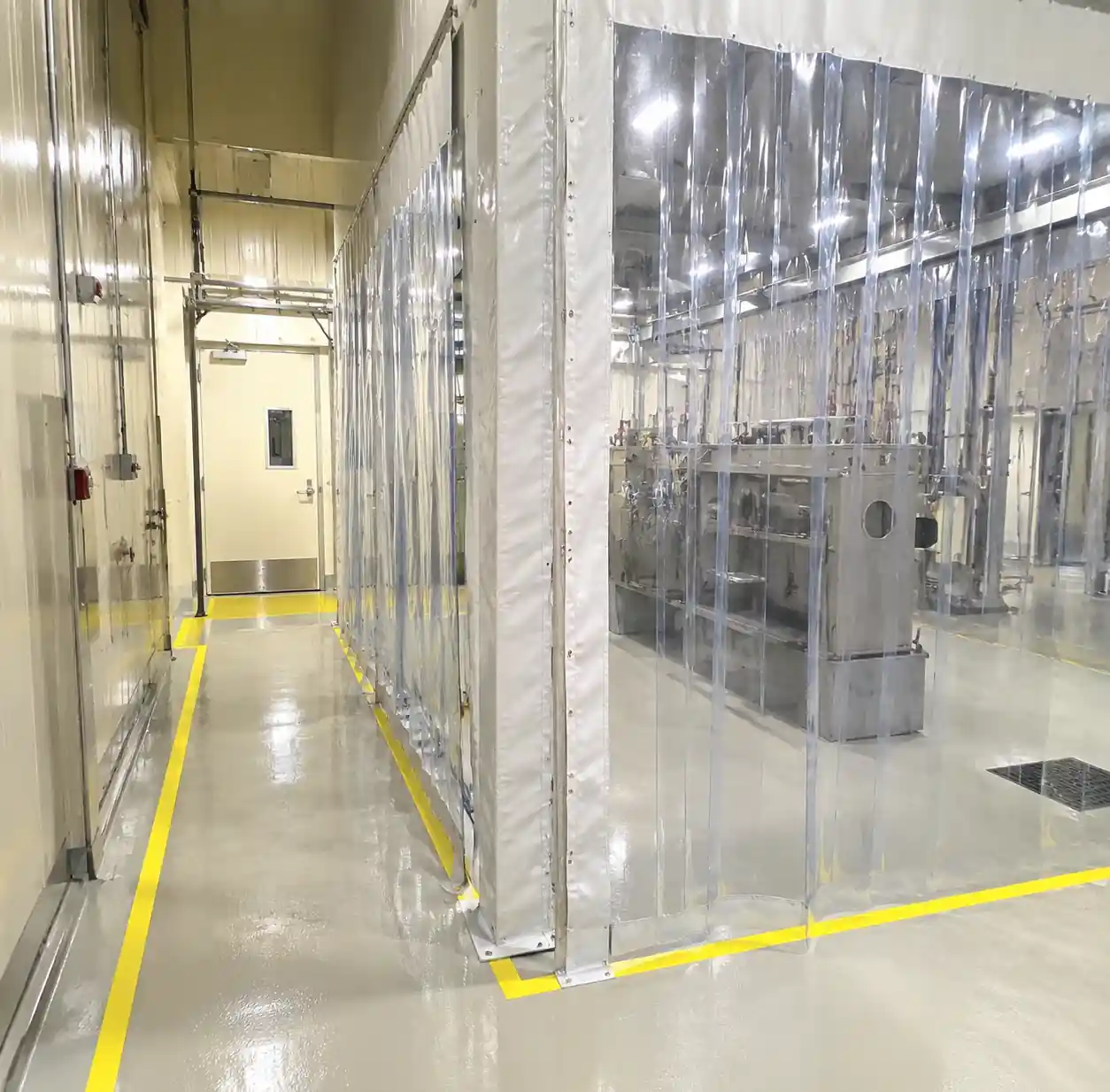 Physical barriers separating chemical spray zones from production areas
Personal Protective Equipment Requirements
Chemical spraying operations require appropriate PPE based on product hazard assessment. You must provide and enforce PPE use for all personnel in chemical application zones, not just the spray operator.
For routine sanitizer application using quaternary ammonium compounds, minimum PPE includes nitrile gloves, safety glasses, and apron protection. Alkaline cleaner application with pH above 11.5 requires face shields instead of safety glasses, plus chemical-resistant boots for floor spraying operations.
Respiratory protection becomes mandatory when spraying creates visible mist, when using air atomizing systems, or when working in poorly ventilated areas. Half-face respirators with P100 filters protect against particulate exposure, while organic vapor cartridges are necessary for volatile chemicals including some pesticides and solvents. You should conduct fit testing annually for all respirator users and maintain documentation per OSHA respiratory protection standards.
Chemical-resistant suits provide full body protection for concentrated chemical mixing or high-volume spraying operations. These are particularly important for pest control applications using restricted-use pesticides that require licensed applicator certification.
Maintaining Spray Equipment for Consistent Performance
Spray system maintenance directly affects both safety and effectiveness. Clogged nozzles increase operating pressure and create irregular spray patterns with increased fine droplet generation. Worn nozzle orifices expand flow rates beyond design specifications, leading to over-application and chemical waste.
You should establish weekly nozzle inspection protocols checking for wear, damage, and buildup. Replace nozzles when orifice diameter increases 10% beyond original specification—a 0.5mm orifice worn to 0.55mm increases flow rate by approximately 20% and alters spray angle. For high-volume CIP systems, inspect nozzles monthly and replace annually as preventive maintenance.
Clean nozzles after each use by soaking in appropriate cleaning solution—acidic cleaner for alkaline residue, alkaline cleaner for acid residue. Never use metal tools to clear clogged orifices, as this damages precision-machined passages. Instead, soak in cleaning solution and flush with water at line pressure.
Pressure regulators require annual calibration verification using test gauges. Inconsistent pressure causes spray pattern variation and uneven chemical distribution. Install pressure gauges at spray equipment for operator monitoring—target pressure should match nozzle manufacturer specifications for the intended droplet size range.
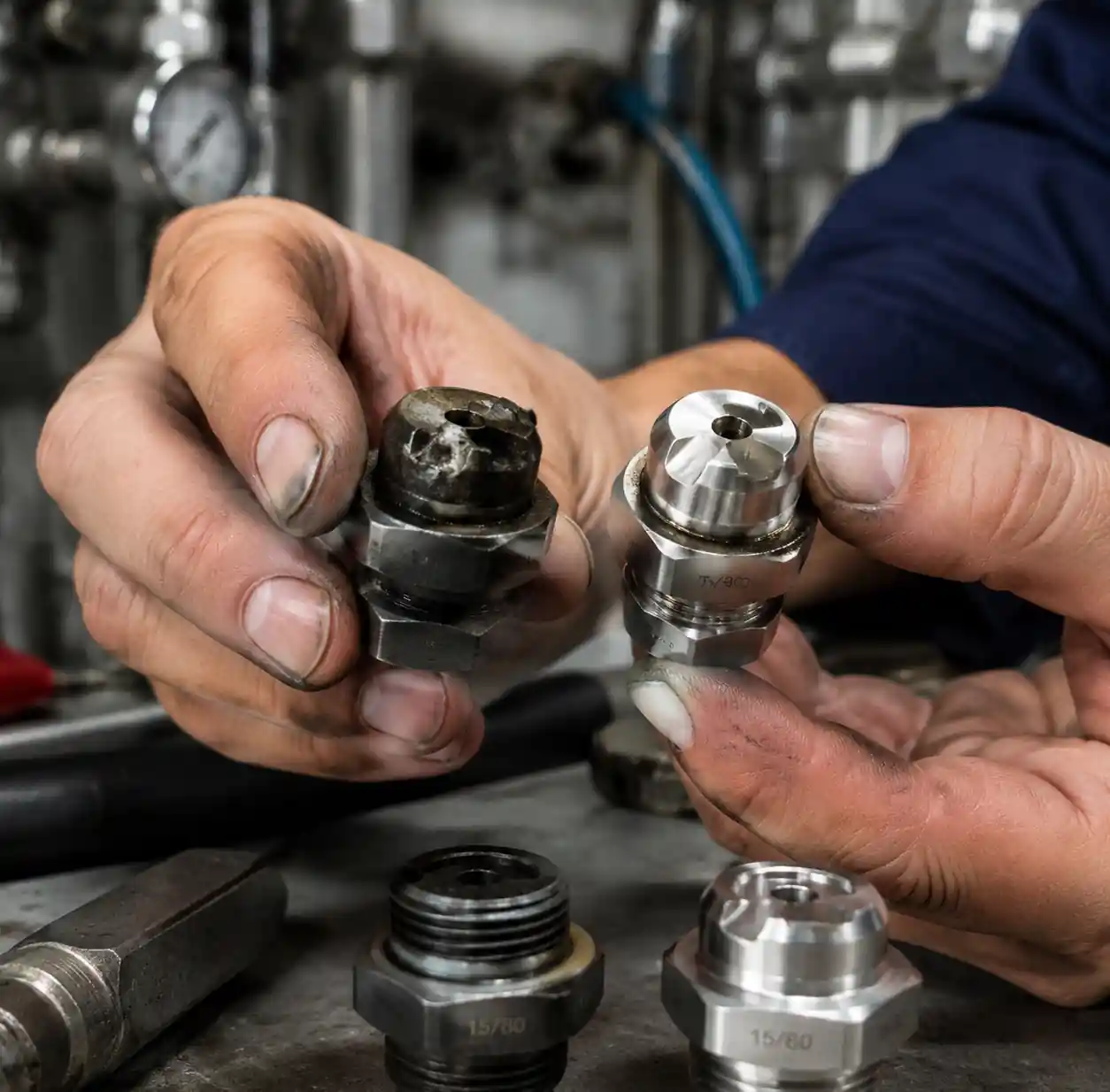 Maintenance inspection of industrial spray nozzles
Ventilation and Exposure Monitoring
Adequate ventilation removes chemical vapors and aerosols before hazardous concentrations develop. You need different ventilation strategies for various spraying operations based on chemical volatility and application method.
For enclosed spray booths used in coating or lubrication applications, provide 100-150 air changes per hour with exhaust positioned to capture spray mist before it reaches the operator breathing zone. Spray booth exhaust should discharge outside the facility, never recirculated into building air handling systems.
General production area ventilation may suffice for low-vapor-pressure chemicals like quaternary ammonium sanitizers applied with coarse spray patterns. However, you must increase ventilation or provide local exhaust when spraying volatile chemicals including alcohol-based sanitizers, petroleum solvents, or chemicals with strong odors indicating vapor release.
Air monitoring verifies that ventilation controls maintain safe exposure levels. Conduct baseline air sampling during initial chemical introduction and annually thereafter for routine operations. Increase monitoring frequency to quarterly for chemicals with 8-hour time-weighted average exposure limits below 100 ppm, or when employees report respiratory irritation or chemical odors.
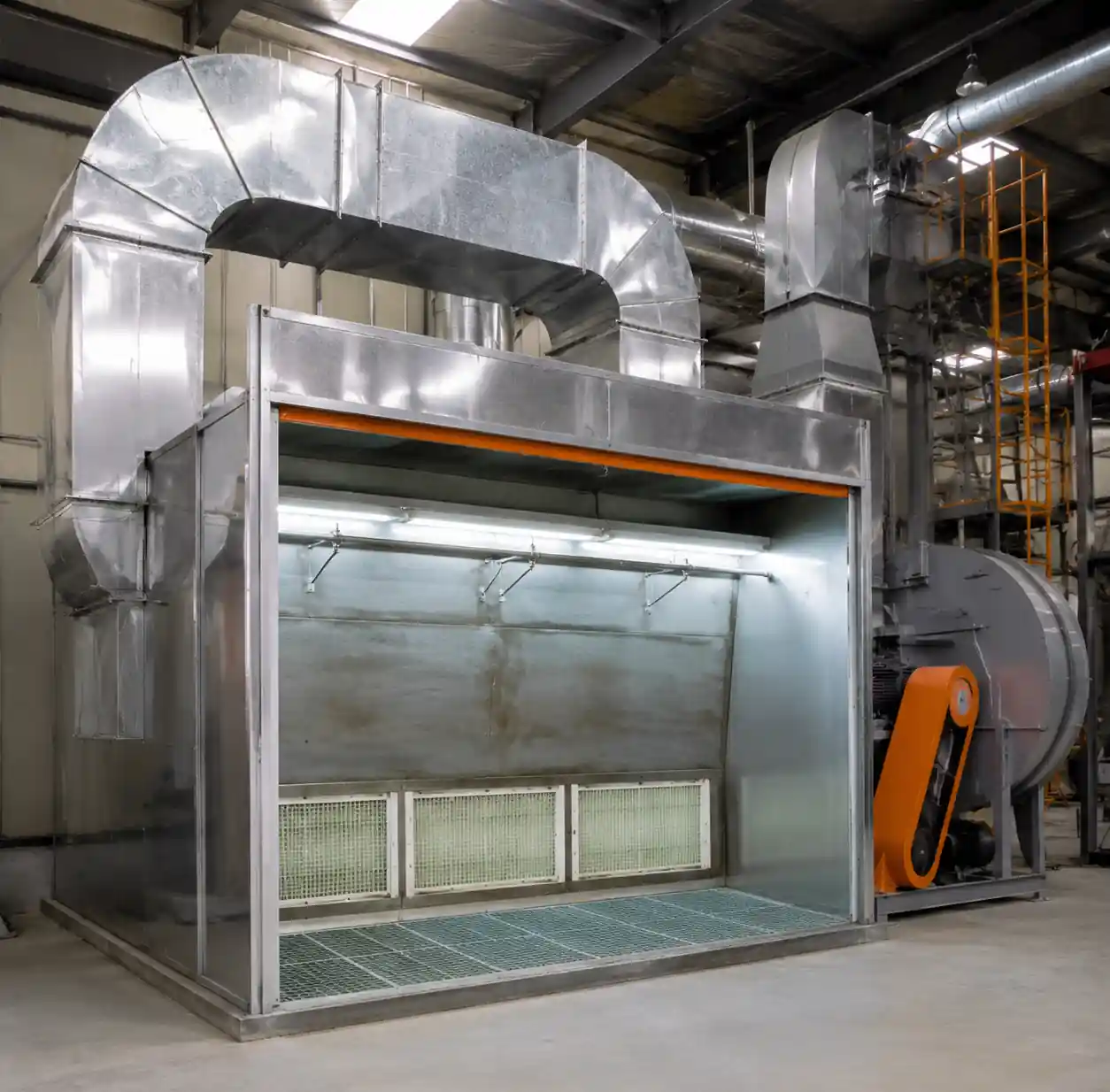 Ventilation exhaust system in chemical spray booth
Regulatory Compliance and Documentation
Chemical spraying in food processing facilities falls under FDA, OSHA, and EPA regulations depending on the specific application. You must maintain documentation demonstrating regulatory compliance for facility inspections and liability protection.
FDA food safety regulations require that all chemicals used in processing plants be approved for their intended use, applied at proper concentrations, and thoroughly rinsed from food contact surfaces. Maintain safety data sheets (SDS) for every chemical product accessible to employees at all times. EPA registration numbers must appear on all pesticide labels, and applications must follow label directions exactly—this is federal law, not a suggestion.
OSHA requires written hazard communication programs documenting chemical inventories, employee training, and exposure control measures. You should conduct annual refresher training for all employees who handle or may be exposed to chemical sprays, covering hazard recognition, proper use procedures, emergency response, and PPE requirements.
Create application logs recording date, time, chemical used, concentration, area treated, operator name, and production clearance time. These records demonstrate due diligence during regulatory inspections and provide traceability if contamination incidents occur. Retain documentation for minimum three years, though five years provides better liability protection.
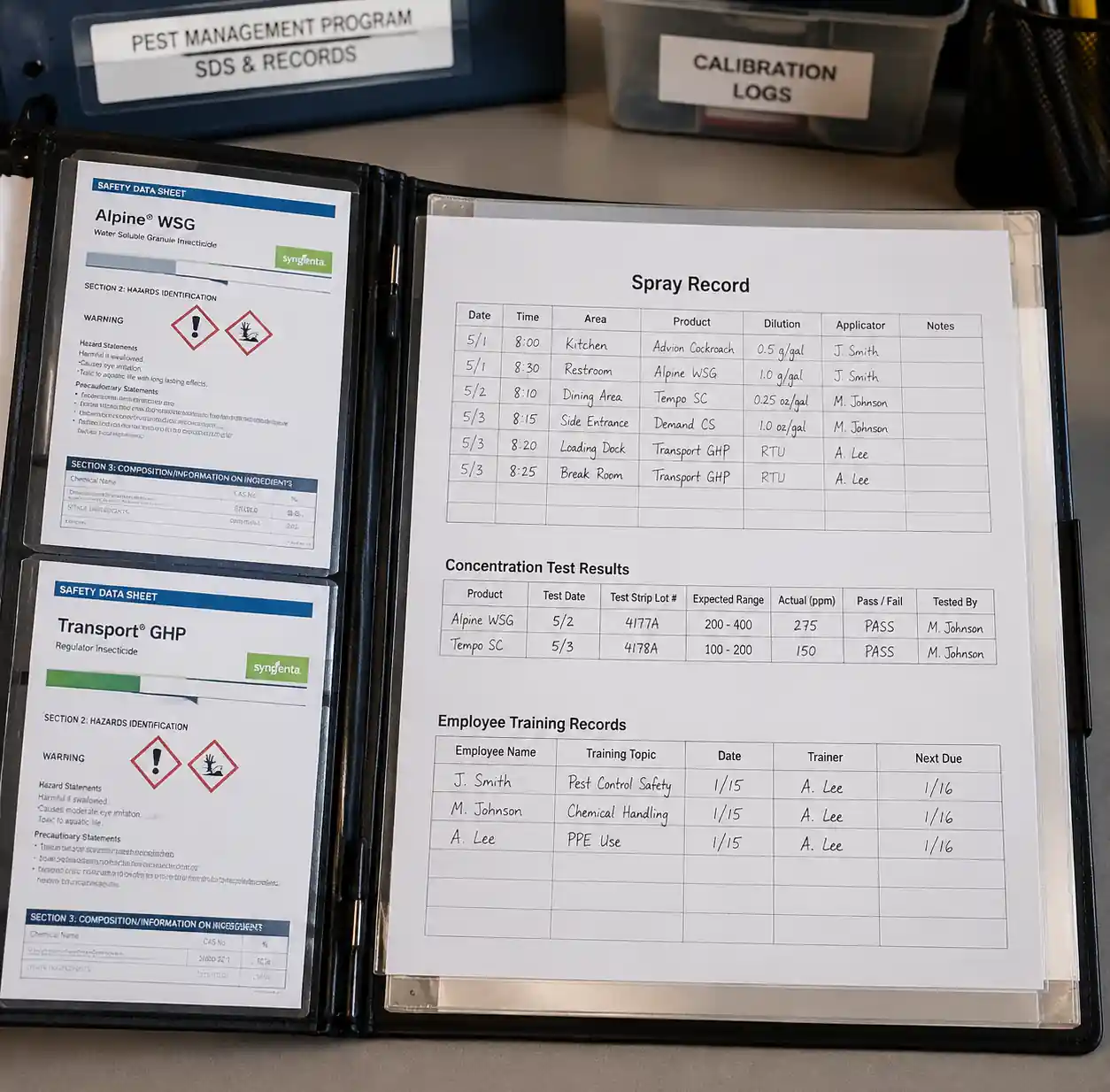 Chemical application documentation and regulatory compliance records
Frequently Asked Questions
What is the safest nozzle type for chemical sanitizer application?
Full cone nozzles operating at 40-60 psi provide the safest combination of uniform coverage and controlled droplet size (200-400 microns) for food contact surface sanitization. This configuration minimizes both inhalation hazards and spray drift while ensuring adequate surface wetting for microbial kill.
How often should chemical spray nozzles be replaced?
Replace nozzles when orifice wear increases flow rate by 10% above specification, typically annually for high-volume CIP systems or after 500-1000 operating hours for manual spray equipment. Immediate replacement is required for visible damage, cracks, or irregular spray patterns regardless of service time.
What pressure should I use for pest control spraying?
Pest control applications require low pressure (20-40 psi) to generate coarse droplets (400-800 microns) that minimize drift into production zones while providing adequate surface coverage. Never exceed 60 psi for indoor pest control spraying, as higher pressure creates fine droplets that drift extensively and increase inhalation exposure.
Can I use the same spray equipment for different chemicals?
No, you should never use the same spray equipment for incompatible chemicals without thorough cleaning between uses. Maintain dedicated, color-coded equipment for alkaline cleaners, acid sanitizers, and pest control products to prevent dangerous chemical reactions and cross-contamination. Mixing alkaline and acid residues can generate heat or toxic gases.
How do I verify that chemical residue is removed from food contact surfaces?
Use ATP bioluminescence testing to verify cleanliness after sanitizer rinsing, targeting readings below 100 relative light units (RLU) for direct food contact surfaces. Chemical-specific test strips can detect residual quaternary ammonium (target <10 ppm residual) or chlorine (target <1 ppm residual) on rinsed surfaces before production restart.
What ventilation is required for indoor chemical spraying?
Minimum 6-10 air changes per hour for general sanitizer application, increasing to 100-150 air changes per hour for enclosed spray booths or air atomizing systems. Position exhaust intakes to capture spray mist before it reaches operator breathing zones, and ensure spray areas maintain negative pressure relative to production zones to prevent chemical migration.
Conclusion
Safe chemical spraying in processing plants requires systematic attention to nozzle selection, application protocols, equipment maintenance, and regulatory compliance. The key is matching spray technology to specific application requirements while implementing multiple layers of exposure control—engineering controls like proper nozzle selection and ventilation, administrative controls including SOPs and training, and PPE as the final protection layer. By selecting chemical-compatible nozzles, controlling droplet size through proper pressure settings, maintaining equipment performance, and documenting all operations, you protect worker safety, product quality, and regulatory standing. Every processing facility has unique requirements based on chemicals used, facility layout, and production schedules, but the fundamental principles of controlled application, contamination prevention, and exposure minimization remain constant across all operations.
Contact YuechenPrecision Technology for chemical-resistant spray nozzles, application system design, and technical support tailored to your processing facility requirements.