



Dust Suppression Systems: Solutions for Mining and Construction
Mining and construction operations generate massive amounts of airborne dust that pose serious health risks and regulatory challenges. Studies show that prolonged exposure to silica dust can cause irreversible lung damage, while uncontrolled dust emissions lead to fines exceeding $70,000 per violation under MSHA regulations. If you want to protect workers, meet environmental compliance, and maintain operational efficiency, then you will need to understand dust suppression technologies, nozzle systems, and application-specific solutions.
This comprehensive guide covers the most effective dust suppression systems for mining and construction, including spray nozzle configurations, water consumption optimization, and proven strategies from active quarries and construction sites.
Table of Contents
- 1. What Are Dust Suppression Systems?
- 2. Types of Dust Suppression Systems for Mining Operations
- 2.1. Dry Fog Dust Suppression Systems
- 2.2. Wet Suppression Systems for Haul Roads
- 2.3. Fixed Spray Systems at Transfer Points
- 3. Dust Suppression Technologies for Construction Sites
- 3.1. Demolition Dust Control Systems
- 3.2. Excavation and Earthmoving Suppression
- 4. Spray Nozzle Selection for Dust Suppression
- 4.1. Pressure Requirements and Flow Rate Optimization
- 5. Material Compatibility and Nozzle Selection
- 6. Water Source Optimization and Chemical Additives
- 6.1. Water Quality Requirements
- 6.2. Surfactant Enhancement
- 7. System Integration and Automation
- 8. Real-World Performance: Case Studies from Active Operations
- 9. Installation Best Practices for Maximum Efficiency
- 10. Regulatory Compliance: MSHA, OSHA, and EPA Requirements
- 11. Cost Analysis and Return on Investment
- 12. FAQ
- 12.1. What is the most effective nozzle type for respirable silica dust suppression?
- 12.2. How much water does a dust suppression system consume per day?
- 12.3. What pressure is required for effective dust suppression in mining?
- 12.4. How do I prevent nozzle clogging in dusty mining environments?
- 12.5. Can dust suppression systems operate in freezing temperatures?
- 12.6. What is the payback period for automated dust suppression systems?
- 12.7. How do surfactants improve dust suppression performance?
- 13. Conclusion
What Are Dust Suppression Systems?
Dust suppression systems are engineered spray solutions that capture and settle airborne particulates using atomized water droplets. These systems control respirable dust at the source—crushing stations, conveyor transfer points, haul roads, and demolition sites—preventing particles from becoming airborne rather than trying to collect them after dispersion.
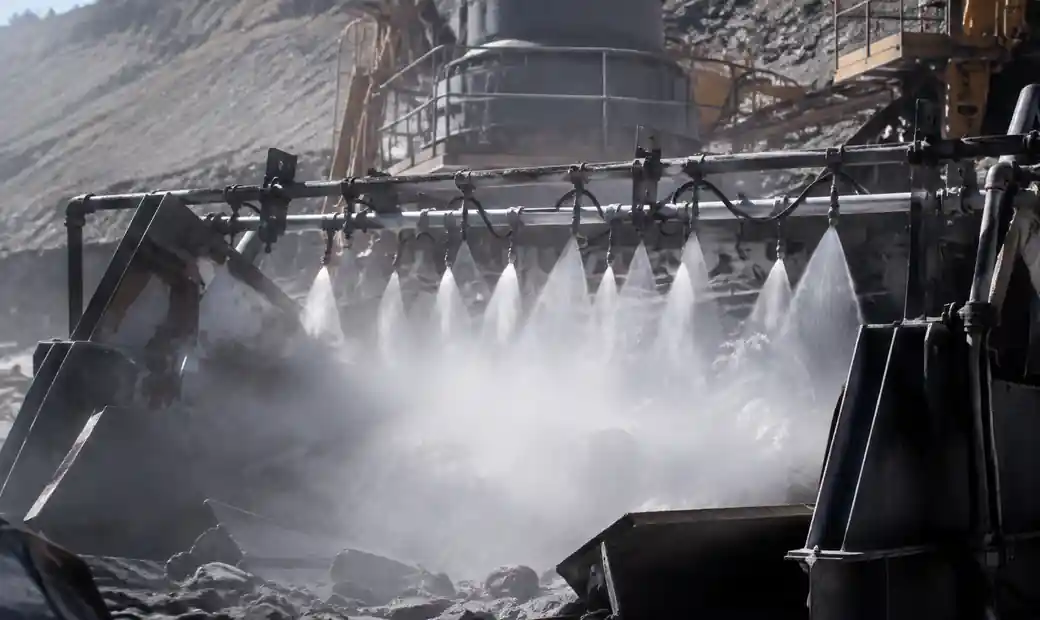 Industrial dust suppression nozzle system installed at mining crushing station
The core principle relies on droplet-particle collision. When water droplets match the size of dust particles (typically 1-100 microns), surface tension causes them to bind together and fall to the ground. You can achieve suppression rates exceeding 90% with properly designed nozzle systems operating at 40-1000 PSI, depending on application requirements.
Modern dust suppression technology has evolved beyond simple water sprays. Fine mist nozzles create droplet sizes as small as 10 microns, matching respirable silica dust particles for maximum capture efficiency while reducing water consumption by up to 70% compared to conventional sprinkler systems.
Types of Dust Suppression Systems for Mining Operations
Dry Fog Dust Suppression Systems
Dry fog systems generate ultra-fine water droplets between 1-10 microns using high-pressure nozzles (800-1500 PSI). These microscopic droplets remain suspended in air, creating a fog curtain that intercepts dust particles without wetting materials or surfaces. You can install dry fog systems at crusher discharge points, screening stations, and enclosed transfer areas where material moisture must remain minimal.
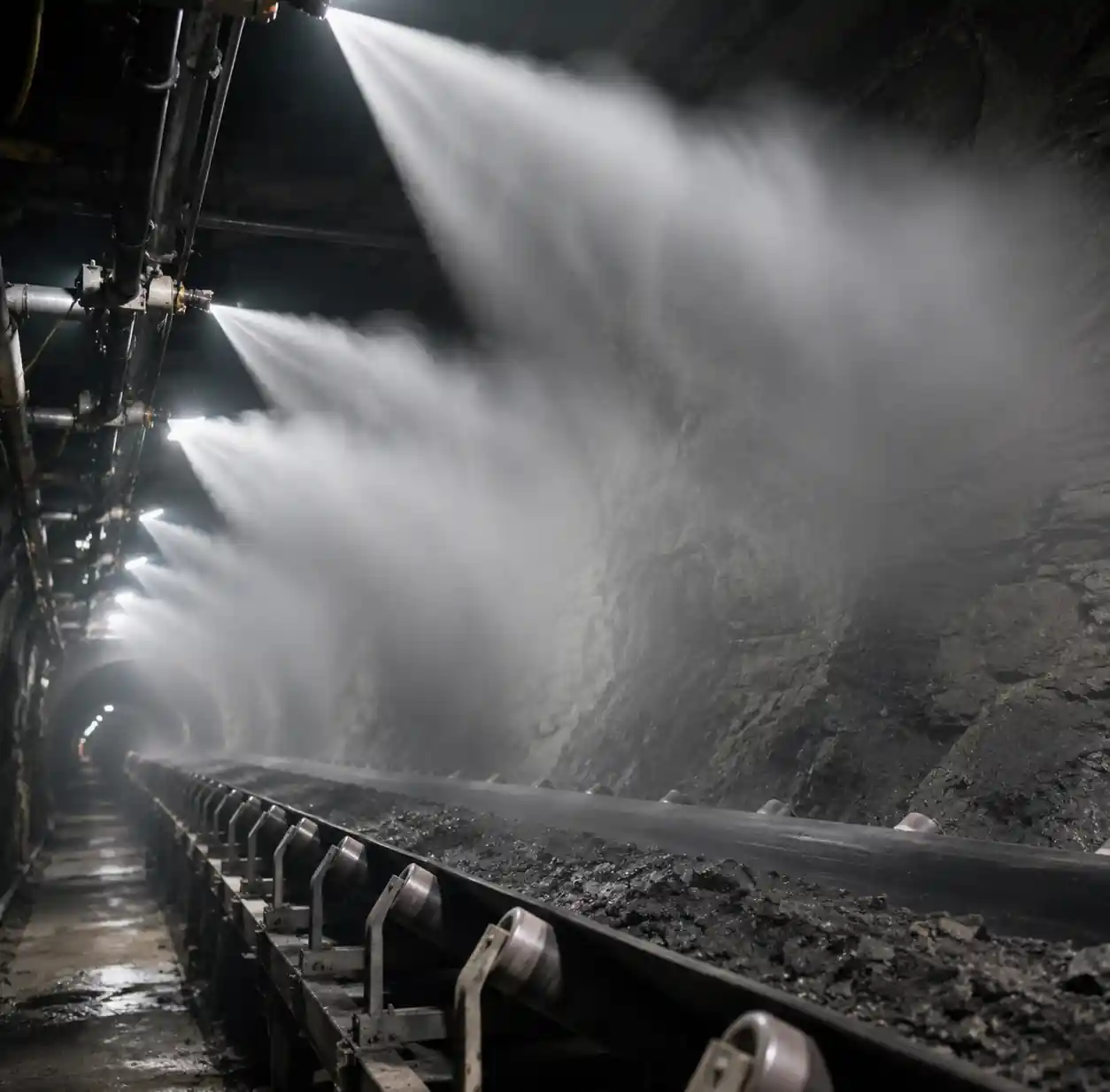 Dry fog dust suppression system creating ultra-fine mist in underground mining tunnel
The technology delivers exceptional performance in underground mining ventilation shafts and tunnels. Testing at coal mines shows dry fog systems reduce respirable dust concentrations by 92% while consuming only 0.5-2 gallons per minute per nozzle. This makes them ideal for operations with limited water supply or where material handling requires dry conditions.
Wet Suppression Systems for Haul Roads
Haul road dust suppression requires different technology than stationary crushing operations. Heavy-duty spray bars with flat fan nozzles distribute water across road surfaces at 40-80 PSI, creating a moisture layer that binds surface particles. You should specify corrosion-resistant stainless steel nozzles for mobile water trucks operating in abrasive mining environments.
Application rates typically range from 0.5 to 1.5 gallons per square yard, depending on traffic volume, vehicle speed, weather conditions, and road surface material. Automated systems with flow sensors adjust water delivery based on dust generation rates, reducing consumption by 40% compared to manual spraying while maintaining consistent suppression.
Fixed Spray Systems at Transfer Points
Conveyor transfer points generate intense dust clouds as material free-falls and impacts collection belts. Fixed spray rings with hollow cone nozzles create 360-degree coverage zones that encapsulate falling material. The system requires precise positioning—nozzles mounted 2-4 feet above the transfer point with 30-60 degree spray angles provide optimal particle capture without excessive material wetting.
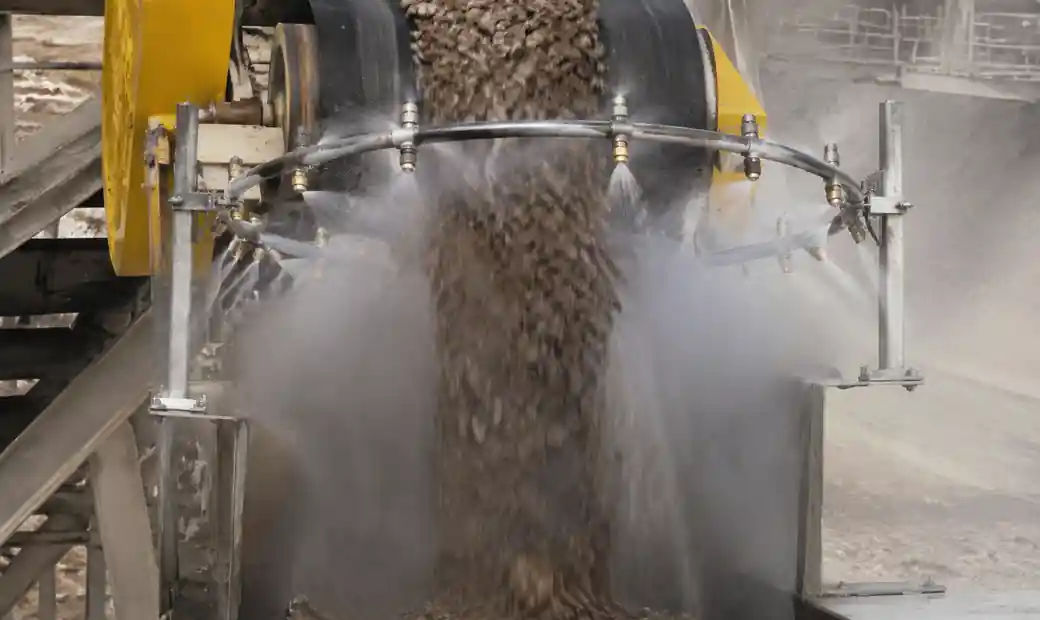 Fixed spray ring system with hollow cone nozzles at conveyor belt transfer point
Flow rates from 2-15 GPM per transfer point deliver effective suppression while maintaining material handling specifications. You can integrate these systems with conveyor controls, activating spray automatically when material flows and shutting off during idle periods to conserve water.
Dust Suppression Technologies for Construction Sites
Demolition Dust Control Systems
Building demolition creates massive dust plumes containing concrete particulates, asbestos fibers, and heavy metals. Mobile fog cannons throw fine mist droplets 100-300 feet using high-velocity fans combined with atomizing nozzles. These units suppress dust at the generation point while operators work at safe distances.
You should deploy fog cannons with droplet sizes between 10-50 microns for maximum airborne particle capture. Units consuming 15-50 GPM can control dust across 10,000-30,000 square foot areas, making them effective for large demolition projects. The technology meets EPA fugitive dust regulations and OSHA respirable crystalline silica standards when properly configured.
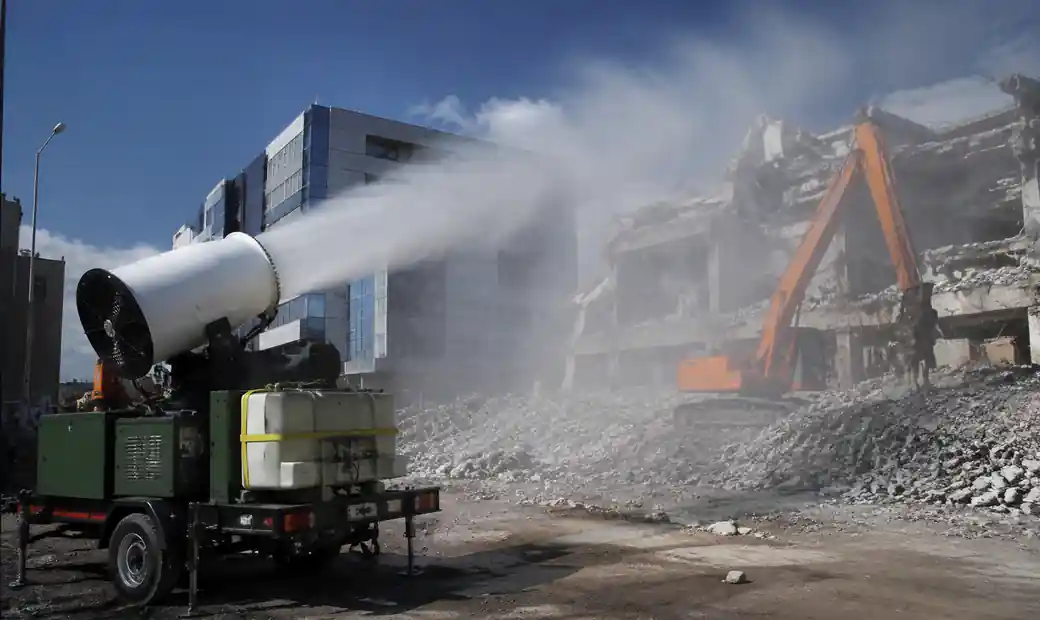 Mobile fog cannon throwing fine mist spray for building demolition dust suppression
Excavation and Earthmoving Suppression
Excavation operations require mobile suppression capability that follows equipment movement. Dust Boss-style fog cannons mount on excavators, dozers, or portable trailers, delivering targeted suppression where active digging occurs. The combination of fan-assisted throw distance and fine atomization controls dust without creating mud that impedes equipment operation.
Spray Nozzle Selection for Dust Suppression
Choosing the correct nozzle type directly impacts suppression efficiency, water consumption, and system maintenance requirements. The following comparison shows performance characteristics of primary nozzle technologies used in dust control applications.
| Nozzle Type | Droplet Size | Pressure Range | Coverage Pattern | Best Application | Water Efficiency |
|---|---|---|---|---|---|
| Hollow Cone | 50-200 microns | 40-150 PSI | Ring-shaped spray | Transfer points, crushing | High |
| Full Cone | 100-300 microns | 40-100 PSI | Circular coverage | Road watering, open areas | Medium |
| Air Atomizing | 10-50 microns | 60-100 PSI air + liquid | Fine mist | Underground, enclosed spaces | Very High |
| Flat Fan | 200-500 microns | 30-80 PSI | Linear strip | Haul roads, surface coating | Medium |
| Dry Fog Nozzles | 1-10 microns | 800-1500 PSI | Ultra-fine mist | Respirable dust, dry materials | Very High |
Pressure Requirements and Flow Rate Optimization
Effective dust suppression requires matching pressure and flow to particle size and generation rate. For respirable silica dust control (particles under 10 microns), you should specify high-pressure systems operating at 800-1500 PSI with specialized dry fog nozzles. Coarser dust from material handling operates effectively at 40-150 PSI with standard industrial spray nozzles.
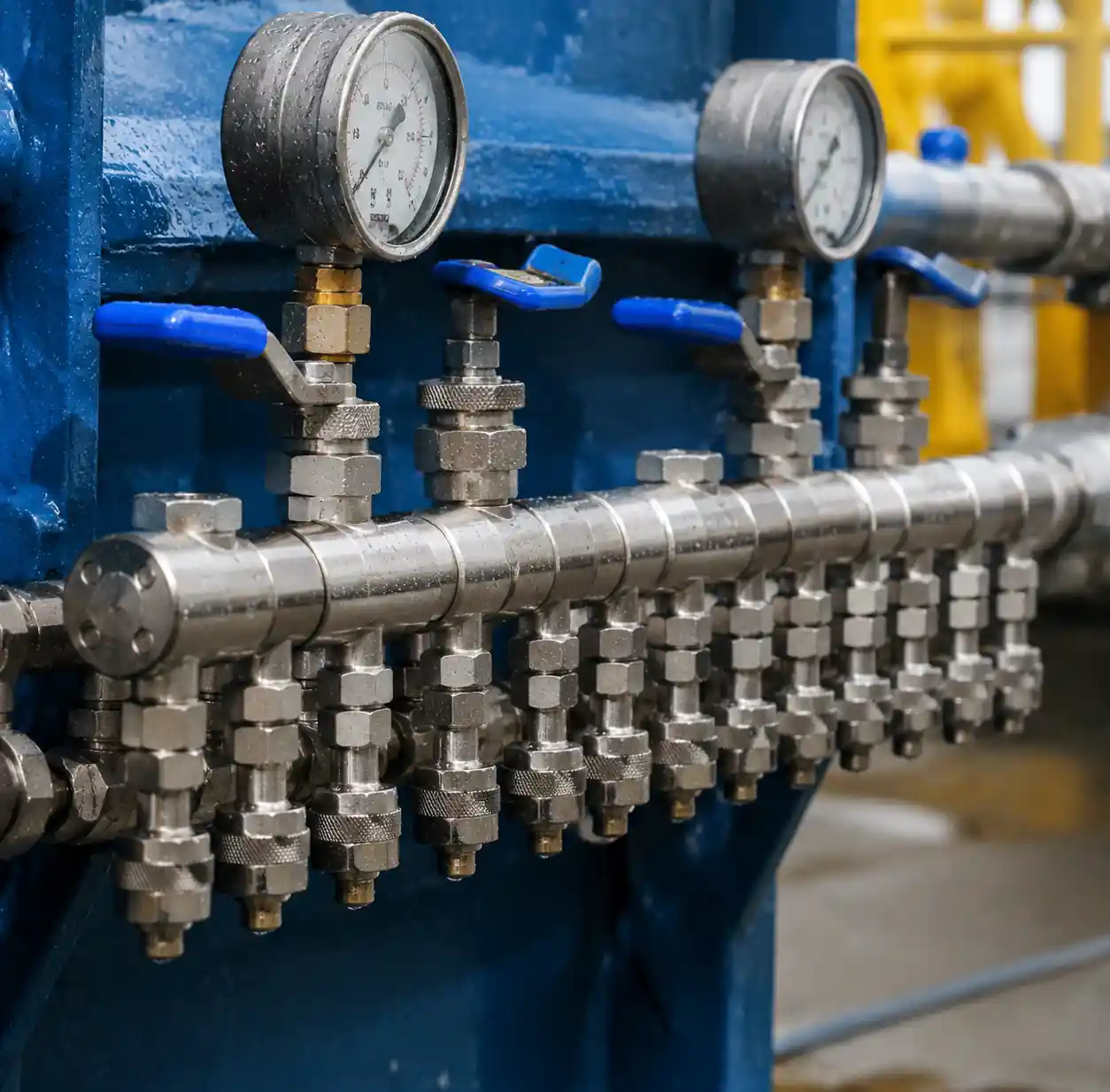 High-pressure dust suppression nozzle manifold showing stainless steel nozzles and fittings
Calculate total system flow by determining coverage area, dust generation rate, and target suppression percentage. A typical crushing plant generating 5000 CFM of dust-laden air requires 15-30 GPM distributed across strategic spray points. You can reduce consumption by 60% using automated controls that cycle spray based on actual dust detection rather than continuous operation.
Material Compatibility and Nozzle Selection
Mining and construction environments expose suppression systems to abrasive particles, chemical exposure, and temperature extremes. Material selection directly impacts service life and maintenance costs. The following specifications guide nozzle material selection for different operating conditions.
| Operating Environment | Recommended Material | Temperature Range | Chemical Resistance | Expected Service Life |
|---|---|---|---|---|
| Coal Mining | 316 Stainless Steel | -20°C to 200°C | Excellent | 3-5 years |
| Aggregate/Quarry | Hardened Stainless Steel or Ceramic | -30°C to 250°C | Excellent | 5-8 years |
| Road Construction | Brass or 304 SS | -10°C to 150°C | Good | 2-4 years |
| Demolition (Urban) | 316 SS or Brass | -5°C to 100°C | Good | 2-3 years |
| Chemical Processing | PVDF or Hastelloy | -20°C to 150°C | Superior | 5-10 years |
You should install inline filters upstream of spray nozzles to prevent clogging from suspended particles in water supply. Mesh sizes between 50-100 microns protect nozzle orifices while maintaining adequate flow. Stainless steel Y-strainers with blow-down valves allow cleaning without system shutdown.
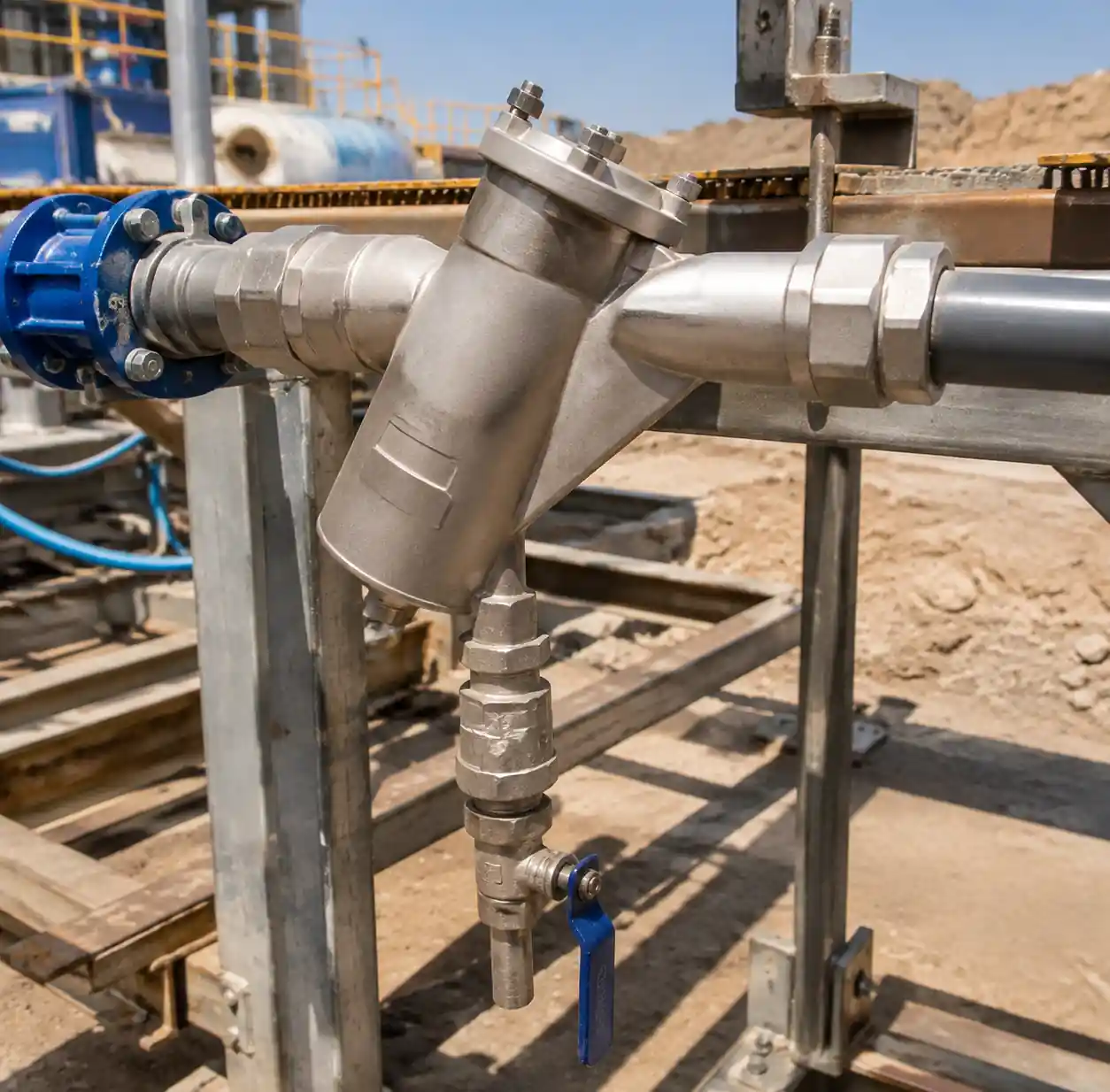 Inline Y-strainer filter protecting dust suppression nozzles from clogging
Water Source Optimization and Chemical Additives
Water Quality Requirements
Dust suppression effectiveness depends on water quality characteristics. High mineral content causes nozzle scaling and reduced spray quality. You should test water supplies for total dissolved solids (TDS), hardness, pH, and suspended particles before system design. Water with TDS exceeding 500 PPM requires treatment to prevent nozzle fouling and maintain spray performance.
Surfactant Enhancement
Adding surfactants to suppression water reduces surface tension, improving droplet-particle collision efficiency. Industrial wetting agents at 0.1-0.5% concentration increase suppression effectiveness by 15-30% while reducing water consumption proportionally. This proves especially valuable in water-scarce mining regions where every gallon counts.
Biodegradable surfactants approved for industrial use comply with environmental regulations while delivering performance improvements. You can inject additives using proportioning pumps that maintain consistent concentration regardless of flow rate variations.
System Integration and Automation
Modern dust suppression systems integrate with existing mine and construction equipment controls. Programmable logic controllers (PLCs) activate spray zones based on equipment operation, dust sensor feedback, and weather conditions. This automation reduces water consumption by 50-70% compared to manual systems while maintaining superior dust control.
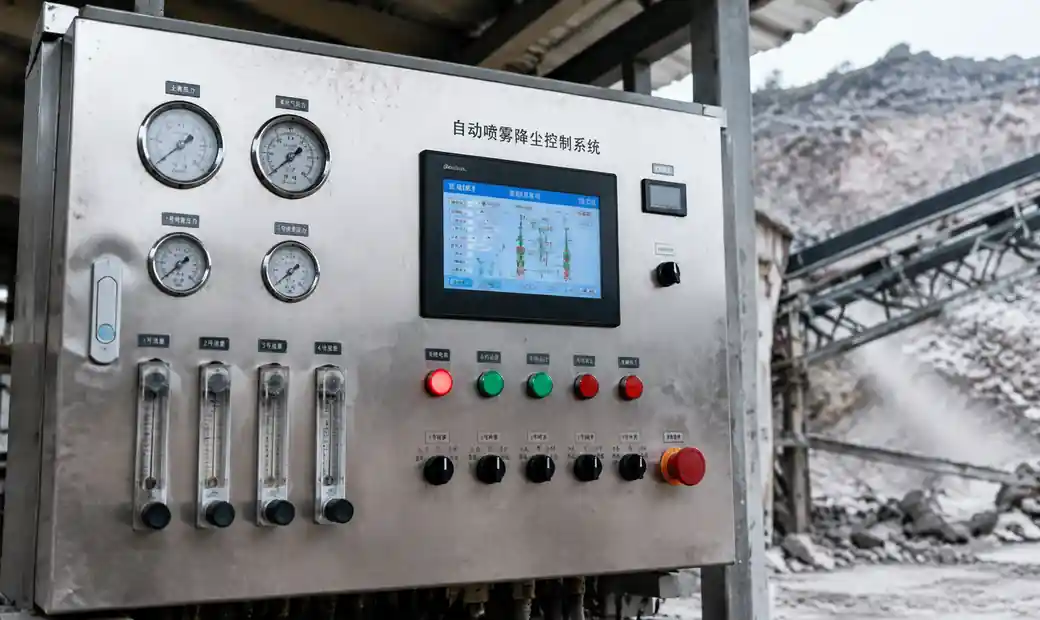 PLC control panel and automation system for dust suppression monitoring
Remote monitoring platforms track system performance, water consumption, nozzle condition, and maintenance requirements. Operators receive alerts when pressure drops indicate clogging or leaks, enabling predictive maintenance before system failure. Data logging provides documentation for regulatory compliance and environmental reporting.
Real-World Performance: Case Studies from Active Operations
A limestone quarry in Nevada implemented a comprehensive dust suppression system combining dry fog nozzles at crushing stations with automated haul road sprayers. The installation reduced respirable silica dust exposure by 87%, bringing MSHA compliance measurements well below action levels. Water consumption decreased from 12,000 gallons per shift to 4,200 gallons while maintaining superior dust control across the 50-acre operation.
A highway construction project in California deployed mobile fog cannons for concrete sawing and demolition activities. The systems controlled silica dust emissions to meet OSHA's 50 micrograms per cubic meter exposure limit while allowing continuous work. Contractors reported zero dust-related citations during the 18-month project timeline.
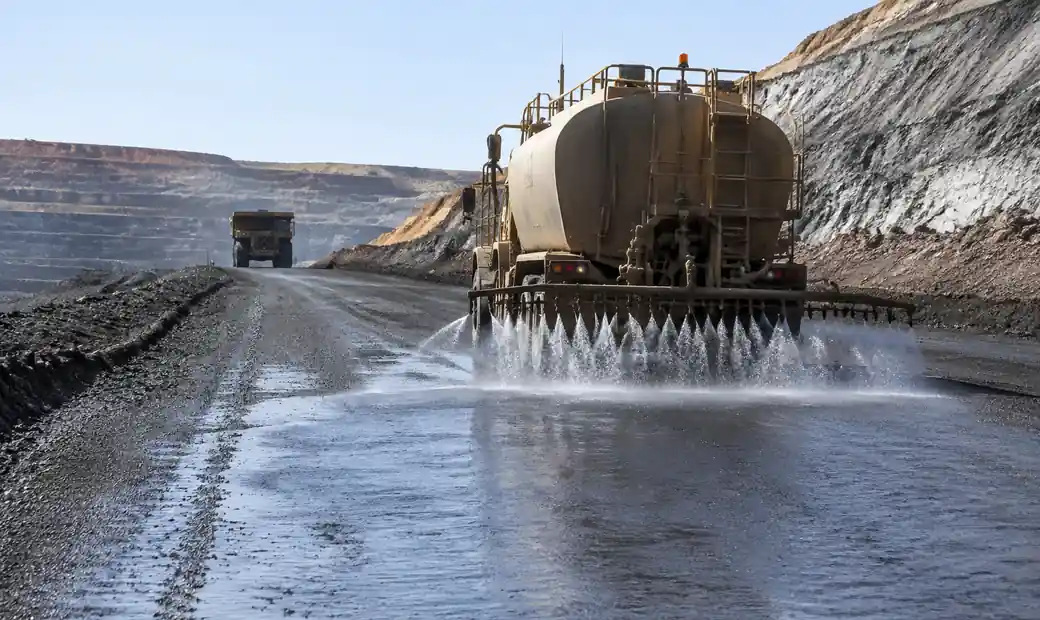 Haul road dust suppression system spraying water on mining access road
Installation Best Practices for Maximum Efficiency
Proper system design determines long-term performance and maintenance requirements. Position nozzles perpendicular to prevailing wind direction, accounting for seasonal variations in wind patterns. Mount spray equipment outside traffic zones and material fall paths to prevent physical damage. Use flexible connections at equipment mounting points to absorb vibration and thermal expansion.
Size pumps and plumbing for 20% capacity above calculated requirements, providing margin for system expansion and flow variations. Install pressure gauges at pump discharge and key spray zones, enabling operators to verify proper operation and diagnose problems quickly. You should specify UV-resistant hoses and fittings for outdoor installations exposed to continuous sunlight.
Regulatory Compliance: MSHA, OSHA, and EPA Requirements
The Mine Safety and Health Administration (MSHA) enforces respirable crystalline silica exposure limits of 50 micrograms per cubic meter as an 8-hour time-weighted average. Effective dust suppression systems provide the primary control method for achieving compliance without requiring engineering controls or respirator programs that reduce productivity.
OSHA construction standards mandate equivalent exposure limits with additional requirements for written exposure control plans and competent person oversight. Proper dust suppression documentation demonstrates compliance and provides defense against citation. You should maintain records of system operation, water consumption, and dust monitoring results.
EPA fugitive dust regulations under the Clean Air Act require reasonable precautions to prevent particulate matter emissions visible beyond property boundaries. State and local air quality districts often impose stricter requirements, including opacity monitoring and dust control plan approval. Engineered suppression systems satisfy regulatory requirements more reliably than manual methods.
Cost Analysis and Return on Investment
Initial system installation costs range from $15,000 for basic transfer point spray bars to $150,000+ for comprehensive mine-wide automated systems. However, the return on investment typically occurs within 6-18 months through reduced water consumption, eliminated regulatory fines, decreased equipment maintenance, and improved worker productivity.
A mid-size aggregate operation spending $8,000 monthly on water delivery reduced consumption by 65% after installing an automated suppression system with flow optimization. The $45,000 system investment paid back in 11 months while improving dust control performance. Additionally, reduced equipment wear from dust infiltration extended maintenance intervals by 30%, adding further savings.
YuechenPrecision Technology offers comprehensive dust suppression solutions engineered for mining and construction applications. Our product range includes high-pressure dry fog nozzles, automated spray systems, mobile fog cannons, and custom-engineered solutions for challenging dust control applications. We provide technical support for system design, nozzle selection, and performance optimization across multiple industries.
FAQ
What is the most effective nozzle type for respirable silica dust suppression?
Dry fog nozzles operating at 800-1500 PSI generate droplet sizes between 1-10 microns, matching respirable silica particles for maximum capture efficiency. These systems achieve suppression rates exceeding 90% while consuming minimal water. You should specify dry fog technology for crushing stations, screening operations, and enclosed transfer points where silica exposure exceeds regulatory action levels.
How much water does a dust suppression system consume per day?
Water consumption varies dramatically based on system type, coverage area, and automation level. A typical aggregate crushing plant with automated suppression consumes 3,000-8,000 gallons per 8-hour shift. Haul road watering requires 500-1,500 gallons per lane mile per application. High-efficiency systems with dry fog nozzles and flow control reduce consumption by 60-70% compared to conventional sprinklers while maintaining superior dust control performance.
What pressure is required for effective dust suppression in mining?
Pressure requirements depend on target particle size and application type. Haul road suppression operates effectively at 40-80 PSI with flat fan nozzles. Transfer point suppression requires 60-150 PSI with hollow cone nozzles. Respirable dust control for MSHA compliance needs 800-1500 PSI dry fog systems. You should match pressure to particle size—finer dust requires higher pressure and smaller droplets for effective capture.
How do I prevent nozzle clogging in dusty mining environments?
Install inline Y-strainers with 50-100 micron mesh screens upstream of all nozzles, providing blow-down valves for cleaning without shutdown. Use water sources with total dissolved solids below 500 PPM to prevent mineral scaling. Specify corrosion-resistant materials like 316 stainless steel for abrasive environments. Implement pressure monitoring to detect clogging early, and establish preventive maintenance schedules for nozzle inspection and cleaning every 30-90 days depending on operating conditions.
Can dust suppression systems operate in freezing temperatures?
Yes, with proper winterization. Install heat trace cables and insulation on water lines exposed to freezing temperatures. Use freeze-resistant valves and quick-drain systems that empty lines when shut down. Some operations switch to heated water or glycol-based antifreeze solutions in winter months. Dry fog systems require less winterization due to minimal water volumes and rapid atomization that prevents ice formation on surfaces.
What is the payback period for automated dust suppression systems?
Most mining and construction operations achieve payback within 6-18 months through reduced water costs, eliminated regulatory fines, decreased equipment maintenance, and improved productivity. A $50,000 automated system typically saves $3,000-6,000 monthly through optimized water usage alone. Additional savings from reduced equipment wear, fewer MSHA citations, and improved air quality monitoring results accelerate return on investment. Operations in water-scarce regions see faster payback due to high water delivery costs.
How do surfactants improve dust suppression performance?
Surfactants reduce water surface tension from 72 dynes/cm to 25-30 dynes/cm, improving droplet-particle collision and binding efficiency. This increases suppression effectiveness by 15-30% while proportionally reducing water consumption. Biodegradable industrial wetting agents at 0.1-0.5% concentration provide optimal performance without environmental concerns. You can inject surfactants using proportioning pumps that maintain consistent concentration across varying flow rates.
Conclusion
Effective dust suppression requires engineered spray systems matched to specific mining and construction applications. High-pressure dry fog nozzles deliver superior performance for respirable silica control, while automated haul road systems optimize water usage across large surface areas. Material selection, pressure optimization, and control integration determine long-term reliability and operating costs.
Regulatory drivers from MSHA, OSHA, and EPA make effective dust control mandatory rather than optional. Systems that combine proper nozzle technology, automation, and monitoring provide reliable compliance while reducing operational costs through optimized water consumption and reduced equipment wear. The return on investment typically occurs within the first year of operation through direct cost savings and avoided regulatory penalties.
For custom dust suppression solutions engineered for your mining or construction operation, contact YuechenPrecision Technology for technical specifications, system design support, and application engineering assistance.