



Controlling Dust in African Quarries: Water-Efficient Solutions
Quarry operations in Africa face a unique challenge: dust suppression in water-scarce environments. Industry data shows that traditional water trucks consume 30-50% of a mine site's total water usage, with haul roads drying within 20 minutes and requiring continuous reapplication. In regions where water costs $2-5 per cubic meter and availability fluctuates seasonally, this approach becomes economically and environmentally unsustainable.
If you want to control dust effectively in African quarry operations while reducing water consumption by up to 90%, then you will need to understand modern water-efficient technologies including dry fog systems, polymer-based suppressants, and atomized misting solutions. This guide examines proven methods that quarries across South Africa, Namibia, and East Africa are implementing to meet dust control regulations while conserving critical water resources.
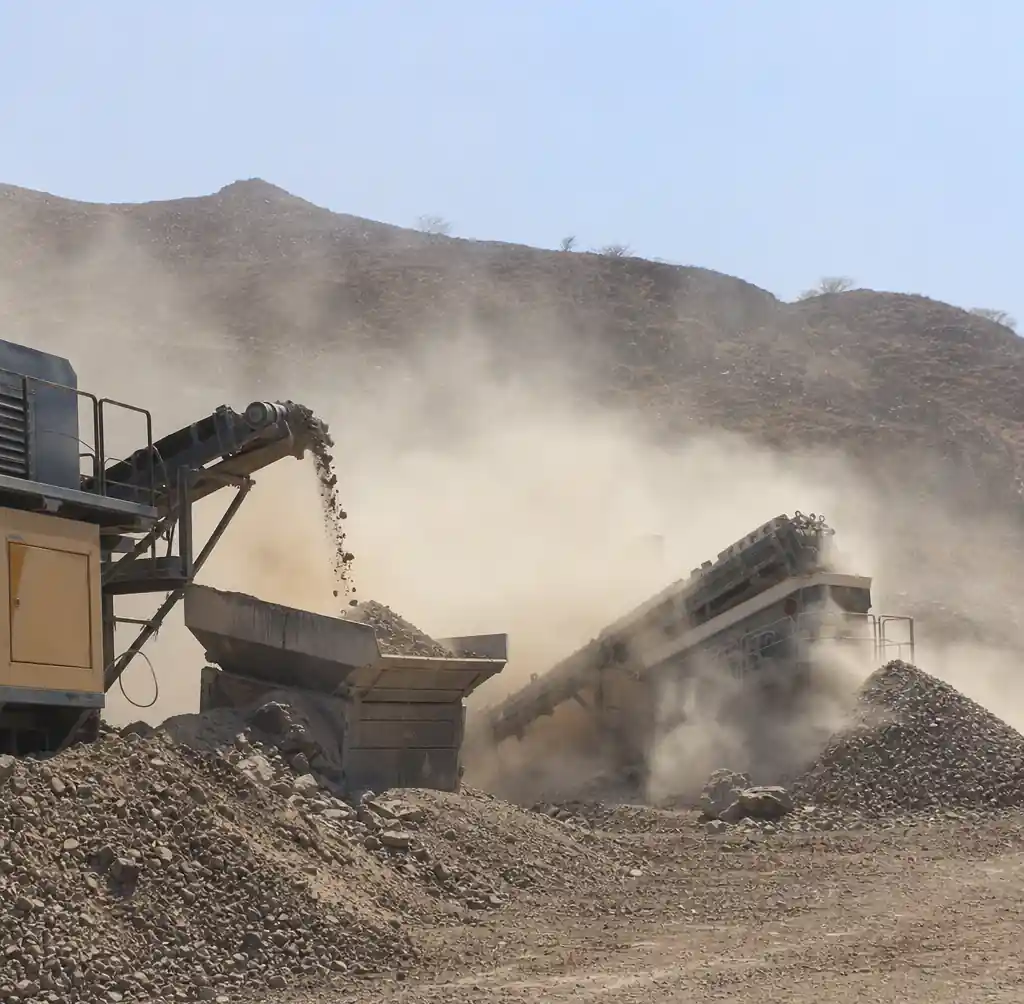 Heavy dust cloud rising from active quarry crushing operations in arid African environment
Table of Contents
- 1. The Water Crisis in African Quarry Operations
- 2. Dry Fog Atomization: 70% Water Reduction
- 3. Polymer-Enhanced Dust Suppressants
- 4. Fine Mist Systems for Haul Roads
- 5. Surfactant-Based Dust Control
- 6. Foam-Based Suppression Technology
- 7. Integrated Water Management Systems
- 8. Selecting the Right Solution for Your Quarry
- 9. FAQ
- 9.1. What is the most water-efficient dust control method for African quarries?
- 9.2. How much does polymer dust treatment cost compared to water spraying?
- 9.3. Can dry fog systems work in high-temperature African climates?
- 9.4. What water quality is required for atomizing nozzles?
- 9.5. How long do polymer treatments last on haul roads?
- 9.6. What are the environmental impacts of polymer dust suppressants?
- 10. Conclusion
The Water Crisis in African Quarry Operations
African quarries operate under conditions that amplify dust generation: high temperatures (often exceeding 35°C), low humidity (15-30%), strong winds, and fine particulate material from crushing operations. Traditional wet suppression methods spray 4 liters of water per square meter daily, but evaporation rates in arid climates can reach 80% before the water binds any dust particles.
Water scarcity adds economic pressure. A single water truck costs $500,000-600,000 annually to operate when accounting for fuel, tires, maintenance, and operator wages. Quarries running 3-4 water trucks consume 200-400 cubic meters of water daily—equivalent to the daily needs of 2,000-4,000 people in water-stressed regions.
Recent environmental regulations compound the challenge. South Africa's National Environmental Management Act and similar frameworks across East Africa now mandate PM10 levels below 75 μg/m³ and PM2.5 below 40 μg/m³ at quarry boundaries. Traditional water spraying achieves only 40-60% dust reduction and requires continuous application.
Dry Fog Atomization: 70% Water Reduction
Dry fog systems represent the most significant advancement in quarry dust control technology. These systems use high-pressure atomizing nozzles operating at 1000-1500 psi (70-100 bar) to create ultra-fine water droplets of 10-20 microns—similar in size to airborne dust particles.
The physics behind dry fog effectiveness is straightforward: dust particles ranging from 1-50 microns collide with similarly sized water droplets and agglomerate into larger particles that fall to the ground. This process, called Brownian motion capture, achieves 85-95% dust suppression at crushing, screening, and transfer points with 70% less water than conventional spraying.
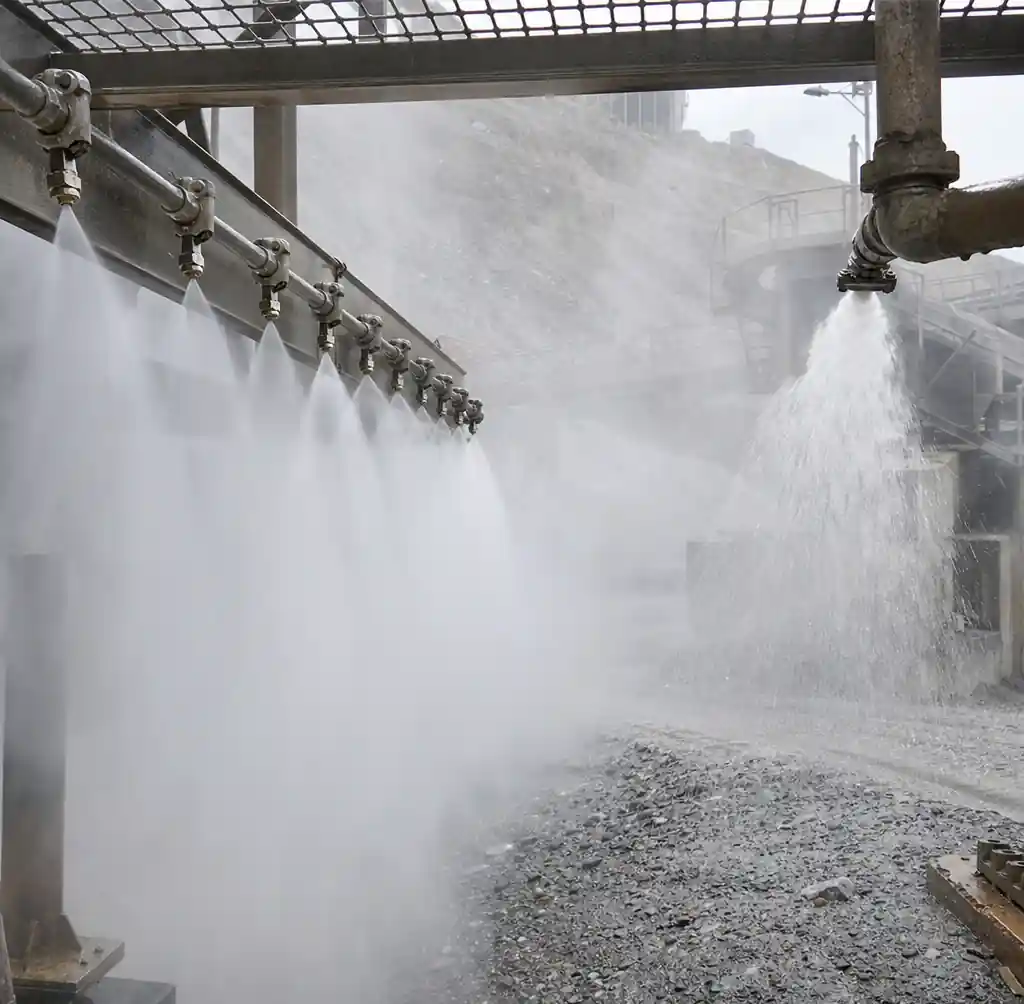 Dry fog atomization nozzles creating ultra-fine mist at quarry transfer point
You can install dry fog systems at critical dust generation points including primary crushers, conveyor transfer stations, screening plants, and loading areas. A typical setup uses 10-15 atomizing nozzles per zone, consuming 50-80 liters per hour compared to 500-800 liters per hour for traditional water sprays. The system operates automatically via dust sensors that trigger misting only when PM levels exceed threshold values, further reducing water consumption.
African quarries implementing dry fog systems report water savings of 150-250 cubic meters daily. At Namibian aggregate operations, dry fog installation reduced dust-related water consumption from 280 to 75 cubic meters per day while improving PM10 compliance from 72% to 96% of monitoring periods.
| Parameter | Traditional Water Spray | Dry Fog Atomization | Improvement |
|---|---|---|---|
| Droplet Size | 200-500 microns | 10-20 microns | 95% reduction |
| Water Consumption | 500-800 L/hr per zone | 50-80 L/hr per zone | 85-90% reduction |
| Dust Suppression Efficiency | 40-60% | 85-95% | 40-60% improvement |
| Coverage Area | 5-8 meters | 15-25 meters | 200% improvement |
| Operating Pressure | 40-80 psi | 1000-1500 psi | Critical for atomization |
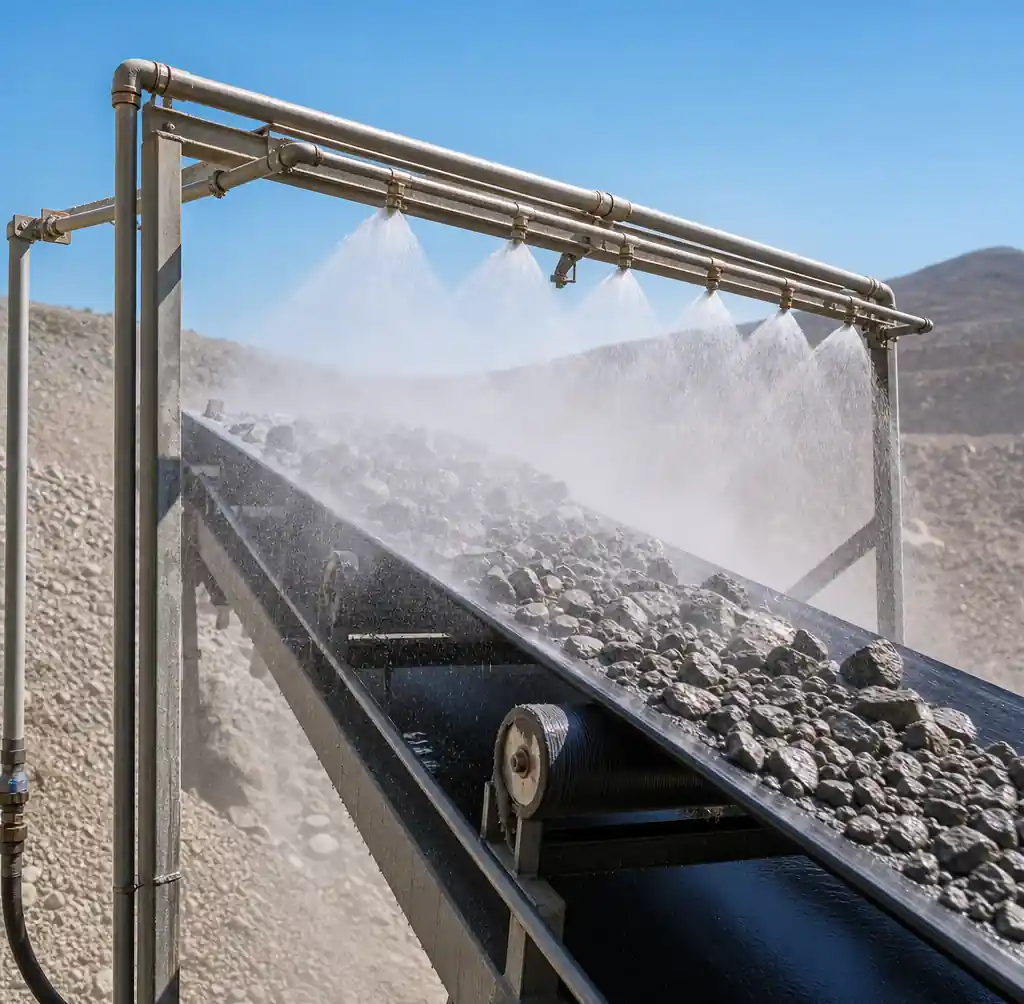 Automated dust suppression system with multiple fog nozzles at conveyor transfer station
Polymer-Enhanced Dust Suppressants
Polymer-based treatments offer long-term dust control for haul roads and stockpiles with water reductions up to 90%. These synthetic or bio-based polymers create a binding crust on road surfaces that remains effective for 3-8 weeks depending on traffic volume and weather conditions.
The mechanism involves polymer chains that bridge fine particles into a cohesive matrix. When applied at 0.5-2% concentration, these solutions penetrate 10-25mm into the road surface and form a flexible, water-resistant crust as they cure. This crust withstands vehicle traffic while preventing fine particle suspension, even in high wind conditions common across African operations.
Modern polymer formulations suitable for African quarries include acrylic copolymers, polyvinyl acetate (PVA), and bio-polymers derived from plant starches. Acrylic systems perform best in high-temperature environments (up to 50°C), maintain effectiveness through seasonal moisture variations, and degrade naturally after 6-12 months without environmental persistence.
You should apply polymer treatments at 1-2 liters per square meter using boom sprayers or nurse trucks equipped with spray bars. A 2-kilometer haul road 15 meters wide requires 30,000 liters of diluted solution initially, then 8,000-12,000 liters for monthly reapplication. This compares to 60,000-90,000 liters needed weekly for water-only suppression.
Fine Mist Systems for Haul Roads
Fine mist nozzles operating at 200-400 psi (14-28 bar) bridge the gap between dry fog and traditional spraying. These systems generate 50-100 micron droplets that provide effective dust knockdown while using 60-75% less water than conventional water carts.
Installation typically involves fixed spray bars positioned 3-5 meters above haul roads at strategic locations: crusher entry/exit points, intersection approaches, steep grade sections, and loading zones. Each spray bar contains 8-15 fog nozzles spaced 0.8-1.2 meters apart, creating an overlapping mist curtain that vehicles pass through.
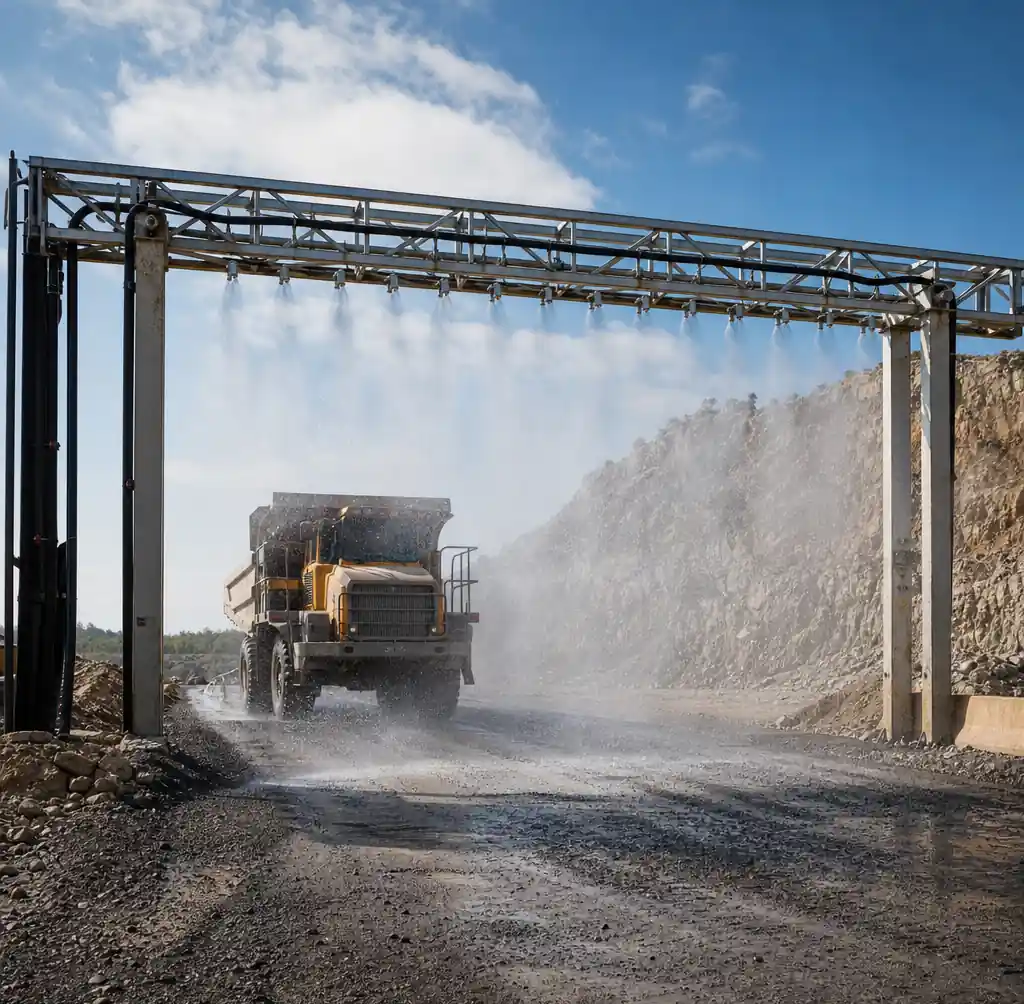 Fixed mist spray system creating curtain of fine droplets over quarry haul road
African operations favor this approach because it eliminates water truck operating costs while providing consistent, automated dust control. A South African limestone quarry replaced two water trucks with four fixed mist stations along a 3-kilometer haul road network, reducing annual water costs from $340,000 to $95,000 while improving dust suppression from 55% to 82% effectiveness.
The systems require water filtration to 50 microns or finer to prevent nozzle clogging—a critical consideration in African locations where water may contain high sediment loads. Many installations include self-flushing filters and nozzle check valves that maintain performance in dusty conditions.
Surfactant-Based Dust Control
Surfactants reduce water surface tension from 72 dynes/cm to 28-35 dynes/cm, allowing water to penetrate dust particles more effectively and persist longer on treated surfaces. These chemical additives, used at 0.1-0.5% concentration, extend the effectiveness of water spraying by 200-400% while reducing consumption by 50-60%.
The technology works particularly well for stockpile stabilization where dust must be controlled during high wind events. You can apply surfactant solutions via hose-end sprayers or fogging systems at 0.5-1.0 liters per square meter. The surfactant-coated particles resist re-entrainment because the reduced surface tension creates stronger interparticle adhesion.
Non-ionic surfactants perform best in African conditions due to their stability across wide pH and hardness ranges. They remain effective in water with total dissolved solids up to 2000 ppm—typical of groundwater sources at many quarry sites. Biodegradable formulations meeting EU detergent regulations minimize environmental impact while maintaining 7-14 day effectiveness on stockpiles.
| Dust Control Method | Water Consumption | Effectiveness Duration | Application Frequency | Cost per 1000m² |
|---|---|---|---|---|
| Traditional Water Spray | 4000 L/day | 15-30 minutes | Continuous | $15-25/day |
| Surfactant Solution | 1500-2000 L/day | 2-4 hours | 4-6 times/day | $35-50/day |
| Polymer Treatment | 500 L initial | 3-8 weeks | Monthly | $120-180/month |
| Dry Fog System | 400-600 L/day | Continuous | Automated | $8-12/day |
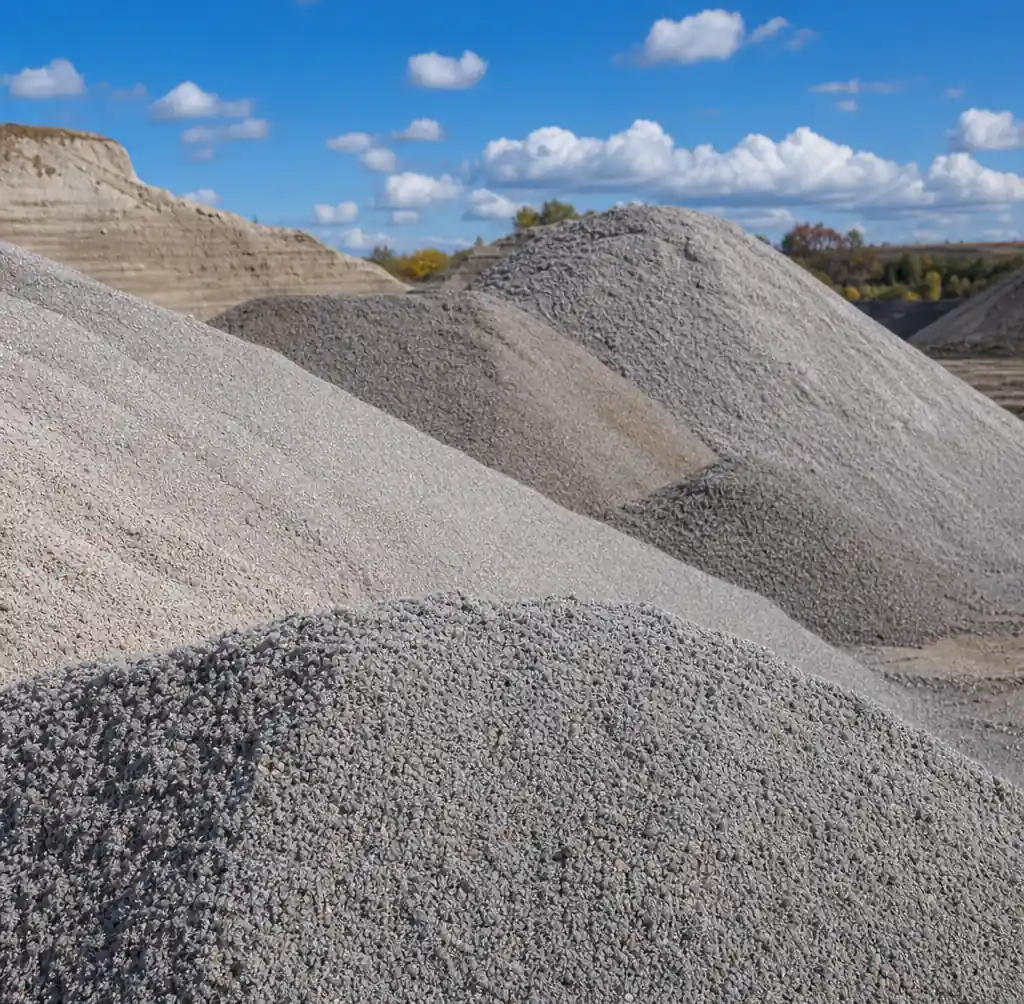 Aggregate stockpile with surface treatment for dust suppression in quarry yard
Foam-Based Suppression Technology
Foam suppression creates a blanket barrier that captures and weighs down dust particles at generation points. The foam consists of air bubbles encased in surfactant films, with expansion ratios of 10:1 to 40:1 allowing minimal water to cover maximum surface area.
Underground quarry operations and enclosed crushing plants benefit most from foam systems because the foam adheres to vertical surfaces and persists in low-ventilation areas where water spray would evaporate rapidly. Foam application at conveyor discharge points reduces airborne dust by 75-90% while consuming 85-90% less water than spray systems.
You should specify foam concentrate at 2-5% mixing ratios and apply through specialized foam generation nozzles that introduce compressed air at controlled ratios. A typical crusher application uses 40-60 liters of foam concentrate per day, creating 2000-3000 liters of foam that provides continuous dust suppression. This replaces water spray systems that would consume 400-600 liters hourly.
The foam biodegrades within 30-60 minutes, leaving no residue on processed aggregate. This characteristic makes foam ideal for operations producing construction-grade material where polymer residues would be unacceptable.
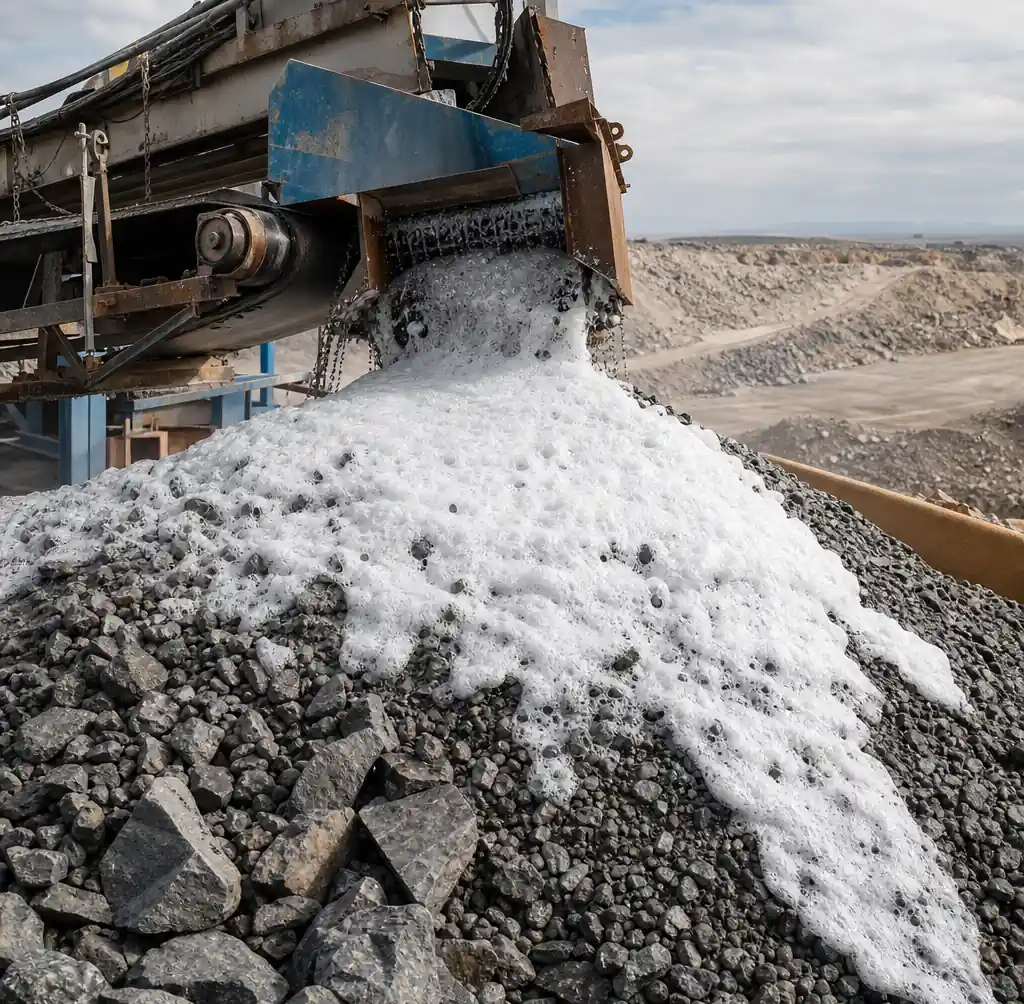 Foam-based dust suppression system operating at enclosed crusher discharge area
Integrated Water Management Systems
The most effective approach combines multiple technologies in an integrated system managed through automated controls. Modern quarry dust control systems use real-time PM monitoring, weather stations, and programmable logic controllers (PLCs) to optimize water use based on actual conditions.
A typical integrated system includes: dry fog atomization at fixed dust generation points, polymer-treated haul roads with supplemental fine mist stations, surfactant-enhanced water for stockpile treatment, and foam generators at enclosed crushing operations. The control system activates each technology based on dust sensor readings, wind speed, humidity, and operational status.
African quarries implementing integrated systems achieve 80-92% water reduction compared to traditional water truck operations while maintaining superior dust control performance. These systems pay for themselves within 18-36 months through reduced water costs, eliminated water truck expenses, improved regulatory compliance, and reduced material loss from wind erosion.
You can install monitoring systems that track water consumption, dust levels, wind conditions, and system performance in real-time. This data allows continuous optimization and provides documentation for environmental reporting and community engagement around dust management efforts.
 Automated dust control system monitoring panel with sensors and controls
Selecting the Right Solution for Your Quarry
Your choice of dust control technology depends on water availability, budget, dust generation characteristics, and regulatory requirements. Quarries with severe water constraints (less than 50 cubic meters daily available) should prioritize dry fog systems and polymer treatments that achieve maximum reduction. Operations with moderate water access can combine fine mist systems with surfactant enhancement for cost-effective improvement.
Start by measuring current water consumption and dust levels at key locations. Calculate the cost per cubic meter including pumping, treatment, and opportunity costs. Map dust generation points by severity: high-priority zones like crushers and transfer points warrant dry fog installation, while haul roads may perform adequately with polymer treatment and targeted mist stations.
Consider implementation in phases: initial investment in dry fog for the highest dust generation points typically provides 40-60% water savings while addressing regulatory hotspots. Subsequent phases can add haul road polymer treatments, fixed mist systems, and automated controls as capital becomes available and operational experience grows.
Work with dust control specialists who understand African conditions including water quality issues, extreme temperatures, seasonal variation, and maintenance access limitations. Solutions proven in Australian or North American operations may require modification for African environments.
| Quarry Characteristic | Recommended Primary Technology | Supplemental Systems | Expected Water Reduction |
|---|---|---|---|
| Severe water scarcity | Dry fog + polymer roads | Surfactant stockpiles | 80-90% |
| Moderate water limits | Fine mist + polymer roads | Dry fog at crushers | 65-80% |
| High dust generation | Dry fog at all sources | Foam at enclosed areas | 70-85% |
| Budget-constrained | Surfactant enhancement | Polymer haul roads | 50-65% |
| High regulatory pressure | Integrated system | Real-time monitoring | 75-90% |
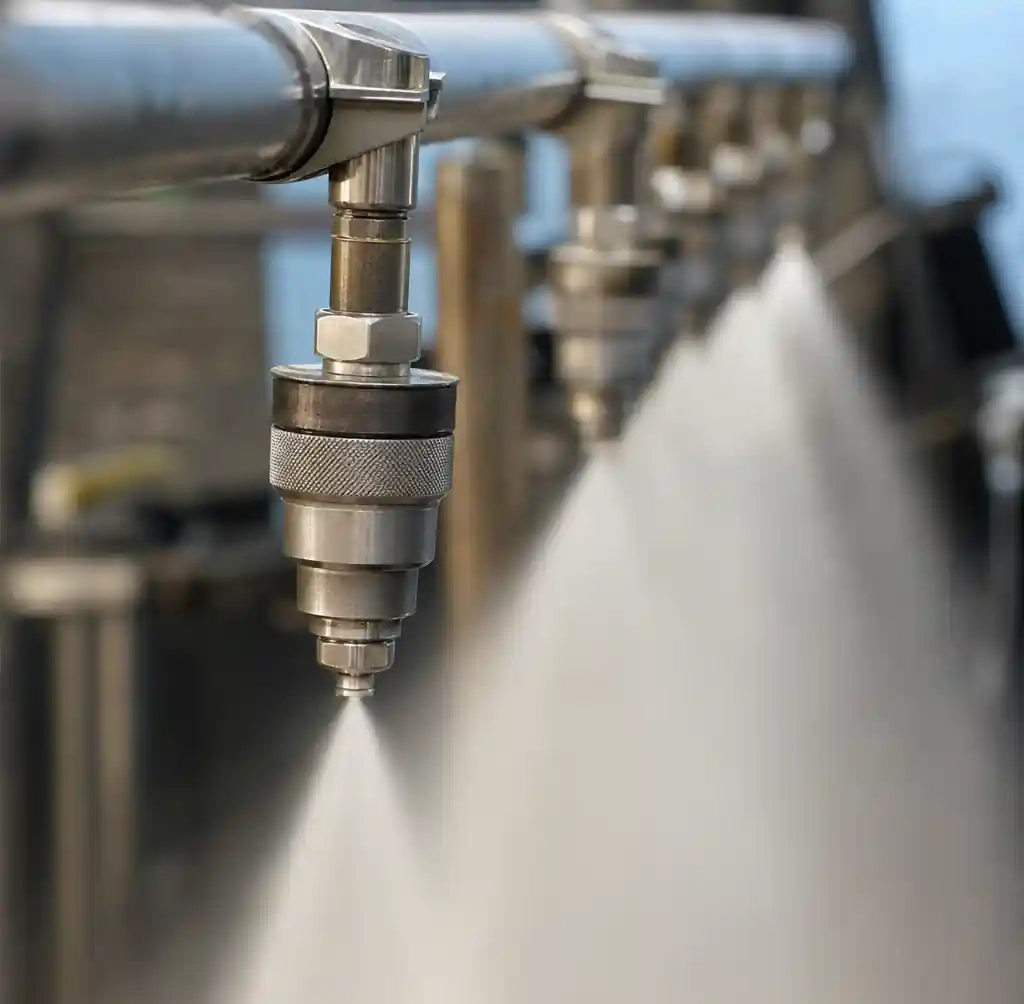 Array of industrial spray nozzles installed for water-efficient dust control
FAQ
What is the most water-efficient dust control method for African quarries?
Dry fog atomization systems provide the highest water efficiency, reducing consumption by 70-90% compared to traditional water spraying while achieving 85-95% dust suppression effectiveness. These systems use high-pressure nozzles to create 10-20 micron water droplets that match dust particle size for optimal capture.
How much does polymer dust treatment cost compared to water spraying?
Polymer treatment requires higher initial cost ($120-180 per 1000 square meters monthly) but eliminates daily water truck expenses of $15-25 per 1000 square meters. Total cost of ownership favors polymer treatment when water costs exceed $1.50 per cubic meter or when water truck operating costs are included in the comparison.
Can dry fog systems work in high-temperature African climates?
Dry fog systems perform exceptionally well in hot, dry conditions because the ultra-fine droplets remain suspended in the air longer before evaporation, increasing dust particle contact time. Systems operating in 40°C temperatures across South African and Namibian quarries consistently achieve 85-90% dust suppression with minimal water loss to evaporation.
What water quality is required for atomizing nozzles?
High-pressure atomizing nozzles require water filtered to 50 microns or finer to prevent clogging. Total dissolved solids should remain below 2000 ppm, and pH should range from 6.5-8.5. Many African quarries install reverse osmosis systems or multi-stage filtration to treat groundwater for nozzle compatibility.
How long do polymer treatments last on haul roads?
Polymer treatments typically remain effective for 3-8 weeks depending on traffic volume, weather conditions, and product selection. Heavy-traffic haul roads (100+ passes daily) require reapplication every 3-4 weeks, while moderate-traffic areas maintain effectiveness for 6-8 weeks. Acrylic copolymer formulations provide longest duration in African climates.
What are the environmental impacts of polymer dust suppressants?
Modern bio-based and synthetic polymers used for dust control are non-toxic, biodegradable within 6-12 months, and approved for use near water sources. They do not accumulate in soil or affect vegetation when applied at recommended rates of 0.5-2% concentration. Select products meeting EN or ASTM environmental standards for quarry applications.
Conclusion
Water-efficient dust control technologies allow African quarries to meet environmental standards while operating sustainably in water-scarce regions. Dry fog atomization, polymer treatments, and integrated monitoring systems reduce water consumption by 70-90% compared to traditional methods while improving dust suppression effectiveness and reducing operating costs. The transition from water-intensive truck spraying to engineered dust control systems represents both environmental stewardship and sound business practice.
YuechenPrecision Technology offers comprehensive spray nozzle solutions for quarry dust control including high-pressure atomizing nozzles for dry fog systems, fine mist nozzles for haul road applications, and foam generation equipment for enclosed crushing operations. Our industrial spray systems are engineered for African conditions with corrosion-resistant materials, self-cleaning designs, and proven performance in high-temperature, high-dust environments across mining and aggregate industries.
Contact us today for water-efficient dust control solutions tailored to your quarry's specific requirements, technical specifications for spray systems, and application engineering support for dust suppression system design and installation.