


Reducing Overspray in Paint Application: Techniques and Tips
To reduce paint overspray from 40-50% to 15-25%: use HVLP systems (65-85% transfer efficiency), maintain 6-8 inches spray distance at 90° angle, optimize air pressure to 8-12 PSI at the cap, and ensure booth ventilation at 100 feet per minute. These changes typically save $850-1,800 monthly in coating costs for mid-size operations, with 18-24 month equipment payback periods.
Table of Contents
Understanding Overspray and Its Impact
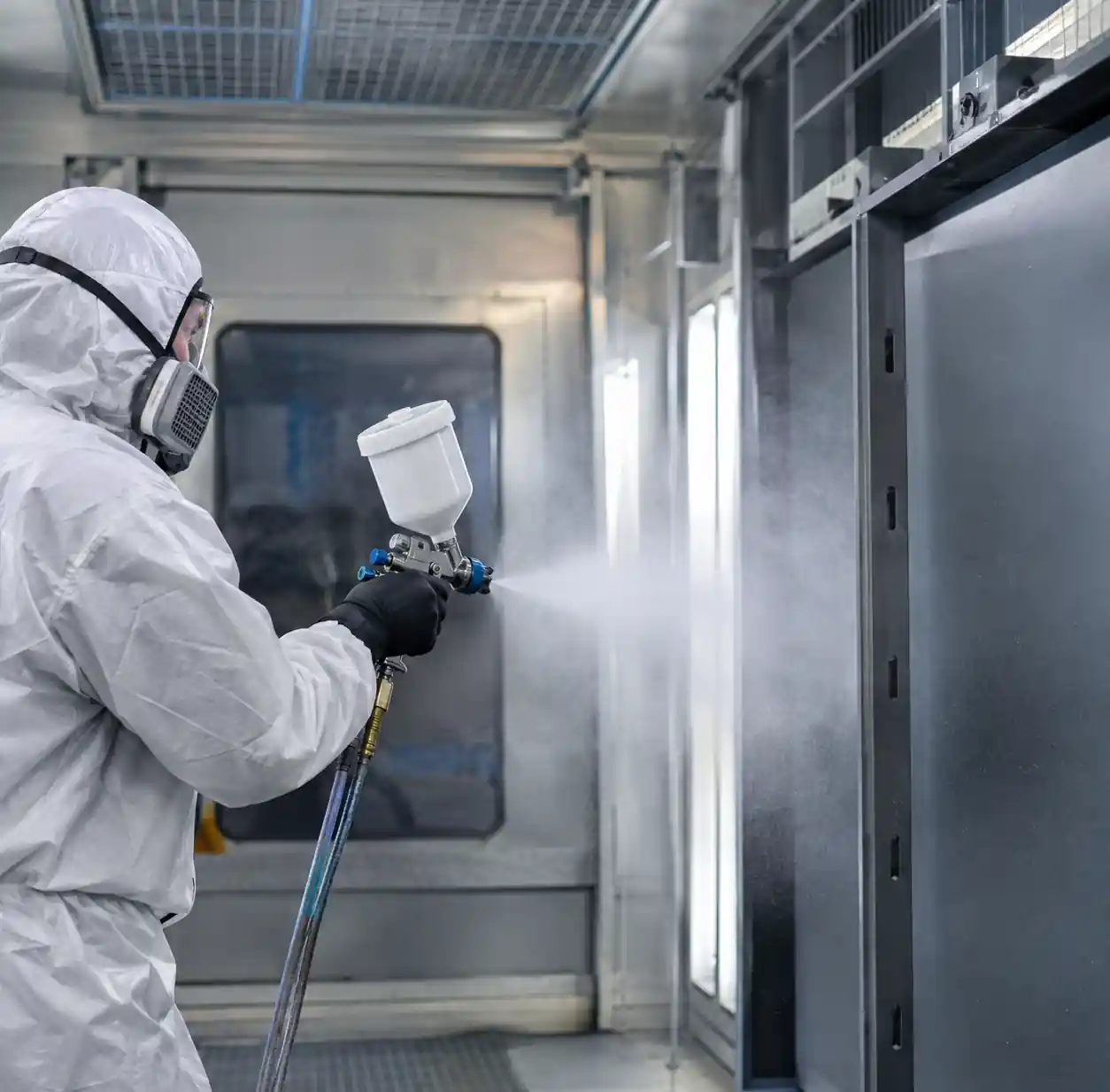
Overspray occurs when atomized paint particles miss the target surface and become airborne waste. In industrial settings, overspray rates can reach 30-50% with conventional spray systems, meaning nearly half your coating material never reaches the product.
 Paint overspray waste in industrial coating environment
The financial impact extends beyond wasted paint. Overspray creates hazardous environments requiring respirators and protective equipment, increases ventilation costs, and demands extensive booth cleaning. In automotive refinishing, overspray on adjacent panels adds hours of preparation time. For production lines, it translates to rejected parts and rework.
Environmental regulations have made overspray management critical. VOC emissions from wasted coatings trigger compliance costs and potential fines. Understanding overspray sources helps you target improvements where they matter most.
Selecting the Right Spray Nozzle
 HVLP and conventional spray nozzle comparison
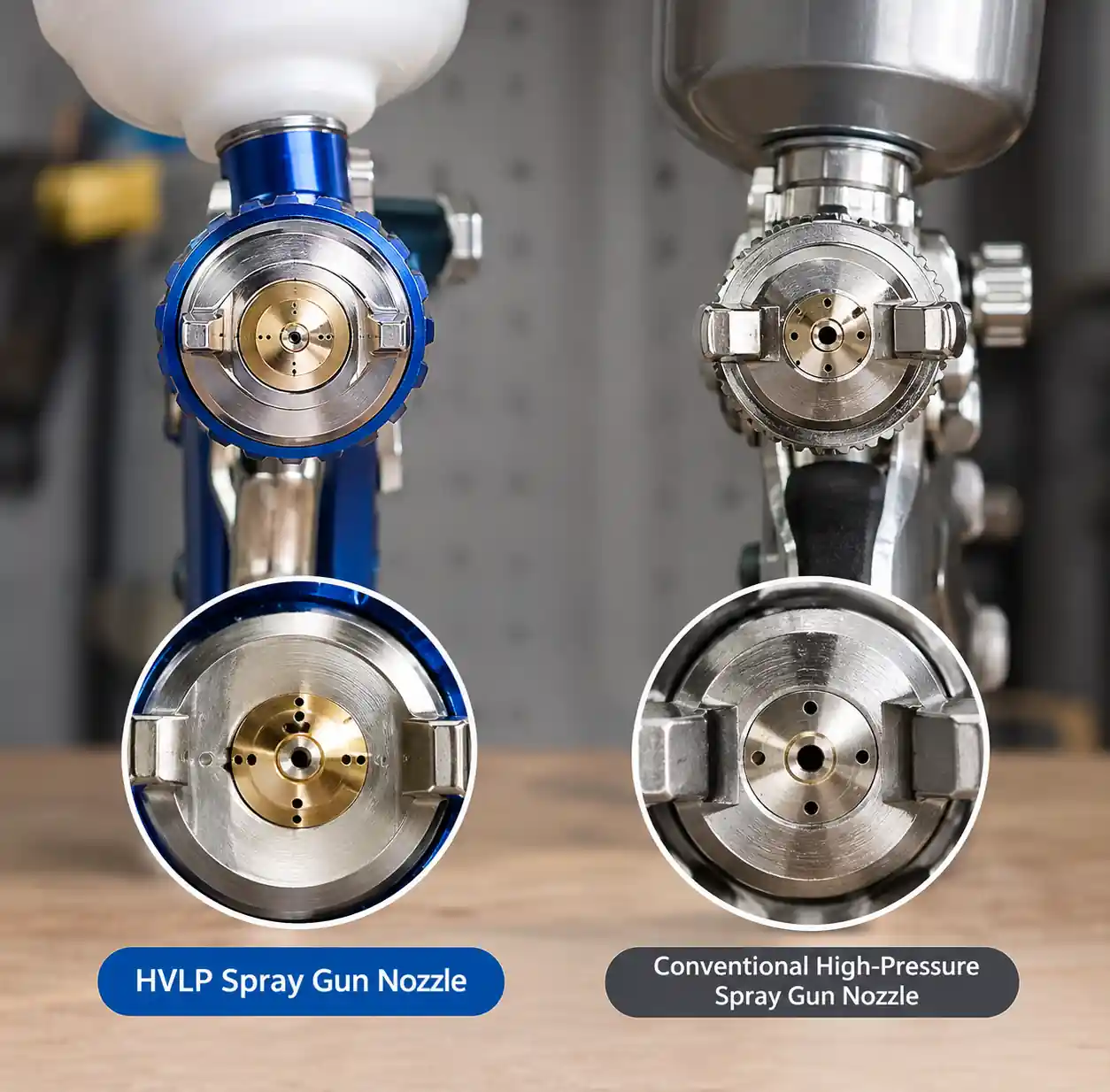
Nozzle selection fundamentally determines atomization quality and overspray levels. The wrong nozzle atomizes too finely, creating particles that drift rather than land on your target.
HVLP vs. Conventional Spray Systems
| System Type | Transfer Efficiency | Overspray Level | Best Applications |
|---|---|---|---|
| HVLP (High Volume Low Pressure) | 65-85% | Low | Automotive finishing, furniture, precision coating |
| Conventional High Pressure | 25-45% | High | Heavy industrial, fast coverage applications |
| LVLP (Low Volume Low Pressure) | 60-75% | Moderate | Small parts, detail work |
| Airless | 50-60% | Moderate | Large surfaces, protective coatings |
HVLP technology reduces overspray by atomizing paint at lower air pressure (typically 10 PSI at the cap versus 50+ PSI for conventional guns). Lower atomization energy creates larger, more controlled droplets that resist air currents and reach the target surface.
For water-based coatings, air atomizing nozzles provide superior atomization control compared to airless systems. YuechenPrecision Technology's air atomizing designs deliver consistent droplet sizes that minimize drift while maintaining excellent surface finish.
Nozzle Orifice and Fluid Tip Selection
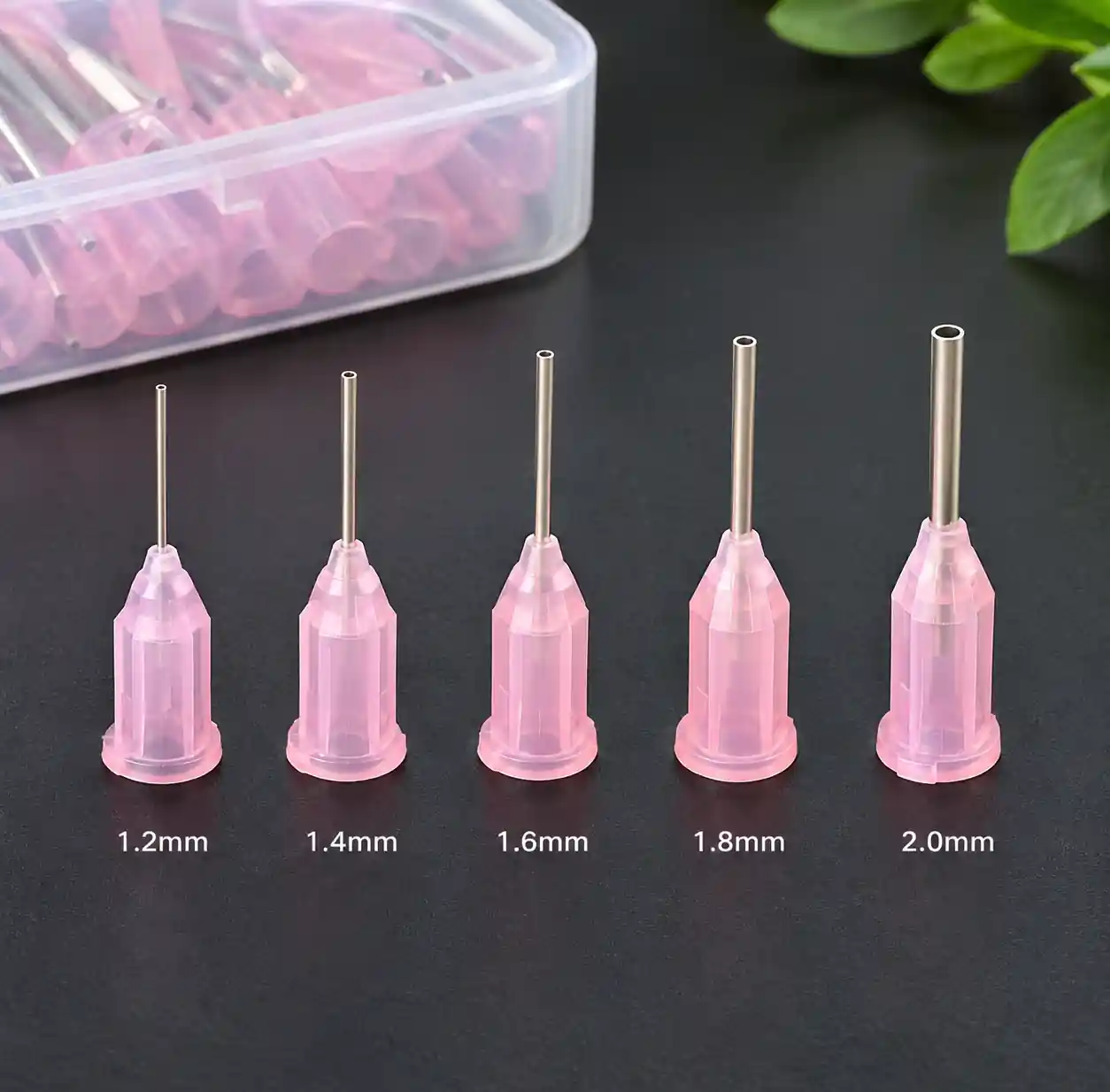
Match your fluid tip size to coating viscosity and desired flow rate. Oversized tips require excessive air pressure to atomize properly, creating fine particles prone to overspray. Undersized tips restrict flow and cause spitting.
For automotive basecoats (18-22 seconds in a #4 Ford Cup), a 1.3-1.4mm tip works well. Clearcoats need 1.2-1.3mm. Heavy primers require 1.8-2.0mm tips. Running a basecoat through a 1.8mm tip designed for primer creates massive overspray because excessive air atomizes the thinner material into mist.
 Different fluid tip sizes for automotive coating applications
Optimizing Air Pressure Settings
Air pressure controls atomization intensity. Too much pressure over-atomizes coating into fine particles that float rather than land. Too little creates large droplets that produce orange peel and runs.
Start with manufacturer recommendations, then adjust based on results. For HVLP systems, measure pressure at the air cap, not at the gun inlet or compressor. Most HVLP guns operate optimally at 8-12 PSI at the cap.
Pressure Adjustment Impact
| Air Pressure Change | Effect on Atomization | Overspray Result |
|---|---|---|
| +5 PSI above optimal | Finer particles, increased drift | 15-25% more overspray |
| Optimal range | Balanced droplet size | Minimal overspray |
| -5 PSI below optimal | Larger droplets, poor finish | Orange peel, but less waste |
Test your pressure by spraying a test panel at arm's length. If significant mist floats past the panel, reduce pressure. If you see droplets rather than smooth coating, increase slightly. The sweet spot produces a wet, even coat with minimal mist.
For production environments, install regulators at each spray station. Compressor output pressure fluctuates with demand, and without local regulation, atomization quality varies throughout the day.
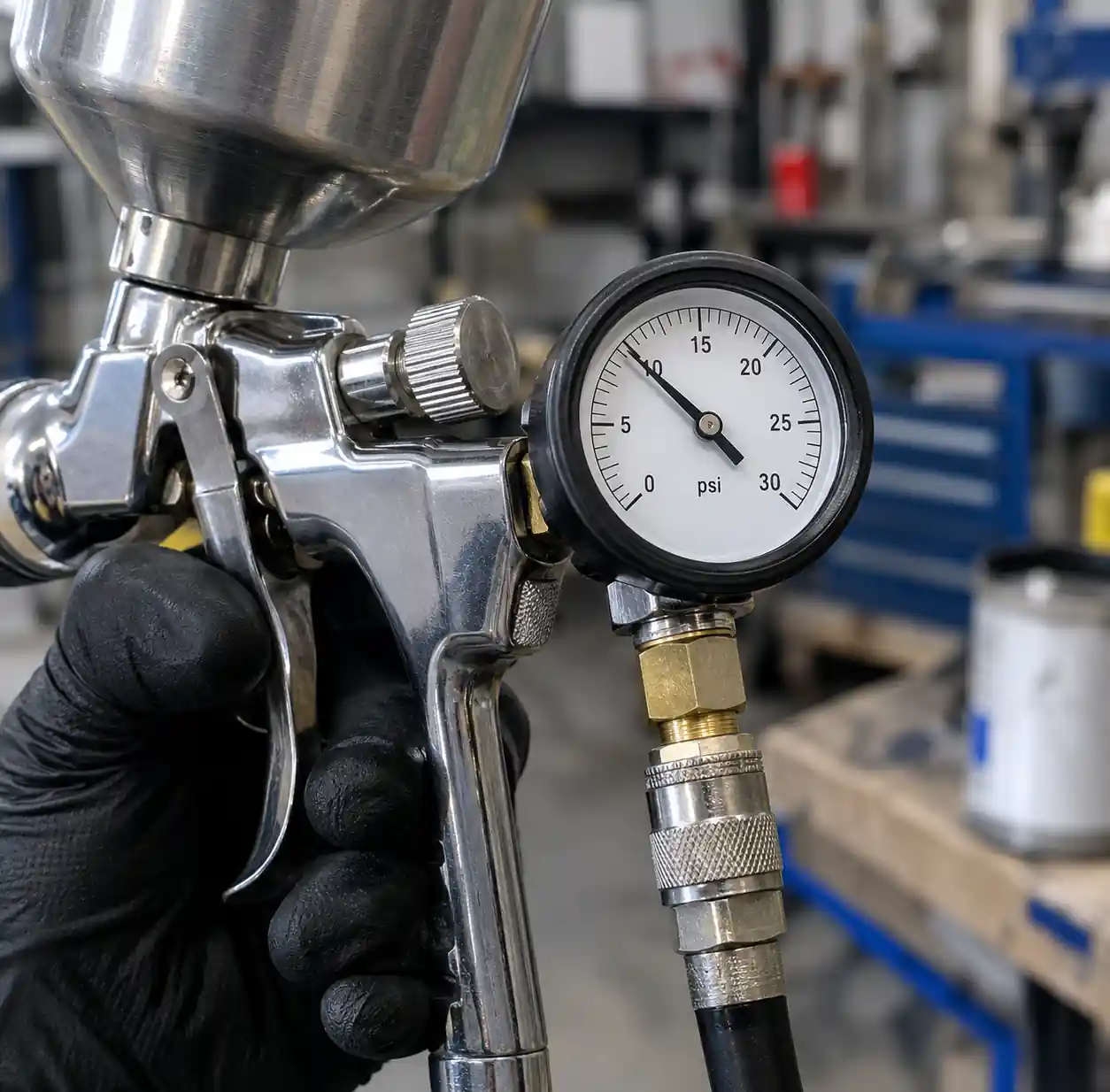 Air pressure gauge on spray gun showing optimal PSI
Mastering Spray Distance and Angle
Spray distance determines how long atomized particles travel through air before reaching the surface. Longer travel time means more opportunity for drift, especially in ventilated environments.
The optimal distance for most HVLP systems is 6-8 inches from the surface. Conventional guns work best at 8-12 inches. Closer than optimal risks runs and solvent entrapment. Farther creates dry spray and excessive overspray.
Maintaining Perpendicular Angle
Keep your spray gun at 90 degrees to the surface. Angling the gun causes uneven coating distribution and forces paint at surface edges where it deflects into overspray. When spraying contoured parts, move your entire arm and body to maintain perpendicular orientation rather than tilting your wrist.
On complex geometries like automotive door jambs, break the surface into sections and reposition yourself for each area. It takes longer than sweeping an angled gun, but paint consumption drops significantly.
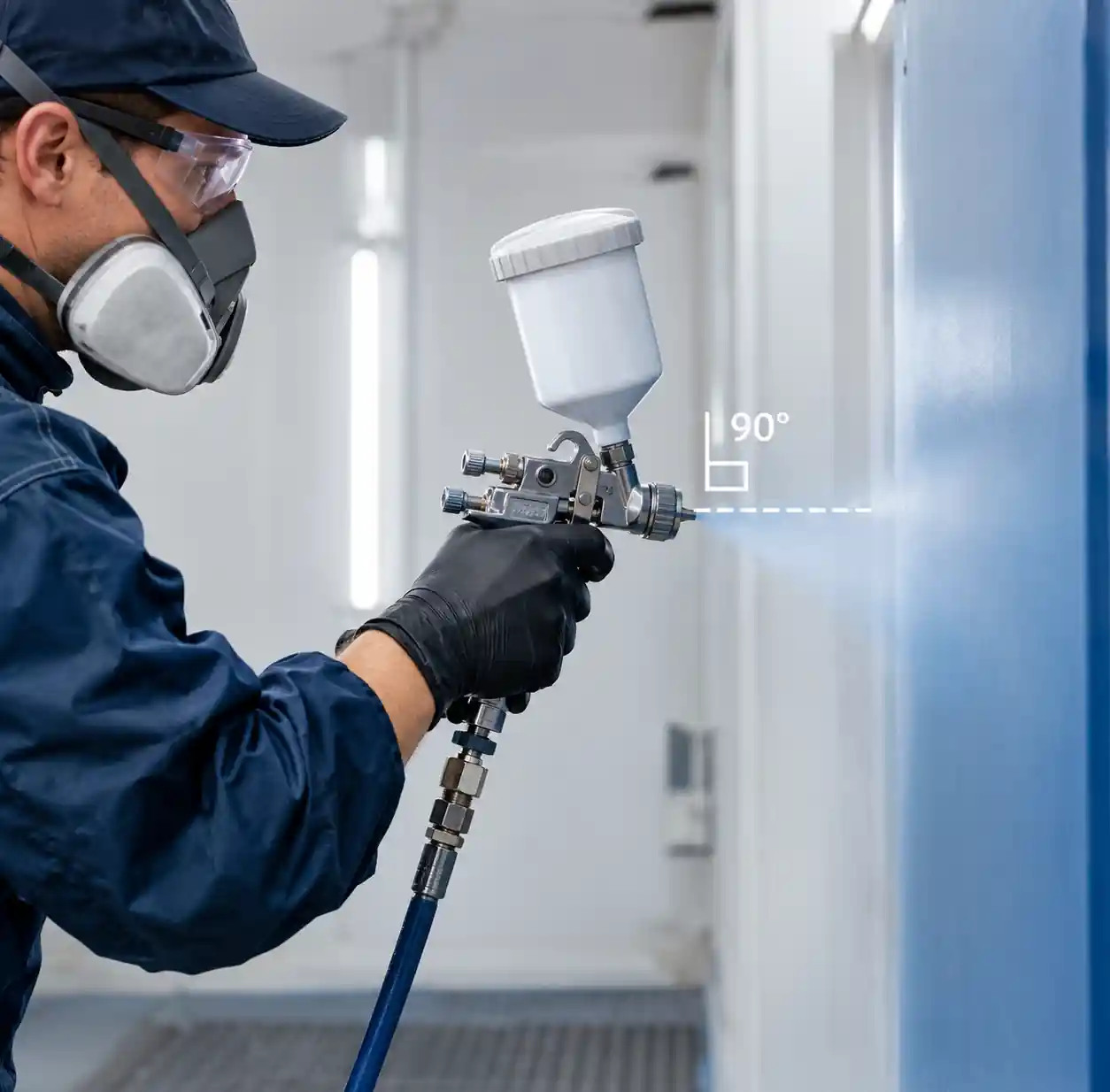 Proper 90-degree spray gun angle technique demonstration
Controlling Spray Pattern for Precision
Pattern width and shape should match your workpiece geometry. Wide patterns cover faster but create overspray at part edges. Narrow patterns concentrate coating and reduce waste on small parts.
Most spray guns offer adjustable pattern width via a needle or control knob. For an 18-inch-wide panel, set your pattern to 8-10 inches and overlap passes by 50%. This provides even coating while keeping the pattern well within part boundaries.
Overlap Technique
Each spray pass should overlap the previous by 50% to ensure even coating thickness. Less overlap creates striping and forces recoating, which doubles overspray. More overlap wastes coating by applying excessive thickness.
Consistent travel speed matters as much as pattern width. Moving faster on one pass and slower on the next creates thin and thick areas that require correction. Practice maintaining steady motion—roughly one step per second for most production spraying.
For small parts, reduce pattern width to 4-6 inches. The narrower pattern prevents paint from extending past part edges into the booth atmosphere. On assemblies with multiple small components, consider using hollow cone nozzles that concentrate spray toward the center of the pattern, reducing edge waste.
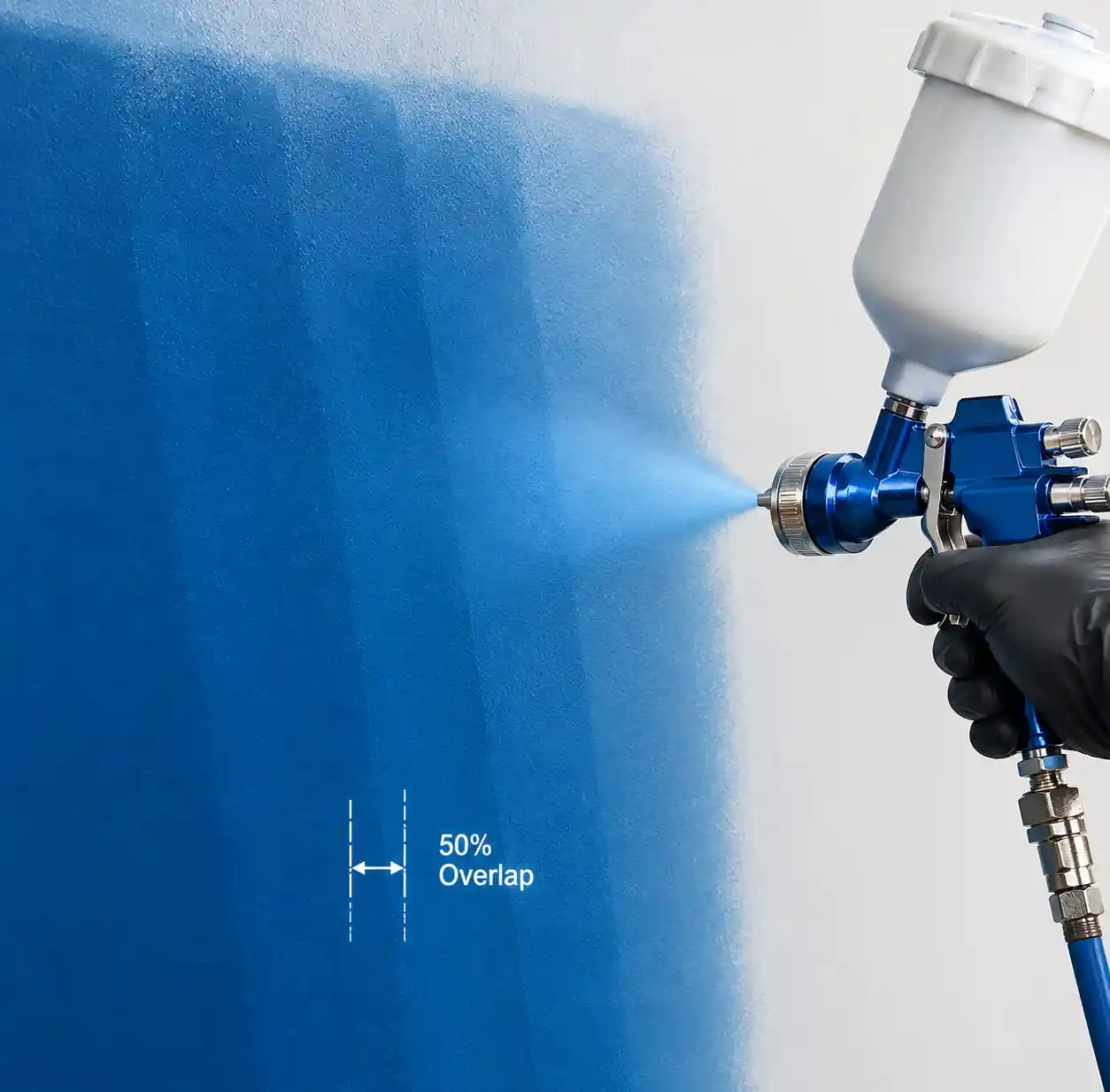 Spray pattern overlap technique for even coating
Spray Booth Design and Ventilation
Even perfect technique produces overspray if your booth creates turbulent airflow. Booth design determines whether overspray particles travel predictably to filters or swirl around creating coating defects and waste.
Cross-Draft vs. Downdraft Booth Performance
Cross-draft booths pull air horizontally across the workspace. They cost less to install but create problems for overspray control. Air current carries fine particles across your work surface, depositing them on already-coated areas. The horizontal flow also means you're spraying into the airstream on half your passes and with it on the other half, creating inconsistent results.
Downdraft booths pull air downward through floor grates. Airflow moves from ceiling to floor, carrying overspray straight down and away from the work surface. This laminar flow pattern reduces overspray circulation and produces cleaner finishes. The downside is higher installation cost and increased energy consumption.
Ventilation Rate Optimization
More airflow isn't always better. Excessive ventilation creates strong air currents that pull atomized particles away from your target before they can land. Most automotive spray booths operate at 100 feet per minute face velocity—enough to capture overspray without creating disruptive air movement.
Measure your booth's air velocity with an anemometer at painter working height. Velocities above 150 FPM start affecting HVLP spray patterns. Below 75 FPM allows overspray to linger and settle on fresh coating.
Balance ventilation with filter maintenance. Clogged filters increase resistance, reducing actual airflow despite constant fan speed. This creates back-pressure that disturbs spray patterns. Replace filters when resistance increases 20% above baseline.
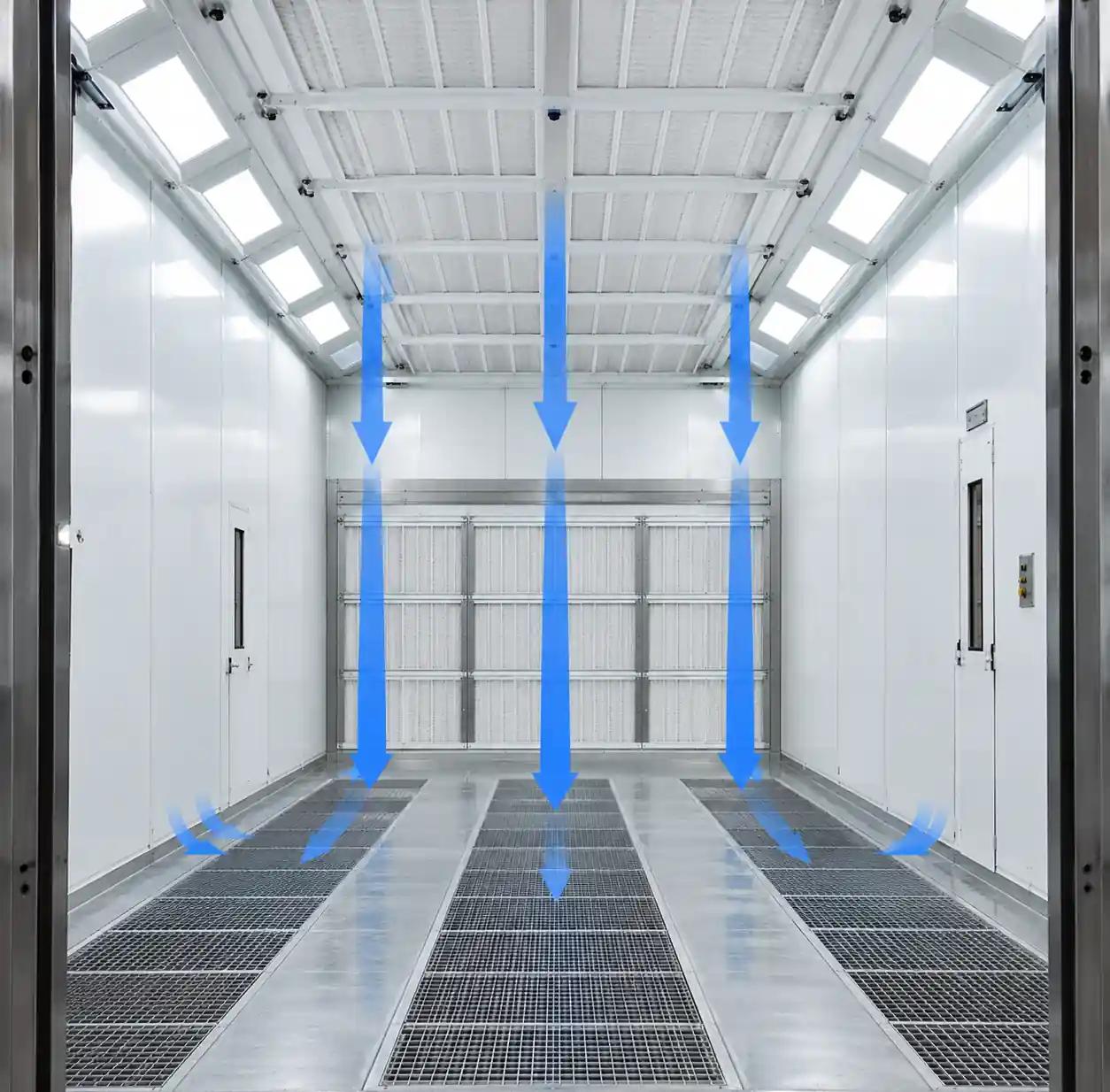 Downdraft spray booth ventilation system design
Quantifying Cost Savings from Reduced Overspray
Overspray reduction delivers measurable financial returns. Calculate your current waste rate by weighing paint used versus theoretical coverage based on film thickness and surface area. The difference represents overspray and other losses.
Example Cost Analysis
A mid-size automotive refinish shop spraying 40 gallons of basecoat monthly at $85/gallon with 45% overspray (conventional gun) spends $1,530 monthly on wasted coating. Switching to HVLP at 20% overspray reduces waste to $680 monthly—an $850/month savings or $10,200 annually.
The calculation: 40 gallons × $85 = $3,400 monthly coating cost. At 45% overspray, waste is $1,530. At 20% overspray, waste is $680. Savings: $850/month.
Add labor savings from reduced booth cleaning, fewer rejected parts, and faster cycle times. Many shops see 18-24 month payback on HVLP equipment from coating savings alone.
Transfer Efficiency Monitoring
Track transfer efficiency monthly by comparing actual coverage to theoretical. Declining efficiency signals technique drift or equipment issues. In production environments, install paint flow meters to monitor consumption per part automatically.
For full cone nozzles in industrial washing and coating prep systems, optimizing spray parameters reduces both overspray and the coating material needed for subsequent operations.
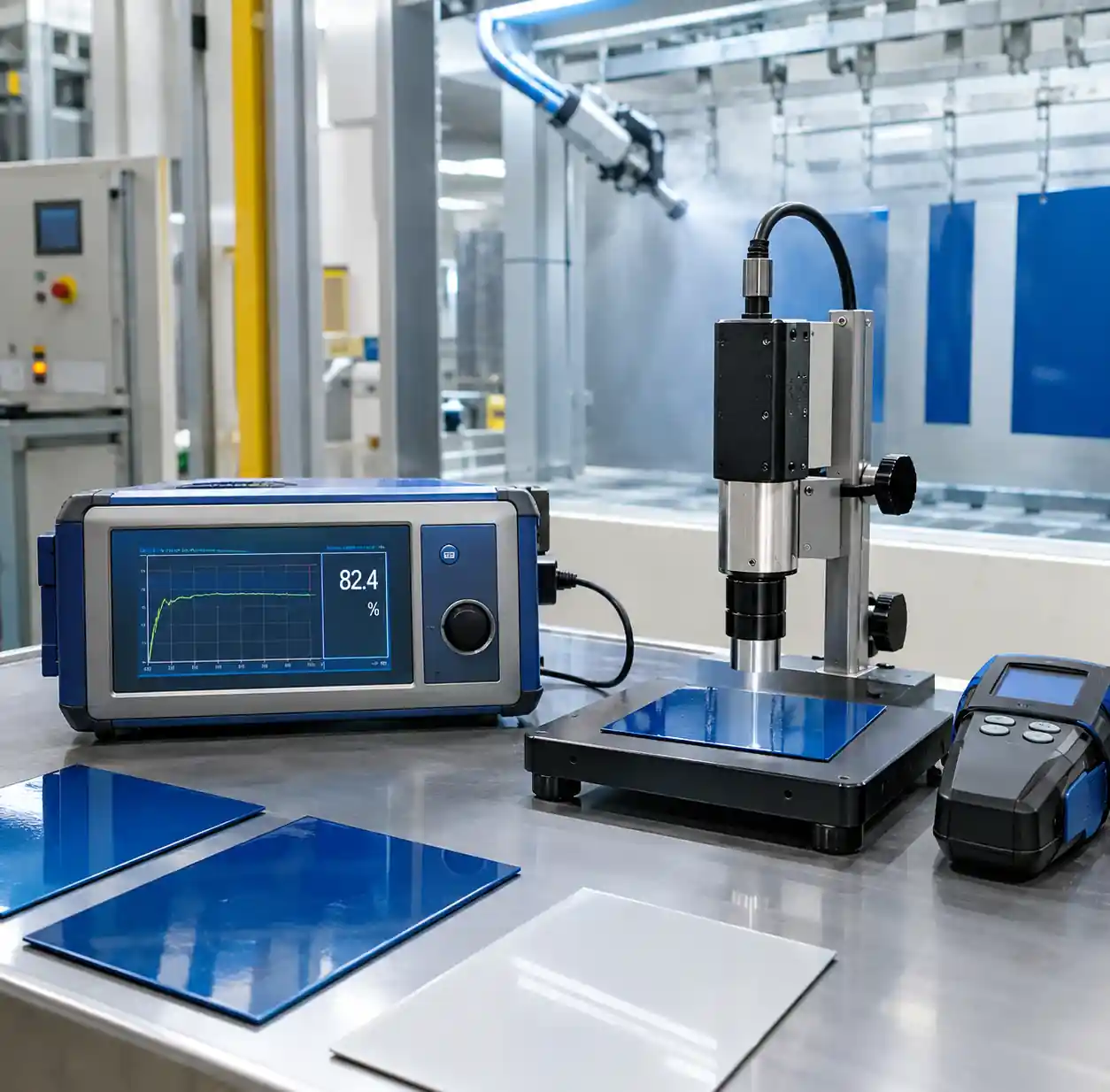 Transfer efficiency measurement and monitoring equipment
FAQ
What causes excessive overspray in paint spraying?
Excessive overspray results from high air pressure over-atomizing paint into fine particles, incorrect nozzle selection creating mist, spraying too far from the surface, poor booth ventilation causing turbulence, and using conventional high-pressure guns instead of HVLP technology. Each factor compounds the others—fixing just one provides limited improvement.
How much can HVLP systems reduce overspray compared to conventional guns?
HVLP systems typically achieve 65-85% transfer efficiency versus 25-45% for conventional high-pressure guns. In practical terms, this means reducing overspray from 50-60% of coating material to 15-25%. For a shop using $4,000 monthly in coating materials, switching to HVLP can save $1,200-1,800 monthly in reduced waste.
What is the optimal spray distance for reducing overspray?
HVLP systems work best at 6-8 inches from the target surface. Conventional guns need 8-12 inches. Spraying closer risks runs and solvent entrapment, while spraying farther gives atomized particles more time to drift. Measure from the air cap to the surface and maintain consistent distance throughout each pass.
Does lowering air pressure always reduce overspray?
Lowering air pressure reduces overspray only to a point. Too little pressure creates large droplets that produce poor finish quality, forcing you to respray and ultimately creating more waste. Find the minimum pressure that produces acceptable atomization for your specific coating viscosity and nozzle setup—usually 8-12 PSI at the cap for HVLP systems.
How does spray booth ventilation affect overspray levels?
Proper ventilation removes overspray particles from the booth atmosphere without creating disruptive air currents. Too little ventilation lets particles linger and settle on fresh coating. Too much ventilation creates turbulence that pulls atomized paint away from your target. Aim for 100 feet per minute face velocity in automotive refinishing applications.
Can nozzle design reduce overspray in industrial coating applications?
Yes, specialized nozzle designs significantly reduce overspray in industrial settings. Flat fan nozzles concentrate spray in a defined pattern that minimizes edge waste on flat surfaces. Air atomizing nozzles from YuechenPrecision Technology provide precise droplet size control that reduces drift while maintaining coating quality across various viscosities and flow rates.
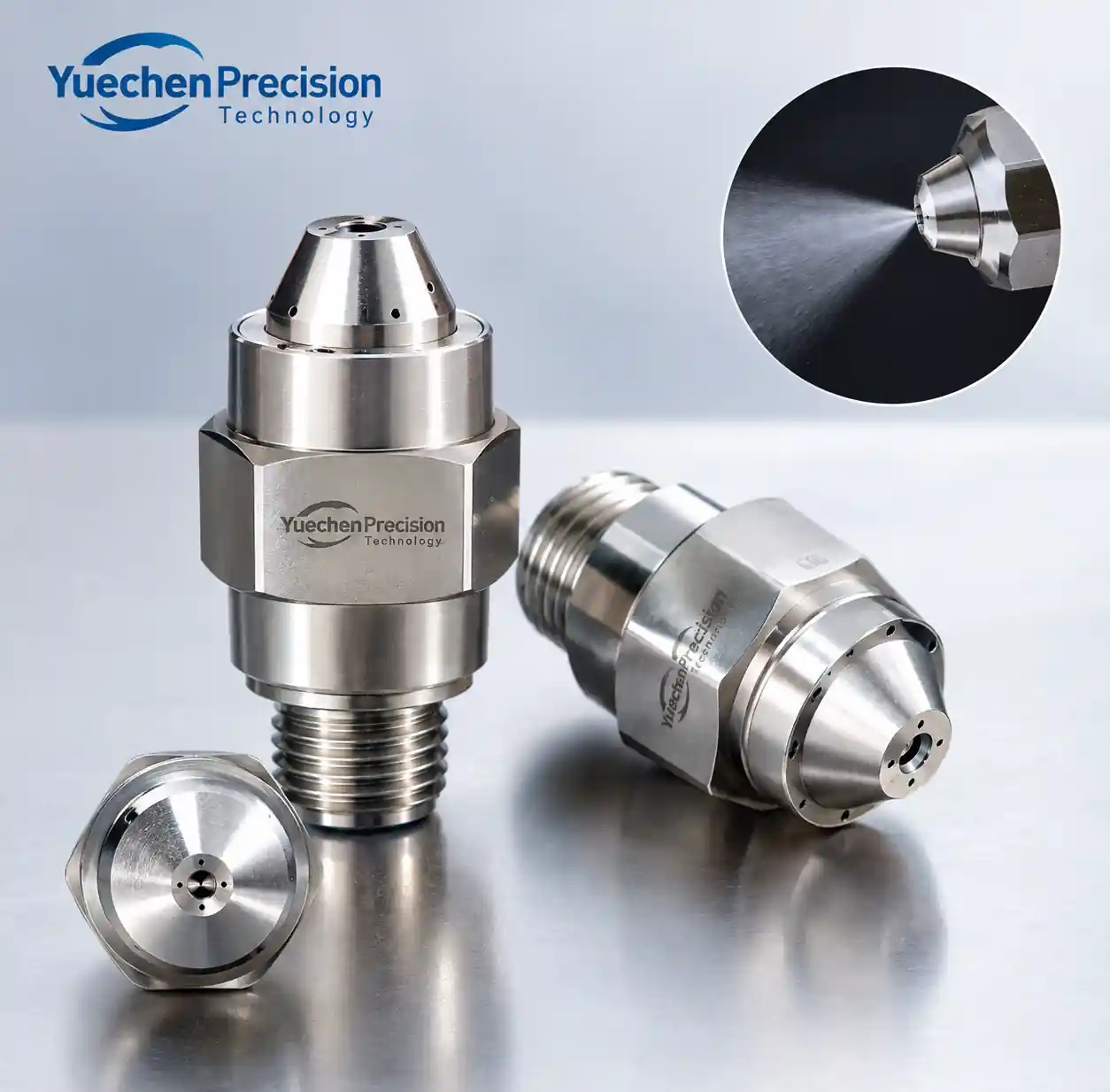 YuechenPrecision Technology industrial air atomizing spray nozzles
Conclusion
Reducing overspray requires attention to equipment selection, technique, and environment. Start with HVLP technology or properly sized air atomizing nozzles to achieve higher transfer efficiency. Optimize air pressure for your specific coating—enough for smooth atomization but no more. Maintain 6-8 inches spray distance and strict 90-degree angle to the surface.
Control your spray pattern width to match part geometry, and overlap passes by exactly 50%. Ensure your booth provides laminar airflow at 100 FPM to capture overspray without disrupting spray patterns. These improvements typically reduce overspray from 40-50% to 15-25%, delivering substantial cost savings.
Track your transfer efficiency monthly to identify technique drift or equipment degradation. Small changes compound over time—a 10% efficiency improvement in a shop using $50,000 annually in coatings saves $5,000 per year. The practices outlined here work across applications from automotive refinishing to industrial production coating.
Start with one improvement and measure the result before adding others. This approach identifies which changes deliver the most value in your specific operation.