



Oil Burner Nozzles: Selection Guide for Heating Systems
Heating system efficiency depends critically on proper oil burner nozzle selection, with studies showing that worn or incorrectly specified nozzles can increase fuel consumption by 15-25% while producing incomplete combustion, soot buildup, and elevated emissions. The nozzle atomizes heating oil into fine droplets that mix with air for efficient combustion, directly affecting burner performance and operating costs.
If you want to select the right oil burner nozzle for maximum heating efficiency and fuel economy, then you will need to understand flow rate specifications, spray angle selection, spray pattern types, and replacement schedules that ensure optimal combustion performance.
Table of Contents
- 1. What Is an Oil Burner Nozzle?
- 2. Flow Rate Specifications and GPH Ratings
- 3. Spray Angle Selection for Combustion Chamber Match
- 4. Spray Pattern Types and Applications
- 5. Atomization Quality and Fuel Efficiency
- 6. Fuel Efficiency and Combustion Performance
- 7. Nozzle Replacement Schedule and Maintenance
- 8. Selecting the Correct Nozzle Specifications
- 9. Common Nozzle Problems and Solutions
- 10. FAQ
- 10.1. What size oil burner nozzle do I need?
- 10.2. How often should oil burner nozzles be replaced?
- 10.3. What spray angle should I use?
- 10.4. What is the difference between solid cone and hollow cone nozzles?
- 10.5. Can I use a higher GPH nozzle to get more heat?
- 10.6. Why is my oil burner smoking after nozzle replacement?
- 10.7. What causes oil burner nozzles to clog?
- 11. Conclusion
What Is an Oil Burner Nozzle?
An oil burner nozzle is a precision-engineered spray device that atomizes liquid heating oil into fine droplets under high pressure, typically 100 PSI (6.9 bar), to create an oil mist that ignites and burns efficiently in the combustion chamber.
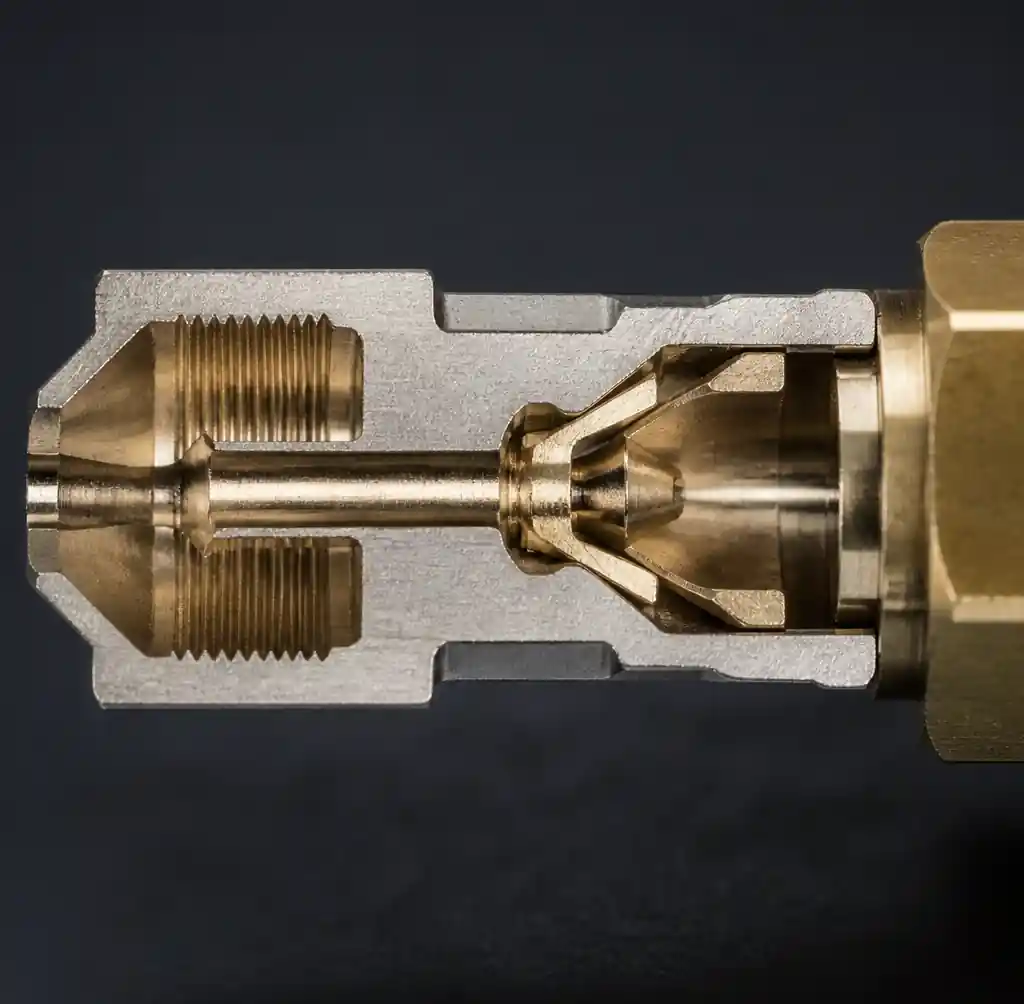 Oil burner nozzle component cross-section showing orifice and swirl chamber
Oil burner nozzles consist of a precision-machined orifice that meters fuel flow, a swirl chamber that imparts rotational motion to the oil, and a distributor that shapes the spray pattern. These elements determine spray angle, droplet size, and atomization quality—factors that directly affect combustion efficiency, flame shape, and heat transfer.
You can use oil burner nozzles in residential furnaces, commercial boilers, industrial heating systems, and applications requiring efficient combustion of No. 2 heating oil, diesel fuel, or kerosene.
Flow Rate Specifications and GPH Ratings
Oil burner nozzles are rated by flow capacity in gallons per hour (GPH) at 100 PSI. Flow rate must match your burner's heat output and building heating load.
| Nozzle Flow Rate | BTU Output (approx.) | Typical Application |
|---|---|---|
| 0.50 - 0.85 GPH | 70,000 - 119,000 BTU/hr | Small residential furnaces |
| 0.85 - 1.50 GPH | 119,000 - 210,000 BTU/hr | Standard residential homes |
| 1.50 - 3.00 GPH | 210,000 - 420,000 BTU/hr | Large homes, commercial |
| 3.00 - 8.00 GPH | 420,000 - 1,120,000 BTU/hr | Commercial boilers, industrial |
Flow rate determines heat output at approximately 140,000 BTU per gallon. A 1.00 GPH nozzle produces roughly 140,000 BTU/hr. Residential burners typically use 0.50 to 3.00 GPH nozzles.
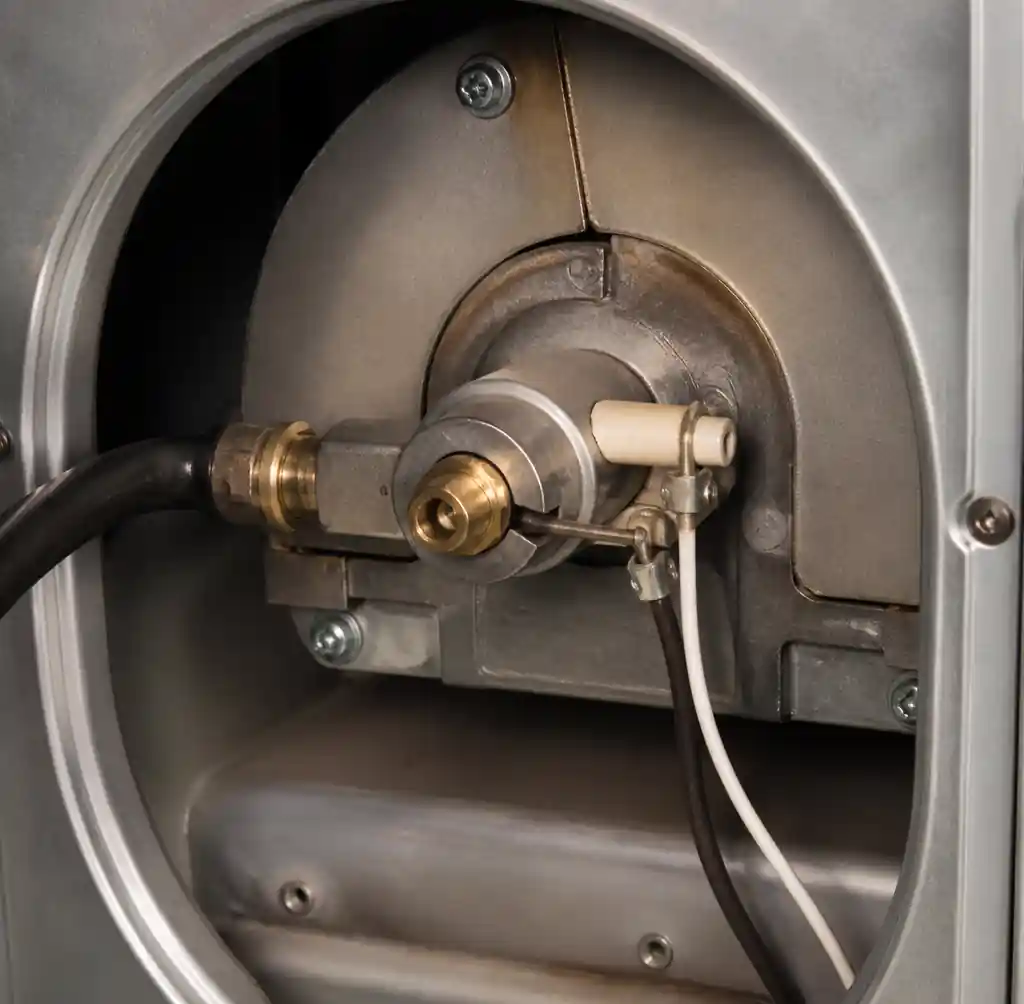 Residential oil burner nozzle installed in burner assembly
Verify correct nozzle flow rate from your burner's rating plate. Incorrect flow rates cause incomplete combustion, sooting, or excessive fuel consumption. Even a 0.10 GPH difference significantly impacts efficiency and safety.
Spray Angle Selection for Combustion Chamber Match
Spray angle refers to the cone-shaped pattern the nozzle creates, measured in degrees. Proper spray angle ensures the flame fills the combustion chamber without impinging on walls or causing incomplete combustion.
Narrow Angles (30° - 45°): Used in deep, narrow chambers. Concentrated spray creates a long, narrow flame. Specify when chamber depth exceeds width by 2:1 or greater.
Medium Angles (60° - 70°): Most common for residential burners. Produce balanced flame shapes for standard chambers with equal depth and width.
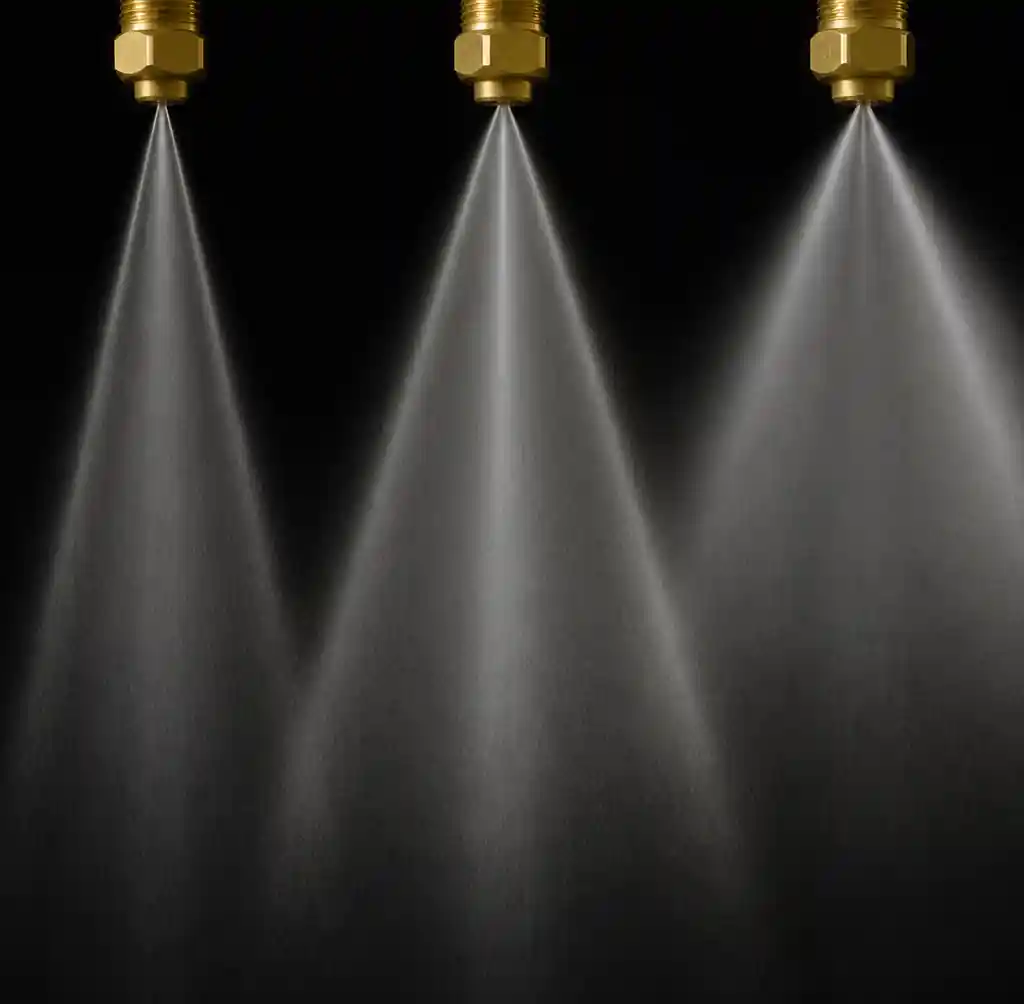 Oil burner nozzle spray patterns showing 45, 60, and 80-degree angles
Wide Angles (80° - 90°): Designed for short, wide chambers. Create short, bushy flames for compact designs.
| Spray Angle | Flame Shape | Chamber Geometry |
|---|---|---|
| 30° - 45° | Long, narrow | Depth > 2× width |
| 60° - 70° | Balanced | Square chambers |
| 80° - 90° | Short, wide | Width > depth |
Wrong spray angles cause flame impingement (leading to soot) or insufficient heat transfer. Match spray angle to specifications on the burner rating plate.
Spray Pattern Types and Applications
Oil burner nozzles produce three distinct spray patterns for specific burner configurations.
Solid Cone (Type A): Produces uniform, filled cone with droplets throughout the spray. Creates stable flames with smooth ignition. Best for residential and light commercial applications.
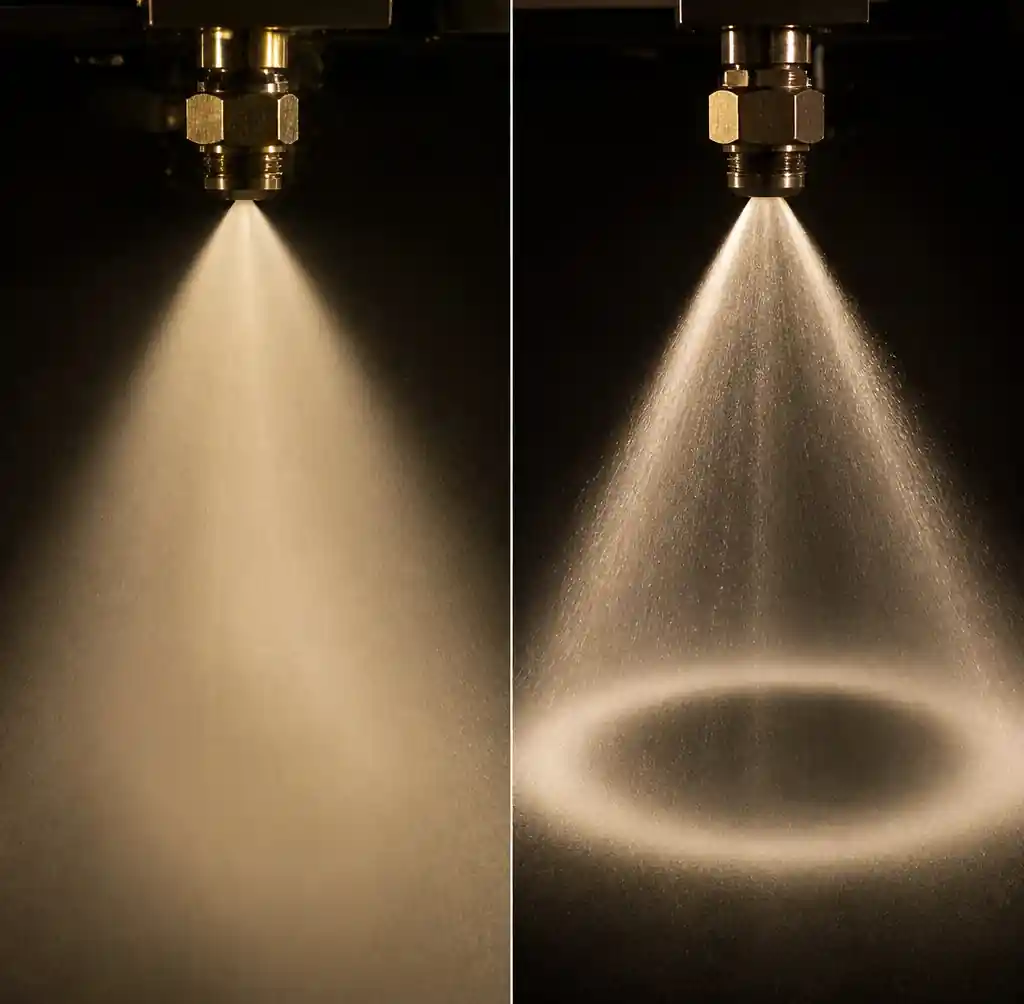 Solid cone and hollow cone oil burner nozzle spray pattern comparison
Hollow Cone (Type B): Generates spray with oil concentrated at outer edge. Allows air to flow through the center, improving air-oil mixing in burners with flow rates above 2.00 GPH.
Semi-Solid Cone (Type W): Hybrid pattern combining solid and hollow cone characteristics. Offers balanced combustion for burners with uniform air distribution.
Approximately 80% of residential burners use solid cone (Type A) nozzles. Hollow cone (Type B) nozzles are common in commercial burners above 3.00 GPH. Consult your burner manufacturer's specifications for recommended spray pattern—wrong patterns cause ignition delays or combustion inefficiency.
Atomization Quality and Fuel Efficiency
Atomization quality determines how finely the nozzle breaks heating oil into droplets, directly affecting combustion efficiency. Superior atomization produces smaller droplets (20-200 microns) with greater surface area for rapid vaporization and complete combustion.
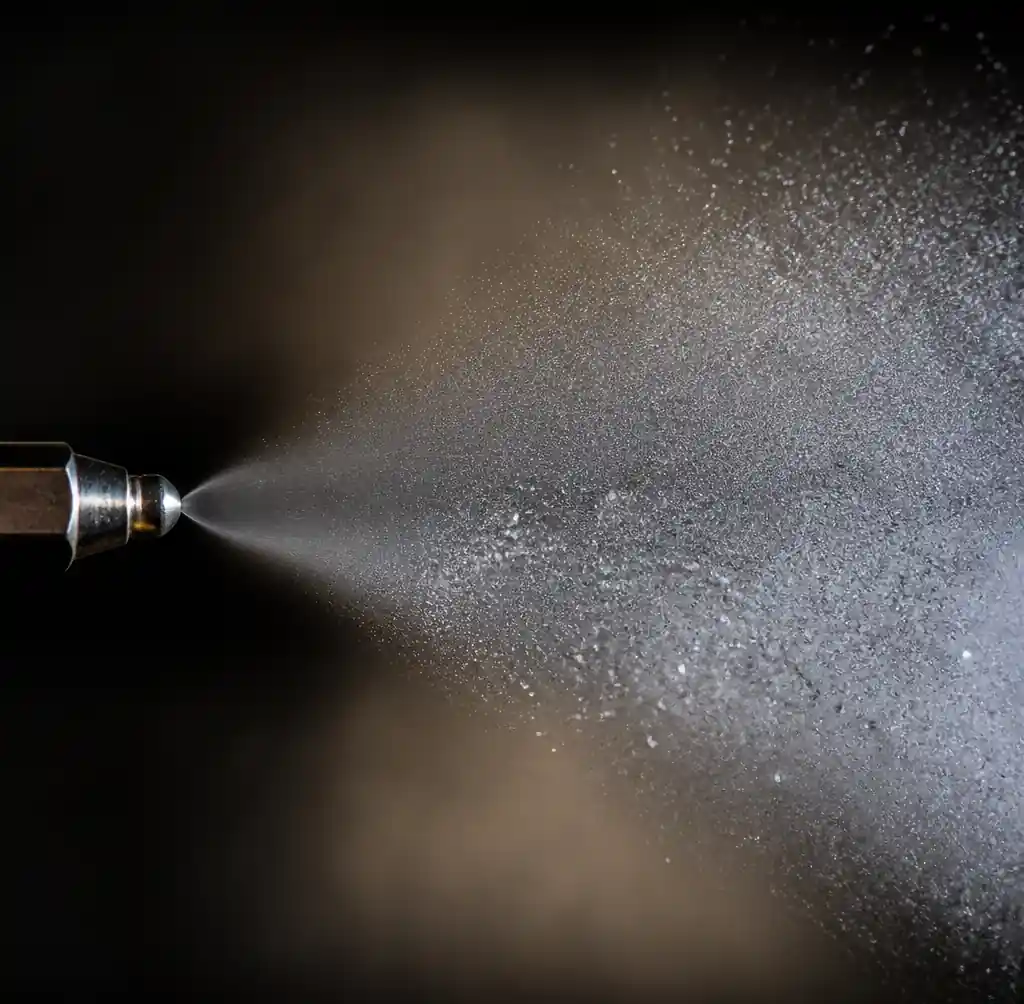 Close-up of oil burner nozzle atomization showing fine droplet formation
Operating pressure, orifice condition, and nozzle wear influence atomization. Standard burners operate at 100 PSI, while commercial systems may use 140 PSI for finer atomization. After 1,200-2,000 operating hours, wear degrades atomization quality, increasing fuel consumption by 8-15%.
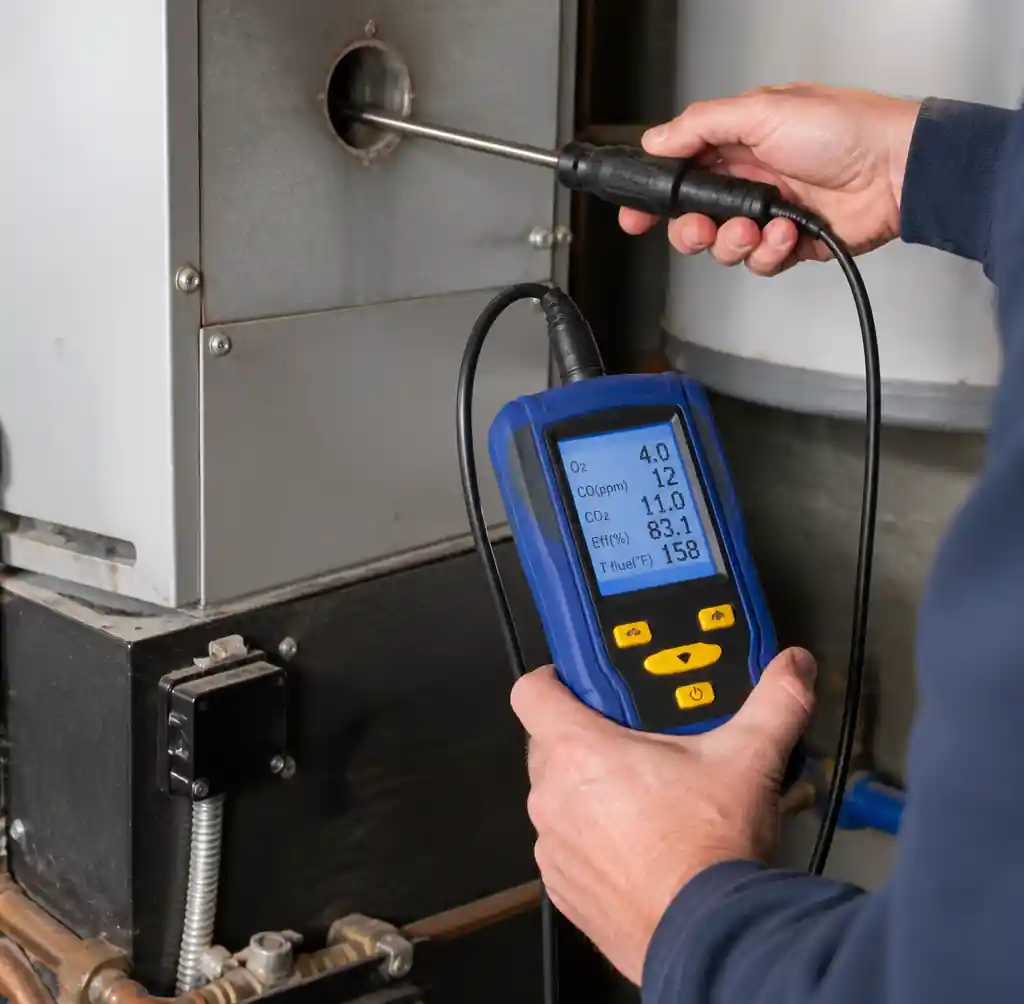 Combustion analyzer testing oil burner efficiency and emissions
Worn nozzles cost $160-370 annually in wasted fuel for typical residential systems. Well-maintained systems achieve 82-87% combustion efficiency with trace smoke and CO under 50 PPM. Systems with worn nozzles drop to 75-80% efficiency with moderate smoke and CO levels of 100-400 PPM. Annual monitoring through professional combustion testing identifies degradation requiring nozzle replacement.
Fuel Efficiency and Combustion Performance
Proper oil burner nozzle selection and maintenance directly impacts fuel efficiency, with measurable effects on operating costs. A correctly specified and maintained nozzle enables complete combustion, maximizing heat output while minimizing waste.
Worn nozzles reduce combustion efficiency by 3-7%, translating to 45-105 additional gallons of fuel annually in typical residential systems using 1,500 gallons per year. At $3.50 per gallon, worn nozzles cost $160-370 annually in wasted fuel.
Efficiency degradation occurs through several mechanisms:
Enlarged Orifice: Wear increases orifice diameter, raising flow rate beyond rated capacity. Excess fuel cannot burn completely within available combustion air.
Degraded Atomization: Worn components produce larger droplets that require more time to vaporize, with some passing through without fully burning.
Pattern Distortion: Wear distorts spray patterns, creating uneven fuel distribution and localized rich or lean combustion zones.
Well-maintained systems achieve 82-87% combustion efficiency with trace smoke levels (scale 0-1) and CO under 50 PPM. Systems with worn nozzles drop to 75-80% efficiency with moderate smoke (scale 3-5) and CO levels of 100-400 PPM.
You should monitor combustion performance annually through professional testing that measures flue gas temperature, oxygen levels, smoke scale, and carbon monoxide to identify degradation requiring nozzle replacement.
Nozzle Replacement Schedule and Maintenance
Oil burner nozzles require annual replacement to maintain optimal combustion efficiency. Professionals recommend replacement during annual tune-up before the heating season.
Nozzles deteriorate after 1,200-2,000 operating hours due to erosion, carbon deposits, and thermal cycling. These factors enlarge the orifice (increasing flow by 8-15%), degrade atomization, and distort spray patterns.
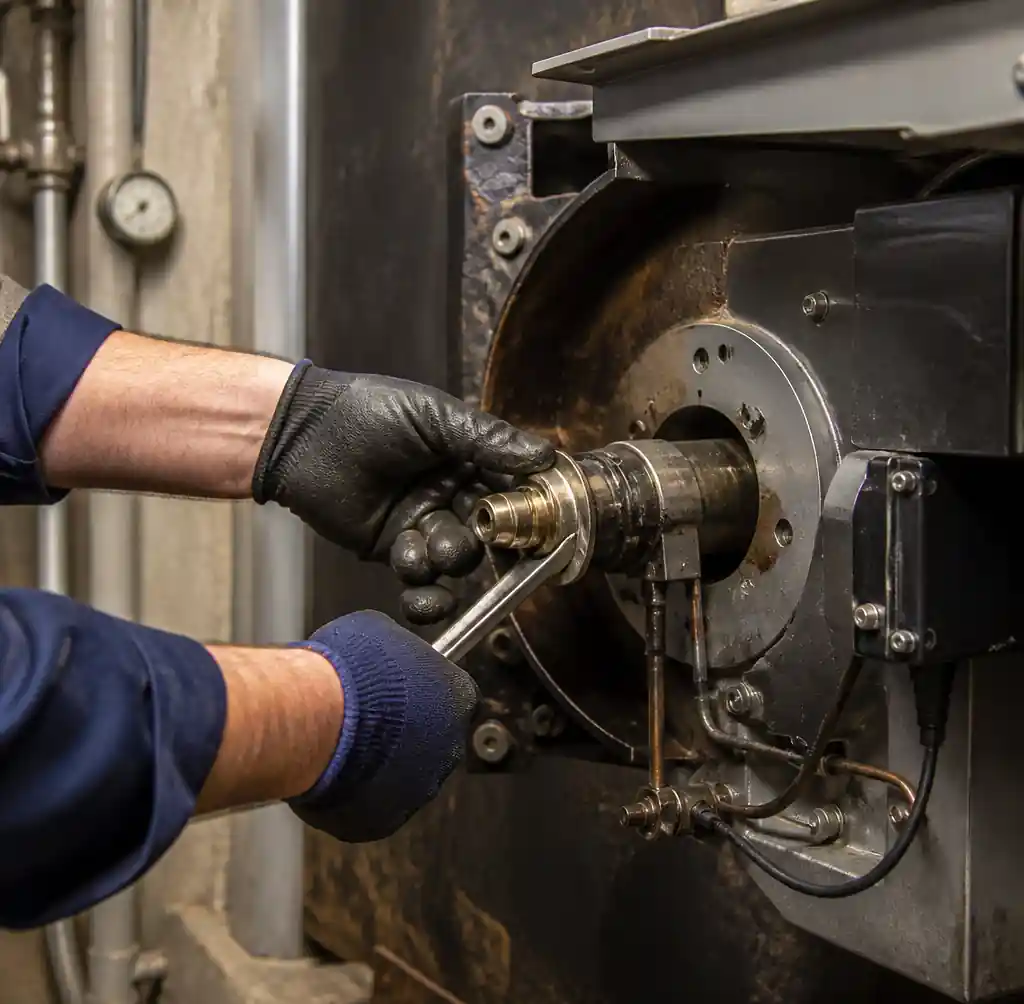 HVAC technician replacing oil burner nozzle during annual maintenance
Annual service includes installing new nozzles matching original specifications, changing fuel filters, adjusting air settings, and measuring efficiency. Service costs $150-300 annually but saves $160-370 yearly in fuel efficiency.
Replace immediately if you observe visible smoke, soot accumulation, rough ignition, increased fuel consumption, elevated CO levels, or irregular flames. Keep spare nozzles with exact specifications for rapid replacement.
Selecting the Correct Nozzle Specifications
Proper nozzle selection requires matching flow rate, spray angle, and spray pattern to your burner configuration.
Step 1: Identify Specifications: Read stamped markings on the existing nozzle, shown as "1.00 80° A" (flow rate, spray angle, pattern). If illegible, check the burner rating plate.
Step 2: Verify Burner Rating: Confirm correct nozzle specifications for your burner model from the rating plate.
Step 3: Match Chamber: Deep chambers need narrow angles (45°), square chambers use medium angles (60-70°), compact chambers require wide angles (80-90°).
Step 4: Source Quality Nozzles: Specify premium nozzles from manufacturers like Delavan, Danfoss, or Hago for precision components.
Even minor deviations from specifications impact combustion quality and safety. Maintain specification records for quick reference during service.
Common Nozzle Problems and Solutions
Oil burner nozzles fail through predictable mechanisms. Understanding common problems enables early detection and correction.
Clogged Nozzle: Debris blocks passages, restricting flow. Symptoms include flame instability or burner lockout. Replace nozzle and oil filter.
Worn Orifice: Extended service enlarges the orifice, increasing flow rate. Symptoms include increased fuel consumption, sooting, and visible smoke. Replace nozzle annually.
Carbon Buildup: Deposits accumulate on nozzle components. Symptoms include delayed ignition and reduced atomization. Replace nozzle and verify proper air settings.
Incorrect Specifications: Wrong flow rate, spray angle, or pattern causes combustion problems. Symptoms include poor efficiency or flame impingement. Verify correct specifications and install proper nozzle.
Address nozzle problems immediately. Proper combustion requires both correct nozzles and proper air adjustment working together.
FAQ
What size oil burner nozzle do I need?
Use the exact flow rate on your burner's rating plate, typically 0.50 to 3.00 GPH for residential systems. Never substitute a different size—even 0.10 GPH difference affects combustion. Check the nozzle stamp or burner documentation.
How often should oil burner nozzles be replaced?
Replace nozzles annually during professional tune-up before heating season. After 1,200-2,000 hours, wear degrades atomization and increases fuel consumption by 8-15%.
What spray angle should I use?
Use the angle specified by your manufacturer, typically 60-80° for residential systems. Match chamber geometry: 30-45° for deep chambers, 60-70° for square chambers, 80-90° for compact chambers.
What is the difference between solid cone and hollow cone nozzles?
Solid cone (Type A) produces uniform spray for most residential applications. Hollow cone (Type B) concentrates spray at edges, used in larger burners above 2.00 GPH.
Can I use a higher GPH nozzle to get more heat?
No. Oversized nozzles cause incomplete combustion, soot buildup, efficiency loss, and dangerous CO production. Upgrade the entire burner system for more heat.
Why is my oil burner smoking after nozzle replacement?
Smoking indicates incorrect spray angle or pattern, improper air adjustment, or defective nozzle. Verify correct specifications and have air properly adjusted by a professional.
What causes oil burner nozzles to clog?
Clogging results from debris including rust, sediment, water contamination, or inadequate filtration. Replace nozzle and oil filter, then inspect fuel tank. Install a 10-micron filter.
Conclusion
Oil burner nozzle selection combines precise specification matching with regular maintenance to achieve maximum heating efficiency and fuel economy. Understanding flow rate accuracy, spray angle compatibility, and spray pattern selection enables informed decisions that optimize combustion performance while minimizing operating costs.
Annual nozzle replacement during professional tune-ups delivers measurable fuel savings of $160-370 per year for typical residential systems by maintaining optimal atomization and combustion efficiency. The modest cost of yearly service pays for itself through reduced fuel consumption while extending equipment life. When selecting replacement nozzles, specify exact match to burner manufacturer requirements—even minor deviations compromise combustion system performance.
If you need high-quality oil burner nozzles for residential or commercial heating systems, YuechenPrecision Technology offers precision-engineered nozzles designed for superior atomization and fuel efficiency. Our comprehensive product range covers flow rates from 0.30 to 35 GPH with all standard spray angles and patterns.
Contact us today for expert technical support, nozzle selection guidance, and competitive pricing on premium oil burner nozzles.