



Fire Safety Solutions for Industrial Facilities in Developing Countries
Industrial fires in developing nations carry consequences beyond property damage. A 2023 factory safety study found facilities under 20,000 m² face 20% higher fire risk—particularly where building code enforcement remains inconsistent. When water infrastructure is limited, electrical supply unreliable, and skilled maintenance personnel scarce, conventional fire suppression approaches developed for Western markets often fail during emergencies.
For facility managers in Africa and Southeast Asia, fire protection means engineering systems that function reliably within local constraints while meeting insurance requirements.
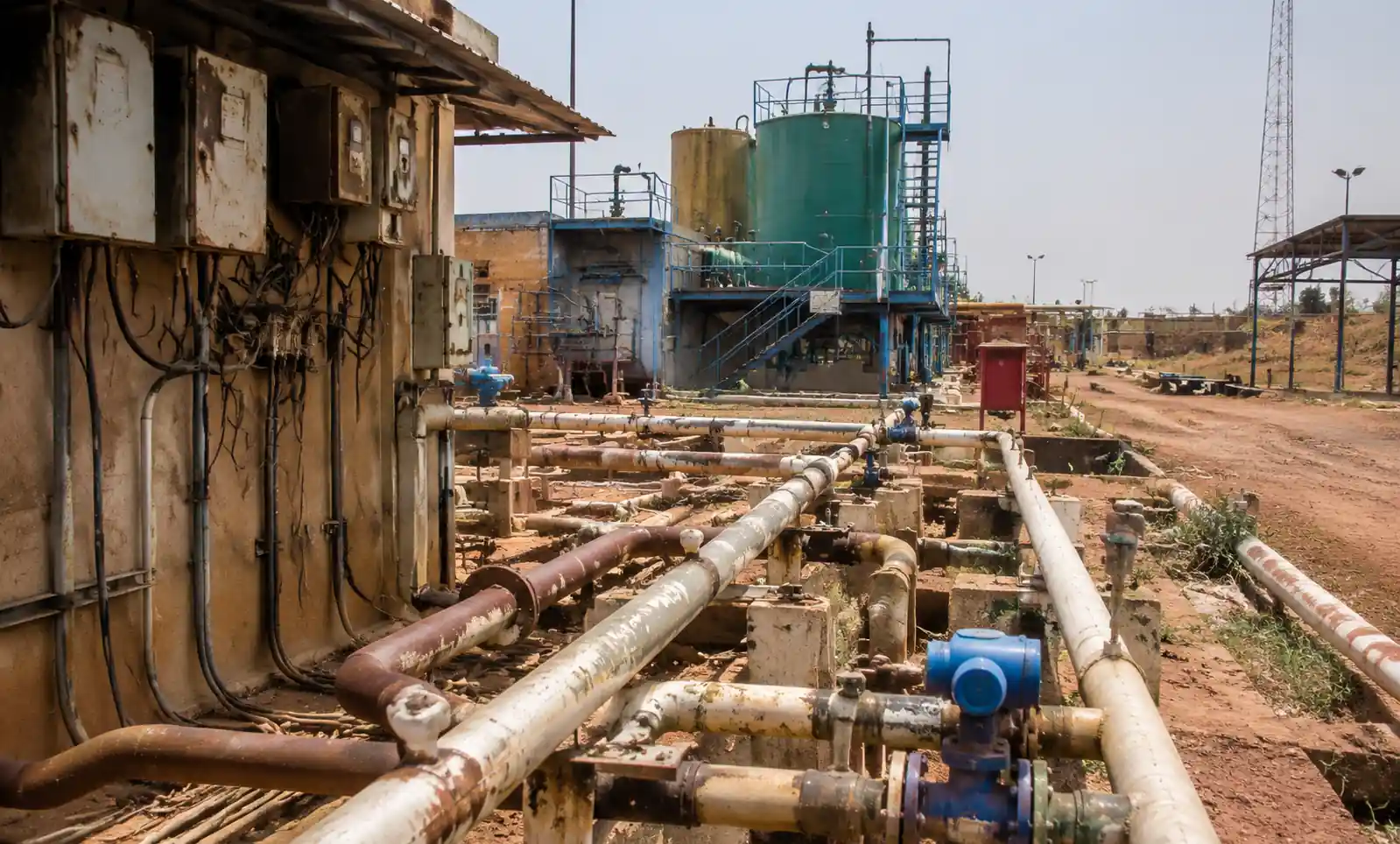 Industrial manufacturing facility in developing region showing infrastructure challenges for fire safety
Table of Contents
- 1. Constraints Industrial Fire Systems Must Overcome
- 2. Water Mist Technology: The Resource-Efficient Alternative
- 3. Pressure Classification and Infrastructure Requirements
- 4. System Design for Intermittent Water Supply
- 5. Fire Safety by Industrial Sector
- 6. Cost Analysis: Capital vs. Operating Expenses
- 7. FAQ
- 7.1. How does water mist perform outdoors or in semi-enclosed areas?
- 7.2. Can water mist protect against electrical fires?
- 7.3. What maintenance do water mist systems require?
- 7.4. How do systems handle poor water quality?
- 7.5. What certifications should facilities verify?
- 7.6. Can water mist retrofit existing buildings?
- 8. Conclusion
Constraints Industrial Fire Systems Must Overcome
Fire protection in developing economies confronts infrastructure realities rarely seen in mature markets. Research on South Asian industrial zones identifies three critical limitations.
Water scarcity and unreliable municipal supply: Industrial parks in Sub-Saharan Africa and Southeast Asia experience water pressure below 2 bar during peak demand. Conventional sprinkler systems require 3-5 bar minimum—standards municipal infrastructure cannot meet. Storage tanks become essential, but 200-500 m³ tanks for traditional sprinklers consume capital budgets and plant floor space.
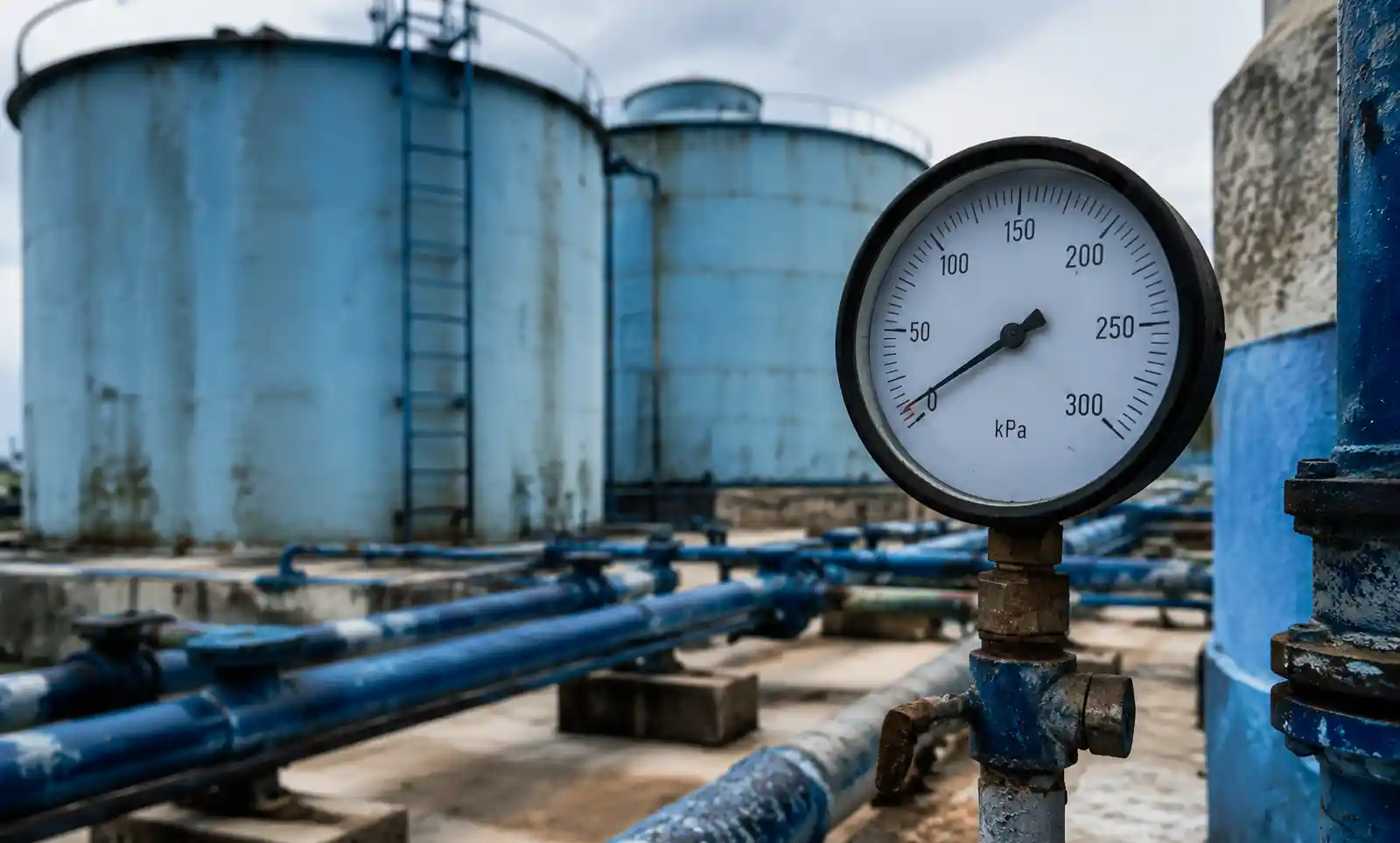 Limited water pressure infrastructure and supply system in industrial area
Power reliability: Electrical interruptions average 8-12 hours monthly. Fire pumps that cannot restart after power cycling introduce failure modes absent from systems designed for stable grids.
Skilled maintenance: Bangladesh manufacturing audits found 68% of installed systems non-functional during inspection—not from equipment failure, but lack of proper maintenance protocols.
Effective fire protection must reduce water consumption, tolerate power fluctuations, and require minimal specialized maintenance.
Water Mist Technology: The Resource-Efficient Alternative
Water mist systems atomize water into droplets below 1,000 µm diameter—one-tenth the size of conventional sprinkler drops. This delivers three critical advantages for resource-constrained installations.
90% water reduction: High-pressure water mist operates at 50-100 bar and discharges 0.8-3 liters per minute per nozzle, versus 80-150 LPM for sprinklers. For 500 m² warehouse protection, water mist requires 15-30 m³ tank capacity versus 200+ m³ for sprinklers—capital and real estate savings that make compliance economically feasible.
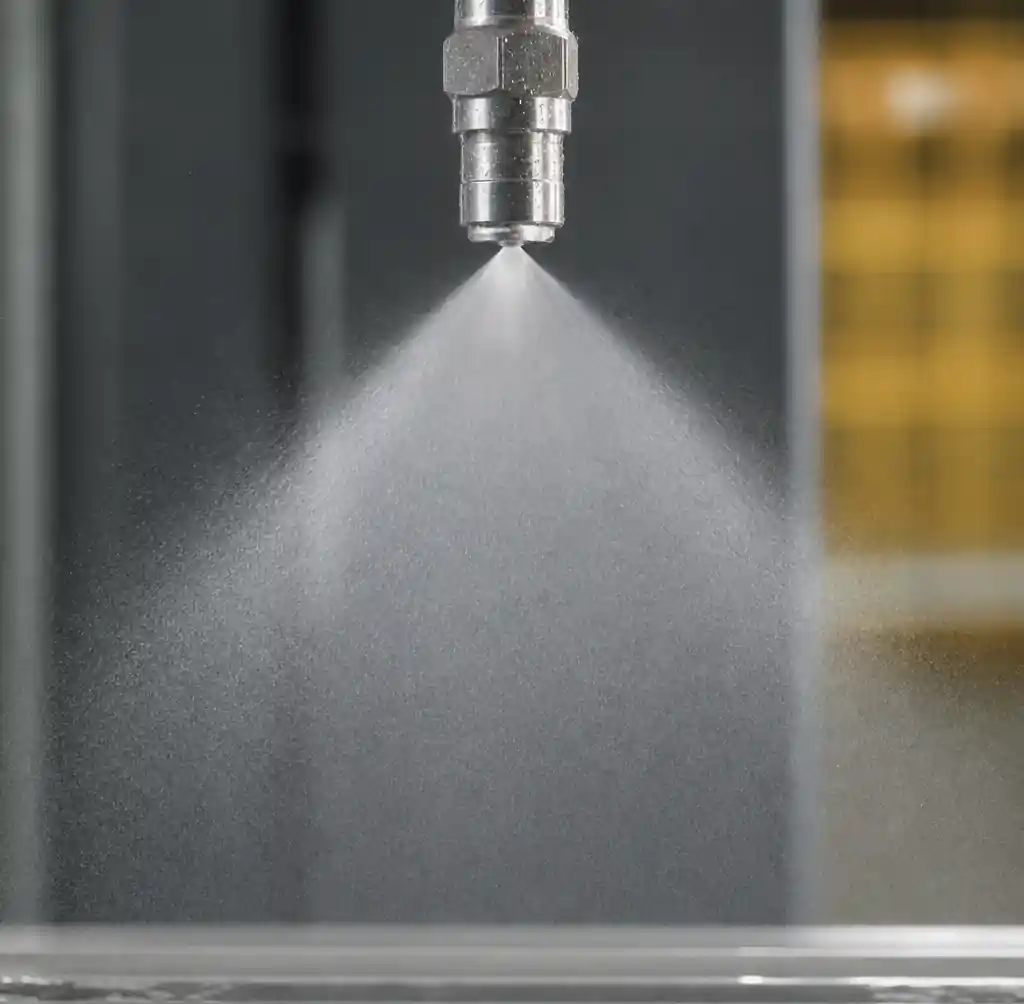 Water mist fire suppression nozzle producing ultra-fine droplets for industrial firefighting
Enhanced cooling and oxygen displacement: Fine droplets vaporize rapidly in fire plumes. Each kilogram absorbs 2,260 kJ energy through phase change. Research in Fire confirmed water mist reduces protected zone temperatures 20-45°C more effectively than conventional spray while displacing oxygen near combustion surfaces.
Reduced collateral damage: Electronics, inventory, and machinery suffer far less water damage from mist versus sprinkler discharge. For facilities with sensitive equipment, this distinction matters between controlled suppression and total loss.
YuechenPrecision Technology's Water Mist Nozzles for Firefighting feature SS316 stainless steel construction resistant to corrosive environments in chemical and food processing facilities across tropical climates.
Pressure Classification and Infrastructure Requirements
NFPA 750 defines three pressure classes, each with distinct infrastructure complexity.
| Pressure Class | Operating Pressure | Droplet Size (Dv50) | Best Application |
|---|---|---|---|
| Low Pressure | ≤ 12.1 bar (175 psi) | 400-700 µm | Residential, local application |
| Intermediate | 12.1-34.5 bar (175-500 psi) | 150-350 µm | Warehouses, manufacturing |
| High Pressure | > 34.5 bar (> 500 psi) | 30-150 µm | High-hazard machinery spaces |
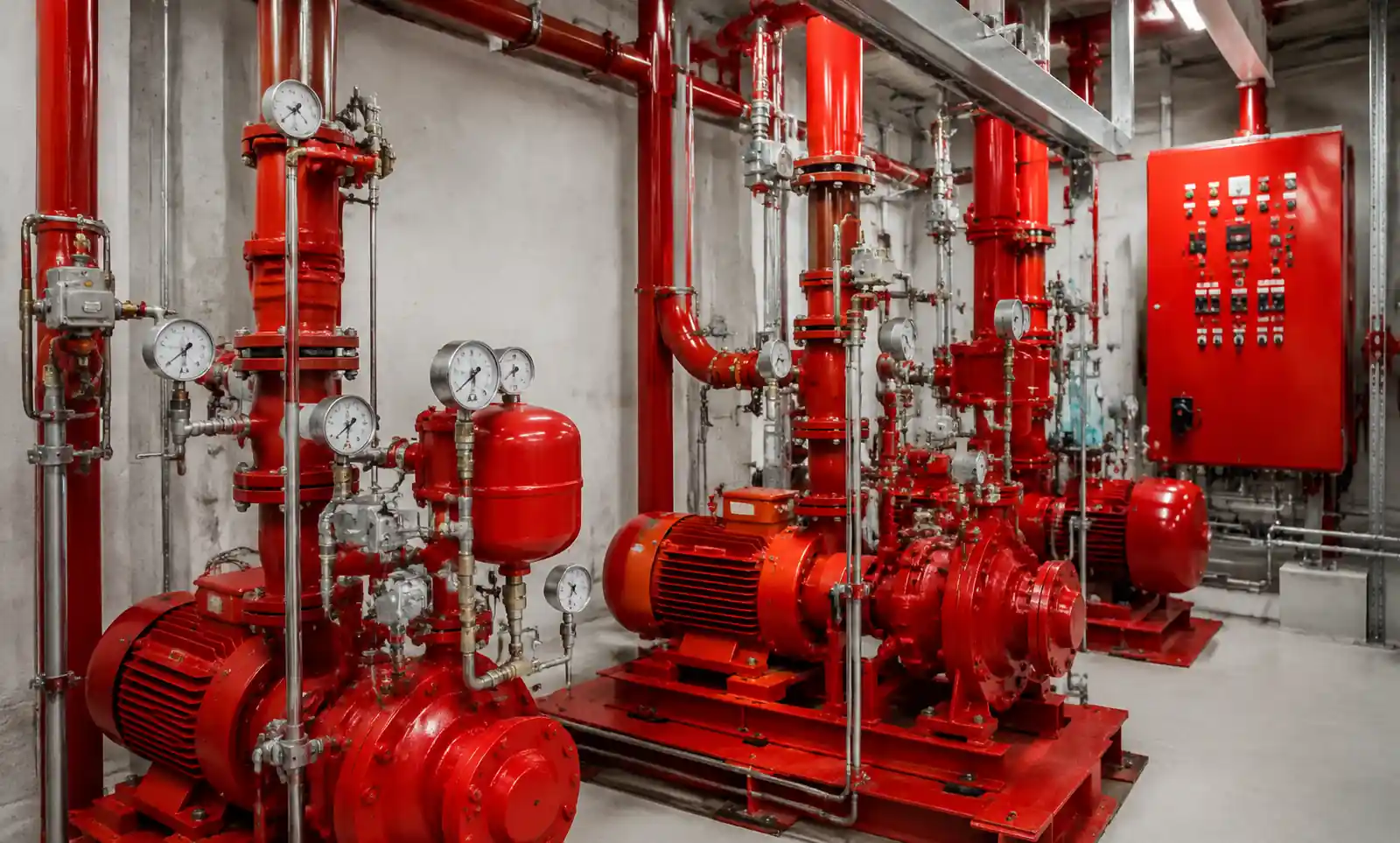 High-pressure fire pump and control equipment for water mist suppression system
Intermediate-pressure systems offer optimal balance for most industrial facilities. They deliver suppression performance approaching high-pressure installations but use pump technology compatible with local infrastructure. A 37 kW pump services 300-800 m² depending on hazard classification.
High-pressure systems (80-140 bar) produce superior atomization but require nitrogen-charged accumulators and technicians trained in high-pressure hydraulics—resources often unavailable outside major industrial centers. Low-pressure systems save capital but need 3-5× more nozzles, offsetting savings through installation labor.
For industrial cooling or dust suppression, YuechenPrecision Technology offers spray solutions adaptable for fire protection where intermediate-pressure infrastructure exists.
System Design for Intermittent Water Supply
Facilities in regions with unreliable municipal service must design around storage and backup capacity—not continuous supply assumptions.
Tank sizing beyond code minimums: Fire codes mandate 30-60 minute supply at design flow. For sites with unpredictable water restoration, best practice extends this to 90-120 minutes. An intermediate-pressure system protecting 1,000 m² requires 50-80 m³ tank capacity for 90-minute duration—versus 400-600 m³ for traditional sprinklers.
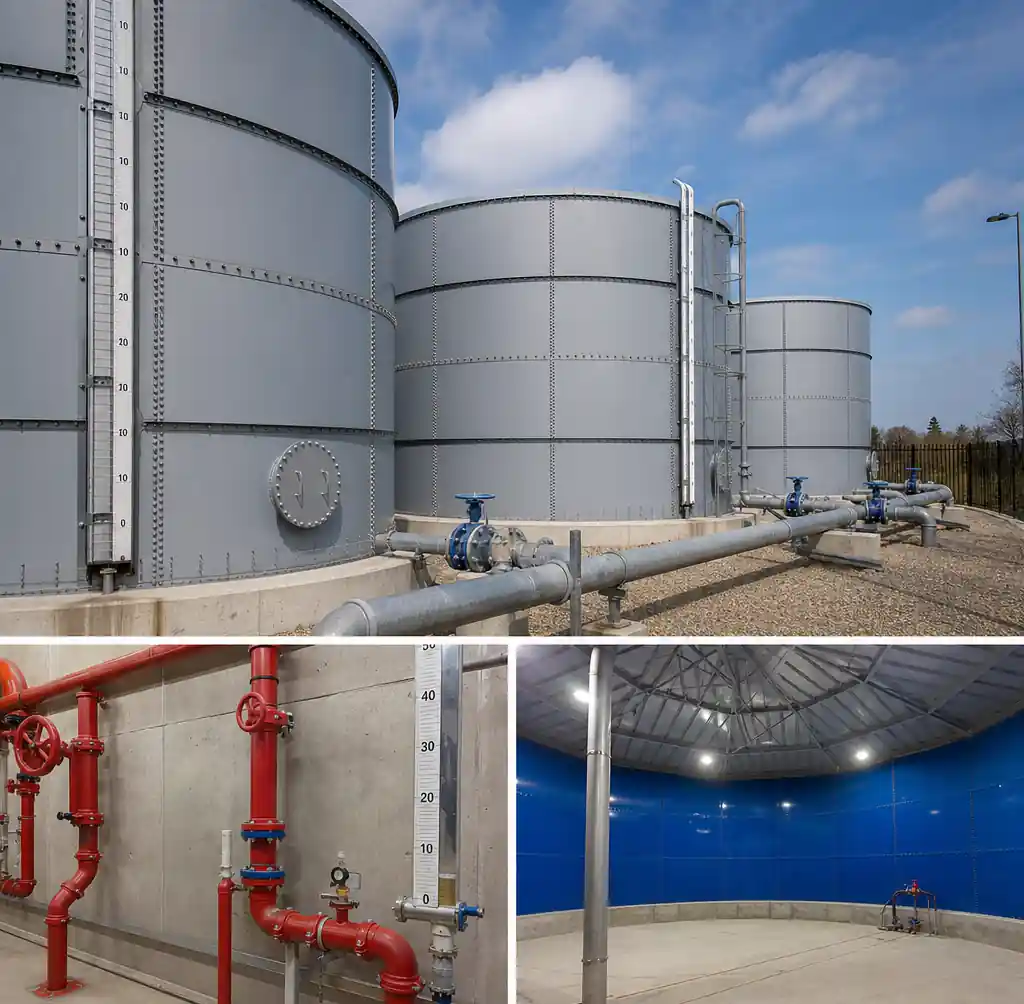 Fire protection water storage tank system for industrial facility with limited municipal supply
Pump redundancy and power backup: Primary pumps must function during outages. Diesel-driven backup pumps are standard where electrical grids are unreliable. For facilities with generators, electric pumps with automatic transfer offer lower maintenance than diesel units requiring monthly testing.
Piping material: Stainless steel or CPVC resists corrosion from poor water quality common in developing regions. Galvanized steel experiences accelerated corrosion in tropical humidity and water with high chloride content. System lifespan increases from 15-20 years (galvanized) to 40-50 years (stainless steel).
Fire Safety by Industrial Sector
Textile and garment: Bangladesh and Southeast Asian facilities have experienced high-profile incidents due to combustible lint, blocked exits, and inadequate suppression. Water mist with early warning addresses fire propagation in fabric storage and cutting areas. Fine misting nozzles provide both fire protection and humidity control—dual-purpose infrastructure improving project economics.
Food processing and beverage: Sanitary requirements conflict with traditional suppression. Water mist nozzles from food-grade stainless steel achieve fire code compliance and HACCP certification. Systems must tolerate CIP chemical exposure during sanitation.
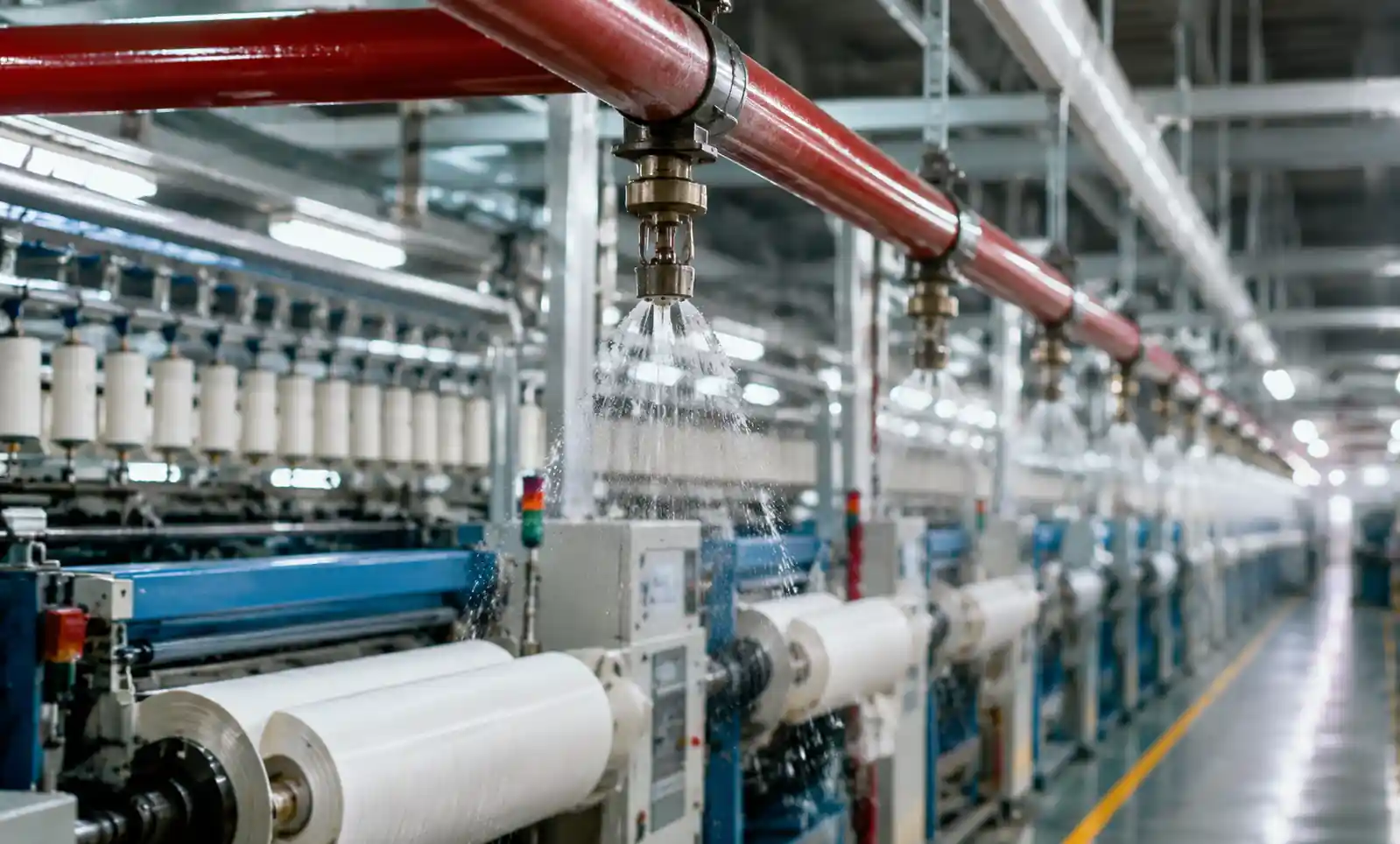 Fire suppression system installation in textile manufacturing facility showing sector-specific application
Chemical and pharmaceutical: Facilities handling flammable liquids need suppression that won't introduce contamination. Water mist provides Class A and B suppression while maintaining pharmaceutical-grade cleanliness. Installation in classified electrical areas requires ATEX or IECEx certification.
Wood processing: Sawdust creates explosion hazards. Systems must integrate with dust collection and protect collector housings—the most common ignition point. Nozzle spacing must account for ventilation airflows that deflect spray patterns.
Cost Analysis: Capital vs. Operating Expenses
The economic case extends beyond equipment price to total ownership across operational life.
| Cost Factor | Water Mist System | Traditional Sprinkler | Differential |
|---|---|---|---|
| Initial Equipment | $40-65/m² | $25-35/m² | Higher upfront |
| Water Storage Tank | 50-80 m³ | 400-600 m³ | 60-75% reduction |
| Foundation & Civil | Minimal | Extensive | 50-70% reduction |
| Installation Labor | Smaller pipe | Extensive piping | 20-30% reduction |
| Total Installed | $55-80/m² | $50-75/m² | Similar to 15% higher |
| Annual Water Cost | Minimal | Test discharge | $500-2,000 savings |
| Insurance Premium | 10-15% reduction | Baseline | 3-5 year payback |
 Cost analysis and financial planning documentation for industrial fire suppression system investment
Critical advantage emerges from reduced infrastructure. A facility requiring 600 m³ storage for sprinklers occupies 100-150 m² valuable floor space. Water mist requiring 60-80 m³ consumes one-third that footprint—recovered space generating revenue often exceeds amortized cost difference.
Insurance underwriters recognize water mist with 10-20% premium reductions versus unprotected facilities, and 5-10% versus sprinklers. For a $5 million facility paying $50,000 annual premium, 10% reduction recovers $5,000 annually—payback within 5-7 years.
FAQ
How does water mist perform outdoors or in semi-enclosed areas?
Effectiveness diminishes in wind above 3-5 m/s where droplets disperse before reaching fire zones. For outdoor yards or open-sided warehouses, hybrid approaches combining perimeter water mist with foam systems provide better coverage.
Can water mist protect against electrical fires?
Yes, when properly certified. Systems carry electrical non-conductivity certifications (tested at 35 kV per IEC 60364-4-41) suitable for transformer rooms and switchgear. Fine droplets don't create conductive paths. However, automatic power shutoff interlocks remain recommended practice.
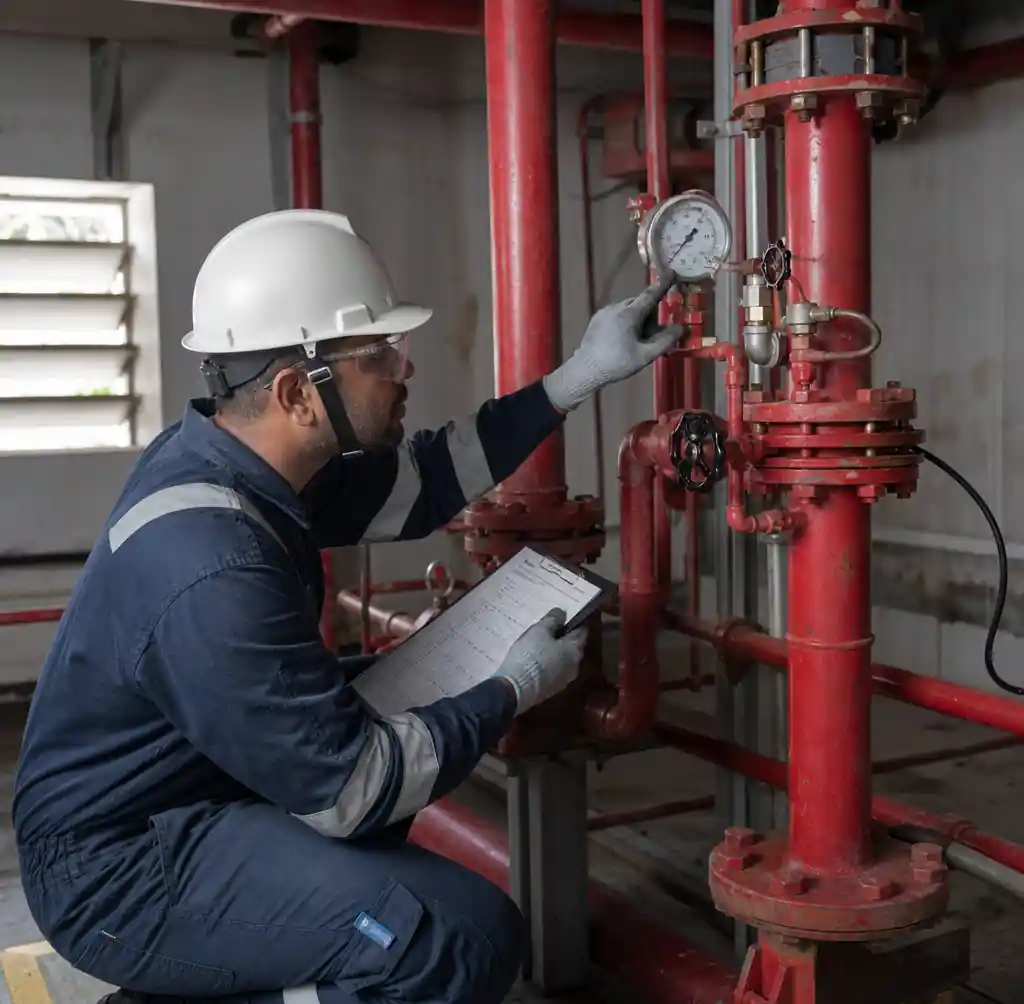 Maintenance technician inspecting and servicing water mist fire suppression system components
What maintenance do water mist systems require?
Intermediate-pressure systems need quarterly nozzle inspection, semi-annual pump tests, and annual full-discharge testing. Maintenance is comparable to sprinklers but requires attention to filters preventing clogging from poor water quality. Budget $2-4/m² annually for preventive contracts.
How do systems handle poor water quality?
Poor municipal quality threatens all suppression through corrosion and clogging. High-pressure installations require filtration to 80-120 microns and treatment where total dissolved solids exceed 300 ppm. This adds $8,000-15,000 but extends component life from 10-15 to 25-35 years.
What certifications should facilities verify?
Systems require approval from local authorities, insurance underwriters (FM Global, LPCB, VdS), and specialized agencies. Water mist must carry NFPA 750 or EN 14972 approval. Contractors should hold manufacturer certifications. Verify equipment has region-specific certification—not merely CE marking.
Can water mist retrofit existing buildings?
Retrofits are often simpler than sprinkler installation because smaller pipe (25-50 mm vs. 80-150 mm) requires less structural modification. However, facilities must accommodate pump rooms and tanks. Projects typically encounter fewer permit delays than traditional sprinkler installations.
Conclusion
Industrial fire protection in developing countries requires engineering matched to local constraints, not specification compliance alone. Water mist systems reduce consumption 85-95%, operate reliably with intermittent supply when designed with adequate storage, and meet international insurance and regulatory standards.
The economic case extends beyond equipment to total value: reduced infrastructure, recovered floor space, lower premiums, and minimized collateral damage. For facilities in Sub-Saharan Africa, Southeast Asia, and water-scarce regions, water mist represents practical protection functioning reliably under real conditions—not theoretical assumptions.
YuechenPrecision Technology offers comprehensive water mist nozzle systems, fine misting equipment, and industrial spray products designed for demanding applications. Our experience across food processing, chemical manufacturing, textile production, and warehousing ensures practical solutions balancing effectiveness with resource constraints.
Contact us today for application-specific fire safety engineering, system sizing calculations, and equipment specifications suited to your facility's environment and local regulatory requirements.