



What Is the Best Nozzle for Seawater Applications: A Materials and Performance Guide (2026)
Table of Contents
- 1. Table of Contents
- 2. 1.Introduction
- 3. 2.Critical Factors for Seawater Nozzle Selection
- 4. 3.Seawater-Compatible Nozzle Materials: Performance and Cost
- 5. 4.Nozzle Type Selection for Common Seawater Applications
- 6. 5.Application-Specific Selection
- 7. 6.Common Installation and Maintenance Mistakes
- 8. 7.Total Cost of Ownership: When Premium Materials Pay Off
- 9. 8.Troubleshooting Common Seawater Nozzle Problems
- 10. 9.FAQ
- 10.1. Is 316 SS acceptable for cold seawater below 15°C?
- 10.2. How do I calculate nozzle spacing for seawater cooling towers?
- 10.3. Can I use plastic nozzles (PVDF, CPVC) to save cost?
- 10.4. What maintenance intervals should I plan?
- 10.5. How much flow loss indicates replacement?
- 11. 10.Conclusion
- 12. 2.Critical Factors for Seawater Nozzle Selection
- 13. 3.Seawater-Compatible Nozzle Materials: Performance and Cost
- 14. 4.Nozzle Type Selection for Common Seawater Applications
- 15. 5.Application-Specific Selection
- 16. 6.Common Installation and Maintenance Mistakes
- 17. 7.Total Cost of Ownership: When Premium Materials Pay Off
- 18. 8.Troubleshooting Common Seawater Nozzle Problems
- 19. 9.FAQ
- 19.1. Is 316 SS acceptable for cold seawater below 15°C?
- 19.2. How do I calculate nozzle spacing for seawater cooling towers?
- 19.3. Can I use plastic nozzles (PVDF, CPVC) to save cost?
- 19.4. What maintenance intervals should I plan?
- 19.5. How much flow loss indicates replacement?
- 20. 10.Conclusion
Table of Contents
- Introduction
- Critical Factors for Seawater Nozzle Selection
- Seawater-Compatible Nozzle Materials
- Nozzle Type Selection for Common Applications
- Application-Specific Selection
- Common Installation and Maintenance Mistakes
- Total Cost of Ownership
- Troubleshooting Common Seawater Nozzle Problems
- FAQ
- Conclusion
1.Introduction
Seawater is brutal on metal. With ~35,000 ppm total dissolved solids and chloride levels around 19,000 ppm, it eats through most common nozzle materials within months. The corrosion gets worse as temperature rises—each 10°C roughly doubles the corrosion rate for most alloys. This guide helps process engineers and marine system designers select nozzles that actually survive in seawater, based on field data from offshore platforms, desalination plants, and marine cooling systems.
2.Critical Factors for Seawater Nozzle Selection
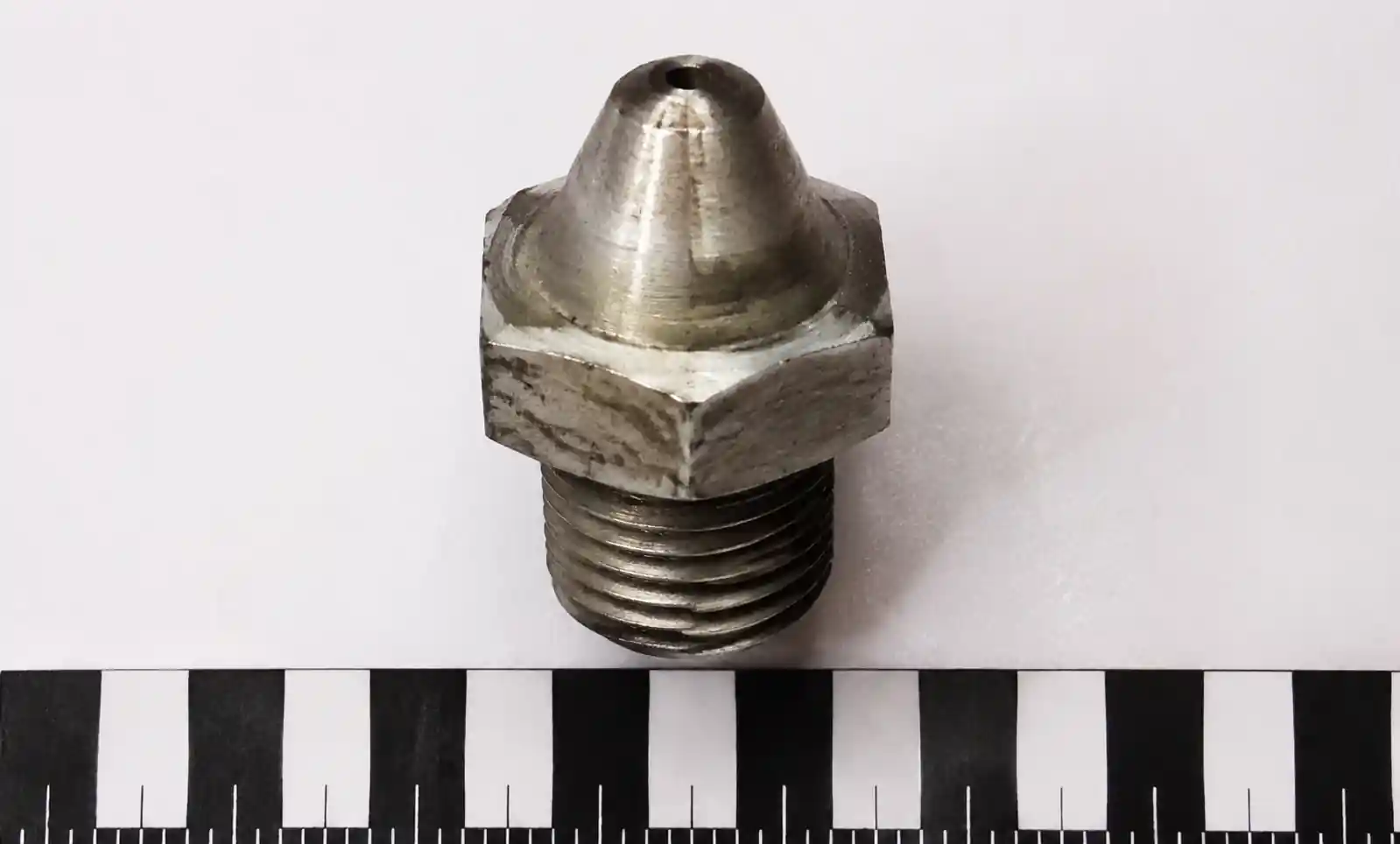
The chloride concentration in seawater is about 190× the threshold for stress corrosion cracking in 304 SS. That's why 304 SS fails in weeks, and 316 SS only lasts a couple of years in warm seawater. Pitting, crevice corrosion, and erosion-corrosion are the main failure mechanisms. Material choice matters more than nozzle type when seawater is involved.
Flow velocity is just as important as the material. Protective oxide films can't reform fast enough if velocity exceeds certain limits. For copper-nickel alloys, keep inlet velocities under 2.5 m/s. Titanium can handle up to 10 m/s, but cavitation will still cause damage if pressure drops are excessive. And if you're using threaded connections in seawater, standard PTFE tape and pipe dope trap water in the threads and create crevice corrosion sites. Use O-ring face seals or wetted-thread assembly instead.
3.Seawater-Compatible Nozzle Materials: Performance and Cost
| Material | Corrosion Resistance | Relative Service Life | Cost Multiplier | Optimal Applications |
|---|---|---|---|---|
| 316 SS | Fair (pitting risk) | 1.0× (baseline) | 1.0× | Intermittent duty, cold seawater (<15°C), protected environments |
| 6Mo SS (254 SMO) | Excellent | 8–12× | 3.5–4.0× | Continuous duty, warm seawater, high reliability required |
| Titanium Grade 2 | Excellent | 15–25× | 5–7× | High velocity, cavitation resistance, weight-sensitive |
| Hastelloy C-276 | Excellent | 12–18× | 8–12× | Extreme temps, chemical injection, sour service |
| Duplex SS (2205) | Very Good | 5–8× | 2.0–2.5× | Structural strength + corrosion resistance, medium velocity |
| Silicon Carbide | Excellent (inert) | 20–30× | 4–6× | Abrasive seawater, high wear zones (brittle—handle carefully) |
316 SS is familiar and cheap, but it pits in warm seawater (>20°C) within 6–18 months. Use it only for cold water, low-duty-cycle applications, or when frequent replacement is acceptable. We've seen 316 SS flat fan nozzles fail after 2–3 years in tropical seawater cooling.
6Mo SS like 254 SMO has a PRE (Pitting Resistance Equivalent = %Cr + 3.3×%Mo + 16×%N) above 42, versus 26 for 316L. In Caribbean seawater at 28°C, 6Mo nozzles last 10+ years. The 3.5–4× cost premium pays off fast when you factor in replacement labor and downtime.
Titanium Grade 2 forms a self-healing oxide film even in stagnant seawater. We've pulled titanium nozzles with 15+ years continuous seawater service—zero measurable corrosion. It's expensive and not every geometry is stocked, but for critical applications like offshore deluge systems or naval fire suppression, it's worth it.
Hastelloy C-276 is overkill for pure seawater, but essential when chemical injection is involved—desalination systems with antiscalants, coagulants, or acids. The 8–12× cost premium limits it to small, critical nozzles.
Duplex SS 2205 offers twice the yield strength of 316 SS and significantly better pitting resistance (PRE ~35). Good for structural spray headers and large-bore nozzles. Watch out for welding—heat-affected zones need proper treatment to avoid localized corrosion.
Silicon carbide is inert to seawater and wears like crazy. We use SiC inserts for seawater injection in oil & gas waterflooding, where abrasive content erodes metal nozzles in months. The brittleness means careful handling—impact during maintenance is the primary failure mode.
4.Nozzle Type Selection for Common Seawater Applications
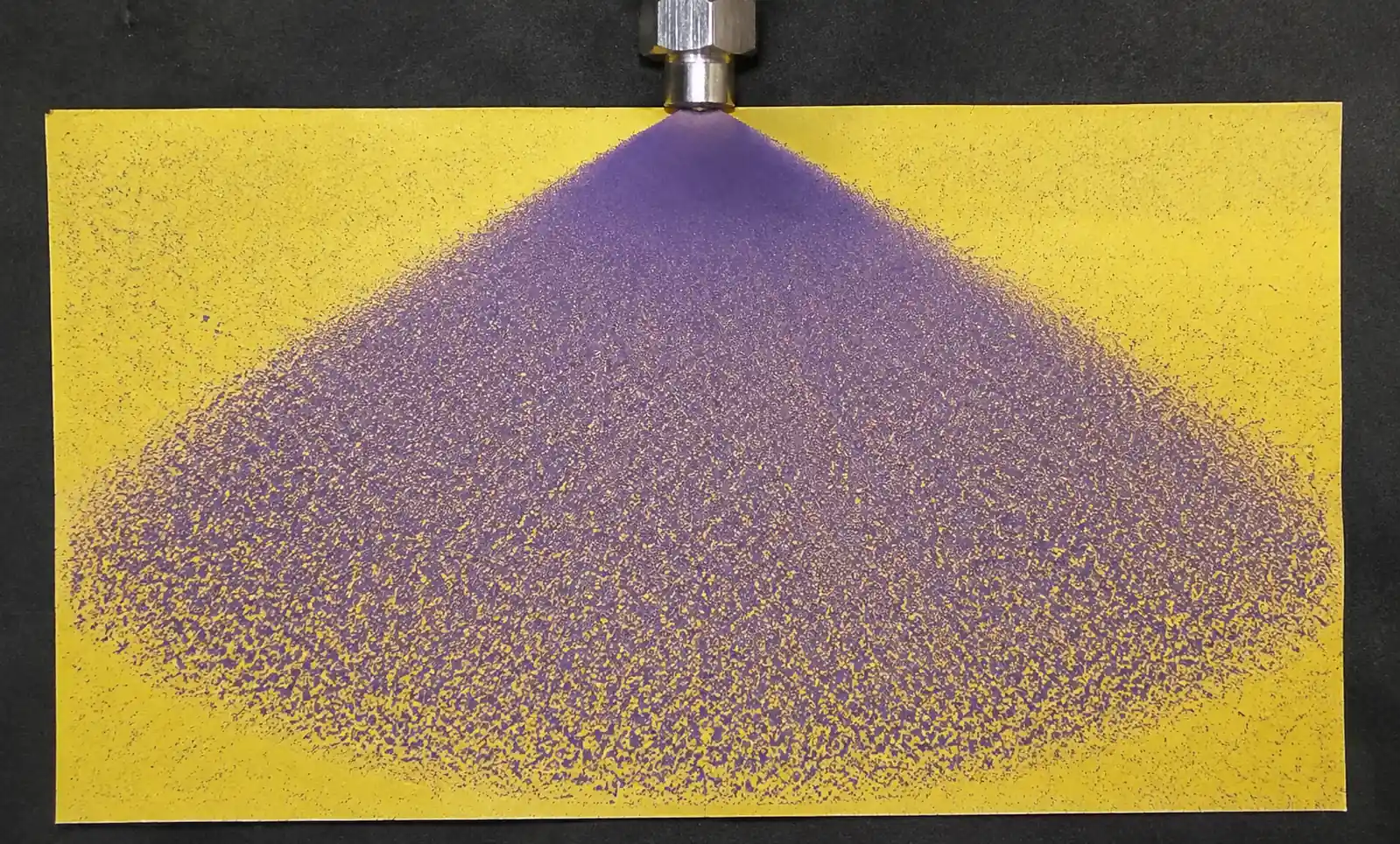
Full cone nozzles are the workhorse for seawater cooling—power plant condensers, refinery heat exchangers, offshore process coolers. Specify axial-flow vane types over whirl-chamber designs. They produce more uniform droplet sizes and have fewer internal recirculation zones where biofouling starts.
Flat fan nozzles create a planar sheet of spray—good for vessel wash-down and personnel decontamination showers. Elliptical orifice designs beat internal vane types in seawater; fewer internal features mean fewer crevice sites and fouling spots. For intermittent systems, freshwater flush before shutdown stops salt crystal growth and barnacle settlement in the orifice.
Hollow cone nozzles produce a ring-shaped spray pattern. They're used in evaporative cooling, mist suppression, and some mixing applications. The whirl-chamber design creates high rotational velocity, making them sensitive to erosion-corrosion in the chamber itself. Use titanium or ceramic inserts in the whirl chamber, even if the body is 6Mo SS.
Air atomizing nozzles produce 10–100 micron sprays for specialized cooling or humidification. Salt accumulation is the problem—evaporating seawater droplets leave salt deposits in air passages. Internal mix designs clog fast; external mix types are more forgiving but still need regular maintenance. For continuous seawater atomization, we've had better luck with high-pressure hydraulic nozzles (500–1000 psi) than air atomizing types.
5.Application-Specific Selection
Marine cooling systems: Full cone in 6Mo SS or duplex. Axial-flow vane types. Size for 2–3 bar pressure. Plan for quarterly visual inspection and annual chemical cleaning.
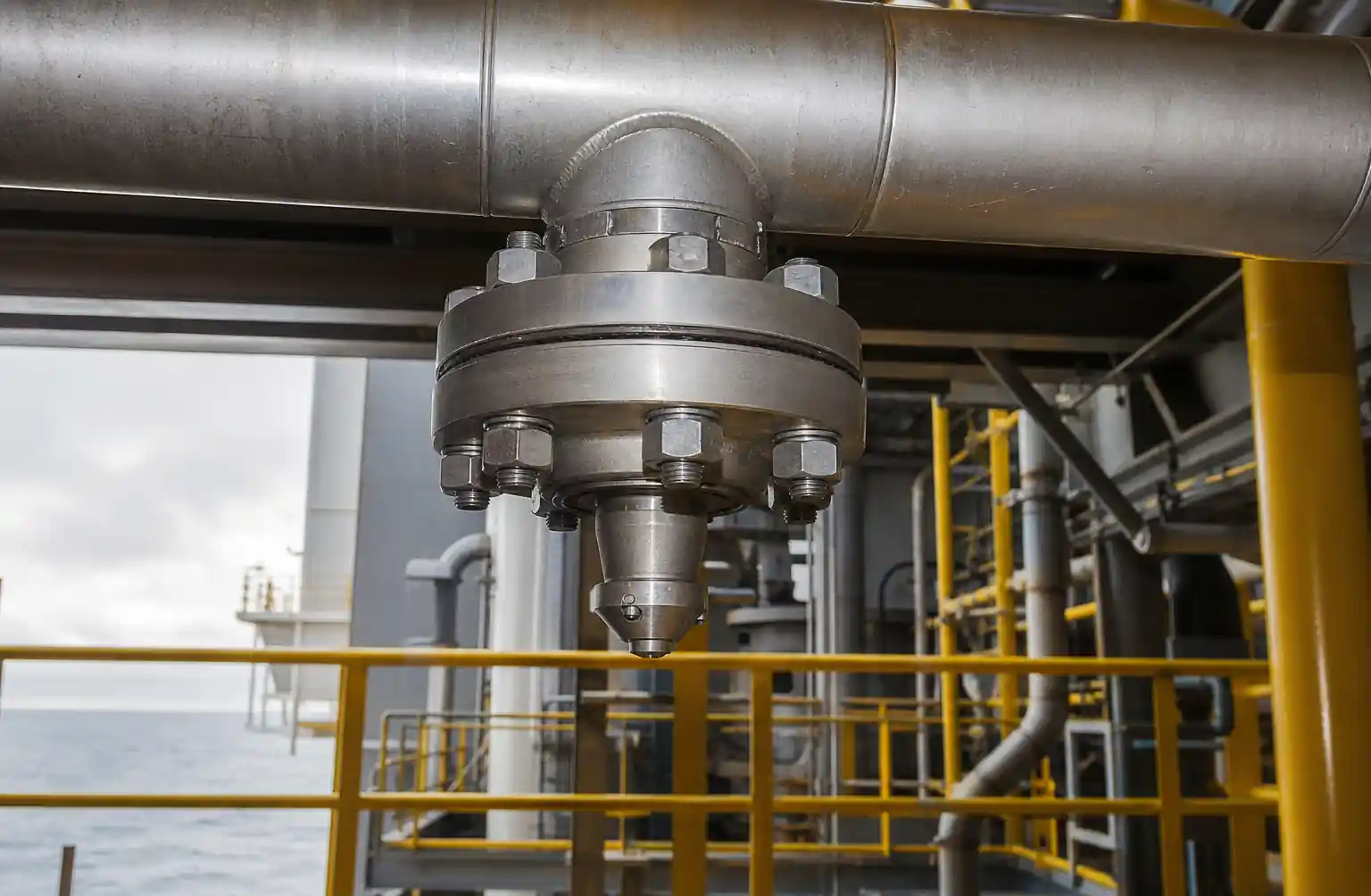
Offshore platform deluge: Full cone fire nozzles in titanium or 6Mo SS, orifice ≥5 mm. Downward orientation for drainage. Flush with freshwater and dry air quarterly. Functional testing twice a year even if standards say less—biofouling can block nozzles between annual tests.
Desalination pre-treatment: For coagulation/flocculation mixing, use full cone or spiral in Hastelloy or 6Mo SS. The mixed seawater-chemical environment accelerates corrosion beyond pure seawater rates. Install nozzles on removable spools for easy inspection without system shutdown.
Ballast water treatment: Titanium is preferred—seawater plus residual chlorine/hypochlorite kills 316 SS fast. Duplex is acceptable if residual chlorine stays below 0.5 ppm and temperature under 30°C. We've seen 316 SS pitting in <1 year when free chlorine exceeded 2 ppm continuously.
6.Common Installation and Maintenance Mistakes
Mistake 1: Ignoring velocity limits. 6Mo SS tops out around 4 m/s; titanium up to 10 m/s. Use tapered reducers at the nozzle inlet, not abrupt step-downs—turbulence accelerates erosion.
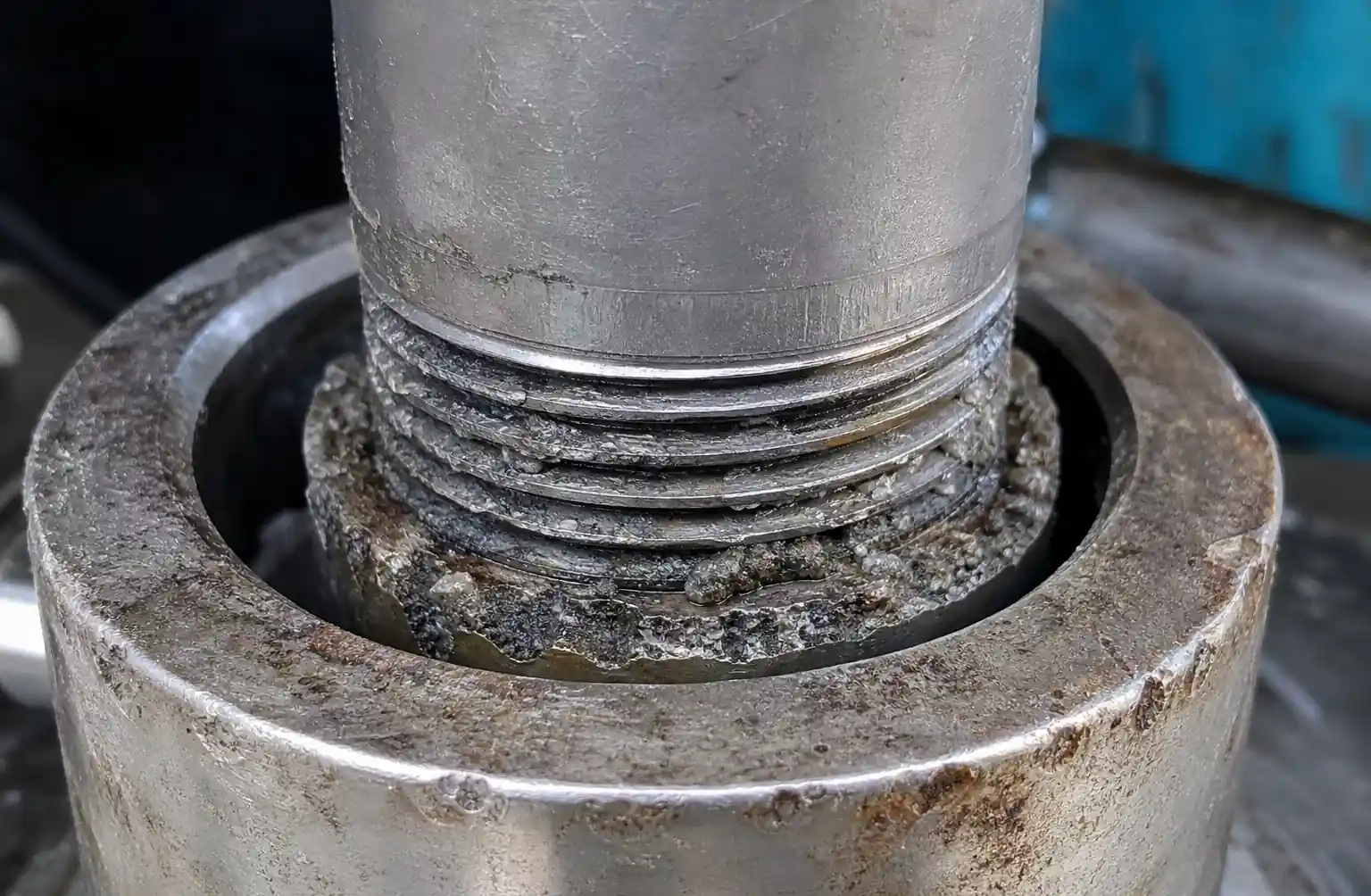
Mistake 2: Using standard thread sealants. Pipe dope or PTFE tape creates crevice corrosion sites. Use O-ring face seals or wetted-thread assembly for seawater connections.
Mistake 3: No flush procedure before shutdown. Stagnant seawater in nozzles and headers during idle periods is perfect for biofouling and accelerated corrosion. A 5-minute freshwater flush before extended downtime can extend nozzle life by 5–10 years.
Mistake 4: Mixing dissimilar metals. A small titanium nozzle in a large 316 SS header creates a galvanic couple—the 316 SS corrodes faster at the junction. Use isolating gaskets or commit to replacing the less noble component more often.
Mistake 5: Undersized strainers. Intake water carries jellyfish, seaweed, shells, sand. Nozzles with orifices <5 mm need automatic self-cleaning strainers with 40–60% open area and openings at least 50% of the nozzle orifice size.
7.Total Cost of Ownership: When Premium Materials Pay Off
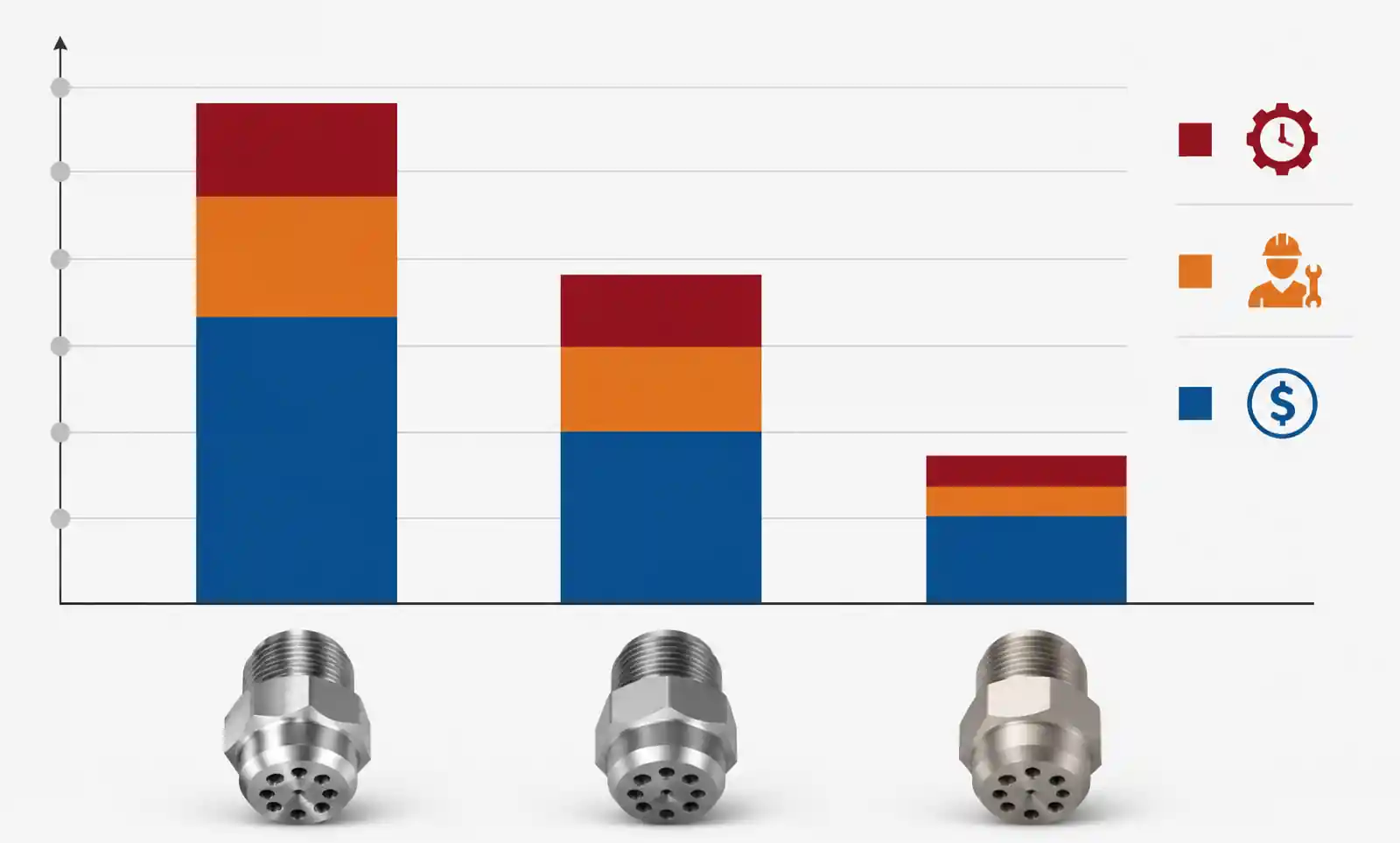
Many organizations default to 316 SS because it's familiar and cheap. Here's what that actually costs over 15 years:
Example: Offshore cooling system with 200 nozzles
| Scenario | Material | Capital Cost | Replacements (15 yrs) | TCO | Savings vs 316 SS |
|---|---|---|---|---|---|
| A | 316 SS | $40,000 | 5× ($65,000 ea) | $365,000 | — |
| B | 6Mo SS | $140,000 | 1× ($65,000) | $205,000 | $160,000 |
| C | Titanium | $240,000 | 0× | $240,000 | $125,000 |
The 6Mo scenario saves $160,000—44% less than 316 SS over 15 years. The titanium scenario saves $125,000—34% less than 316 SS. And this doesn't even account for avoided downtime costs ($100,000–500,000 per day for offshore production).
When 316 SS is acceptable: Cold seawater (<15°C), low duty cycle (<20% runtime), easy access for replacement, non-critical service.
When 6Mo SS is optimal: Continuous or frequent duty, warm seawater (>20°C), 10–15 year service life expected. This is our default recommendation for most seawater cooling and process applications.
When titanium is justified: High-consequence applications (fire suppression, critical process cooling), difficult-access maintenance, weight-sensitive offshore installations, 20+ year service life expected.
8.Troubleshooting Common Seawater Nozzle Problems
Spray angle narrows or spray becomes non-uniform: Partial clogging from salt crystallization, biofouling, or silt. Remove and clean with freshwater soak followed by 5% citric acid for 30 minutes. If erosion damage is visible, replace with more corrosion-resistant material.
Rapid orifice erosion (>10% diameter increase in <2 years): Material inadequate, excessive velocity, or cavitation. Upgrade to higher-tier material (6Mo → titanium, or stainless → SiC insert). Verify inlet velocity limits. Add upstream filtration to remove abrasives >50 microns.
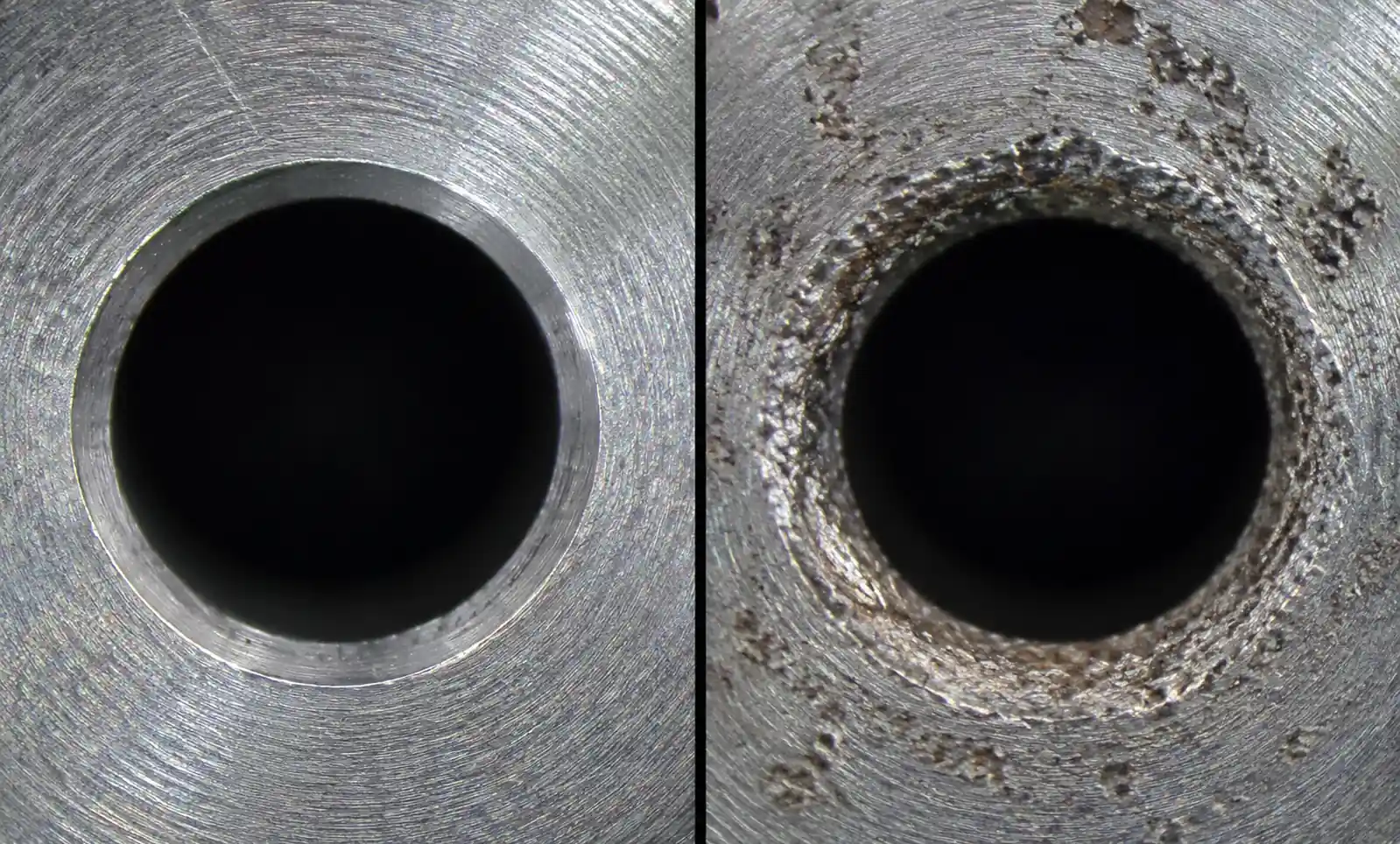
Visible pitting or perforation: Material selection inadequate for chloride concentration, temperature, or mixed chemical environment. Replace with material PRE >40 (6Mo SS, duplex, titanium, Hastelloy). Eliminate crevice sites using O-ring face seal instead of threaded joints.
Complete blockage after shutdown: Marine organism colonization or salt crystallization. Implement pre-shutdown flushing procedure: 10–15 minutes freshwater, blow down with compressed air or nitrogen. Quarterly flow-testing during standby prevents complete blockage.
9.FAQ
Is 316 SS acceptable for cold seawater below 15°C?
Yes, but with caveats. Corrosion rates roughly halve at 15°C, extending life to 5–7 years. Crevice corrosion at threaded joints remains a risk even in cold water. If replacement is difficult, invest in 6Mo SS anyway.
How do I calculate nozzle spacing for seawater cooling towers?
Start with heat rejection requirement to determine mass flow. Divide by desired flow per nozzle (typically 50–200 L/min). Space nozzles based on spray angle: S = 2 × H × tan(θ/2) × 1.1 for 100–120% overlap at fill elevation. Validate with water-sensitive paper during commissioning.
Can I use plastic nozzles (PVDF, CPVC) to save cost?
They resist seawater corrosion and cost 50–70% less than 6Mo SS. But temperature limits (PVDF max 135°C, CPVC max 95°C), UV degradation (5–8 year life in direct sunlight), and mechanical fragility make them suitable mainly for indoor applications. For outdoor marine environments, accept 5–7 year replacement cycles.
What maintenance intervals should I plan?
Quarterly visual inspection, annual flow testing and cleaning, 3-year detailed inspection with orifice measurement. Critical systems (fire protection, safety showers) need functional testing every 6 months.
How much flow loss indicates replacement?
Replace when flow drops 15% below baseline at constant pressure, or when pressure required to maintain flow increases by 20%. That's roughly 30% orifice area reduction. Critical applications: tighten to 10% flow loss or 15% pressure increase.
10.Conclusion
Seawater kills nozzles. The choice isn't whether they'll degrade—it's how quickly. 316 SS is a false economy in warm or continuous seawater service. 6Mo SS is the baseline for most applications, offering 8–12× the service life of 316 SS at 3.5–4× the cost. Titanium is for critical installations and difficult access. And if you're using 304 SS in seawater, you're already losing money.
Beyond material, pay attention to velocity limits, avoid threaded connections where possible, flush before shutdown, and don't mix metals. The premium materials pay for themselves within the first maintenance cycle. When seawater is involved, design for 15–20 years, not for the lowest first cost. The reliability and avoided downtime justify the investment.## 1.Introduction
Seawater is brutal on metal. With ~35,000 ppm total dissolved solids and chloride levels around 19,000 ppm, it eats through most common nozzle materials within months. The corrosion gets worse as temperature rises—each 10°C roughly doubles the corrosion rate for most alloys. This guide helps process engineers and marine system designers select nozzles that actually survive in seawater, based on field data from offshore platforms, desalination plants, and marine cooling systems.
2.Critical Factors for Seawater Nozzle Selection
The chloride concentration in seawater is about 190× the threshold for stress corrosion cracking in 304 SS. That's why 304 SS fails in weeks, and 316 SS only lasts a couple of years in warm seawater. Pitting, crevice corrosion, and erosion-corrosion are the main failure mechanisms. Material choice matters more than nozzle type when seawater is involved.
Flow velocity is just as important as the material. Protective oxide films can't reform fast enough if velocity exceeds certain limits. For copper-nickel alloys, keep inlet velocities under 2.5 m/s. Titanium can handle up to 10 m/s, but cavitation will still cause damage if pressure drops are excessive. And if you're using threaded connections in seawater, standard PTFE tape and pipe dope trap water in the threads and create crevice corrosion sites. Use O-ring face seals or wetted-thread assembly instead.
3.Seawater-Compatible Nozzle Materials: Performance and Cost
| Material | Corrosion Resistance | Relative Service Life | Cost Multiplier | Optimal Applications |
|---|---|---|---|---|
| 316 SS | Fair (pitting risk) | 1.0× (baseline) | 1.0× | Intermittent duty, cold seawater (<15°C), protected environments |
| 6Mo SS (254 SMO) | Excellent | 8–12× | 3.5–4.0× | Continuous duty, warm seawater, high reliability required |
| Titanium Grade 2 | Excellent | 15–25× | 5–7× | High velocity, cavitation resistance, weight-sensitive |
| Hastelloy C-276 | Excellent | 12–18× | 8–12× | Extreme temps, chemical injection, sour service |
| Duplex SS (2205) | Very Good | 5–8× | 2.0–2.5× | Structural strength + corrosion resistance, medium velocity |
| Silicon Carbide | Excellent (inert) | 20–30× | 4–6× | Abrasive seawater, high wear zones (brittle—handle carefully) |
316 SS is familiar and cheap, but it pits in warm seawater (>20°C) within 6–18 months. Use it only for cold water, low-duty-cycle applications, or when frequent replacement is acceptable. We've seen 316 SS flat fan nozzles fail after 2–3 years in tropical seawater cooling.
6Mo SS like 254 SMO has a PRE (Pitting Resistance Equivalent = %Cr + 3.3×%Mo + 16×%N) above 42, versus 26 for 316L. In Caribbean seawater at 28°C, 6Mo nozzles last 10+ years. The 3.5–4× cost premium pays off fast when you factor in replacement labor and downtime.
Titanium Grade 2 forms a self-healing oxide film even in stagnant seawater. We've pulled titanium nozzles with 15+ years continuous seawater service—zero measurable corrosion. It's expensive and not every geometry is stocked, but for critical applications like offshore deluge systems or naval fire suppression, it's worth it.
Hastelloy C-276 is overkill for pure seawater, but essential when chemical injection is involved—desalination systems with antiscalants, coagulants, or acids. The 8–12× cost premium limits it to small, critical nozzles.
Duplex SS 2205 offers twice the yield strength of 316 SS and significantly better pitting resistance (PRE ~35). Good for structural spray headers and large-bore nozzles. Watch out for welding—heat-affected zones need proper treatment to avoid localized corrosion.
Silicon carbide is inert to seawater and wears like crazy. We use SiC inserts for seawater injection in oil & gas waterflooding, where abrasive content erodes metal nozzles in months. The brittleness means careful handling—impact during maintenance is the primary failure mode.
4.Nozzle Type Selection for Common Seawater Applications
Full cone nozzles are the workhorse for seawater cooling—power plant condensers, refinery heat exchangers, offshore process coolers. Specify axial-flow vane types over whirl-chamber designs. They produce more uniform droplet sizes and have fewer internal recirculation zones where biofouling starts.
Flat fan nozzles create a planar sheet of spray—good for vessel wash-down and personnel decontamination showers. Elliptical orifice designs beat internal vane types in seawater; fewer internal features mean fewer crevice sites and fouling spots. For intermittent systems, freshwater flush before shutdown stops salt crystal growth and barnacle settlement in the orifice.
Hollow cone nozzles produce a ring-shaped spray pattern. They're used in evaporative cooling, mist suppression, and some mixing applications. The whirl-chamber design creates high rotational velocity, making them sensitive to erosion-corrosion in the chamber itself. Use titanium or ceramic inserts in the whirl chamber, even if the body is 6Mo SS.
Air atomizing nozzles produce 10–100 micron sprays for specialized cooling or humidification. Salt accumulation is the problem—evaporating seawater droplets leave salt deposits in air passages. Internal mix designs clog fast; external mix types are more forgiving but still need regular maintenance. For continuous seawater atomization, we've had better luck with high-pressure hydraulic nozzles (500–1000 psi) than air atomizing types.
5.Application-Specific Selection
Marine cooling systems: Full cone in 6Mo SS or duplex. Axial-flow vane types. Size for 2–3 bar pressure. Plan for quarterly visual inspection and annual chemical cleaning.
Offshore platform deluge: Full cone fire nozzles in titanium or 6Mo SS, orifice ≥5 mm. Downward orientation for drainage. Flush with freshwater and dry air quarterly. Functional testing twice a year even if standards say less—biofouling can block nozzles between annual tests.
Desalination pre-treatment: For coagulation/flocculation mixing, use full cone or spiral in Hastelloy or 6Mo SS. The mixed seawater-chemical environment accelerates corrosion beyond pure seawater rates. Install nozzles on removable spools for easy inspection without system shutdown.
Ballast water treatment: Titanium is preferred—seawater plus residual chlorine/hypochlorite kills 316 SS fast. Duplex is acceptable if residual chlorine stays below 0.5 ppm and temperature under 30°C. We've seen 316 SS pitting in <1 year when free chlorine exceeded 2 ppm continuously.
6.Common Installation and Maintenance Mistakes
Mistake 1: Ignoring velocity limits. 6Mo SS tops out around 4 m/s; titanium up to 10 m/s. Use tapered reducers at the nozzle inlet, not abrupt step-downs—turbulence accelerates erosion.
Mistake 2: Using standard thread sealants. Pipe dope or PTFE tape creates crevice corrosion sites. Use O-ring face seals or wetted-thread assembly for seawater connections.
Mistake 3: No flush procedure before shutdown. Stagnant seawater in nozzles and headers during idle periods is perfect for biofouling and accelerated corrosion. A 5-minute freshwater flush before extended downtime can extend nozzle life by 5–10 years.
Mistake 4: Mixing dissimilar metals. A small titanium nozzle in a large 316 SS header creates a galvanic couple—the 316 SS corrodes faster at the junction. Use isolating gaskets or commit to replacing the less noble component more often.
Mistake 5: Undersized strainers. Intake water carries jellyfish, seaweed, shells, sand. Nozzles with orifices <5 mm need automatic self-cleaning strainers with 40–60% open area and openings at least 50% of the nozzle orifice size.
7.Total Cost of Ownership: When Premium Materials Pay Off
Many organizations default to 316 SS because it's familiar and cheap. Here's what that actually costs over 15 years:
Example: Offshore cooling system with 200 nozzles
| Scenario | Material | Capital Cost | Replacements (15 yrs) | TCO | Savings vs 316 SS |
|---|---|---|---|---|---|
| A | 316 SS | $40,000 | 5× ($65,000 ea) | $365,000 | — |
| B | 6Mo SS | $140,000 | 1× ($65,000) | $205,000 | $160,000 |
| C | Titanium | $240,000 | 0× | $240,000 | $125,000 |
The 6Mo scenario saves $160,000—44% less than 316 SS over 15 years. The titanium scenario saves $125,000—34% less than 316 SS. And this doesn't even account for avoided downtime costs ($100,000–500,000 per day for offshore production).
When 316 SS is acceptable: Cold seawater (<15°C), low duty cycle (<20% runtime), easy access for replacement, non-critical service.
When 6Mo SS is optimal: Continuous or frequent duty, warm seawater (>20°C), 10–15 year service life expected. This is our default recommendation for most seawater cooling and process applications.
When titanium is justified: High-consequence applications (fire suppression, critical process cooling), difficult-access maintenance, weight-sensitive offshore installations, 20+ year service life expected.
8.Troubleshooting Common Seawater Nozzle Problems
Spray angle narrows or spray becomes non-uniform: Partial clogging from salt crystallization, biofouling, or silt. Remove and clean with freshwater soak followed by 5% citric acid for 30 minutes. If erosion damage is visible, replace with more corrosion-resistant material.
Rapid orifice erosion (>10% diameter increase in <2 years): Material inadequate, excessive velocity, or cavitation. Upgrade to higher-tier material (6Mo → titanium, or stainless → SiC insert). Verify inlet velocity limits. Add upstream filtration to remove abrasives >50 microns.
Visible pitting or perforation: Material selection inadequate for chloride concentration, temperature, or mixed chemical environment. Replace with material PRE >40 (6Mo SS, duplex, titanium, Hastelloy). Eliminate crevice sites using O-ring face seal instead of threaded joints.
Complete blockage after shutdown: Marine organism colonization or salt crystallization. Implement pre-shutdown flushing procedure: 10–15 minutes freshwater, blow down with compressed air or nitrogen. Quarterly flow-testing during standby prevents complete blockage.
9.FAQ
Is 316 SS acceptable for cold seawater below 15°C?
Yes, but with caveats. Corrosion rates roughly halve at 15°C, extending life to 5–7 years. Crevice corrosion at threaded joints remains a risk even in cold water. If replacement is difficult, invest in 6Mo SS anyway.
How do I calculate nozzle spacing for seawater cooling towers?
Start with heat rejection requirement to determine mass flow. Divide by desired flow per nozzle (typically 50–200 L/min). Space nozzles based on spray angle: S = 2 × H × tan(θ/2) × 1.1 for 100–120% overlap at fill elevation. Validate with water-sensitive paper during commissioning.
Can I use plastic nozzles (PVDF, CPVC) to save cost?
They resist seawater corrosion and cost 50–70% less than 6Mo SS. But temperature limits (PVDF max 135°C, CPVC max 95°C), UV degradation (5–8 year life in direct sunlight), and mechanical fragility make them suitable mainly for indoor applications. For outdoor marine environments, accept 5–7 year replacement cycles.
What maintenance intervals should I plan?
Quarterly visual inspection, annual flow testing and cleaning, 3-year detailed inspection with orifice measurement. Critical systems (fire protection, safety showers) need functional testing every 6 months.
How much flow loss indicates replacement?
Replace when flow drops 15% below baseline at constant pressure, or when pressure required to maintain flow increases by 20%. That's roughly 30% orifice area reduction. Critical applications: tighten to 10% flow loss or 15% pressure increase.
10.Conclusion
Seawater kills nozzles. The choice isn't whether they'll degrade—it's how quickly. 316 SS is a false economy in warm or continuous seawater service. 6Mo SS is the baseline for most applications, offering 8–12× the service life of 316 SS at 3.5–4× the cost. Titanium is for critical installations and difficult access. And if you're using 304 SS in seawater, you're already losing money.
Beyond material, pay attention to velocity limits, avoid threaded connections where possible, flush before shutdown, and don't mix metals. The premium materials pay for themselves within the first maintenance cycle. When seawater is involved, design for 15–20 years, not for the lowest first cost. The reliability and avoided downtime justify the investment.