



How to Choose the Right Tank Cleaning Nozzle: A Practical Selection Guide
Choosing the wrong tank cleaning nozzle doesn't just waste water—it creates contamination risks that shut down production lines. After twelve years managing CIP systems across dairy, pharmaceutical, and chemical plants, I've learned that nozzle selection determines whether your tank passes hygiene validation or fails with residue that costs thousands in rework.
This guide covers the critical factors separating effective tank cleaning from expensive failures, based on real applications where nozzle choices directly impacted product quality and operational costs.
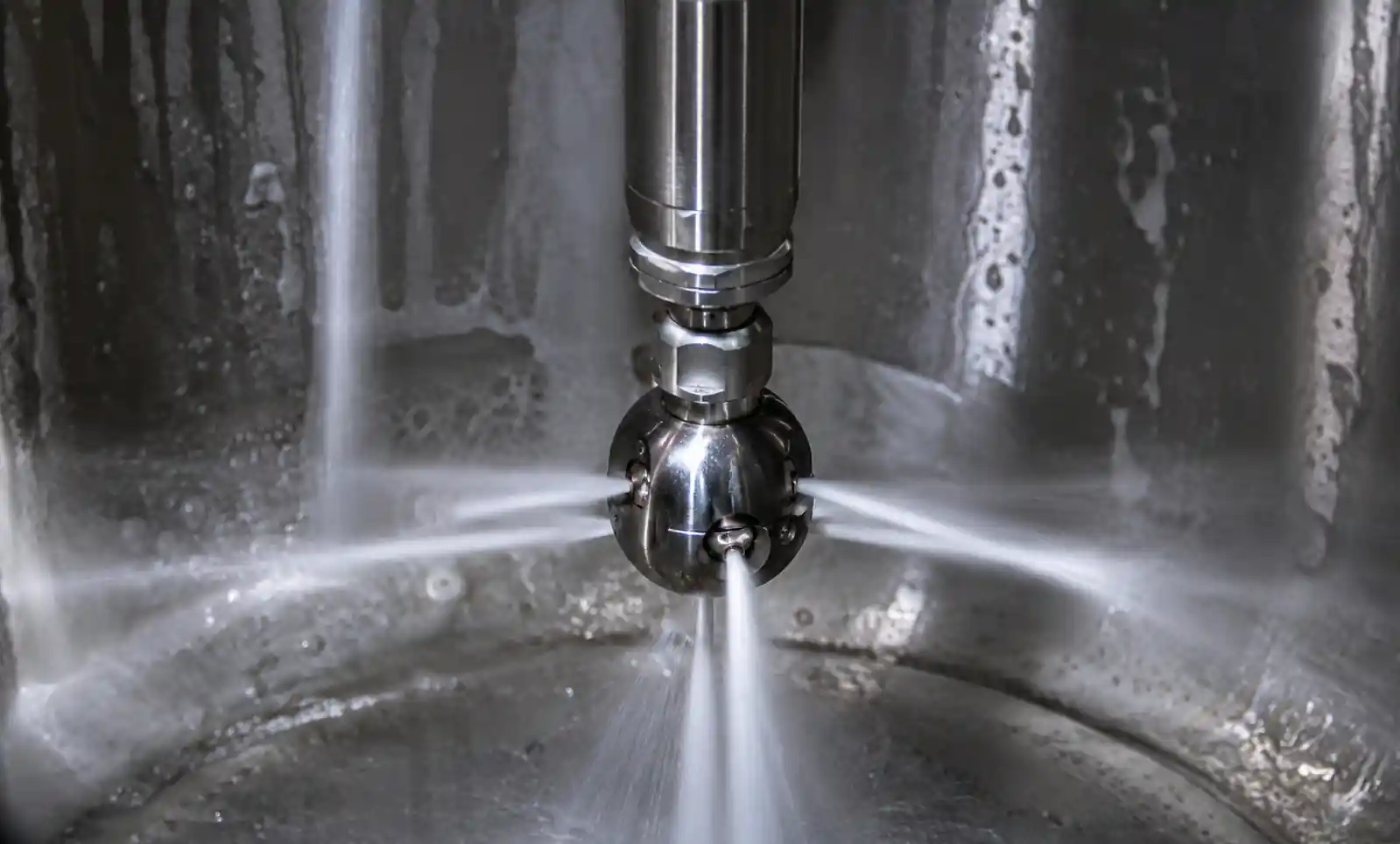
Table of Contents
- 1. 1. Understanding Tank Cleaning Nozzle Performance Fundamentals
- 2. 2. Static Spray Balls vs Rotary Jet Heads: Real Performance Differences
- 3. 3. Nozzle Material Selection for Longevity
- 4. 4. Matching Nozzle Type to Tank Size and Geometry
- 5. 5. Pressure and Flow Rate Requirements
- 6. 6. Industry-Specific Considerations
- 7. 7. Common Selection Mistakes That Cost Money
- 8. Conclusion
1. Understanding Tank Cleaning Nozzle Performance Fundamentals
Impact force determines cleaning effectiveness more than flow rate. When we upgraded our 5,000-gallon mixing tank from a static spray ball to a rotary jet head at identical 30 GPM flow, cleaning cycle time dropped from 45 minutes to 18 minutes. The difference? Concentrated jet streams delivering 12 PSI impact force versus dispersed spray at 2 PSI.
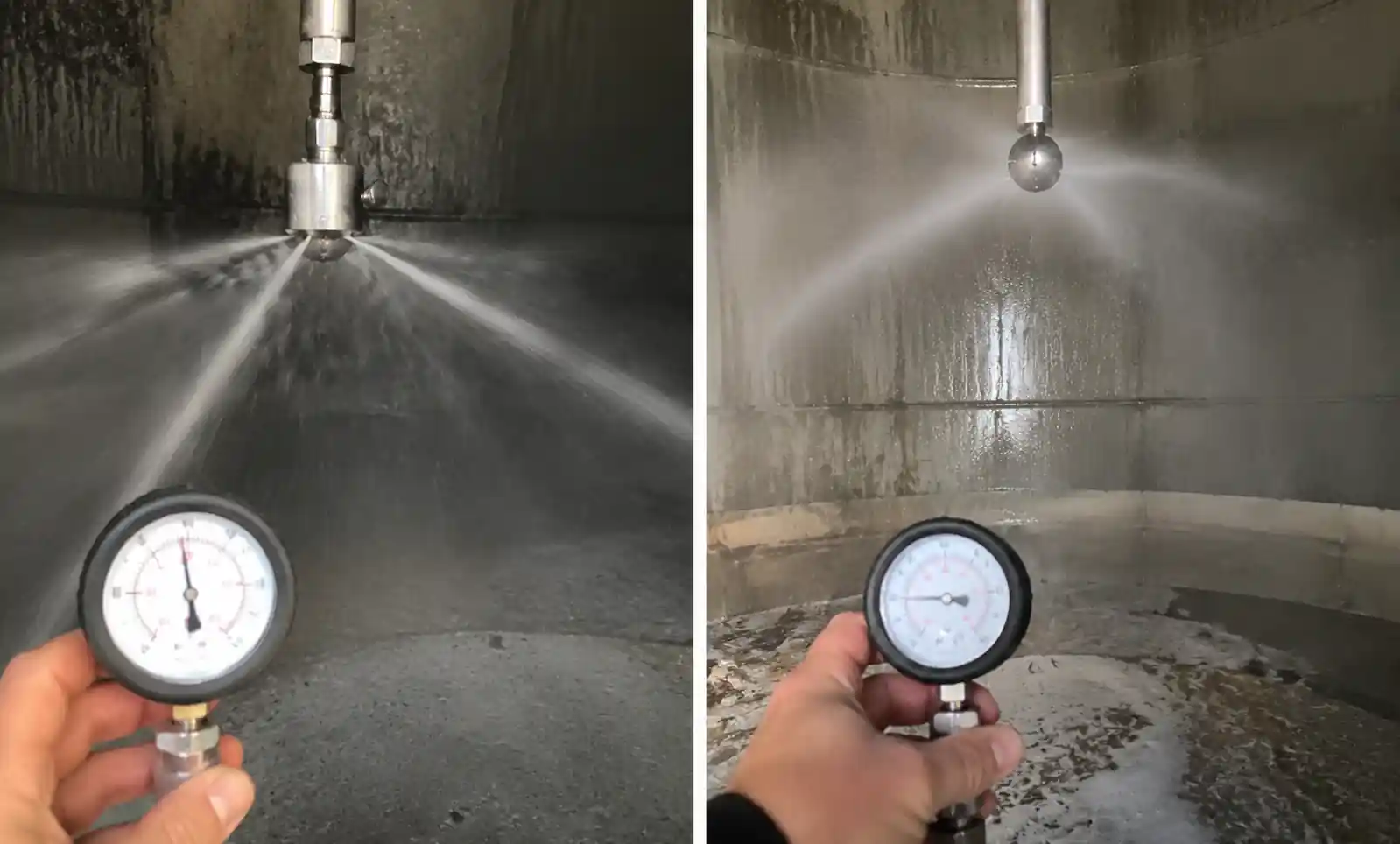
Coverage pattern consistency separates reliable cleaning from contamination incidents. Spray balls create overlapping spherical patterns, but shadowed areas behind baffles remain untouched. After three failed swab tests in our pharmaceutical vessel, switching to a dual-axis rotary head eliminated the blind spots that static spray couldn't reach.
Droplet size affects mechanical cleaning action. Large droplets (800-1200 microns) from rotary jets break up protein deposits our spray ball couldn't touch, while finer spray (300-500 microns) works better for final rinse cycles without leaving pooled water that harbors bacteria.
2. Static Spray Balls vs Rotary Jet Heads: Real Performance Differences
Static spray balls work for light soiling where gentle coverage matters more than mechanical scrubbing. Our 500-gallon buffer tanks use spray balls because changeover involves only rinsing water-soluble residues. Installation costs $180 per nozzle versus $1,400 for rotary units—smart when cleaning demands are minimal.
| Feature | Static Spray Ball | Rotary Jet Head | Real Impact |
|---|---|---|---|
| Impact Force | 1-3 PSI | 8-15 PSI | Rotary removes baked-on residue spray balls can't touch |
| Water Usage | Baseline | 30-40% less | We saved 2.4M gallons annually switching 8 tanks |
| Cleaning Time | Baseline | 50-70% faster | Reduced downtime = 3 extra production batches weekly |
| Coverage | 360° but low intensity | 360° with high intensity | Rotary reaches shadowed areas spray balls miss |
| Initial Cost | $150-300 | $1,200-2,500 | Payback in 4-8 months from water/chemical savings |
| Maintenance | None (no moving parts) | Annual bearing service | Budget $200/year per unit for seal kits |
Rotary jet heads concentrate flow into 2-4 high-velocity streams that rotate on two axes. Our 10,000-gallon fermentation tanks had protein buildup requiring manual scrubbing every third cycle with spray balls. Rotary jets eliminated manual cleaning entirely—the focused impact strips deposits that spray balls just wet.
Self-rotating designs use fluid pressure to drive rotation through turbine mechanisms. We run these at 40-80 PSI with 25-50 GPM depending on tank size. Turbine models need minimum flow to maintain rotation speed—running one at 15 GPM (below 20 GPM minimum) caused erratic rotation and streaked cleaning that failed ATP testing.
3. Nozzle Material Selection for Longevity
Material choice determines whether your nozzle lasts three months or three years. Our brass spray ball orifices in caustic cleaning tanks expanded 18% in six months, destroying spray pattern uniformity and failing validation. Switching to 316L stainless extended life to 4+ years with negligible wear.
| Material | Chemical Resistance | Abrasion Resistance | Temperature Range | Typical Lifespan | Cost Factor | Best Application |
|---|---|---|---|---|---|---|
| Brass | Poor (acids attack) | Low | -20°C to 120°C | 6-12 months (corrosive) | 1x | Clean water only |
| 316L Stainless | Excellent | Moderate | -40°C to 200°C | 3-5 years | 2.5-3x | Food, pharma, most chemicals |
| Ceramic (Al₂O₃) | Excellent (except HF) | Very High | -40°C to 300°C | 5-8 years | 4-6x | Abrasive slurries, high-temp |
| PEEK Polymer | Good | Low | -40°C to 180°C | 2-4 years | 2-3x | Sterile processes, non-abrasive |
Stainless steel 316L handles 80°C caustic, 65°C acid, and 135°C steam sterilization. The material resists chloride stress corrosion that destroys 304 stainless in salty rinse water. However, stainless erodes in high-velocity slurry applications where ceramic outlasts it 10:1.
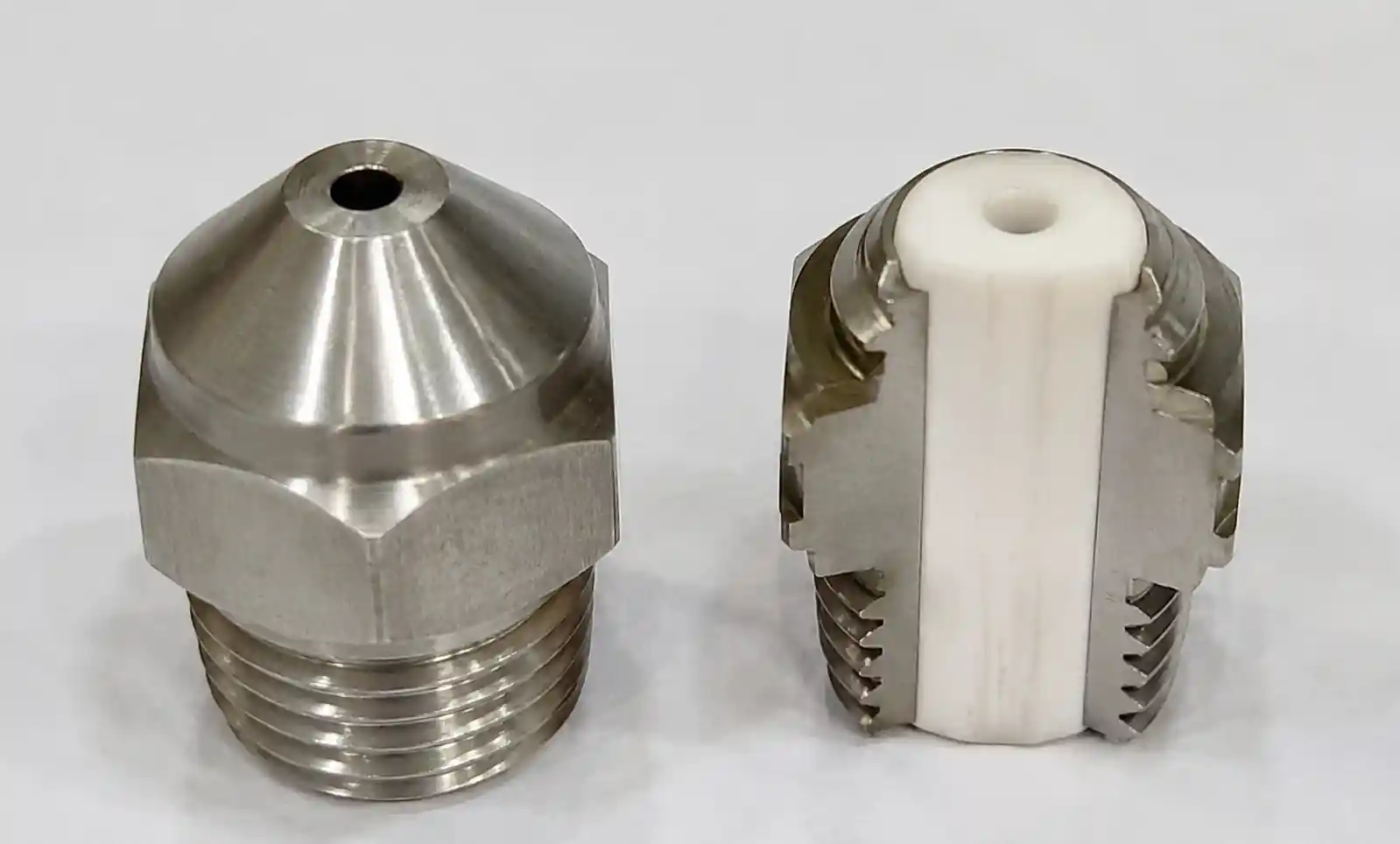
Ceramic inserts provide ultimate abrasion resistance. Our chocolate processing tank had stainless nozzles wear out every 18 months from cocoa solids. Ceramic orifice inserts cost $450 versus $180 for all-stainless units, but they've run 4 years without measurable wear. The brittleness requires careful installation—we cracked one by overtightening mounting threads.
4. Matching Nozzle Type to Tank Size and Geometry
Tank volume determines minimum flow capacity and impact force. Small tanks (100-500 gallons) work with spray balls at 5-15 GPM. Medium tanks (500-3,000 gallons) benefit from rotary heads at 15-35 GPM. Large tanks (3,000+ gallons) demand high-impact rotary jets at 30-80 GPM for effective mechanical cleaning.
Vertical cylindrical tanks work well with single top-mounted nozzles. Our 2,000-gallon tanks use one rotary jet head at top center. Gravity helps drainage while 360-degree rotation covers walls and cone bottom. Tanks with height-to-diameter ratios over 3:1 may need side-mounted nozzles for bottom coverage.
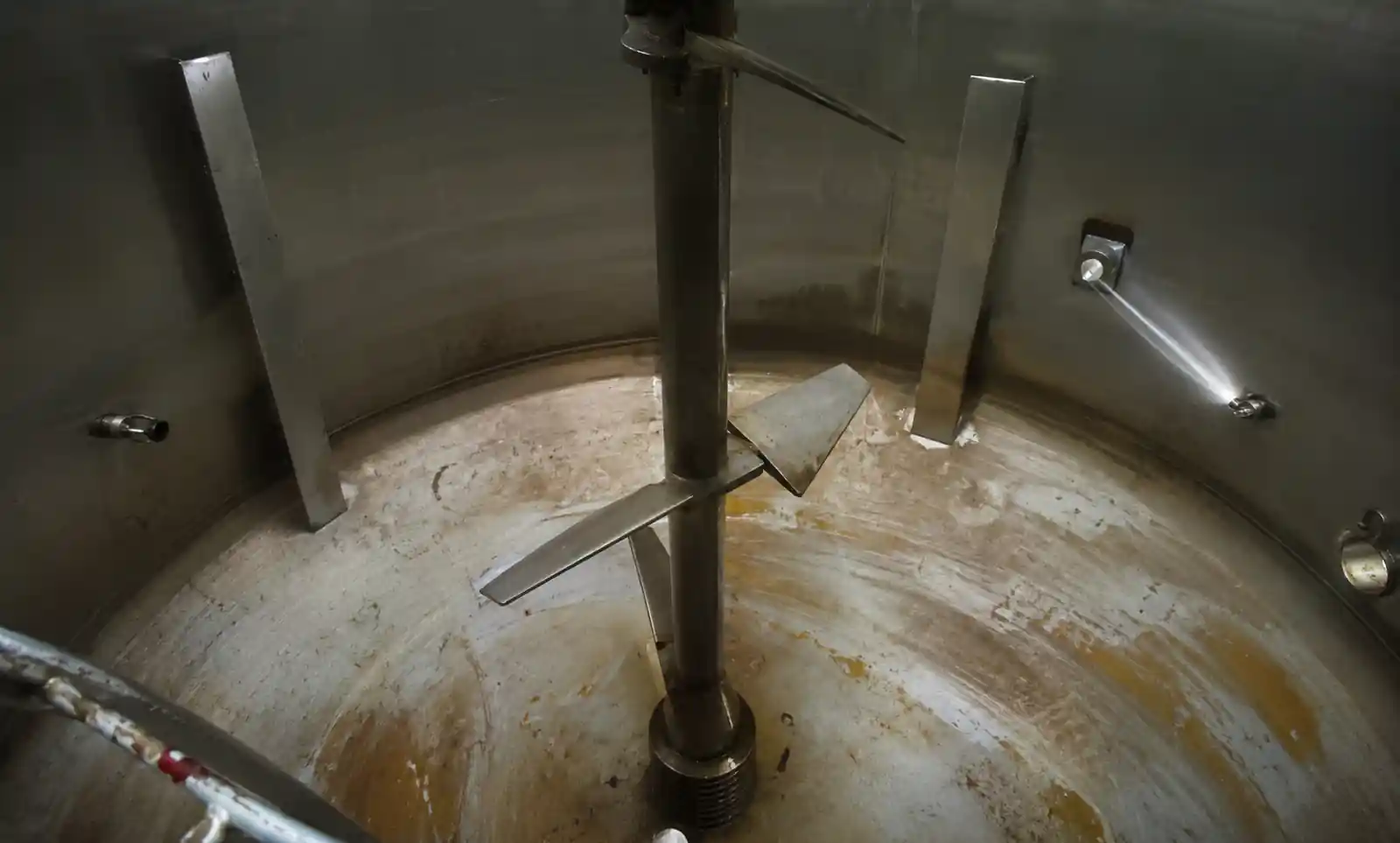
Internal obstructions demand careful nozzle placement. Our mixing tank has a central agitator shaft creating a shadow zone that top-mounted nozzles can't reach. We added a side-mounted rotary head at mid-height angled 15 degrees downward—eliminating the 3-inch uncleaned ring around the shaft base that caused contamination failures.
Horizontal tanks require multiple nozzles. Our 4,000-gallon horizontal storage vessel uses three rotary spray heads—one at each end and one at the center. Running all three at 20 GPM each completes cleaning in 15 minutes. Initially we tried one central unit at 60 GPM, but the ends received inadequate impact force and harbored residue.
5. Pressure and Flow Rate Requirements
Minimum pressure determines effectiveness. Spray balls need 15-30 PSI for uniform patterns—below this, spray collapses into dribbling streams. Rotary mechanisms require 30-50 PSI minimum for rotation speed. High-impact jets need 60-100 PSI to break up stubborn deposits.
Flow rate correlates with coverage speed and impact energy. At 30 GPM, a rotary head completes full cleaning of our 3,000-gallon tank in 20 minutes. Reducing flow to 20 GPM drops impact force 30% and extends cycle time to 32 minutes—marginal water savings but longer downtime costs more.
| Tank Size | Nozzle Type | Minimum Flow | Optimal Pressure | Cleaning Time | Notes |
|---|---|---|---|---|---|
| 100-500 gal | Spray Ball | 5-15 GPM | 20-30 PSI | 15-25 min | Adequate for light soiling |
| 500-2,000 gal | Rotary Spray Head | 15-30 GPM | 40-60 PSI | 15-20 min | Good balance for most applications |
| 2,000-5,000 gal | Rotary Jet Head | 30-50 GPM | 60-80 PSI | 18-25 min | Required for protein/fat removal |
| 5,000-15,000 gal | High-Impact Rotary | 50-80 GPM | 80-120 PSI | 20-30 min | Chemical plants, heavy soiling |
Pump capacity limits system design. Our facility has 100 GPM CIP pump capacity serving five tanks. We sequence cleaning with PLC control, running two tanks at 40 GPM each. Running three tanks at 33 GPM each dropped pressure to 45 PSI, below the 60 PSI minimum for effective rotary operation.
Pressure drop through piping steals performance. We measured 22 PSI loss through 150 feet of 1.5-inch supply line at 40 GPM. Upsizing to 2-inch pipe reduced loss to 8 PSI. Always calculate system pressure at the nozzle, not just pump discharge—installations fail validation when nobody accounts for line losses.
6. Industry-Specific Considerations
Food and beverage processing demands materials withstanding hot caustic and acid CIP cycles. Our dairy operation runs 1.5% NaOH at 80°C followed by 2% HNO₃ at 65°C. Only 316L stainless survives this—brass corrodes in weeks, and 304 stainless pits after six months. FDA compliance requires 3-A Sanitary Standards certification.
Pharmaceutical manufacturing needs validation documentation proving cleaning effectiveness. Our sterile API production uses rotary jet heads with documented coverage patterns. The validation package cost $8,000 but saved $40,000 in failed inspections we'd experienced with undocumented spray balls. Nozzles must be CIP/SIP compatible, handling 135°C steam cycles without seal degradation.
Chemical processing deals with aggressive solvents. Our solvent recovery tank had standard stainless nozzles fail within months from MEK attack. Switching to PTFE-lined bodies with ceramic orifices extended life to 3+ years. The $2,400 specialized nozzle beats replacing $650 standard units every four months.
Brewing operations face protein and biofilm challenges. Our fermentation tanks had krausen rings that spray balls couldn't remove, requiring manual scrubbing every third batch. Rotary jet heads at 70 PSI eliminated manual intervention entirely—beer-stone buildup disappeared when we increased impact force from 3 PSI to 12 PSI.
7. Common Selection Mistakes That Cost Money
Undersizing for "cost savings" creates failures. Our team installed $180 spray balls in tanks needing $1,400 rotary jets to cut costs. The spray balls failed ATP validation 60% of the time, requiring manual cleaning at $280 per incident. Four months of failures exceeded what proper nozzles would have cost initially.
Ignoring internal geometry causes blind spots. We specified a top-mounted rotary head for a tank with side-entry agitator that created a 12-inch shadow zone. Contamination incidents from this uncleaned area cost $15,000 in product disposal. Always map internal obstructions before selecting nozzle placement.
Overspecifying pressure wastes pump capacity. An engineer specified 100 PSI rotary jets for light-soiling buffer tanks that clean perfectly at 50 PSI. This consumed 40% more pump capacity than necessary, limiting how many tanks we could clean simultaneously.
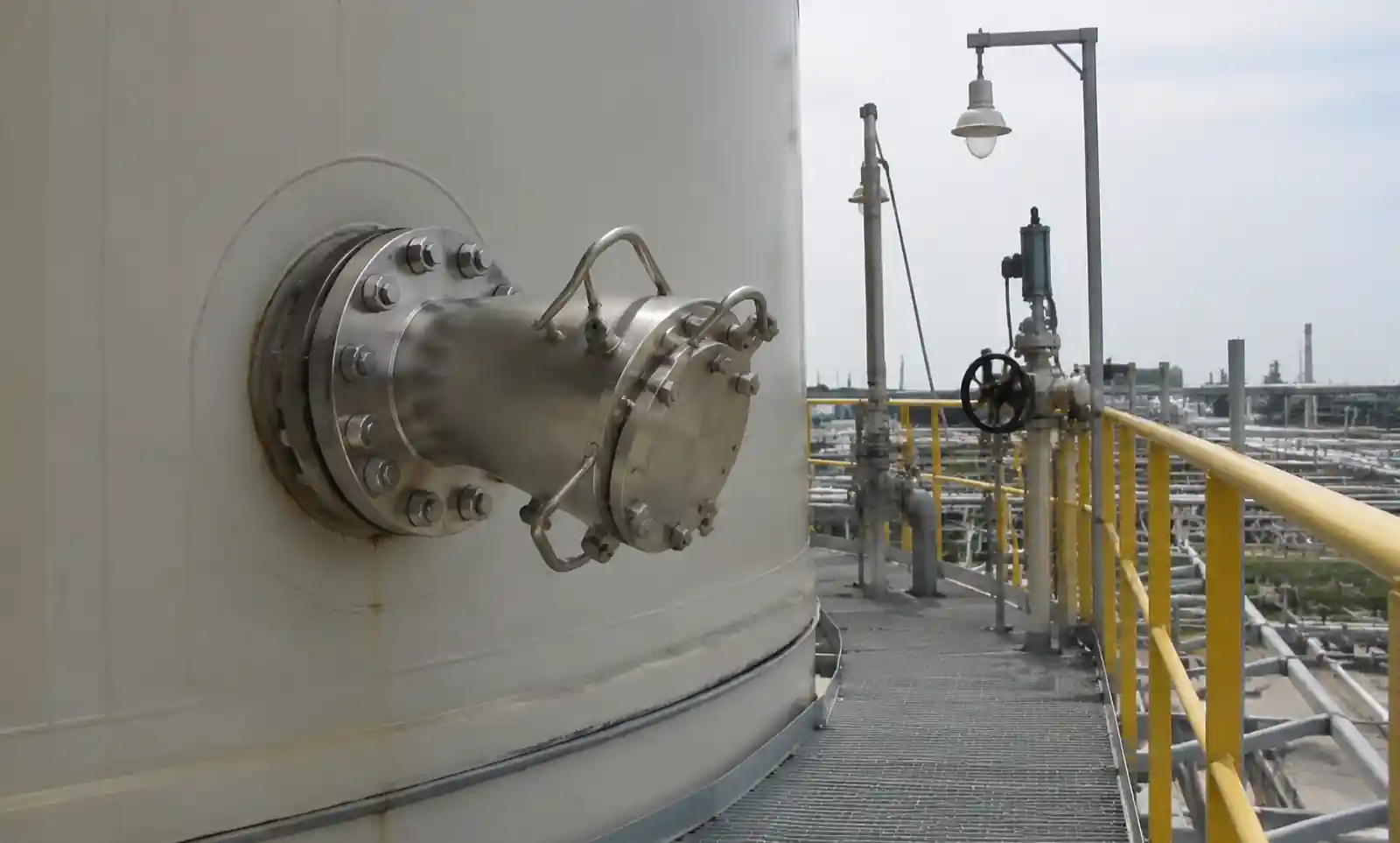
Neglecting maintenance access dooms reliability. Our ceiling-mounted rotary head required scaffolding for quarterly bearing service. After six months of deferred maintenance, the seized bearing caused validation failure. Relocating to a flanged side port with catwalk access reduced service time from 4 hours to 20 minutes.
Buying based on initial cost ignores operating expenses. Cheap spray balls at $150 each seemed attractive versus $1,600 rotary jets. But spray balls used 45% more water and 40% more chemicals per cycle, costing $8,400 extra annually across eight tanks. Rotary jets paid back their premium in five months.
Skipping validation testing causes expensive surprises. We bought 12 rotary heads based on manufacturer claims, then discovered they couldn't remove our specific biofilm at rated pressure. Testing one unit first would have saved $14,000 in wrong equipment purchases.
Conclusion
Choosing the right tank cleaning nozzle starts with honest assessment of soil type and cleaning requirements. Static spray balls work for light soiling where low capital cost matters. Rotary spray heads suit moderate demands. High-impact rotary jet heads become essential for stubborn deposits, strict hygiene requirements, or when water and chemical savings justify higher investment.
Material selection determines longevity—316L stainless handles most food and pharmaceutical applications, while ceramic inserts prove necessary for abrasive environments. Tank geometry drives nozzle placement; internal obstructions require careful mapping to avoid blind spots causing contamination failures.
Pressure and flow rate control cleaning effectiveness. Spray balls need 15-30 PSI, basic rotary units want 40-60 PSI, and high-impact systems require 60-100 PSI. Calculate pump capacity and account for piping losses—insufficient pressure at the nozzle guarantees failed validation.
Avoid common errors by right-sizing equipment to actual requirements. Test candidate nozzles in your application before full installation. Calculate total cost of ownership including water, chemicals, and energy—not just purchase price. Proper nozzle selection pays back through reliable cleaning, reduced operating costs, and eliminated manual intervention.