



How Cooling Systems Work in Marine Engines: A Complete Guide
Marine engines operate in one of the harshest environments imaginable. Unlike automotive engines that benefit from airflow and moderate temperatures, boat engines must dissipate tremendous heat while surrounded by water that can be corrosive, debris-laden, and temperature-variable. Understanding how marine cooling systems work isn't just technical knowledge—it's essential for every boat owner who wants to avoid catastrophic engine failure and costly repairs.
Table of Contents
- 1. 1. Why Marine Engines Need Specialized Cooling
- 2. 2. The Three Main Types of Marine Cooling Systems
- 3. 3. Raw Water Cooling Systems: Simple but Limited
- 4. 4. Closed Loop Freshwater Cooling: The Modern Standard
- 5. 5. Keel Cooling Systems: The Maintenance-Free Option
- 6. 6. Key Components in Marine Cooling Systems
- 7. 7. How Heat Exchange Works in Marine Engines
- 8. 8. Common Cooling System Problems and Solutions
- 9. 9. Maintenance Best Practices for Marine Cooling Systems
- 10. 10. Choosing the Right Cooling System for Your Vessel
- 11. Conclusion
1. Why Marine Engines Need Specialized Cooling
Marine engines generate extreme heat during combustion—often exceeding 2,000°F in the cylinders. Without effective cooling, metal components would warp, seals would fail, and the engine would seize within minutes. But marine environments present unique challenges that automotive cooling systems aren't designed to handle.
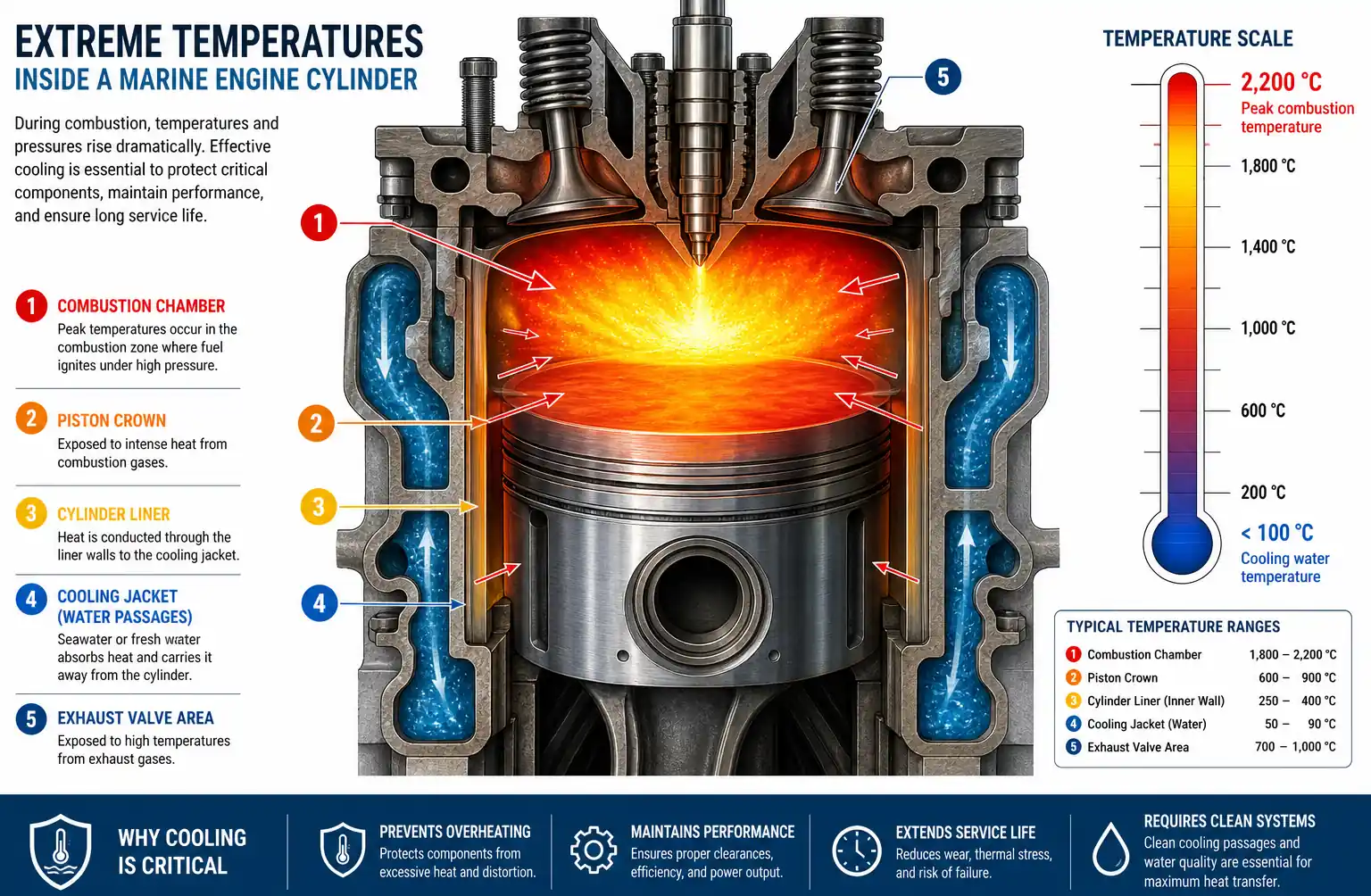
Saltwater corrosion, marine growth, sand and debris, and temperature fluctuations all threaten cooling system integrity. A car engine can rely on a radiator and fan, but boat engines must use the surrounding water as their ultimate heat sink. This fundamental difference drives the design of all marine cooling systems.
The cooling system must maintain optimal operating temperature (typically 160-180°F) regardless of whether you're idling in a tropical marina or running at full throttle in frigid northern waters. Too cold, and the engine runs inefficiently with increased wear. Too hot, and you risk overheating damage that can cost thousands to repair.
2. The Three Main Types of Marine Cooling Systems
Marine engineers have developed three distinct cooling system architectures, each with specific advantages and trade-offs. Your vessel likely uses one of these systems, and understanding which one can help you maintain it properly.
Raw water cooling circulates seawater directly through the engine block. Closed loop freshwater cooling uses a heat exchanger to separate engine coolant from raw water. Keel cooling eliminates raw water intake entirely by using external hull-mounted cooling tubes.
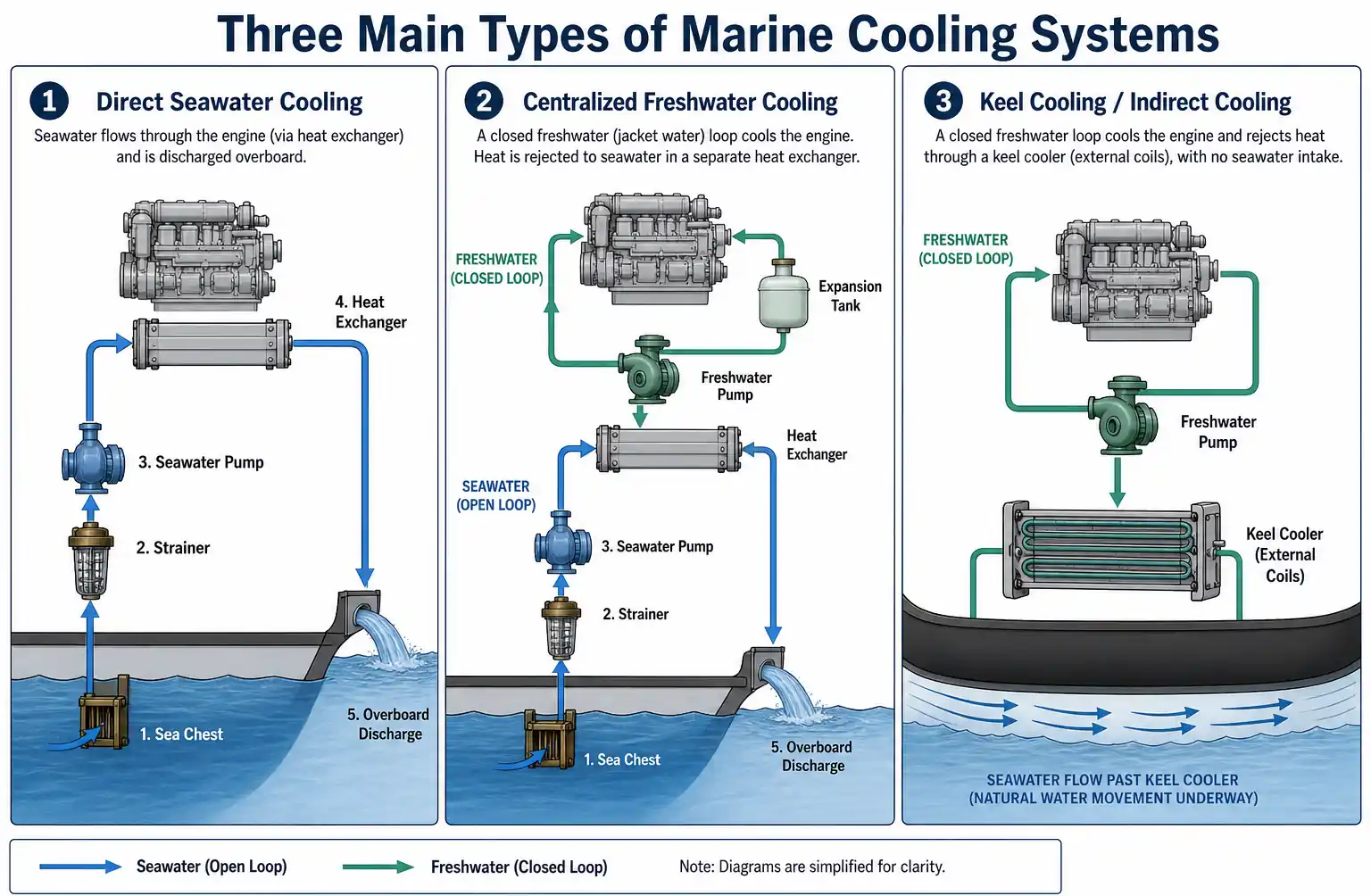
The choice between these systems depends on your vessel type, operating environment, budget, and maintenance preferences. Commercial vessels often favor different systems than recreational boats, and saltwater operations demand different considerations than freshwater use.
3. Raw Water Cooling Systems: Simple but Limited
Raw water cooling is the most straightforward marine cooling approach. A seacock opens to allow water intake, a pump draws water through a strainer, and that water flows directly through the engine block and cylinder head before exiting through the exhaust.
This system's simplicity is its greatest advantage. Fewer components mean lower initial cost, easier troubleshooting, and less that can go wrong. Many smaller outboard engines and older inboard designs use raw water cooling successfully.
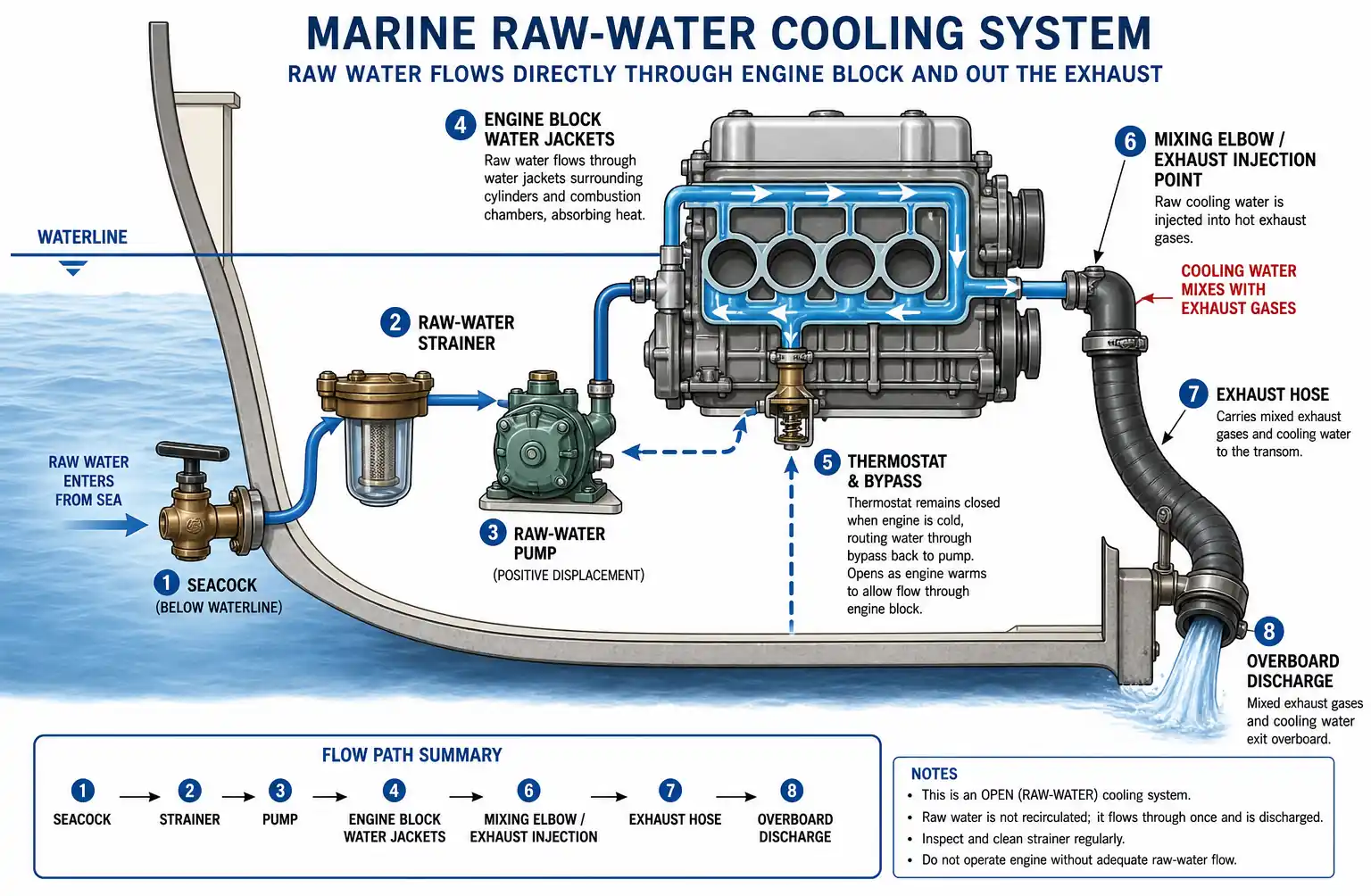
However, raw water cooling has significant drawbacks. Saltwater flowing through engine passages causes corrosion and mineral deposits. Sand, shells, and marine organisms can clog narrow passages. The engine runs cooler than optimal because raw water temperature varies with ambient conditions.
Pros of raw water cooling:
- Lowest initial cost
- Simplest design with fewer failure points
- Easy to understand and service
- No heat exchanger to maintain
Cons of raw water cooling:
- Accelerated corrosion in saltwater
- Mineral and salt buildup in engine passages
- Temperature control depends on water temperature
- More frequent maintenance required
- Shorter engine lifespan in saltwater applications
Raw water systems work best in freshwater environments or for engines that see limited saltwater use. If you operate primarily in saltwater, the long-term costs of corrosion and maintenance often exceed the initial savings.
4. Closed Loop Freshwater Cooling: The Modern Standard
Closed loop cooling systems revolutionized marine engine longevity. These systems circulate antifreeze coolant through the engine in a sealed loop—just like a car—while using raw water only to cool the heat exchanger.
The engine coolant never contacts seawater. Instead, it flows through the engine absorbing heat, then passes through a heat exchanger where raw water flowing on the opposite side carries away the heat. The cooled engine coolant returns to continue the cycle.
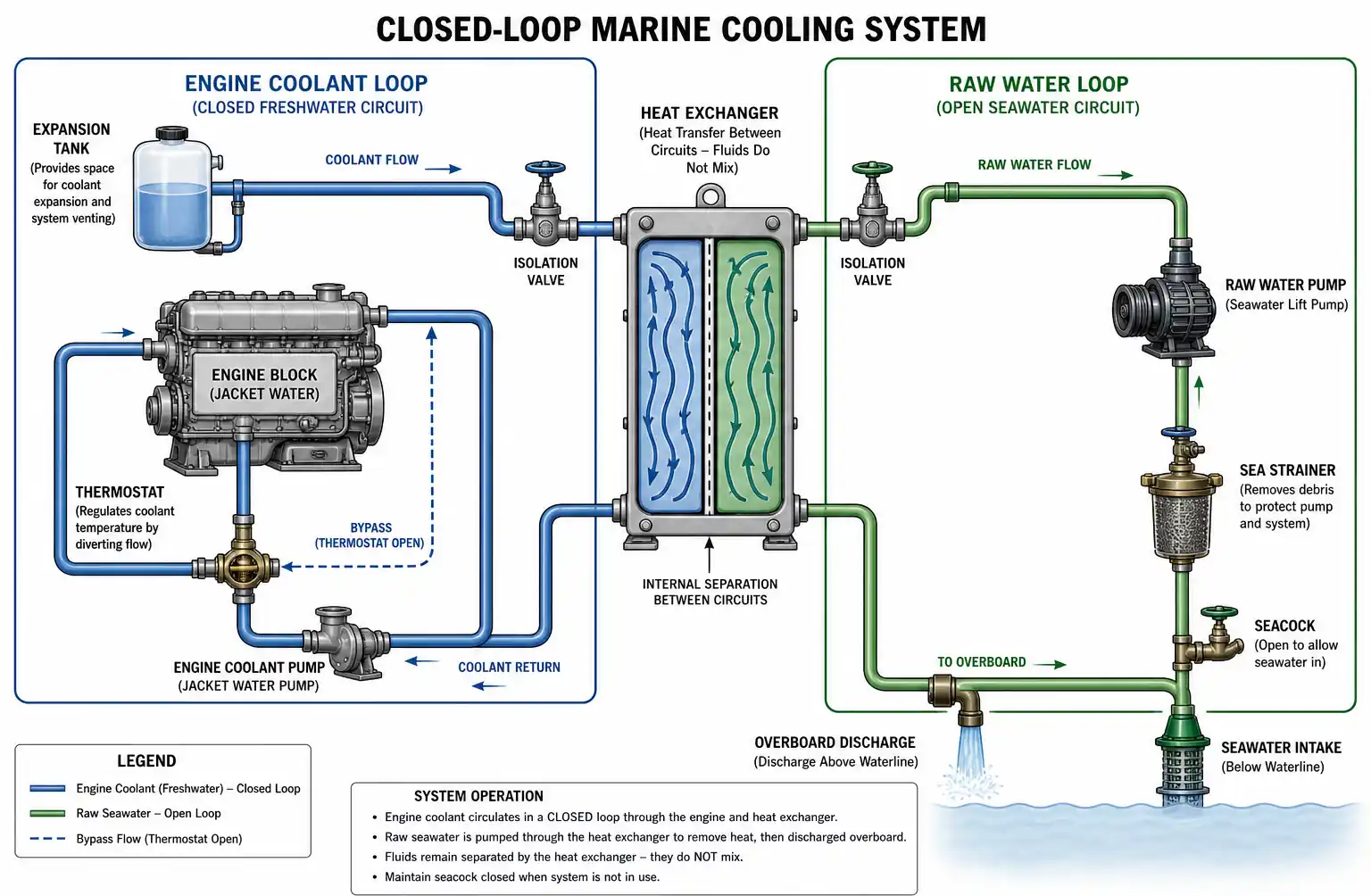
This separation provides enormous benefits. The engine runs at optimal temperature regardless of water conditions. Corrosion is minimized because only the heat exchanger contacts raw water. You can use proper antifreeze with corrosion inhibitors throughout the engine.
How the closed loop system works:
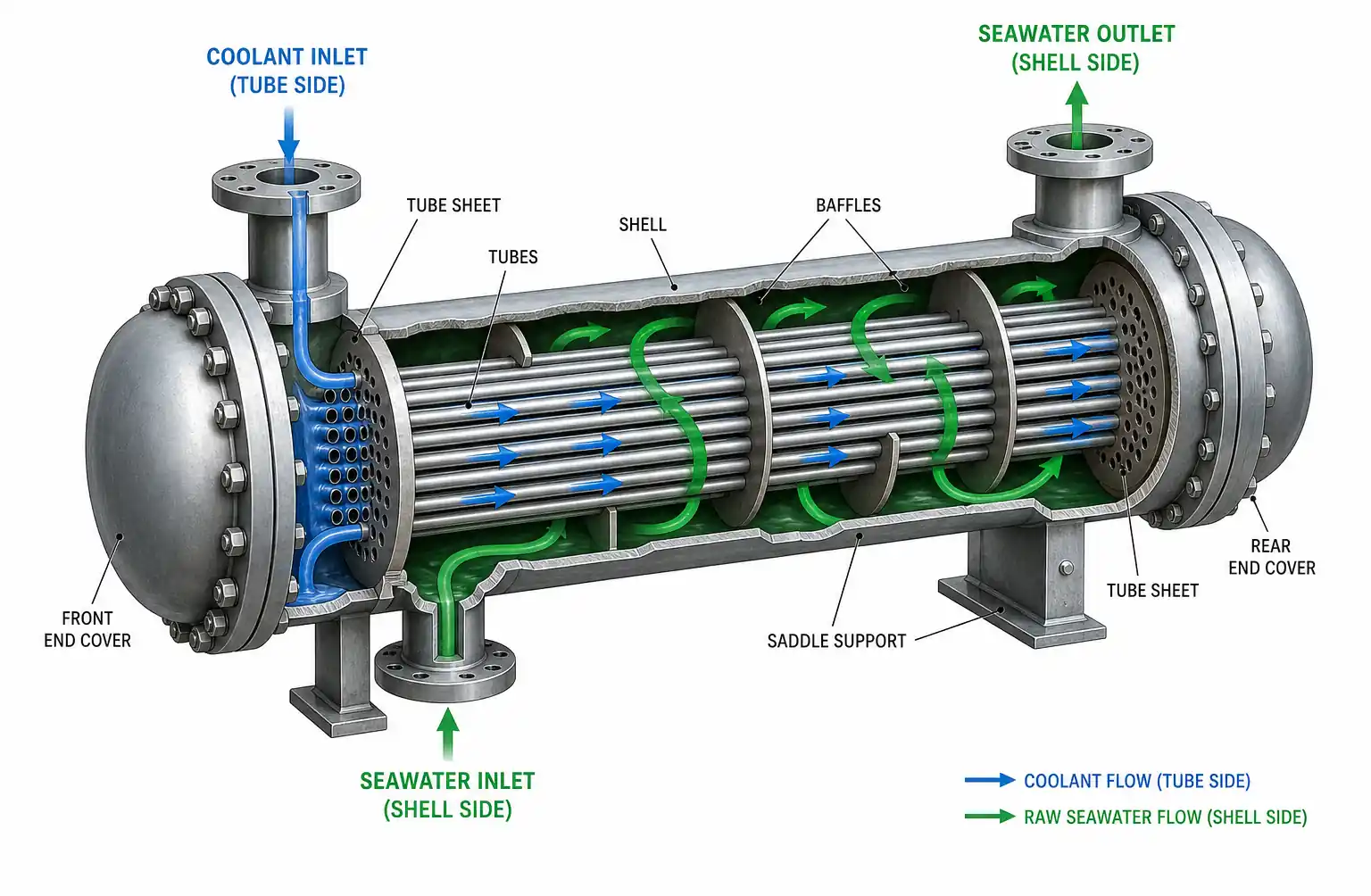
The freshwater pump circulates coolant through the engine block and heads. Hot coolant flows to the heat exchanger—a tube-and-shell design where engine coolant runs through tubes while raw water flows around them. The raw water pump draws seawater through the strainer and pushes it through the heat exchanger. Heat transfers from the hot coolant to the cooler raw water. The raw water exits through the exhaust, while cooled engine coolant returns to the engine.
A thermostat regulates coolant temperature by controlling flow through the heat exchanger. When the engine is cold, the thermostat stays closed, allowing coolant to warm quickly. Once operating temperature is reached, the thermostat opens to maintain consistent temperature.
Advantages of closed loop cooling:
- Engine runs at optimal temperature
- Dramatically reduced corrosion
- Longer engine life, especially in saltwater
- Can use proper antifreeze and corrosion inhibitors
- Better cold-weather protection
- More consistent performance
Disadvantages:
- Higher initial cost
- More components to maintain
- Heat exchanger requires periodic cleaning
- Slightly more complex troubleshooting
Most modern inboard diesel and gasoline engines use closed loop cooling. The investment pays off through extended engine life and reduced maintenance costs over time.
5. Keel Cooling Systems: The Maintenance-Free Option
Keel cooling represents the ultimate in low-maintenance marine cooling. This system eliminates raw water intake entirely by mounting cooling tubes externally on the hull below the waterline.
Engine coolant circulates through the engine, then flows through tubes or plates mounted on the hull exterior. The surrounding water cools these tubes through direct contact, and the cooled coolant returns to the engine. No raw water ever enters the boat.
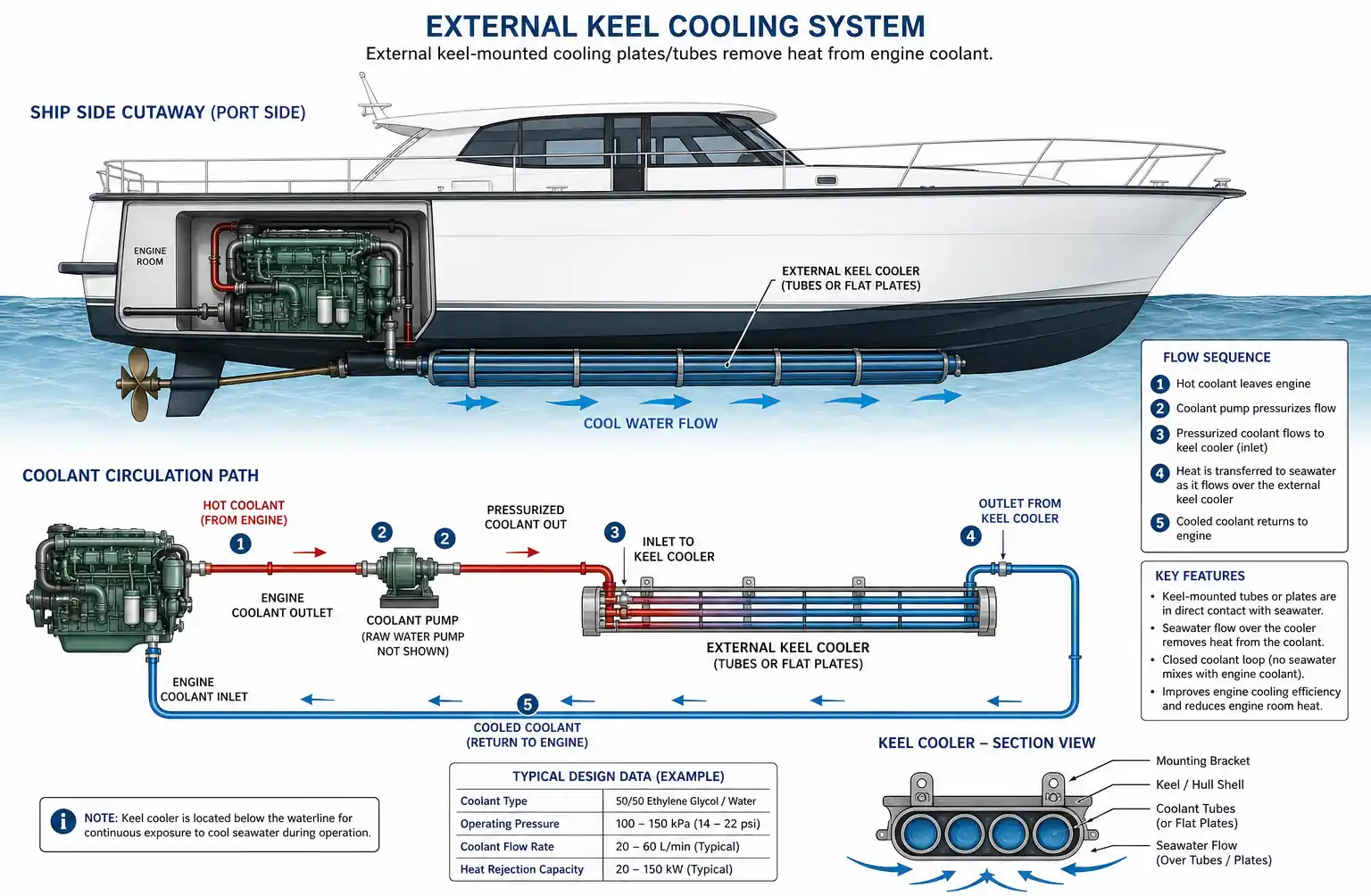
Keel cooling shines in specific applications. Vessels operating in debris-heavy waters avoid intake clogging. Boats in extremely cold climates eliminate freeze-up concerns. Commercial vessels reduce maintenance downtime significantly.
Benefits of keel cooling:
- No raw water intake or strainer to maintain
- No raw water pump to fail
- Eliminates clogging from debris or marine growth
- Ideal for shallow or debris-laden waters
- Reduced through-hull fittings
- Excellent for cold climates
Drawbacks:
- Highest initial installation cost
- Requires significant hull space for cooling tubes
- Less efficient at low speeds or when stationary
- Hull damage can compromise cooling
- Difficult to retrofit on existing vessels
- May require larger coolant capacity
Keel cooling works best for commercial vessels, workboats, and recreational boats operating in challenging environments where the benefits justify the higher cost.
6. Key Components in Marine Cooling Systems
Understanding the major components helps you diagnose problems and perform maintenance effectively. While systems vary, most share these critical elements.
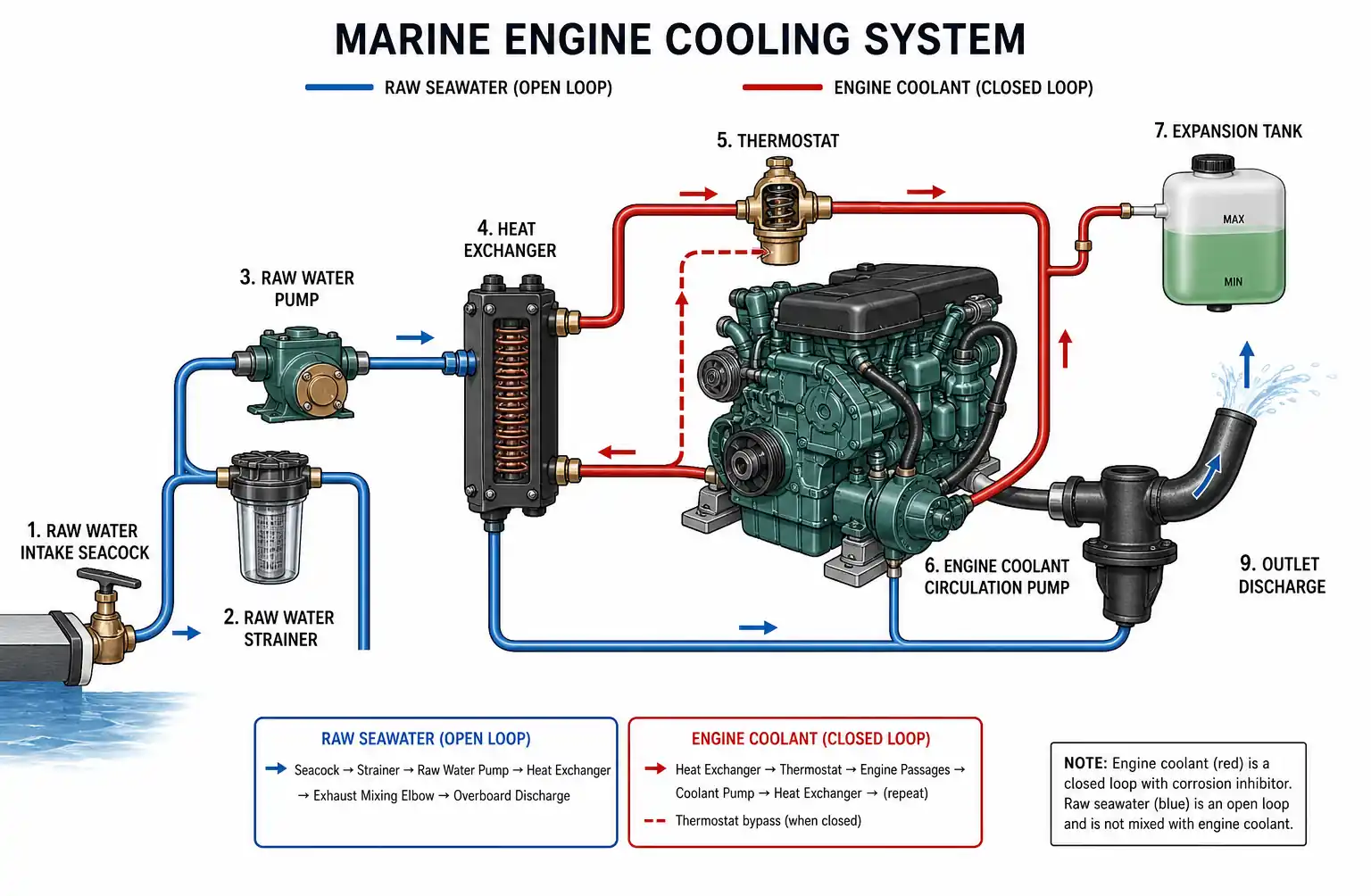
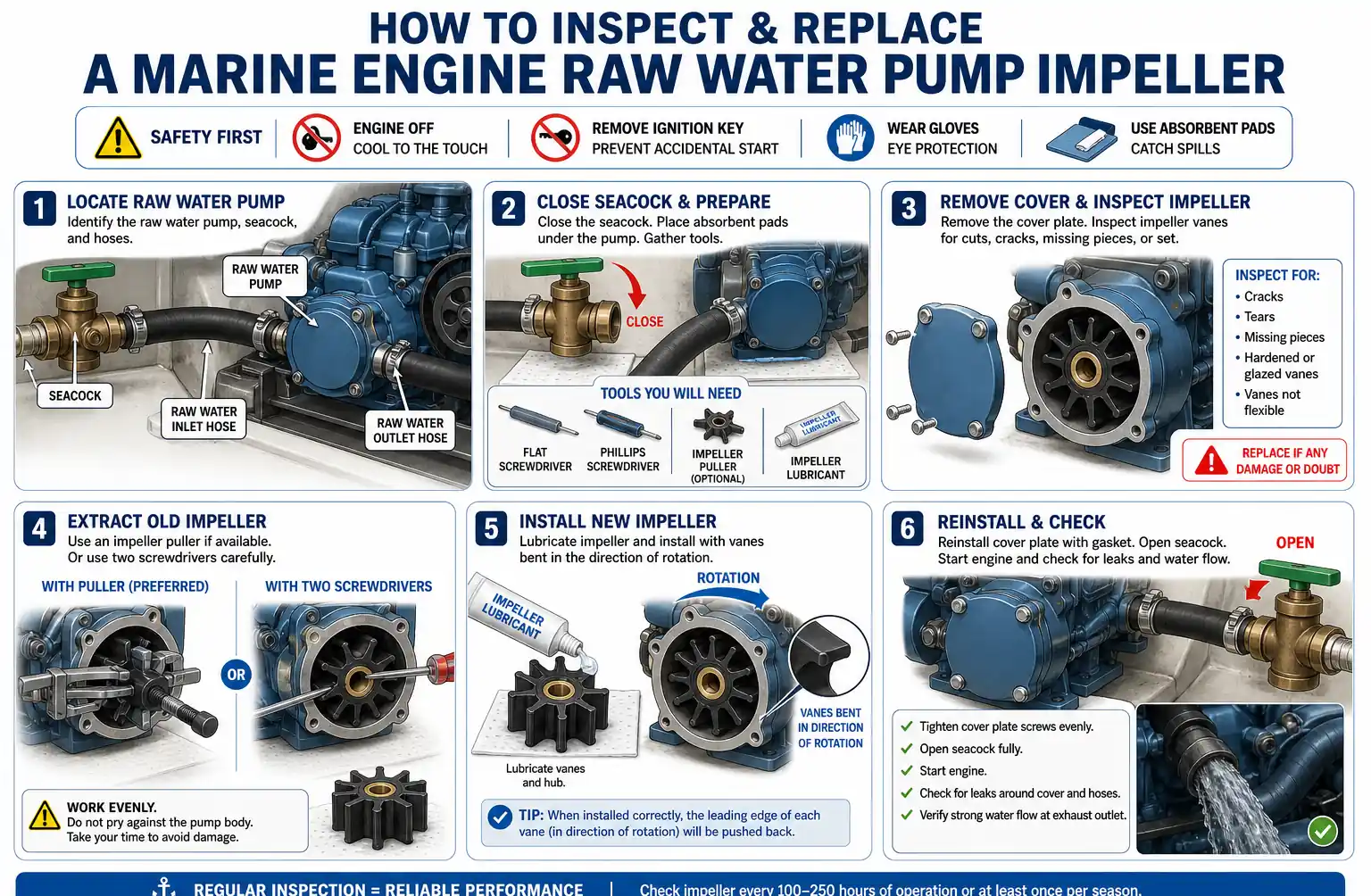
Raw water pump: Creates flow through the cooling system. Most marine engines use impeller pumps with rubber vanes that require periodic replacement. The impeller is often the first component to fail, making it crucial to carry spares.
Heat exchanger: In closed loop systems, this component transfers heat from engine coolant to raw water. Tube-and-shell or plate-style designs are most common. Zinc pencil anodes protect against corrosion.
Thermostat: Regulates coolant temperature by controlling flow. Marine thermostats typically open at 160-180°F. A stuck-closed thermostat causes overheating; stuck-open causes overcooling and poor performance.
Expansion tank: Accommodates coolant expansion and provides a fill point. Maintains system pressure and allows air purging. The cap's pressure rating is critical for proper operation.
Seacock and strainer: Controls raw water intake and filters debris. The strainer basket requires regular cleaning, especially in areas with marine growth or debris.
Coolant pump: In closed loop systems, circulates antifreeze through the engine. Usually belt-driven from the crankshaft. Bearing failure or seal leaks are common issues.
Exhaust mixing elbow: Combines hot exhaust gases with cooling water to reduce temperature before exiting. Corrosion-prone and requires periodic replacement.
7. How Heat Exchange Works in Marine Engines
Heat exchange is the fundamental process that keeps your engine from destroying itself. Understanding this process helps you recognize when something isn't working correctly.
Combustion generates heat that transfers to cylinder walls, pistons, and heads. Coolant flowing past these surfaces absorbs this heat through conduction. The heated coolant carries thermal energy away from critical components.
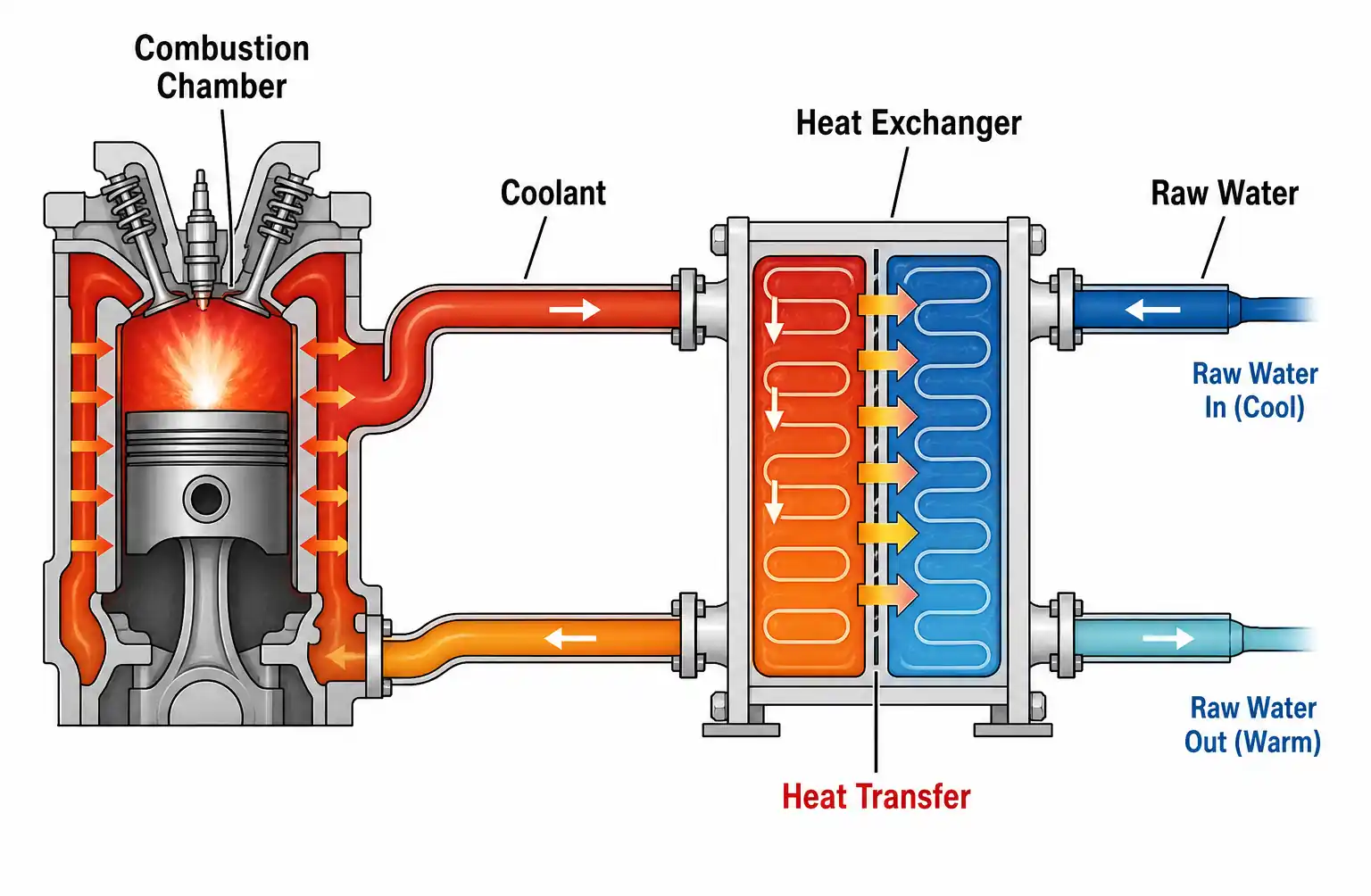
In raw water systems, this hot coolant (which is actually seawater) exits through the exhaust. In closed loop systems, the hot coolant flows to the heat exchanger where the real magic happens.
The heat exchanger uses counterflow design for maximum efficiency. Hot engine coolant flows through tubes in one direction while cool raw water flows around the tubes in the opposite direction. This arrangement maximizes the temperature difference, improving heat transfer.
Heat moves from the hot coolant through the tube walls to the cooler raw water. The raw water temperature rises while the engine coolant temperature drops. The warmed raw water exits through the exhaust, carrying the heat away from the boat.
Factors affecting heat exchange efficiency:
Flow rate matters tremendously. Insufficient flow reduces heat transfer and causes overheating. Blocked passages, failed pumps, or clogged strainers all reduce flow.
Temperature differential drives heat transfer. Colder raw water improves cooling efficiency. This is why engines may overheat in very warm water despite the system working correctly.
Surface area determines how much heat can transfer. Deposits on heat exchanger tubes reduce effective surface area and cooling capacity.
8. Common Cooling System Problems and Solutions
Marine cooling systems fail in predictable ways. Recognizing symptoms early can prevent catastrophic damage.
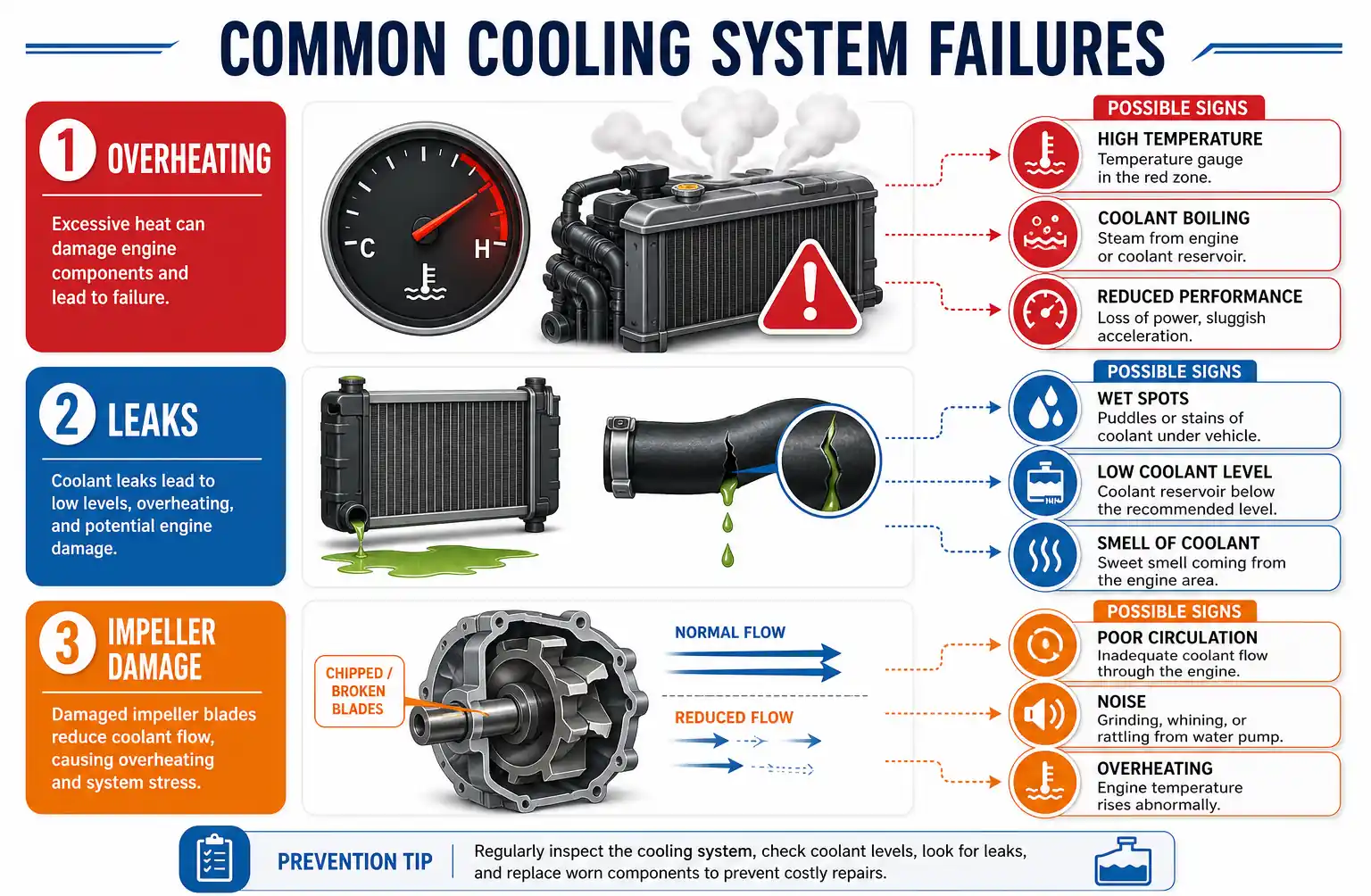
Overheating: The most common and dangerous problem. Symptoms include high temperature gauge readings, steam from the engine compartment, or the engine alarm sounding.
Causes: Failed impeller (most common), clogged strainer, closed seacock, thermostat stuck closed, air in the system, low coolant level, clogged heat exchanger, failed coolant pump.
Solutions: Check raw water flow from exhaust—weak flow indicates impeller or intake problems. Inspect strainer for debris. Verify seacock is open. Test thermostat operation. Check coolant level and look for leaks. Clean heat exchanger if flow is good but cooling is poor.
Overcooling: Less obvious but still problematic. Engine runs below normal temperature, reducing efficiency and increasing wear.
Causes: Thermostat stuck open or missing, oversized cooling system, extremely cold water temperature.
Solutions: Replace thermostat. Verify correct thermostat temperature rating for your engine. In extreme cold, some operators partially restrict raw water flow.
Coolant leaks: External leaks are obvious; internal leaks are insidious.
Causes: Worn hoses, failed gaskets, corroded heat exchanger, cracked expansion tank, damaged coolant pump seal.
Solutions: Pressure test the system to locate leaks. Replace hoses every 5-7 years preventatively. Check heat exchanger zinc anodes. Inspect pump seals for weeping.
Corrosion and deposits: Gradual performance degradation over time.
Causes: Saltwater exposure, inadequate corrosion inhibitors, neglected maintenance, failed zinc anodes.
Solutions: Flush system regularly. Use proper marine antifreeze with corrosion inhibitors. Replace zinc anodes before they're completely consumed. Consider acid cleaning for severe deposits.
Impeller failure: The most frequent maintenance issue.
Causes: Age, running dry, debris damage, chemical degradation.
Solutions: Replace impellers annually or every 200-300 hours. Never run the engine without water flow. Carry spare impellers and the tools to replace them. Inspect the pump housing for wear.
9. Maintenance Best Practices for Marine Cooling Systems
Preventative maintenance is dramatically cheaper than emergency repairs. A systematic approach keeps your cooling system reliable.
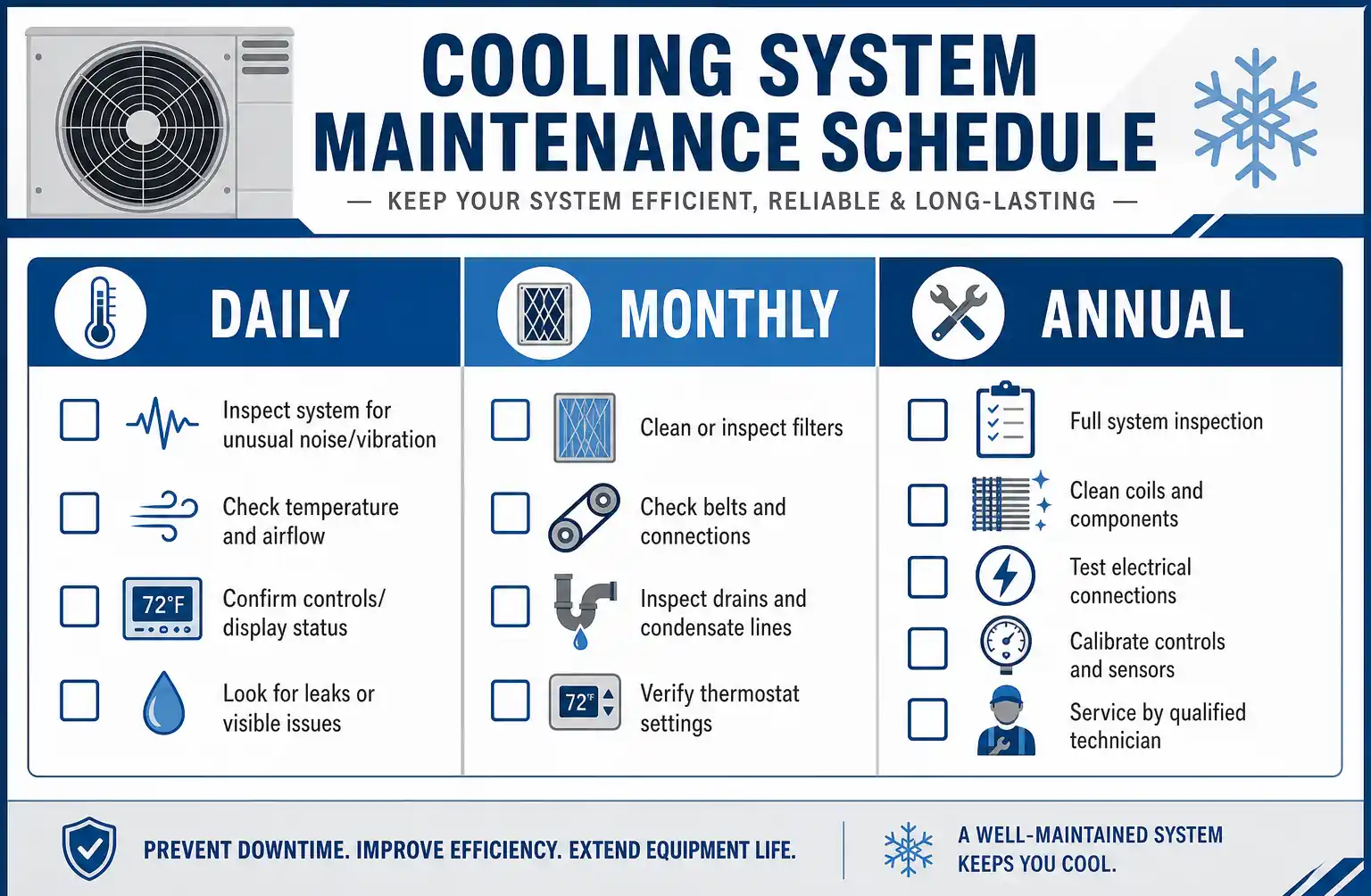
Daily checks before operation:
- Verify raw water flow from exhaust after starting
- Check temperature gauge reaches normal operating range
- Listen for unusual sounds from pumps
- Look for new leaks or drips
Monthly maintenance:
- Clean raw water strainer basket
- Check coolant level in expansion tank
- Inspect visible hoses for cracks or softness
- Verify belt tension on coolant pump
Annual service:
- Replace raw water impeller
- Flush cooling system with fresh water
- Inspect and replace zinc anodes
- Pressure test for leaks
- Check thermostat operation
- Inspect heat exchanger for corrosion
- Replace coolant (closed loop systems)
Every 2-3 years:
- Replace all cooling system hoses
- Acid clean heat exchanger if in saltwater
- Rebuild or replace raw water pump
- Inspect exhaust mixing elbow
Winterization (cold climates):
- Drain all raw water from the system
- Add antifreeze to closed loop systems
- Run antifreeze through raw water side
- Ensure no water remains that could freeze
Flushing procedure for saltwater operation:
After each saltwater use, flush the raw water side with fresh water. Connect a hose to the raw water intake or use a flushing attachment. Run the engine at idle for 10-15 minutes with fresh water flowing. This removes salt deposits before they harden.
For closed loop systems, drain and refill coolant every 2-3 years. Use marine-grade antifreeze with proper corrosion inhibitors. Burp the system to remove air pockets after refilling.
10. Choosing the Right Cooling System for Your Vessel
If you're repowering or buying a new vessel, selecting the appropriate cooling system affects long-term costs and reliability.
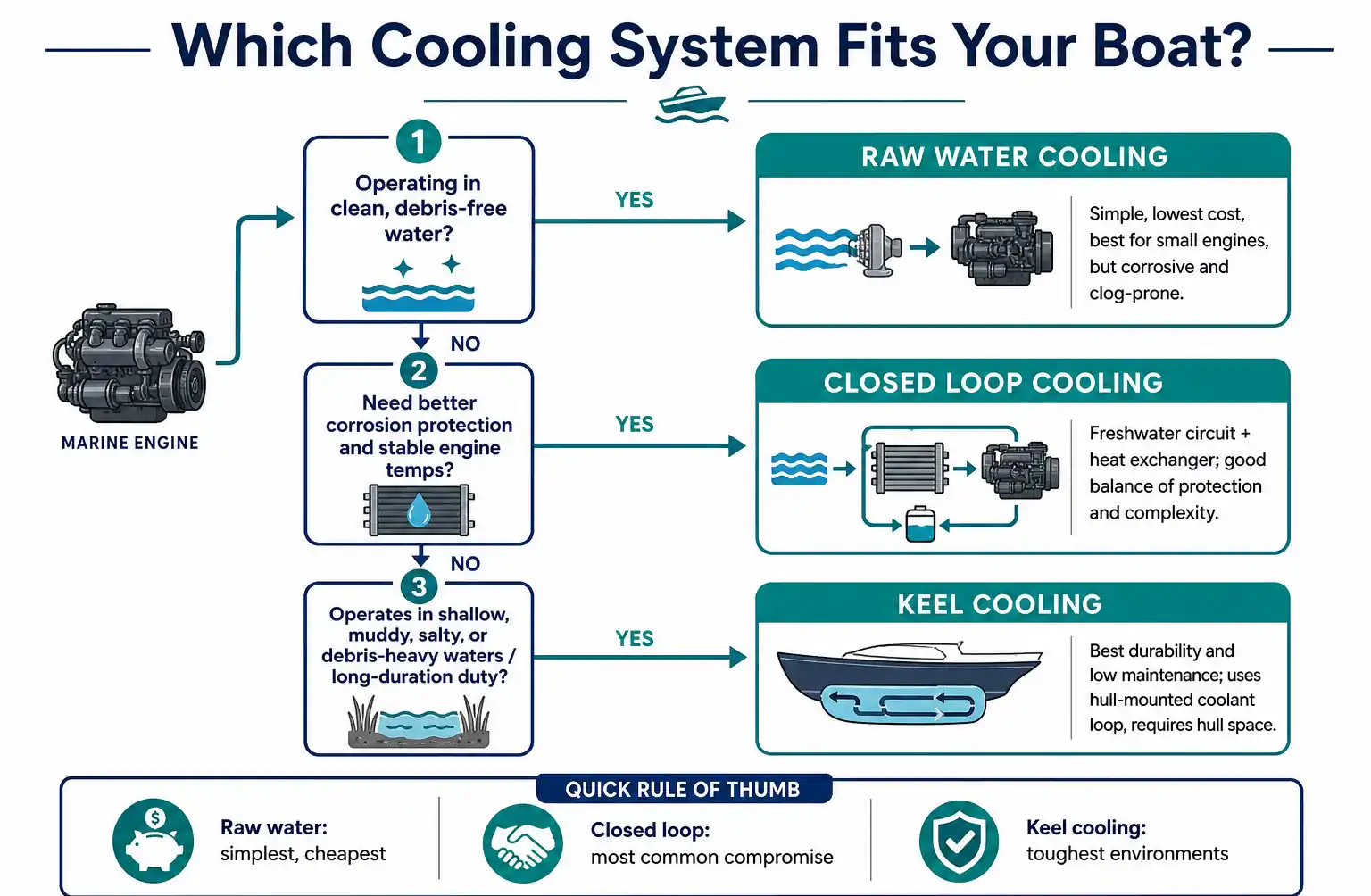
Choose raw water cooling if:
- You operate primarily in fresh water
- Initial cost is the primary concern
- You have a smaller engine (under 50 HP)
- You're comfortable with more frequent maintenance
- The vessel is used seasonally with limited hours
Choose closed loop cooling if:
- You operate in saltwater regularly
- You want maximum engine longevity
- You prefer less frequent maintenance
- You need consistent operating temperature
- You operate in varying water temperatures
Choose keel cooling if:
- You operate in debris-heavy waters
- You need minimal maintenance
- You have commercial operation requirements
- You operate in extremely cold climates
- Initial cost is less important than reliability
Hybrid considerations:
Some vessels use hybrid approaches. For example, a closed loop system for the engine block with raw water cooling for the exhaust manifolds. This provides corrosion protection for the engine while keeping costs reasonable.
Auxiliary systems like air conditioning, hydraulics, or generators may use different cooling methods than the main engine. Coordinate all systems to avoid overloading raw water capacity.
Installation quality matters:
Regardless of system type, proper installation is critical. Use marine-grade hoses with double clamps. Install seacocks that are easily accessible. Route hoses to avoid chafe and heat exposure. Provide adequate ventilation around the engine.
Size components appropriately for your engine's heat rejection. Undersized heat exchangers or inadequate raw water flow cause chronic overheating. Consult manufacturer specifications rather than guessing.
Conclusion
Marine engine cooling systems are engineering marvels that protect your investment from destructive heat. Whether your vessel uses simple raw water cooling, sophisticated closed loop systems, or maintenance-free keel cooling, understanding how these systems work empowers you to maintain them properly.
The key takeaways: raw water systems are simple but require diligent maintenance, especially in saltwater. Closed loop systems offer the best balance of performance and longevity for most applications. Keel cooling eliminates raw water headaches but requires significant investment.
Regular maintenance prevents the vast majority of cooling system failures. Replace impellers annually, clean strainers frequently, flush after saltwater use, and monitor temperature gauges religiously. These simple practices prevent catastrophic failures that can leave you stranded or facing five-figure repair bills.
Your cooling system works silently in the background, but it's as critical as fuel or oil. Give it the attention it deserves, and it will keep your engine running reliably for decades. Neglect it, and you'll learn expensive lessons about thermal dynamics at the worst possible moment.
Understanding your marine cooling system isn't just technical knowledge—it's seamanship.