


How Does Denitrification Work in Industrial Emission Control?
Industrial facilities burning fossil fuels face tightening NOx emission regulations worldwide. A coal-fired power plant exceeding 200 mg/Nm³ NOx limits risks penalties exceeding $37,500 per day under the U.S. Clean Air Act. Denitrification—removing nitrogen oxides (NO and NO₂) from flue gas—has become non-negotiable for compliance-driven operations.
This guide examines how industrial denitrification works, compares proven technologies, and provides actionable selection criteria for facility managers and process engineers seeking reliable NOx control strategies.
Quick Answer: Industrial denitrification uses chemical reduction to convert harmful NOx (nitrogen oxides) into harmless nitrogen (N₂) and water vapor (H₂O), primarily through SCR (Selective Catalytic Reduction) or SNCR (Selective Non-Catalytic Reduction) systems that inject ammonia-based reagents into flue gas streams.
Regulatory Pressures Are Mounting
The U.S. EPA's Good Neighbor Plan and the EU's revised Industrial Emissions Directive have pushed NOx limits lower than ever. Large combustion plants must now achieve NOx concentrations below 100–200 mg/Nm³ depending on jurisdiction.
The Cost Dimension
Facilities operating without adequate denitrification systems face:
- Regulatory fines: Up to $37,500 per day of non-compliance (U.S. Clean Air Act)
- Operational restrictions: Mandatory load reductions or shutdown orders
- Reagent cost volatility: Ammonia prices spiked above $1,000/tonne in 2022 and remain volatile
Efficiency Failures Cost More Than Compliance
In our engineering practice across 200+ industrial installations, we consistently observe that inefficient atomization and poor reagent distribution are the root causes of 60%+ of denitrification system underperformance. When droplet size exceeds optimal ranges or injection lances foul with ash, ammonia slip increases and NOx removal efficiency drops—sometimes by 20–30 percentage points.
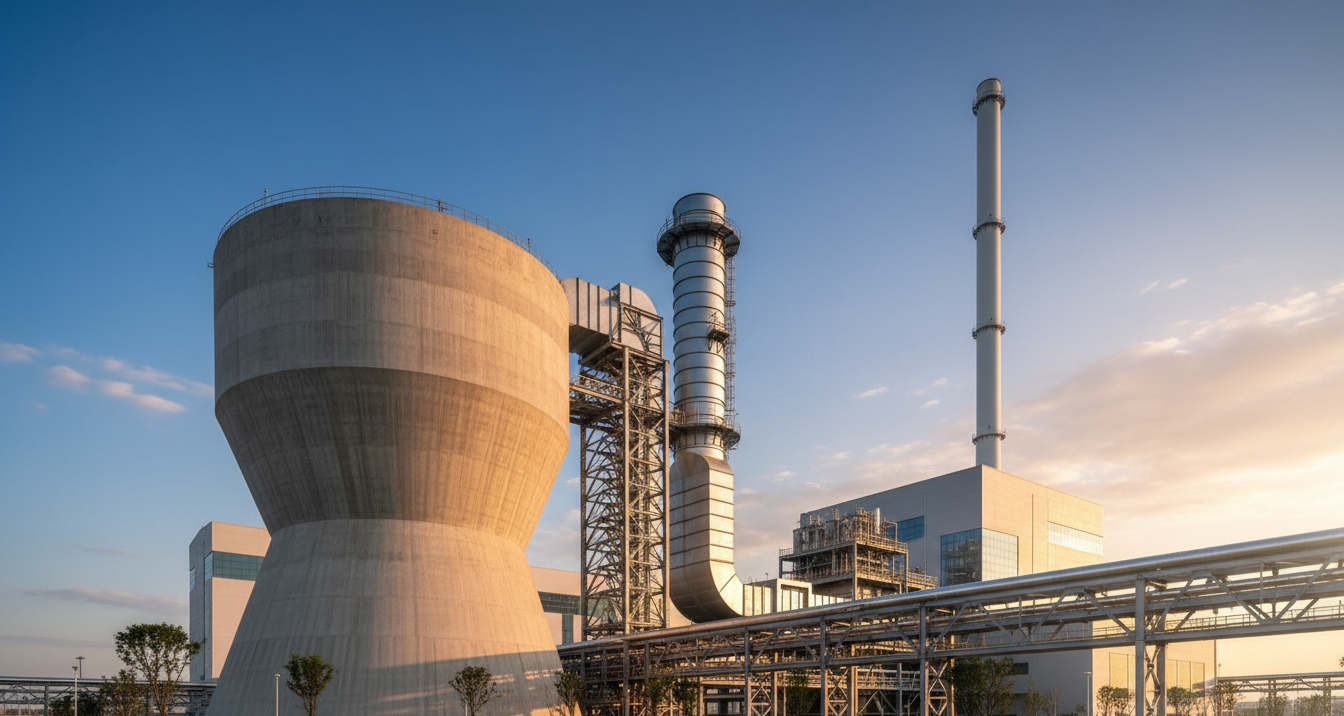
Table of Contents
- 0.1. Regulatory Pressures Are Mounting
- 0.2. The Cost Dimension
- 0.3. Efficiency Failures Cost More Than Compliance
- 1. How Selective Catalytic Reduction (SCR) Works
- 1.1. The SCR Process: Step-by-Step
- 1.2. Catalyst Management: Critical for Performance
- 2. How Selective Non-Catalytic Reduction (SNCR) Works
- 2.1. The SNCR Process: Key Characteristics
- 2.2. Why SNCR Appeals to Many Facilities
- 3. SCR vs. SNCR: Technical Comparison
- 3.1. When to Choose Each Technology
- 4. The Critical Role of Spray Nozzles in Denitrification
- 4.1. Why Droplet Size Matters
- 4.2. Material Selection for Harsh Environments
- 4.3. Key Nozzle Performance Specifications
- 5. Industry Applications and Performance Data
- 5.1. Case Study 1: Coal-Fired Power Station (SCR Retrofit)
- 5.2. Case Study 2: Cement Kiln (SNCR Implementation)
- 5.3. Case Study 3: Waste-to-Energy Plant (Hybrid System)
- 6. Frequently Asked Questions
- 6.1. What is the ideal droplet size for SNCR denitrification?
- 6.2. How do SCR and SNCR systems differ in operating costs?
- 6.3. What causes ammonia slip in denitrification systems?
- 6.4. Can existing SNCR systems be upgraded to meet stricter regulations?
- 6.5. How does denitrification relate to flue gas desulfurization?
- 6.6. What maintenance practices extend denitrification nozzle life?
- 7. Conclusion and Next Steps
How Selective Catalytic Reduction (SCR) Works
SCR is the most efficient industrial denitrification technology, achieving 70–95% NOx removal under controlled conditions. The process relies on a catalyst to accelerate the reduction reaction at moderate temperatures.
The SCR Process: Step-by-Step
- Reagent preparation: Ammonia (anhydrous or aqueous) or urea solution is stored and vaporized
- Injection: NH₃ is precisely metered into the flue gas stream upstream of the catalyst reactor
- Catalytic reaction: The gas mixture passes through a catalyst bed (typically vanadium, tungsten, or titanium-based) operating at 300–400°C
- Conversion: NOx molecules reduce to nitrogen (N₂) and water vapor (H₂O)
- Emission monitoring: Continuous Emissions Monitoring Systems (CEMS) verify compliance
Catalyst Management: Critical for Performance
SCR catalyst modules typically require replacement every 3–5 years, depending on:
- Flue gas composition (sulfur content, particulate loading)
- Operating temperature consistency
- Presence of catalyst poisons (arsenic, alkali metals)
Pro tip: Maintaining catalyst activity through regular inspections and avoiding temperature excursions above 450°C can extend catalyst life by 30–40%.
How Selective Non-Catalytic Reduction (SNCR) Works
SNCR provides a lower-capital alternative for facilities with moderate NOx reduction requirements. Unlike SCR, this process operates without a catalyst—relying entirely on high-temperature chemistry.
The SNCR Process: Key Characteristics
- Operating temperature: 850–1,100°C (narrower optimal window than SCR)
- NOx removal efficiency: 30–70% depending on furnace design
- Reagent options: Anhydrous ammonia, aqueous ammonia, or urea solution
- Injection method: Wall-mounted or retractable lances positioned in the furnace combustion zone
Why SNCR Appeals to Many Facilities
- Lower capital investment: Approximately one-third the cost of equivalent SCR capacity
- Simpler retrofit: Minimal ductwork modifications required
- Shorter installation outage: Often completed during scheduled maintenance windows
However, SNCR carries limitations facility managers must understand. The narrow temperature window creates operational challenges during part-load operation, and reagent consumption rates are typically higher per unit of NOx removed compared to SCR.
SCR vs. SNCR: Technical Comparison
Choosing between these technologies requires evaluating multiple performance and cost dimensions. The following comparison summarizes key decision factors:
| Parameter | SCR | SNCR | Hybrid SNCR+SCR |
|---|---|---|---|
| NOx Removal Efficiency | 70 – 95% | 30 – 70% | 80 – 90% |
| Operating Temperature | 300 – 400°C | 850 – 1,100°C | Variable |
| Catalyst Required | Yes (replace every 3–5 yr) | No | Partial |
| Capital Cost | High | Low | Medium |
| Operating Cost | Medium | Medium–High | Medium |
| Ammonia Slip Risk | Low–Moderate | Moderate–High | Low |
| Space Requirements | Large (reactor + ductwork) | Compact | Moderate |
| Best Application | Strict limits (<100 mg/Nm³) | Interim/moderate targets | Retrofit, deep reduction |
When to Choose Each Technology
- Choose SCR when: Your permit requires >70% NOx removal, you have available footprint for a reactor, and reagent cost optimization is a priority.
- Choose SNCR when: Capital constraints exist, the furnace temperature profile is stable, and 30–50% NOx reduction meets compliance requirements.
- Choose Hybrid SNCR+SCR when: Retrofitting an existing SNCR to meet stricter future regulations, or when ammonia slip from standalone SNCR exceeds permit limits.
The Critical Role of Spray Nozzles in Denitrification
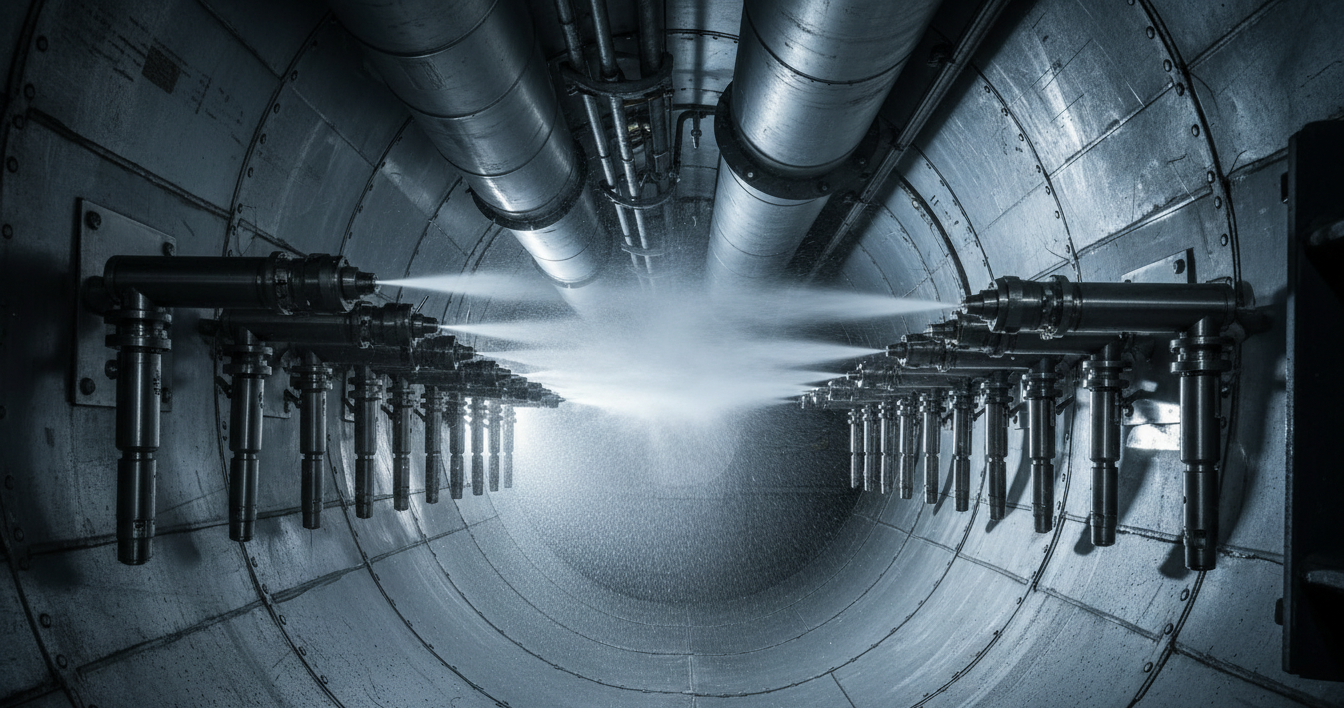
Nozzle selection directly determines denitrification system performance. Droplet size distribution, spray pattern uniformity, and material durability are the three technical levers that separate efficient systems from costly failures.
Why Droplet Size Matters
Effective NOx removal requires precise atomization:
| Application | Optimal Droplet Size (Dv0.9) | Engineering Rationale |
|---|---|---|
| SCR reagent injection | 50 – 120 µm | Faster evaporation ensures full ammonia-NOx reaction before catalyst bed |
| SNCR furnace injection | 80 – 200 µm | Balances evaporation rate with penetration depth in high-temperature zones |
| FGD scrubbing (coarse) | 200 – 500 µm | Maximizes gas-liquid contact area for SO₂ absorption |
In our field evaluations across 50+ installations, reagent injection nozzles producing droplets outside the 50–120 µm range for SCR applications showed 15–25% lower DeNOx efficiency compared to properly specified systems.
Material Selection for Harsh Environments
Denitrification nozzles operate in some of the most corrosive conditions in industry. Material selection must account for:
- Reaction-Bonded Silicon Carbide (RBSC/SiSiC): The gold standard for high-wear applications. Offers extreme hardness and extends service life by 300% compared to standard alloys in abrasive environments.
- 316L Stainless Steel: Cost-effective for SCR/SNCR injection lances and gas cooling applications. Provides excellent resistance to acidic flue gases.
- Hastelloy C-276: Engineered for marine scrubbers and waste incineration plants. Unparalleled protection against stress corrosion cracking in high-chloride, low-pH environments.
- Technical Ceramics (Alumina/Zirconia): Maintains structural integrity at temperatures exceeding 1,000°C, ideal for furnace injection applications.
For facilities evaluating nozzle upgrades, high-efficiency denitrification nozzles designed specifically for SCR/SNCR applications can deliver measurable improvements in atomization uniformity and service life.
Key Nozzle Performance Specifications
- Spray patterns: Full cone, hollow cone, spiral, and flat fan configurations
- Flow rates: 0.5 L/min to 8,000+ L/min depending on application scale
- Temperature tolerance: Up to 1,200°C with ceramic/SiC construction
- Spray angles: 15° to 170° for precise coverage mapping
Industry Applications and Performance Data
Case Study 1: Coal-Fired Power Station (SCR Retrofit)
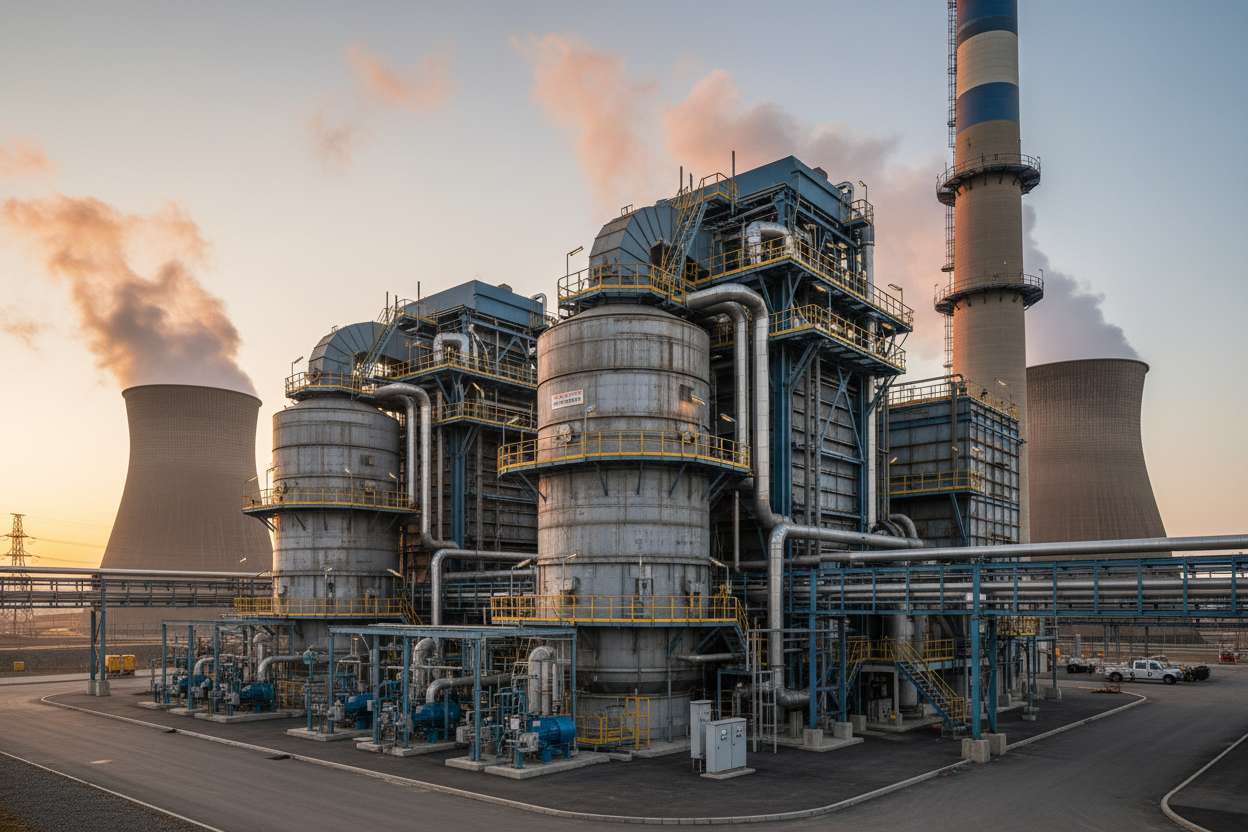
A 600 MW pulverized coal plant faced EPA MATS compliance with baseline NOx emissions of 380 mg/Nm³—nearly double the permitted limit.
- Solution: High-dust SCR system with 3-layer honeycomb catalyst, urea-based reagent injection, and precision-engineered ammonia distribution nozzles
- Results: NOx emissions reduced to 35 mg/Nm³ (90.8% reduction), system availability exceeding 98% over three years
- ROI: Catalyst replacement costs offset by avoided penalties and improved plant dispatch priority
Case Study 2: Cement Kiln (SNCR Implementation)
A European cement manufacturer needed moderate NOx reduction to meet EU IED requirements without major capital investment.
- Solution: SNCR system with urea injection lances positioned at the kiln inlet zone, optimized through CFD modeling
- Results: NOx reduced by 52% (from 450 mg/Nm³ to 216 mg/Nm³), installation completed during a 10-day scheduled outage
- Key learning: Reducing urea solution concentration from 50% to 10% eliminated the need for heat tracing, cutting operating costs by 18%
Case Study 3: Waste-to-Energy Plant (Hybrid System)
A municipal waste incinerator required deep NOx reduction while managing high particulate and corrosive flue gas conditions.
- Solution: Combined SNCR (furnace zone) + SCR (tail-end, dust-free) configuration with SiC nozzles and ceramic catalyst elements
- Results: Overall DeNOx efficiency of 92%, ammonia slip maintained below 3 ppm, nozzle replacement interval extended to 4 years with RBSC construction
- Operational insight: Regular spray pattern inspection every 6 months prevented fouling-related efficiency degradation
Frequently Asked Questions
What is the ideal droplet size for SNCR denitrification?
Effective SNCR denitrification requires a droplet spectrum of 80–200 µm (Dv0.9). Droplets in this range balance evaporation rate with furnace penetration depth. Smaller droplets (<80 µm) may evaporate before reaching the reaction zone, while larger droplets (>200 µm) can impinge on walls and cause corrosion.
How do SCR and SNCR systems differ in operating costs?
SCR systems typically incur higher capital costs (catalyst reactor, additional ductwork) but lower reagent consumption per unit of NOx removed. SNCR systems have lower upfront costs but require 15–30% more reagent due to the absence of catalytic enhancement. Over a 10-year lifecycle, total costs often converge for medium-scale installations.
What causes ammonia slip in denitrification systems?
Ammonia slip occurs when excess NH₃ fails to react with NOx and exits the stack. Primary causes include:
- Over-injection of reagent beyond stoichiometric requirements
- Temperature excursions outside the optimal reaction window
- Poor mixing between reagent and flue gas
- Catalyst degradation in SCR systems reducing reaction efficiency
Monitoring and controlling slip below 5 ppm is essential to avoid secondary pollution and visible stack plumes.
Can existing SNCR systems be upgraded to meet stricter regulations?
Yes. Many facilities add a downstream SCR catalyst layer—creating a hybrid SNCR+SCR system—to achieve 80–90% NOx removal without replacing the entire infrastructure. This approach leverages existing injection equipment while adding catalytic polishing. Our engineering assessments indicate hybrid retrofits typically cost 40–60% less than standalone SCR installations.
How does denitrification relate to flue gas desulfurization?
Both are post-combustion emission control processes, but they target different pollutants. Denitrification removes nitrogen oxides (NOx), while flue gas desulfurization (FGD) removes sulfur dioxide (SO₂). Many facilities operate both systems simultaneously—often sharing infrastructure such as reagent storage, CEMS, and stack monitoring. Nozzle technology for FGD scrubbing requires different specifications (larger free passage for slurry handling, coarser droplet distribution) compared to denitrification injection systems.
What maintenance practices extend denitrification nozzle life?
Based on our operational data across 200+ installations, these practices deliver the longest service intervals:
- Quarterly spray pattern verification using visual inspection or patternation tests
- Bi-annual pressure differential monitoring to detect fouling or erosion
- Annual material thickness measurements at high-wear locations
- Scheduled replacement during planned outages rather than emergency shutdowns
Conclusion and Next Steps
Industrial denitrification is a mature, proven technology—but system performance hinges on engineering details: catalyst selection, temperature window management, and especially reagent injection nozzle specification.
Key takeaways for facility managers:
- SCR delivers the highest NOx removal (70–95%) for strict regulatory environments
- SNCR offers the lowest capital entry point when 30–50% reduction meets compliance needs
- Hybrid systems provide a future-proof retrofit path for evolving regulations
- Nozzle selection directly impacts efficiency, maintenance frequency, and total lifecycle cost
"The facilities achieving the lowest cost-per-tonne of NOx removed share one common trait: they treat injection nozzle specification as a critical engineering decision, not a commodity purchase." — Process Engineering Review
Need engineering support for your denitrification system? Our team provides flow rate calculations, material selection guidance, and custom nozzle design for SCR, SNCR, and FGD applications. Contact our engineers for a technical consultation or quotation.