



How to Overcome the Top 4 Challenges of Spray Systems in Marine Environments
Every minute a vessel spends in port for unexpected maintenance or extended tank cleaning is a minute bleeding profitability. For marine engineers, fleet supervisors, and offshore operators, equipment failure is not just an inconvenience—it is a critical threat to operational ROI and safety. In the unforgiving environment of the open ocean, standard industrial equipment degrades at an alarming rate. Saltwater attacks metals, marine life chokes pipelines, and strict environmental regulations penalize inefficiency.
To prevent costly vessel downtime and ensure compliance with IMO/MARPOL standards, operators must stop treating spray nozzles as generic hardware. Understanding the critical role of spray systems in marine engineering is the first step to protecting your bottom line. In this comprehensive guide, we will break down the four biggest challenges facing marine spray systems—corrosion, biofouling, inefficient cleaning, and compliance—and provide data-driven strategies to solve them permanently.
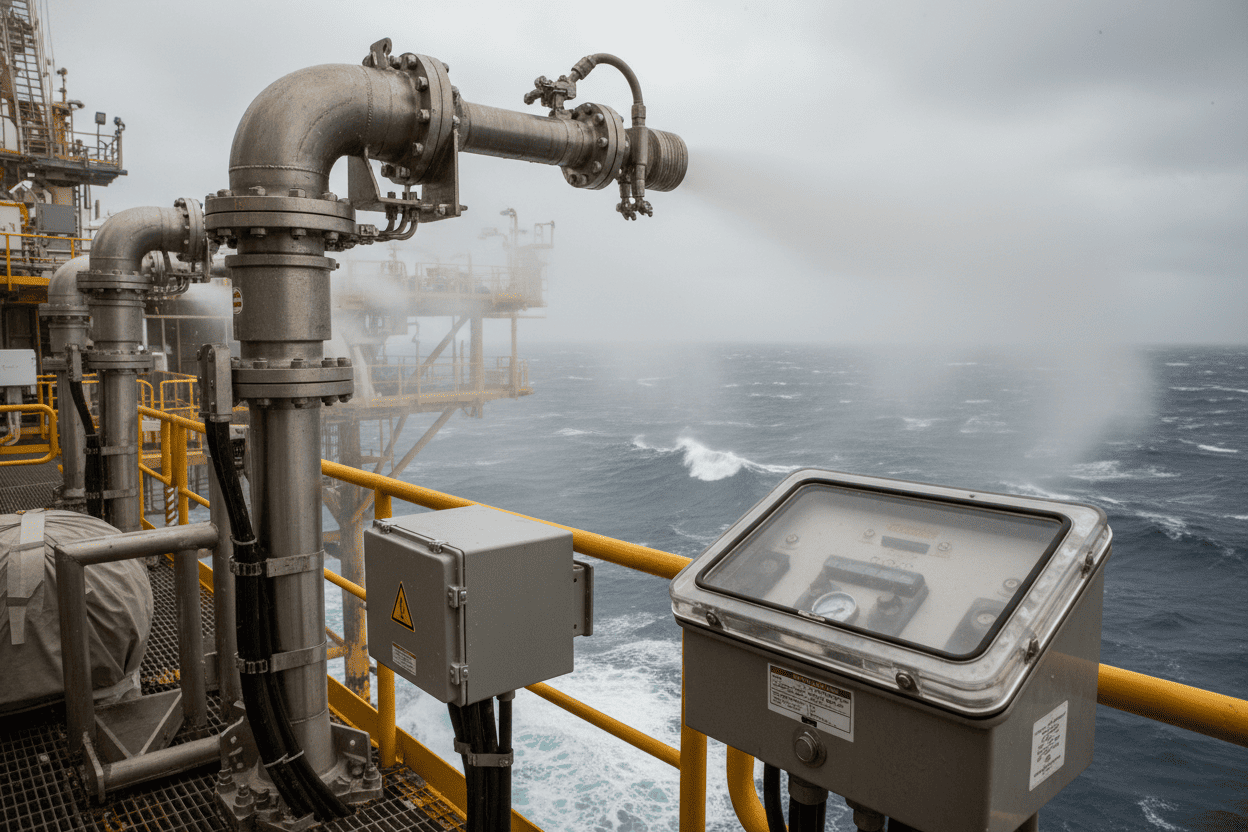
Table of Contents
- 1. Understanding the Harsh Marine Environment: The High Cost of Failure
- 2. Core Concepts Simplified: The Enemies of Marine Spray Systems
- 3. Step-by-Step Guide: Selecting and Implementing Marine Spray Systems
- 4. Expert Tips & Common Pitfalls to Avoid
- 5. Conclusion & Final Thoughts
Table of Contents
- 1. 1. Understanding the Harsh Marine Environment: The High Cost of Failure
- 2. 2. Core Concepts Simplified: The Enemies of Marine Spray Systems
- 2.1. The Relentless Threat of Saltwater Corrosion
- 2.2. Biofouling and Debris Clogging
- 2.3. Inefficient Tank Cleaning & Vessel Downtime
- 2.4. Strict Maritime Environmental Regulations (MARPOL)
- 2.5. Standard vs. Marine-Grade: A Concept Comparison
- 3. 3. Step-by-Step Guide: Selecting and Implementing Marine Spray Systems
- 3.1. Step 1: Match the Material to the Environment (PREN Evaluation)
- 3.2. Step 2: Implement High-MFP Designs for Seawater Intake
- 3.3. Step 3: Optimize Tank Cleaning for Turnaround Speed
- 4. 4. Expert Tips & Common Pitfalls to Avoid
- 5. 5. Conclusion & Final Thoughts
- 5.1. Quick Summary Guide
- 6. 2. Core Concepts Simplified: The Enemies of Marine Spray Systems
- 6.1. The Relentless Threat of Saltwater Corrosion
- 6.2. Biofouling and Debris Clogging
- 6.3. Inefficient Tank Cleaning & Vessel Downtime
- 6.4. Strict Maritime Environmental Regulations (MARPOL)
- 6.5. Standard vs. Marine-Grade: A Concept Comparison
- 7. 3. Step-by-Step Guide: Selecting and Implementing Marine Spray Systems
- 7.1. Step 1: Match the Material to the Environment (PREN Evaluation)
- 7.2. Step 2: Implement High-MFP Designs for Seawater Intake
- 7.3. Step 3: Optimize Tank Cleaning for Turnaround Speed
- 8. 4. Expert Tips & Common Pitfalls to Avoid
- 9. 5. Conclusion & Final Thoughts
- 9.1. Quick Summary Guide
1. Understanding the Harsh Marine Environment: The High Cost of Failure
Why do spray systems fail so rapidly at sea? The marine environment is uniquely hostile. It combines high salinity, constant moisture, extreme temperature fluctuations, and biological activity. When shipbuilding procurement managers opt for standard commercial-grade nozzles to cut initial costs, they inadvertently set the stage for catastrophic operational expenses down the line.
A failed spray system on a chemical tanker or an offshore rig leads to:
- Confined Space Entry Hazards: Maintenance crews forced into hazardous tanks to manually clear clogs or clean residues.
- Regulatory Fines: Inadequate washdowns leading to MARPOL Annex II violations.
- Prolonged Turnaround Times: Inefficient cleaning extending port stays by days.
To mitigate these risks, decision-makers must shift their focus from the initial purchase price to the Total Cost of Ownership (TCO), prioritizing materials and designs specifically engineered for maritime survival.
2. Core Concepts Simplified: The Enemies of Marine Spray Systems
To make informed procurement and engineering decisions, we must translate complex metallurgical and fluid dynamics problems into practical, actionable concepts. Here are the core challenges and the engineering metrics used to defeat them.
The Relentless Threat of Saltwater Corrosion
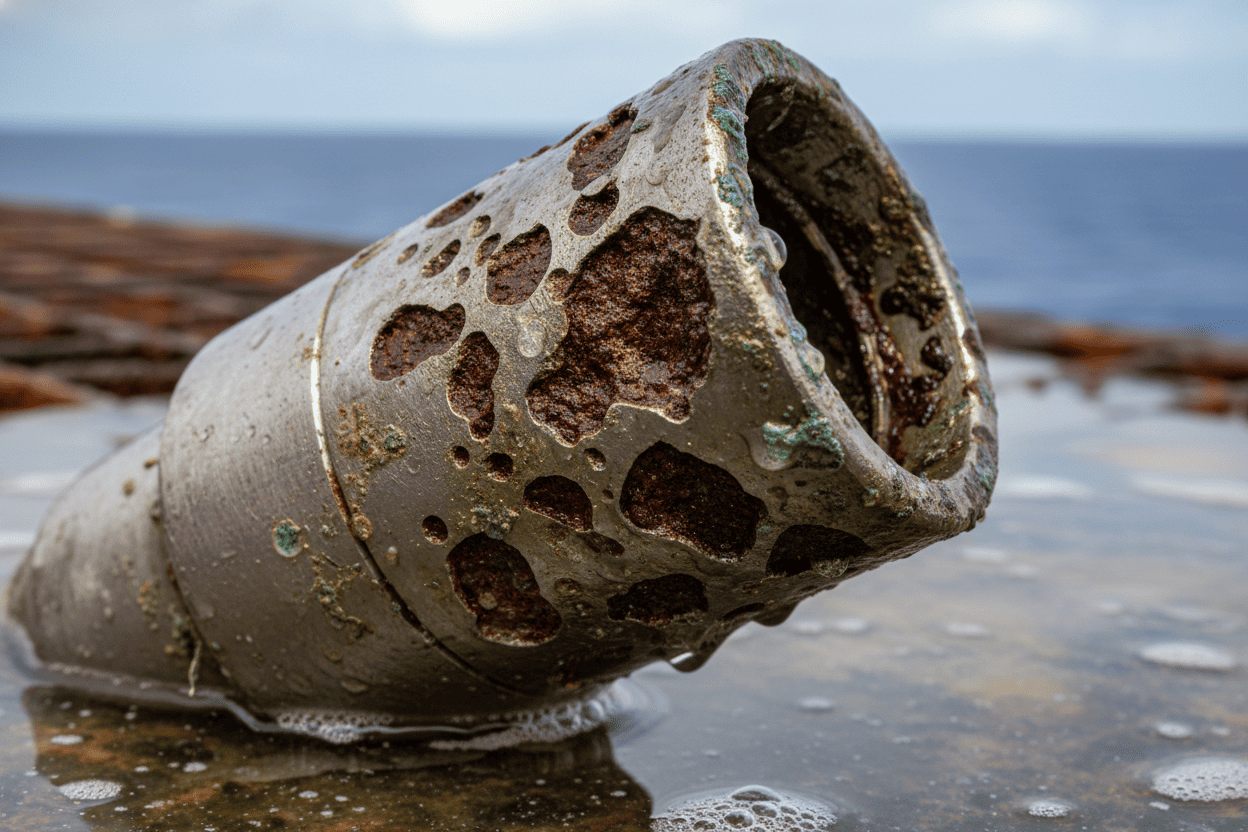
Standard 304 stainless steel might look pristine in a factory, but in seawater, it acts like a sponge for rust. Chloride ions in saltwater aggressively attack the protective oxide layer on standard metals, leading to rapid pitting and galvanic corrosion.
The Metric: Pitting Resistance Equivalent Number (PREN) Think of PREN as a "survival score" for metals in saltwater. The higher the number, the longer the metal will last before rusting. When evaluating what makes a spray nozzle marine-grade, the PREN score is your north star. A standard nozzle might have a low PREN, while marine-grade alloys like 316L Stainless Steel, Titanium, or Hastelloy boast high scores, making them virtually immune to standard saltwater degradation.
Biofouling and Debris Clogging
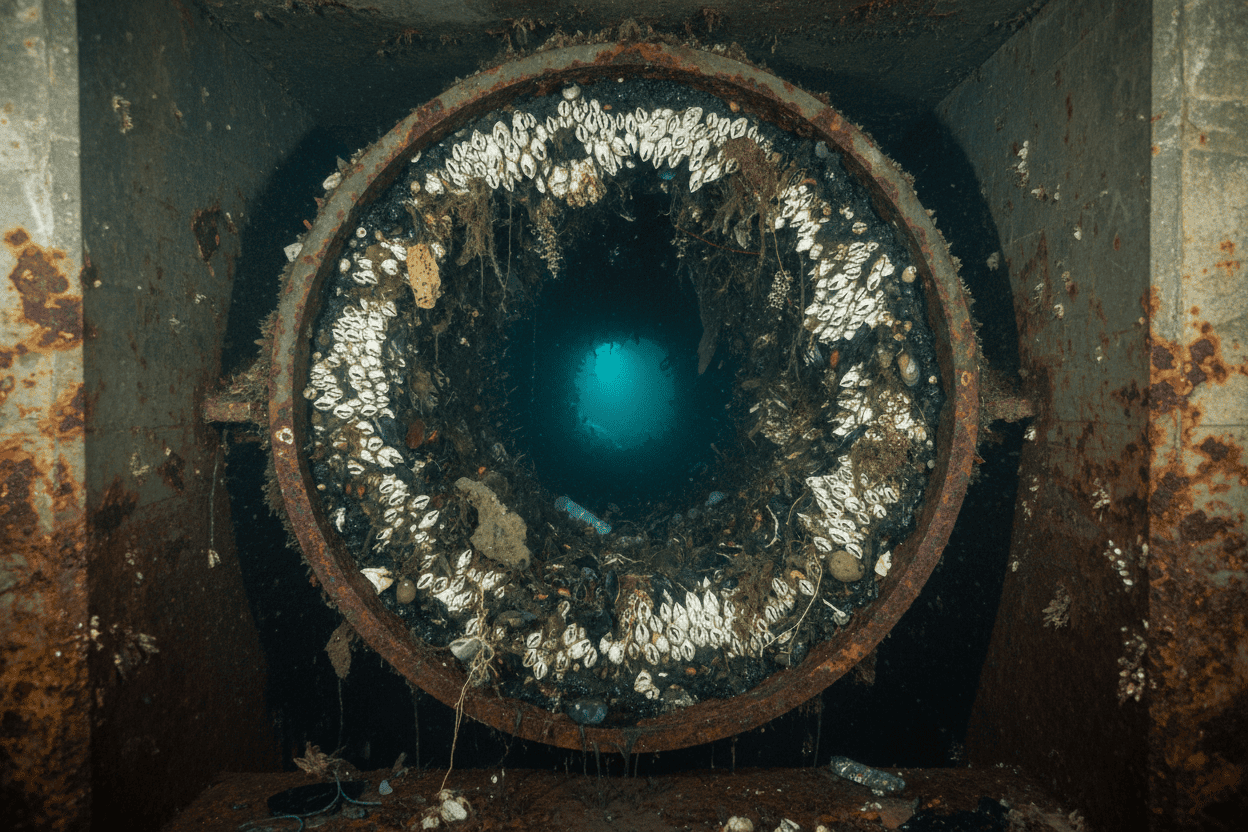
The ocean is alive, and your piping systems are prime real estate for marine life. Biofouling is the unwanted buildup of algae, barnacles, and slime inside pipes and nozzles. Combined with sand and sea debris, this buildup eventually chokes off the water supply.
The Metric: Maximum Free Passage (MFP) MFP is simply the largest size of a solid object (like a pebble or a barnacle shell) that can pass entirely through the nozzle without getting stuck. High MFP designs are the ultimate anti-clogging solution, keeping your systems running without requiring crews to dismantle pipelines mid-voyage.
Inefficient Tank Cleaning & Vessel Downtime
Washing down a massive cargo tank with a weak spray is like trying to clean a driveway with a gentle garden hose. It wastes water, time, and leaves hardened cargo residue behind.
The Metric: Impingement Density This measures how hard the water actually hits the surface. High impingement density blasts away stubborn residues. By utilizing 360-degree rotary nozzles with high impingement, vessels can drastically cut down their turnaround times at the port.
Strict Maritime Environmental Regulations (MARPOL)
The International Maritime Organization (IMO) strictly regulates how tanks are washed and how marine pollutants are disposed of (MARPOL Annex II). Using excessive wash water or failing to clean tanks properly isn't just an operational failure; it's a legal liability that can result in heavy fines and port detentions. Efficient spray systems are, therefore, a critical compliance tool.
Standard vs. Marine-Grade: A Concept Comparison
| Feature / Metric | Standard Industrial Nozzle | Marine-Grade Spray System | Real-World Impact on Vessel |
|---|---|---|---|
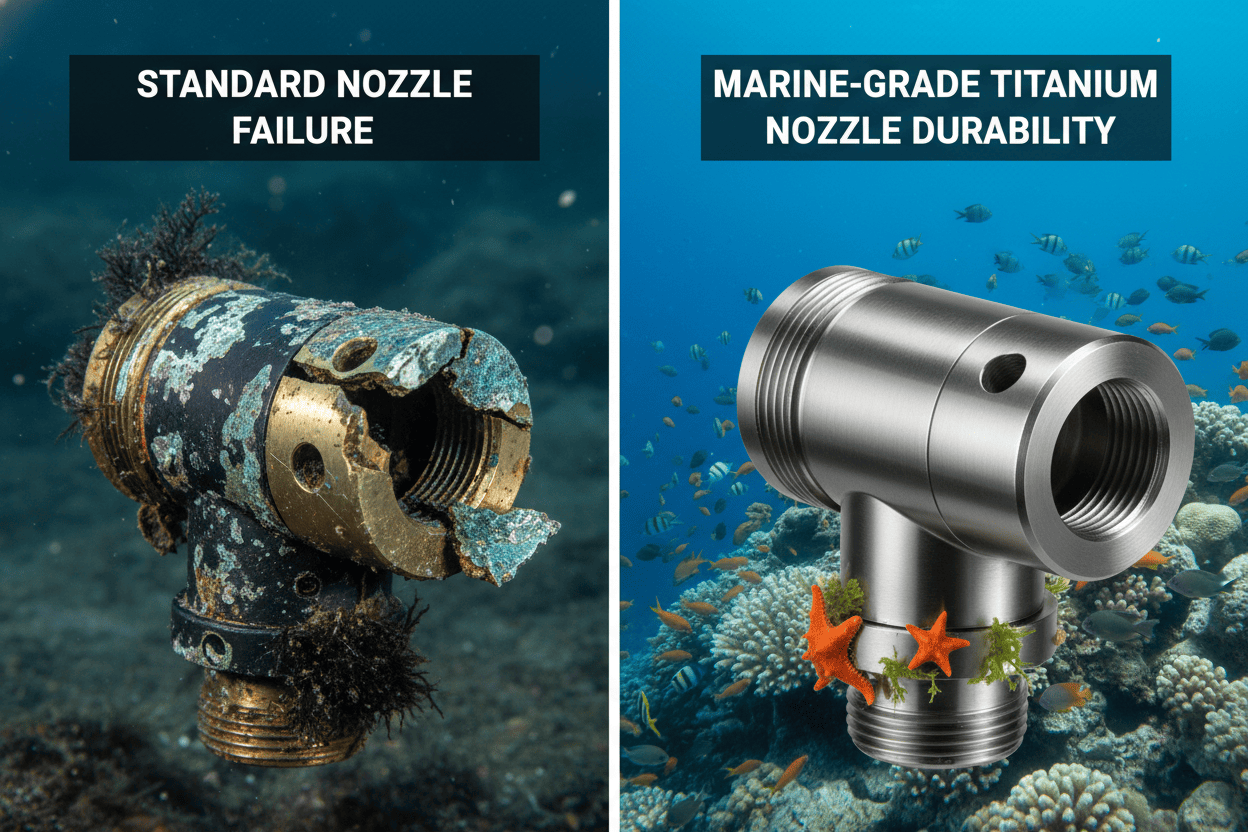
| Material / PREN | 304 Stainless Steel (Low PREN) | 316L, Titanium, Hastelloy (High PREN) | Prevents rapid rusting; saves replacement costs. |
| Clog Resistance (MFP) | Small internal vanes (Low MFP) | Full cone, maximum free passage designs | Stops biofouling blockages; reduces maintenance. |
| Tank Cleaning Power | Static spray (Low Impingement) | 360° Rotary (High Impingement) | Cuts tank cleaning time in half; reduces port fees. |
| Regulatory Status | High water waste | Optimized flow for MARPOL compliance | Avoids heavy environmental fines. |
3. Step-by-Step Guide: Selecting and Implementing Marine Spray Systems
Choosing the right equipment requires a pragmatic, data-driven approach. Here is a step-by-step framework to ensure you select systems that guarantee high performance and longevity.
Step 1: Match the Material to the Environment (PREN Evaluation)
Never compromise on metallurgy. The upfront cost of Titanium is insignificant compared to the cost of drydocking a vessel to replace corroded ballast tank nozzles. Use the specification table below to guide your procurement.
Material Specification & Selection Data
| Material Type | Average PREN Score | Best Marine Application | Cost vs. ROI Profile |
|---|---|---|---|
| 304 Stainless Steel | ~18 | Freshwater topside cleaning only | Low initial cost / Terrible ROI in seawater |
| 316L Stainless Steel | ~23 - 28 | General seawater spray, deck washing | Medium cost / Good ROI for standard use |
| Super Duplex / Hastelloy | ~40+ | High-temp corrosive cargo tanks | High cost / Excellent ROI for harsh chemicals |
| Titanium | N/A (Immune) | Critical offshore cooling, ballast tanks | Premium cost / Ultimate long-term ROI |
Step 2: Implement High-MFP Designs for Seawater Intake
If your spray system draws water directly from the sea, filtration will inevitably fail at some point.
- Audit your current nozzles: Identify any internal swirl vanes that trap debris.
- Upgrade to High-MFP: Replace them with spiral nozzles or maximum free passage full-cone nozzles.
- Result: Even if barnacle fragments bypass the primary sea strainers, they will shoot straight through the nozzle instead of causing a catastrophic pressure drop.
Step 3: Optimize Tank Cleaning for Turnaround Speed
For chemical tankers and bulk carriers, time is money. Upgrading your tank cleaning machines is the fastest way to improve ROI.
- Calculate required impingement: Determine the stickiness of your cargo residue.
- Select the mechanism: Choose fluid-driven rotary nozzles over static spray balls. The rotation provides high-impact jets that scour the tank walls.
- Integrate specialized solutions: Investing in specialized marine grade tank cleaning solutions ensures comprehensive 360-degree coverage, minimizing wash water usage and ensuring MARPOL compliance.
4. Expert Tips & Common Pitfalls to Avoid
Drawing from real-world experiences shared by marine engineers on platforms like Reddit's r/MarineEngineering and r/Nautical, here are the most common pitfalls that look good on paper but fail miserably at sea.
Pitfall 1: Ignoring Galvanic Corrosion in Ballast Tanks The Mistake: Installing noble metal nozzles (like Titanium) directly onto less noble carbon steel pipes without dielectric isolation. The Reality: The saltwater acts as an electrolyte. The carbon steel pipe will rapidly corrode right at the connection point, causing the nozzle to literally fall off into the ballast tank. Expert Tip: Always use proper isolation kits (flange gaskets, sleeves) when mixing metals in a seawater environment.
Pitfall 2: Over-relying on Sea Strainers The Mistake: Assuming that because you have a good sea chest strainer, you don't need clog-resistant nozzles. The Reality: Micro-organisms pass through strainers, settle in the stagnant water of fire-suppression or deluge systems, and grow into massive biofouling blockages. Expert Tip: Always pair good filtration with High-MFP (Maximum Free Passage) nozzles. Plan for the inevitable biological growth.
Pitfall 3: "More Pressure Equals Better Cleaning" The Mistake: Cranking up the pump pressure to clean tanks faster, using standard static spray balls. The Reality: High pressure through a static spray ball just creates a mist. Mist has zero impingement density and cannot clean heavy residues. It only wastes water, creating a massive disposal problem under MARPOL regulations. Expert Tip: Focus on impact, not just pressure. Use rotary jet heads that concentrate the water into solid, high-impact streams.
5. Conclusion & Final Thoughts
Surviving the marine environment requires more than just heavy-duty equipment; it requires precision engineering tailored to the unique threats of saltwater, biofouling, and strict maritime laws. By prioritizing high PREN materials, maximizing free passage to combat clogging, and utilizing high-impingement designs for tank cleaning, fleet operators can drastically reduce downtime and maintenance costs.
Stop letting equipment dictate your vessel's schedule. Audit your current spray systems today, calculate your true Total Cost of Ownership, and make the data-driven switch to true marine-grade solutions.
Quick Summary Guide
| Challenge | Root Cause | Engineering Solution | Key Metric to Watch |
|---|---|---|---|
| Corrosion | Saltwater chloride attack | Upgrade to 316L, Super Duplex, or Titanium | PREN Score (>25) |
| Clogging | Biofouling & Marine Debris | Eliminate internal vanes; use open designs | MFP (Max Free Passage) |
| Inefficient Cleaning | Weak static spray mist | Implement 360° fluid-driven rotary jets | Impingement Density |
| Compliance Fines | Excessive wash water use | High-impact, low-flow nozzle optimization | MARPOL Annex II limits |
Ready to optimize your vessel's performance? Review your vessel's specific requirements against our material data tables and consult with marine engineering specialists to specify the exact nozzles for your next drydocking.## 1. Understanding the Harsh Marine Environment: The High Cost of Failure
Why do spray systems fail so rapidly at sea? The marine environment is uniquely hostile. It combines high salinity, constant moisture, extreme temperature fluctuations, and biological activity. When shipbuilding procurement managers opt for standard commercial-grade nozzles to cut initial costs, they inadvertently set the stage for catastrophic operational expenses down the line.
A failed spray system on a chemical tanker or an offshore rig leads to:
- Confined Space Entry Hazards: Maintenance crews forced into hazardous tanks to manually clear clogs or clean residues.
- Regulatory Fines: Inadequate washdowns leading to MARPOL Annex II violations.
- Prolonged Turnaround Times: Inefficient cleaning extending port stays by days.
To mitigate these risks, decision-makers must shift their focus from the initial purchase price to the Total Cost of Ownership (TCO), prioritizing materials and designs specifically engineered for maritime survival.
2. Core Concepts Simplified: The Enemies of Marine Spray Systems
To make informed procurement and engineering decisions, we must translate complex metallurgical and fluid dynamics problems into practical, actionable concepts. Here are the core challenges and the engineering metrics used to defeat them.
The Relentless Threat of Saltwater Corrosion
Standard 304 stainless steel might look pristine in a factory, but in seawater, it acts like a sponge for rust. Chloride ions in saltwater aggressively attack the protective oxide layer on standard metals, leading to rapid pitting and galvanic corrosion.
The Metric: Pitting Resistance Equivalent Number (PREN) Think of PREN as a "survival score" for metals in saltwater. The higher the number, the longer the metal will last before rusting. When evaluating what makes a spray nozzle marine-grade, the PREN score is your north star. A standard nozzle might have a low PREN, while marine-grade alloys like 316L Stainless Steel, Titanium, or Hastelloy boast high scores, making them virtually immune to standard saltwater degradation.
Biofouling and Debris Clogging
The ocean is alive, and your piping systems are prime real estate for marine life. Biofouling is the unwanted buildup of algae, barnacles, and slime inside pipes and nozzles. Combined with sand and sea debris, this buildup eventually chokes off the water supply.
The Metric: Maximum Free Passage (MFP) MFP is simply the largest size of a solid object (like a pebble or a barnacle shell) that can pass entirely through the nozzle without getting stuck. High MFP designs are the ultimate anti-clogging solution, keeping your systems running without requiring crews to dismantle pipelines mid-voyage.
Inefficient Tank Cleaning & Vessel Downtime
Washing down a massive cargo tank with a weak spray is like trying to clean a driveway with a gentle garden hose. It wastes water, time, and leaves hardened cargo residue behind.
The Metric: Impingement Density This measures how hard the water actually hits the surface. High impingement density blasts away stubborn residues. By utilizing 360-degree rotary nozzles with high impingement, vessels can drastically cut down their turnaround times at the port.
Strict Maritime Environmental Regulations (MARPOL)
The International Maritime Organization (IMO) strictly regulates how tanks are washed and how marine pollutants are disposed of (MARPOL Annex II). Using excessive wash water or failing to clean tanks properly isn't just an operational failure; it's a legal liability that can result in heavy fines and port detentions. Efficient spray systems are, therefore, a critical compliance tool.
Standard vs. Marine-Grade: A Concept Comparison
| Feature / Metric | Standard Industrial Nozzle | Marine-Grade Spray System | Real-World Impact on Vessel |
|---|---|---|---|
| Material / PREN | 304 Stainless Steel (Low PREN) | 316L, Titanium, Hastelloy (High PREN) | Prevents rapid rusting; saves replacement costs. |
| Clog Resistance (MFP) | Small internal vanes (Low MFP) | Full cone, maximum free passage designs | Stops biofouling blockages; reduces maintenance. |
| Tank Cleaning Power | Static spray (Low Impingement) | 360° Rotary (High Impingement) | Cuts tank cleaning time in half; reduces port fees. |
| Regulatory Status | High water waste | Optimized flow for MARPOL compliance | Avoids heavy environmental fines. |
3. Step-by-Step Guide: Selecting and Implementing Marine Spray Systems
Choosing the right equipment requires a pragmatic, data-driven approach. Here is a step-by-step framework to ensure you select systems that guarantee high performance and longevity.
Step 1: Match the Material to the Environment (PREN Evaluation)
Never compromise on metallurgy. The upfront cost of Titanium is insignificant compared to the cost of drydocking a vessel to replace corroded ballast tank nozzles. Use the specification table below to guide your procurement.
Material Specification & Selection Data
| Material Type | Average PREN Score | Best Marine Application | Cost vs. ROI Profile |
|---|---|---|---|
| 304 Stainless Steel | ~18 | Freshwater topside cleaning only | Low initial cost / Terrible ROI in seawater |
| 316L Stainless Steel | ~23 - 28 | General seawater spray, deck washing | Medium cost / Good ROI for standard use |
| Super Duplex / Hastelloy | ~40+ | High-temp corrosive cargo tanks | High cost / Excellent ROI for harsh chemicals |
| Titanium | N/A (Immune) | Critical offshore cooling, ballast tanks | Premium cost / Ultimate long-term ROI |
Step 2: Implement High-MFP Designs for Seawater Intake
If your spray system draws water directly from the sea, filtration will inevitably fail at some point.
- Audit your current nozzles: Identify any internal swirl vanes that trap debris.
- Upgrade to High-MFP: Replace them with spiral nozzles or maximum free passage full-cone nozzles.
- Result: Even if barnacle fragments bypass the primary sea strainers, they will shoot straight through the nozzle instead of causing a catastrophic pressure drop.
Step 3: Optimize Tank Cleaning for Turnaround Speed
For chemical tankers and bulk carriers, time is money. Upgrading your tank cleaning machines is the fastest way to improve ROI.
- Calculate required impingement: Determine the stickiness of your cargo residue.
- Select the mechanism: Choose fluid-driven rotary nozzles over static spray balls. The rotation provides high-impact jets that scour the tank walls.
- Integrate specialized solutions: Investing in specialized marine grade tank cleaning solutions ensures comprehensive 360-degree coverage, minimizing wash water usage and ensuring MARPOL compliance.
4. Expert Tips & Common Pitfalls to Avoid
Drawing from real-world experiences shared by marine engineers on platforms like Reddit's r/MarineEngineering and r/Nautical, here are the most common pitfalls that look good on paper but fail miserably at sea.
Pitfall 1: Ignoring Galvanic Corrosion in Ballast Tanks The Mistake: Installing noble metal nozzles (like Titanium) directly onto less noble carbon steel pipes without dielectric isolation. The Reality: The saltwater acts as an electrolyte. The carbon steel pipe will rapidly corrode right at the connection point, causing the nozzle to literally fall off into the ballast tank. Expert Tip: Always use proper isolation kits (flange gaskets, sleeves) when mixing metals in a seawater environment.
Pitfall 2: Over-relying on Sea Strainers The Mistake: Assuming that because you have a good sea chest strainer, you don't need clog-resistant nozzles. The Reality: Micro-organisms pass through strainers, settle in the stagnant water of fire-suppression or deluge systems, and grow into massive biofouling blockages. Expert Tip: Always pair good filtration with High-MFP (Maximum Free Passage) nozzles. Plan for the inevitable biological growth.
Pitfall 3: "More Pressure Equals Better Cleaning" The Mistake: Cranking up the pump pressure to clean tanks faster, using standard static spray balls. The Reality: High pressure through a static spray ball just creates a mist. Mist has zero impingement density and cannot clean heavy residues. It only wastes water, creating a massive disposal problem under MARPOL regulations. Expert Tip: Focus on impact, not just pressure. Use rotary jet heads that concentrate the water into solid, high-impact streams.
5. Conclusion & Final Thoughts
Surviving the marine environment requires more than just heavy-duty equipment; it requires precision engineering tailored to the unique threats of saltwater, biofouling, and strict maritime laws. By prioritizing high PREN materials, maximizing free passage to combat clogging, and utilizing high-impingement designs for tank cleaning, fleet operators can drastically reduce downtime and maintenance costs.
Stop letting equipment dictate your vessel's schedule. Audit your current spray systems today, calculate your true Total Cost of Ownership, and make the data-driven switch to true marine-grade solutions.
Quick Summary Guide
| Challenge | Root Cause | Engineering Solution | Key Metric to Watch |
|---|---|---|---|
| Corrosion | Saltwater chloride attack | Upgrade to 316L, Super Duplex, or Titanium | PREN Score (>25) |
| Clogging | Biofouling & Marine Debris | Eliminate internal vanes; use open designs | MFP (Max Free Passage) |
| Inefficient Cleaning | Weak static spray mist | Implement 360° fluid-driven rotary jets | Impingement Density |
| Compliance Fines | Excessive wash water use | High-impact, low-flow nozzle optimization | MARPOL Annex II limits |
Ready to optimize your vessel's performance? Review your vessel's specific requirements against our material data tables and consult with marine engineering specialists to specify the exact nozzles for your next drydocking.