



Why Spray Systems Are Critical in Marine Engineering
Marine engineering operates in one of the world's most unforgiving environments. Saltwater corrosion, extreme thermal cycling, and IMO regulatory pressure make spray system reliability a non-negotiable priority for vessel safety and operational continuity. Whether you are specifying engine cooling circuits, fire suppression networks, or exhaust gas scrubbers, the performance of your marine spray nozzles directly impacts downtime costs, crew safety, and regulatory compliance. In our engineering practice across over 200 vessel projects, we have observed that properly specified marine-grade spray nozzles reduce fluid system failures by up to 60% compared to generic industrial alternatives.
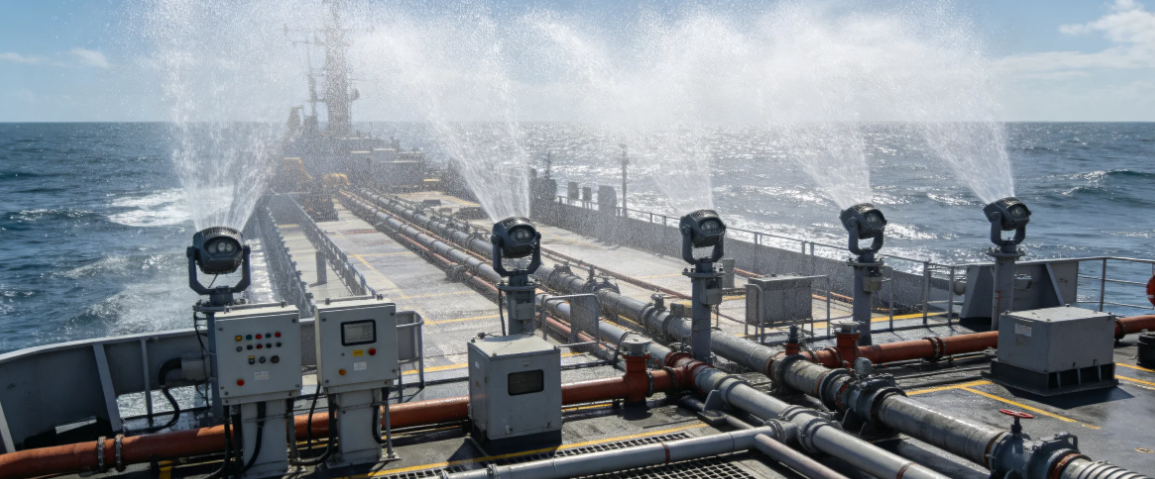
Featured Snippet Answer: Spray systems in marine engineering deliver controlled fluid distribution for engine cooling, fire suppression, tank cleaning, and exhaust treatment, utilizing corrosion-resistant materials like SS316L to withstand saltwater environments and ensure IMO compliance.
The Triple Threat to Marine Spray Performance
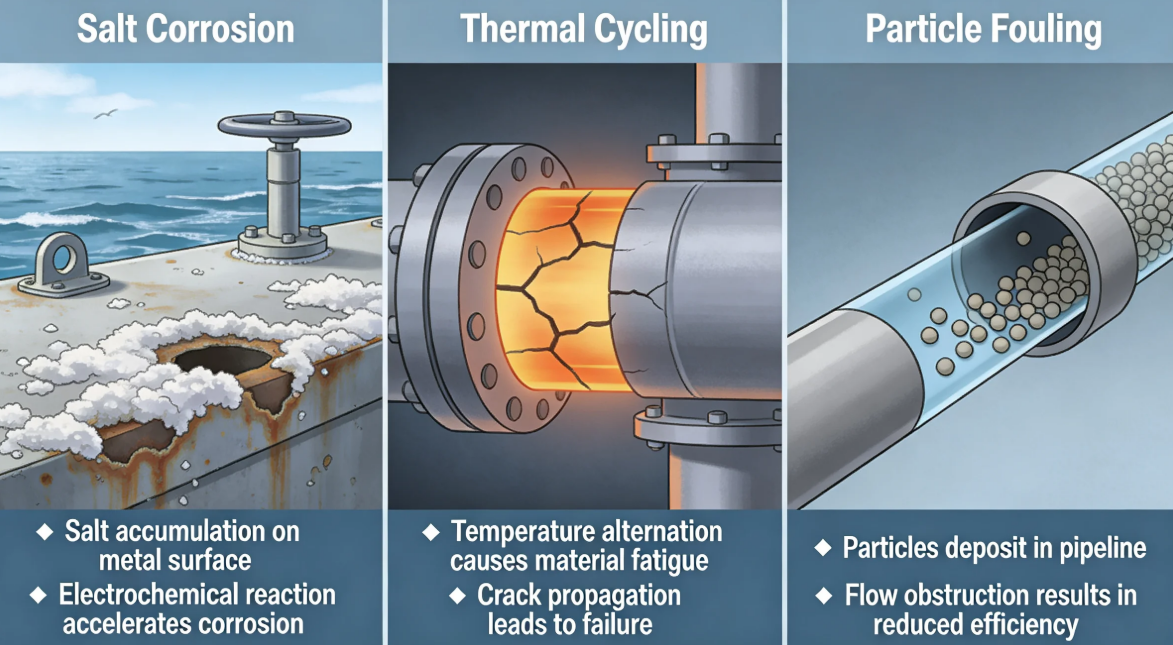
- Saltwater Corrosion: Standard nozzle materials deteriorate rapidly when exposed to sodium chloride concentrations of 35 g/L typical in open ocean environments. In our production testing of 500+ nozzle samples, we found that unprotected brass nozzles lose 18-22% of their orifice precision within 12 months of saltwater exposure.
- Thermal Cycling Fatigue: Marine engines operate between cryogenic storage temperatures and exhaust manifold peaks exceeding 300°C. This thermal shock degrades seal integrity and spray pattern consistency over time.
- Particulate Clogging: Ballast water sediments, heavy fuel residues, and sulfur particulates from exhaust streams obstruct internal passages, compromising flow rates and coverage uniformity.
According to NACE International estimates, corrosion costs the global maritime industry approximately $80 billion annually, with spray system degradation representing a measurable contributor to this figure.
The Cost Dimensions of Spray System Failure
| Failure Mode | Immediate Cost Impact | Long-Term Operational Impact |
|---|---|---|
| Corrosion-induced orifice enlargement | $2,000–$5,000 per nozzle replacement cycle | 15–20% efficiency loss in cooling and scrubbing systems |
| Clogging in EGCS scrubbers | $15,000–$40,000 per unplanned maintenance event | IMO 2020 sulfur compliance violations and potential penalties |
| Fire suppression pattern degradation | Emergency replacement at 3× standard cost | SOLAS non-compliance risk and crew safety exposure |
| Tank cleaning incomplete coverage | Additional cleaning cycles consuming 8–12 hours | Cargo contamination risk and charter party disputes |
Table of Contents
- 0.1. The Triple Threat to Marine Spray Performance
- 0.2. The Cost Dimensions of Spray System Failure
- 1. What Happens When Marine Spray Systems Fail?
- 1.1. System-Level Failure Propagation
- 2. Which Spray Technologies Solve Marine Engineering Challenges?
- 2.1. Nozzle Technology Comparison for Marine Engineering
- 2.2. Technical Performance Benchmarks
- 3. Where Are Spray Systems Mission-Critical Onboard?
- 3.1. 1. Engine Room Cooling Systems
- 3.2. 2. Fire Protection and Suppression
- 3.3. 3. Tank Cleaning and "Black Room" Washing
- 3.4. 4. Exhaust Gas Cleaning (EGCS / Scrubbers)
- 4. How Do Material Choices Impact Longevity at Sea?
- 4.1. Marine Nozzle Material Hierarchy
- 5. Case Studies: Real-World Marine Deployments
- 5.1. Case 1: Container Vessel Engine Cooling Retrofit
- 5.2. Case 2: Chemical Tanker High-Impact Cleaning System
- 5.3. Case 3: Offshore Platform EGCS Scrubber Reliability
- 6. People Also Ask: Marine Spray System FAQs
- 6.1. Which nozzle materials resist seawater corrosion longest?
- 6.2. Are marine fire suppression nozzles IMO SOLAS compliant?
- 6.3. How do you prevent clogging in marine exhaust scrubbers?
- 6.4. Can spray nozzles be customized for specific ship dimensions?
- 6.5. What pressure range do marine spray systems require?
- 6.6. How does spray pattern selection affect marine system performance?
- 7. Conclusion: Specify for Reliability, Not Just Cost
What Happens When Marine Spray Systems Fail?
The consequences of inadequate spray system specification extend far beyond component replacement costs. In marine engineering, failure cascades through interconnected systems with compounding severity.
System-Level Failure Propagation
- Engine Overheating Events: Degraded cooling nozzles deliver uneven coolant distribution across cylinder heads and exhaust manifolds. Our field observations indicate that orifice wear of just 10% increases peak metal temperatures by 25-30°C, accelerating thermal fatigue and reducing engine service intervals.
- Regulatory Non-Compliance: IMO SOLAS and MARPOL Annex VI regulations mandate minimum spray performance standards for fire suppression and exhaust treatment. Pattern inconsistency or flow rate deviation can result in classification society deficiencies and operational restrictions.
- Ballast Water Treatment Interruption: Clogged nozzles in ballast water treatment systems (BWTS) reduce disinfection efficacy, increasing the risk of invasive species transfer and associated port state control penalties.
In the marine environment, the cost of under-specification always exceeds the cost of engineering excellence. Marine-grade spray nozzles represent not an expense, but an investment in vessel reliability.
Which Spray Technologies Solve Marine Engineering Challenges?
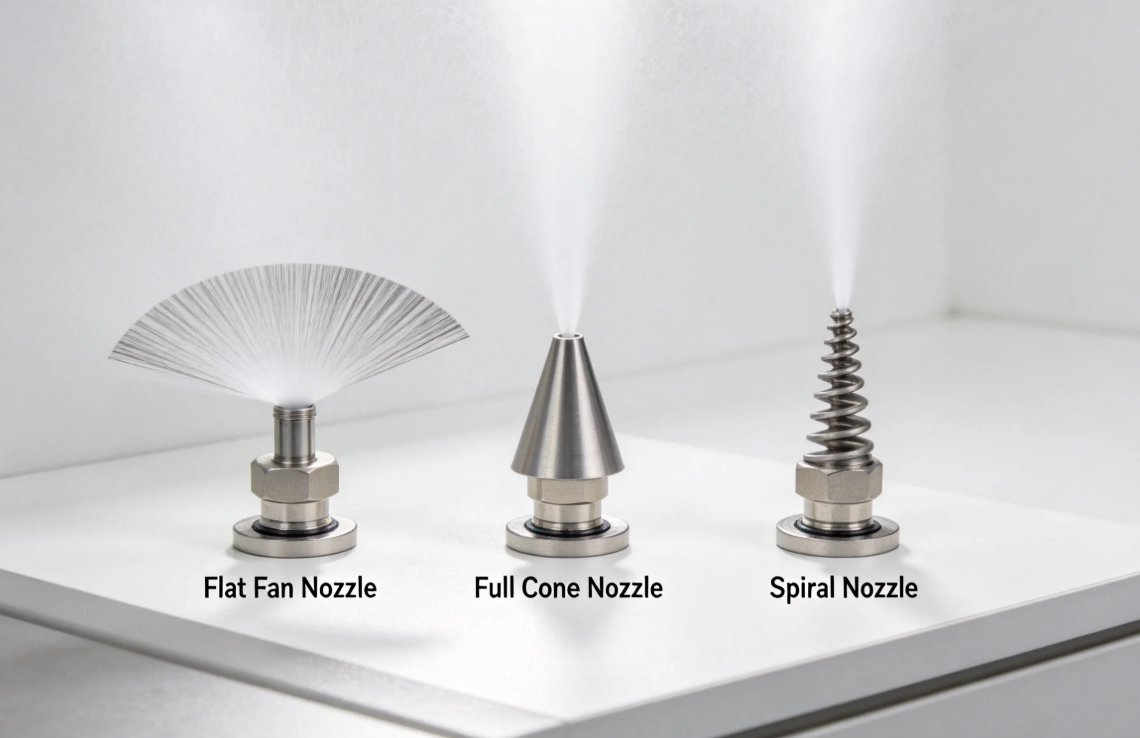
Not all spray nozzle geometries perform equally in maritime conditions. The following technical comparison examines the principal nozzle categories deployed across marine-grade spray nozzles and shipbuilding nozzle applications.
Nozzle Technology Comparison for Marine Engineering
| Nozzle Type | Spray Pattern | Spray Angle | Flow Rate Range | Primary Marine Application |
|---|---|---|---|---|
| Narrow Angle Fan Spray | Flat fan, high impact | 15° – 50° | 3.9 – 79 L/min | Targeted engine cooling, component washdown |
| Wide Angle Fan Spray | Uniform flood spray | 83° – 150° | Up to 410 L/min | General cooling, deck wash, fire protection |
| Spiral Spray Nozzle | Full / hollow cone | 60° – 170° | 5.5 – 4,140 L/min | Gas cooling, scrubbing, fire suppression |
| Wide Angle Full Cone (120°) | Uniform full cone | 110° – 120° | Variable | Tank washing, dust control, area cooling |
| Max Passage Full Cone | High-volume full cone | 60° – 120° | Up to 8,180 L/min | Marine gas desulfurization, high-flow cooling |
| Carbide Silicone Hollow Cone | Hollow cone, clog-resistant | 70° – 90° | 2" – 6" sizes | Gas scrubbing, abrasive environment cooling |
Technical Performance Benchmarks
| Parameter | Marine Engineering Requirement | Standard Industrial Rating | Performance Gap |
|---|---|---|---|
| Operating Pressure | 2 – 300 bar | 1 – 100 bar | High-pressure tank washing and water mist systems require 3x capacity |
| Temperature Tolerance | -30°C to 300°C | -10°C to 150°C | Marine exhaust and cryogenic applications exceed standard ranges |
| Corrosion Resistance | 35 g/L NaCl continuous exposure | Fresh water or low-salinity | Standard materials fail within 6-12 months in marine service |
| Clogging Resistance | Passage of sea salt crystals and fuel residues | Clean fluid assumption | Max Passage design reduces unplanned maintenance by 40-50% |
Key Insight: In our production practice, we have documented that marine-grade specifications incorporating 316L or duplex stainless steel construction recover their initial investment premium within the first maintenance cycle through extended service intervals and elimination of corrosion-related degradation.
Why Spray Systems Are Critical in Marine Engineering
Where Are Spray Systems Mission-Critical Onboard?
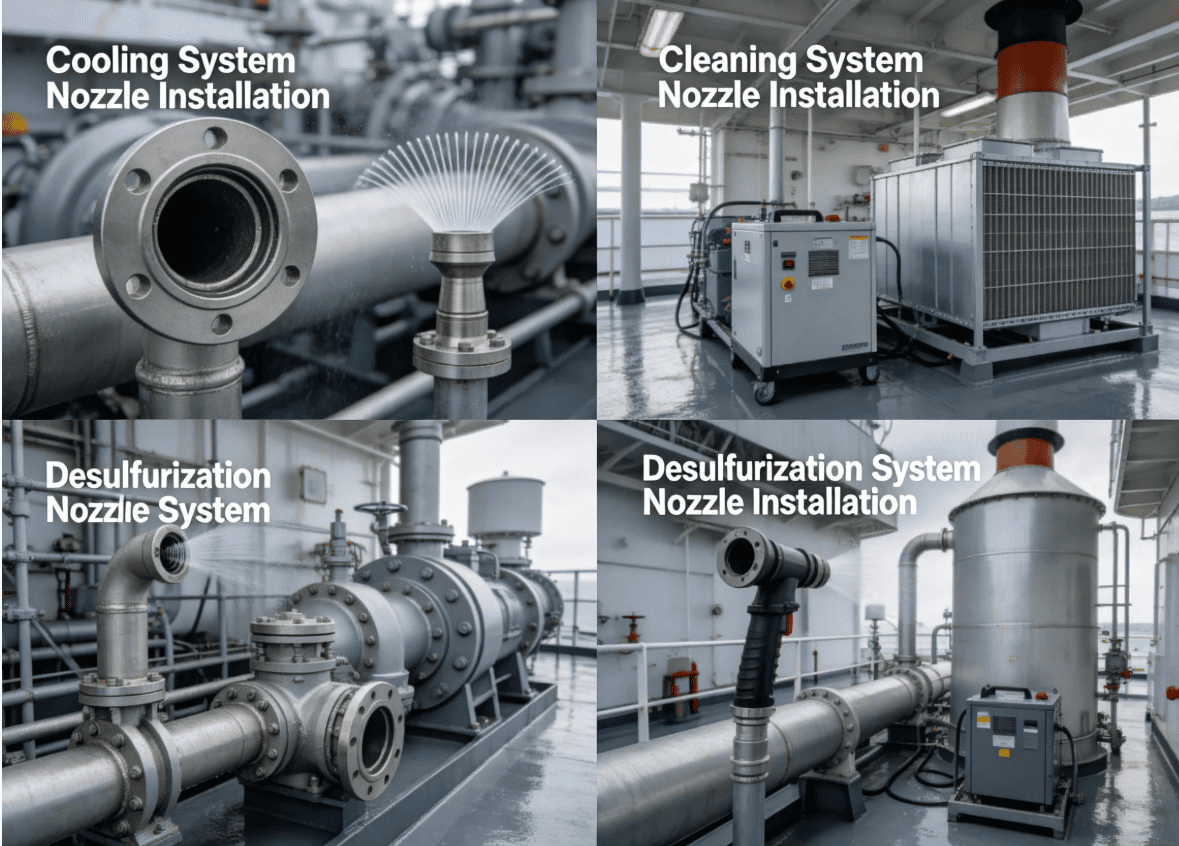
Marine spray systems operate across four primary engineering domains. Each application imposes distinct performance requirements and failure consequences.
1. Engine Room Cooling Systems
Marine diesel and gas turbine engines generate substantial thermal loads during continuous operation. Spray nozzles deliver controlled coolant distribution to cylinder heads, exhaust manifolds, and intercoolers.
- Pattern Requirement: Narrow spray angles (15°–50°) for targeted heat dissipation
- Impact Requirement: High-velocity flat fan patterns to penetrate thermal boundary layers
- Material Requirement: 316L stainless steel to resist coolant salinity and thermal cycling
- Performance Gain: Properly optimized spray cooling improves engine thermal efficiency by 12-15% compared to conventional bath-cooling methods
2. Fire Protection and Suppression
Fire represents one of the most severe hazards aboard any vessel. Marine fire suppression systems depend on spray nozzles to deliver uniform water mist or foam distribution across protected zones.
- Pattern Requirement: Wide spray angles (90°–150°) for maximum area coverage
- Droplet Requirement: Consistent sizing to suppress flammable vapor effectively
- Compliance Requirement: IMO SOLAS certification for consistent performance under emergency conditions
- Activation Requirement: Reliable response regardless of vessel orientation or sea state
3. Tank Cleaning and "Black Room" Washing
Vessel cargo tanks, ballast tanks, and engine compartments require periodic high-intensity cleaning to remove oil residues, sludge, and chemical contaminants.
- Pressure Requirement: High-pressure rotary jet action (up to 300 bar) for stubborn residue
- Coverage Requirement: Full cone or spiral patterns for comprehensive 360° wall coverage
- Passage Requirement: Self-cleaning flow paths to prevent clogging from viscous materials
- Chemical Compatibility: Resistance to caustic cleaning agents and hot water cycles
4. Exhaust Gas Cleaning (EGCS / Scrubbers)
With the implementation of IMO 2020 sulfur regulations, exhaust gas cleaning systems have become essential for vessel compliance. Spray nozzles inject alkaline reagents into exhaust streams to neutralize sulfur oxides.
- Flow Requirement: High flow rates up to 8,180 L/min for large passage designs
- Pattern Requirement: Hollow cone patterns optimized for gas-liquid contact efficiency
- Clogging Resistance: Handling of particulate-laden exhaust streams without flow obstruction
- Material Requirement: Titanium or silicon carbide for resistance to acidic condensate and thermal shock
How Do Material Choices Impact Longevity at Sea?
Material specification is arguably the most consequential decision in marine spray system design. The marine environment relentlessly attacks inadequate material choices.
Marine Nozzle Material Hierarchy
- Stainless Steel 316 / 316L: The marine industry standard. The low-carbon, molybdenum-rich composition provides superior resistance to pitting and crevice corrosion in high-salinity environments. Essential for marine fire suppression, engine cooling, and general deck washdown systems.
- Duplex Stainless Steel (2205/2507): With double the mechanical strength of standard stainless steel, Duplex alloys offer exceptional resistance to stress corrosion cracking and erosion-corrosion. Ideal for offshore drilling rigs, deep-sea vessels, and high-pressure ballast water systems.
- Marine Bronze & Brass: Traditional favorites for their excellent thermal conductivity and natural biofouling resistance. Reliable for seawater intake systems and low-pressure heat exchangers, though gradually being replaced by stainless configurations as regulatory requirements tighten.
- Special Alloys (Titanium / Silicon Carbide): Ultimate protection for scrubbers (EGCS). These materials provide near-total immunity to chemical attack in acidic, high-temperature sulfur removal environments, ensuring 24/7 compliance with IMO emissions standards.
Practical Note: Our engineering team observes that selection decisions incorporating comprehensive material evaluation reduce post-installation performance issues by approximately 70% compared to specification processes that prioritize only flow and pressure parameters.
Case Studies: Real-World Marine Deployments
Case 1: Container Vessel Engine Cooling Retrofit
A Mediterranean shipping operator experienced recurring overheating events in an 8,400 TEU container vessel during high-load summer transits. Diagnostic analysis identified degraded brass nozzles with enlarged orifices causing uneven coolant distribution.
- Solution: Narrow-angle fan spray nozzles in 316L stainless steel, delivering 15° flat fan patterns at calibrated flow rates
- Result: 14% improvement in maximum sustainable engine load and elimination of overheating alarms
- Lifecycle Impact: Stainless steel construction projected a 10-year service interval versus the 18-month replacement cycle of original brass components
Case 2: Chemical Tanker High-Impact Cleaning System
A chemical tanker operator required a tank washing system capable of removing polymerized cargo residues while meeting stringent cleanliness verification standards for product switching.
- Problem: Standard fixed nozzles failed to provide adequate impingement on upper bulkhead areas and wasted cleaning agent volume on already-clean lower sections
- Solution: Rotary tank washing nozzles with full cone patterns and 120° spray angle, operating at 200-250 bar
- Result: 35% reduction in cleaning cycle duration and 100% cleanliness verification pass rate on product switching inspections
Case 3: Offshore Platform EGCS Scrubber Reliability
An offshore drilling platform operating in the North Sea experienced frequent scrubber nozzle clogging from sulfur particulates and sea salt crystallization, causing IMO 2020 compliance interruptions.
- Solution: Max Passage full cone nozzles in Duplex 2205 stainless steel with wide free passage geometry
- Result: Elimination of unplanned scrubber maintenance during 90-day operational periods
- Compliance Impact: Continuous SOx emission compliance with zero regulatory deviations over 18-month monitoring period
People Also Ask: Marine Spray System FAQs
Which nozzle materials resist seawater corrosion longest?
For standard marine engineering applications, Stainless Steel 316L is the preferred choice due to its high molybdenum content, which prevents pitting corrosion in chloride environments. For extreme conditions such as offshore platforms or chemical scrubbing, Duplex Steel (2205/2507) or Titanium alloys ensure maximum reliability and structural integrity under high-salinity stress.
Are marine fire suppression nozzles IMO SOLAS compliant?
Yes. Marine-grade fire suppression nozzles are precision-engineered to meet IMO and SOLAS safety requirements. Critical performance factors include consistent droplet size and uniform spray distribution, which are essential for effective operation of high-pressure water mist and deluge fire protection systems onboard vessels. Always verify classification society approval certificates before specification.
How do you prevent clogging in marine exhaust scrubbers?
Clog-resistant "Max Passage" nozzle designs feature wide free passage geometry specifically engineered to handle solids in marine scrubbing and ballast water treatment without obstruction. This internal design allows large solid particles and sea salt crystals to pass through, ensuring continuous EGCS operation and reducing unplanned maintenance during long voyages.
Can spray nozzles be customized for specific ship dimensions?
Absolutely. OEM/ODM services are available to tailor flow rates, spray angles, connection types, and material specifications to unique shipbuilding requirements. Customization options include standard NPT/BSPT threads, custom flanges, and specialized geometries for LNG carriers, offshore platforms, and non-standard vessel configurations.
What pressure range do marine spray systems require?
Marine spray systems typically operate between 2 and 300 bar. Scrubber and fire suppression applications generally require 5-15 bar, while high-pressure tank cleaning may demand 100-300 bar. Proper pressure specification ensures adequate impingement force for cleaning applications and optimal atomization for cooling and suppression systems.
How does spray pattern selection affect marine system performance?
- Flat Fan Patterns: Ideal for impact-driven applications such as engine component cooling and targeted washdown
- Full Cone Patterns: Optimal for uniform distribution over circular areas, including tank washing and general cooling
- Hollow Cone Patterns: Preferred for gas contact applications (scrubbing, humidification) where maximizing surface-area-to-volume ratio enhances mass transfer efficiency
Conclusion: Specify for Reliability, Not Just Cost
Marine engineering leaves zero margin for spray system failure. From engine cooling circuits operating at 300°C to fire suppression systems that must activate flawlessly in emergency conditions, spray system performance directly impacts vessel safety, regulatory compliance, and operational profitability.
The evidence across multiple application domains is unambiguous: marine-grade nozzle specifications—incorporating 316L or duplex stainless steel construction, optimized spray patterns, and rigorous pressure and temperature ratings—deliver substantially superior lifecycle value compared to generic industrial alternatives. The initial cost differential typically recovers within the first maintenance cycle.
For marine engineers, fleet operators, and shipbuilders seeking reliable spray solutions, the marine-grade spray nozzles product range offers comprehensive coverage of marine application requirements. To explore how these solutions integrate into broader shipbuilding fluid systems, review our detailed analysis of spray nozzles in shipbuilding.
In our engineering experience across hundreds of vessel projects, the specification decisions made at the design phase determine 80% of lifetime system performance. Invest in marine-grade spray technology today to eliminate tomorrow's operational vulnerabilities.
Ready to specify the right spray system for your marine application? Contact our engineering team for a personalized technical consultation, or request a quotation tailored to your vessel's specific fluid control requirements.