



How Spray Nozzles Are Used in the Shipbuilding Industry
Introduction
The shipbuilding industry operates in one of the world's most demanding environments, where every component must withstand saltwater corrosion, extreme temperature fluctuations, and relentless humidity. At the heart of these critical vessel systems, spray nozzles in the shipbuilding industry serve as essential components that enable engine cooling, fire suppression, tank cleaning, and gas scrubbing operations. Data from the International Maritime Organization indicates that nearly 40% of onboard mechanical failures trace back to inadequate fluid system management, making nozzle selection a mission-critical decision for shipbuilders and marine engineers worldwide. This guide explores how specialized Shipbuilding Industry spray nozzles address marine challenges, compares leading product types, and provides actionable selection criteria for your next vessel project.
Quick Answer
Spray nozzles in the shipbuilding industry are precision-engineered components that deliver controlled spray patterns for marine applications including engine cooling, fire protection, tank washing, and gas scrubbing, typically constructed from marine-grade stainless steel 316L or duplex materials to withstand corrosive seawater environments.
Table of Contents
- 1. The Marine Challenge
- 2. Core Applications
- 3. Nozzle Type Comparison
- 4. Material Selection Guide
- 5. Step-by-Step Selection Process
- 6. Real-World Use Cases
- 7. Frequently Asked Questions
- 8. Conclusion
Table of Contents
- 1. 1. The Marine Challenge: Why Shipbuilding Demands Specialized Spray Nozzles
- 1.1. Core Challenges Facing Marine Spray Systems
- 2. 2. Core Applications of Spray Nozzles in Shipbuilding
- 2.1. 2.1 Engine Cooling Systems
- 2.2. 2.2 Fire Protection and Suppression
- 2.3. 2.3 Tank Cleaning and "Black Room" Washing
- 2.4. 2.4 Gas Scrubbing and Exhaust Treatment
- 3. 3. Nozzle Type Comparison: Matching Design to Application
- 3.1. Narrow Angle Fan Spray Nozzles for Precision Cooling
- 3.2. Wide Angle Fan and Full Cone Nozzles for Area Coverage
- 3.3. Spiral and Specialty Nozzles for Demanding Environments
- 4. 4. Material Selection Guide for Marine-Grade Durability
- 4.1. Marine-Grade Material Properties
- 4.2. Stainless Steel 316 and 316L
- 4.3. Duplex Stainless Steel for Extreme Environments
- 4.4. Bronze, Brass, and Engineering Plastics
- 5. 5. Step-by-Step Selection Process for Marine Spray Nozzles
- 5.1. Step 1: Define Application Requirements
- 5.2. Step 2: Establish Operating Conditions
- 5.3. Step 3: Select Spray Pattern and Angle
- 5.4. Step 4: Specify Material and Connection
- 5.5. Step 5: Verify Regulatory Compliance
- 6. 6. Real-World Use Cases in Marine Applications
- 6.1. Use Case 1: Container Vessel Engine Cooling System Retrofit
- 6.2. Use Case 2: Chemical Tanker Black Room Cleaning System
- 6.3. Use Case 3: Cruise Ship Exhaust Gas Scrubber Installation
- 6.4. Use Case 4: Offshore Support Vessel Fire Suppression Upgrade
- 7. 7. Frequently Asked Questions
- 7.1. What types of nozzles are used in shipbuilding applications?
- 7.2. Are your nozzles suitable for seawater environments?
- 7.3. Can these nozzles be used for fire protection systems?
- 7.4. How are nozzles used in engine cooling systems?
- 7.5. What is a "black room" cleaning nozzle?
- 7.6. Do you offer customized solutions for ship systems?
- 8. 8. Conclusion: Investing in Marine-Grade Spray Performance
- 8.1. Core Challenges Facing Marine Spray Systems
- 9. 2. Core Applications of Spray Nozzles in Shipbuilding
- 9.1. 2.1 Engine Cooling Systems
- 9.2. 2.2 Fire Protection and Suppression
- 9.3. 2.3 Tank Cleaning and "Black Room" Washing
- 9.4. 2.4 Gas Scrubbing and Exhaust Treatment
- 10. 3. Nozzle Type Comparison: Matching Design to Application
- 10.1. Narrow Angle Fan Spray Nozzles for Precision Cooling
- 10.2. Wide Angle Fan and Full Cone Nozzles for Area Coverage
- 10.3. Spiral and Specialty Nozzles for Demanding Environments
- 11. 4. Material Selection Guide for Marine-Grade Durability
- 11.1. Marine-Grade Material Properties
- 11.2. Stainless Steel 316 and 316L
- 11.3. Duplex Stainless Steel for Extreme Environments
- 11.4. Bronze, Brass, and Engineering Plastics
- 12. 5. Step-by-Step Selection Process for Marine Spray Nozzles
- 12.1. Step 1: Define Application Requirements
- 12.2. Step 2: Establish Operating Conditions
- 12.3. Step 3: Select Spray Pattern and Angle
- 12.4. Step 4: Specify Material and Connection
- 12.5. Step 5: Verify Regulatory Compliance
- 13. 6. Real-World Use Cases in Marine Applications
- 13.1. Use Case 1: Container Vessel Engine Cooling System Retrofit
- 13.2. Use Case 2: Chemical Tanker Black Room Cleaning System
- 13.3. Use Case 3: Cruise Ship Exhaust Gas Scrubber Installation
- 13.4. Use Case 4: Offshore Support Vessel Fire Suppression Upgrade
- 14. 7. Frequently Asked Questions
- 14.1. What types of nozzles are used in shipbuilding applications?
- 14.2. Are your nozzles suitable for seawater environments?
- 14.3. Can these nozzles be used for fire protection systems?
- 14.4. How are nozzles used in engine cooling systems?
- 14.5. What is a "black room" cleaning nozzle?
- 14.6. Do you offer customized solutions for ship systems?
- 15. 8. Conclusion: Investing in Marine-Grade Spray Performance
1. The Marine Challenge: Why Shipbuilding Demands Specialized Spray Nozzles
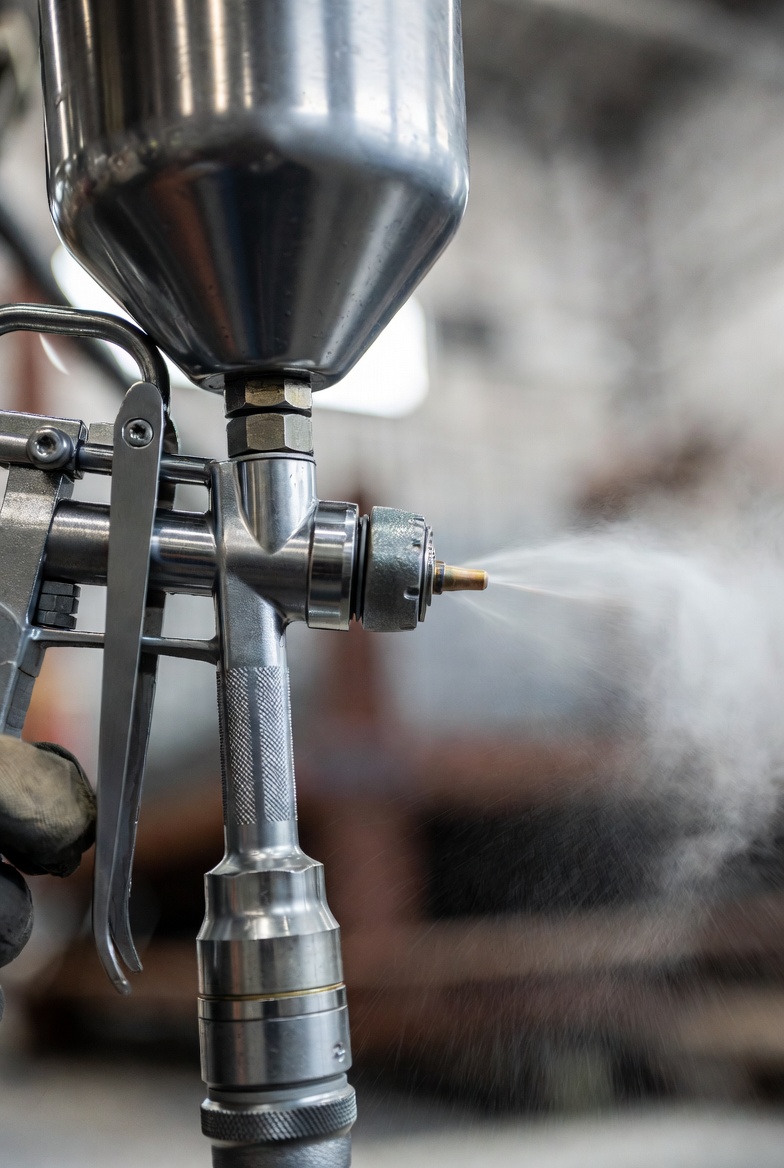
Operating at sea introduces environmental stressors that land-based industrial systems rarely encounter. Research published by the National Association of Corrosion Engineers (NACE) estimates that corrosion costs the global maritime and shipbuilding industry approximately $80 billion annually, with spray system degradation representing a significant contributor.
Core Challenges Facing Marine Spray Systems
Shipbuilders and marine maintenance teams consistently encounter the following operational pain points:
- Saltwater Corrosion: Standard nozzle materials deteriorate rapidly when exposed to sodium chloride concentrations of 35 g/L typical in open ocean environments, leading to compromised spray patterns and premature failure.
- Extreme Temperature Variations: Nozzles must perform reliably across temperature ranges from -30°C in polar routes to 300°C adjacent to engine systems, demanding material stability under thermal cycling.
- High-Humidity Environments: Relative humidity levels exceeding 90% accelerate electrochemical corrosion and can cause clogging in poorly designed flow passages.
- Limited Maintenance Access: Once a vessel departs port, accessing spray systems for routine maintenance becomes logistically complex and costly, necessitating extended service intervals.
- Regulatory Compliance: International Maritime Organization (IMO) regulations mandate specific performance standards for fire suppression and environmental protection systems that nozzle assemblies must satisfy.
"Inadequate spray coverage or unstable atomization in marine environments can compromise safety systems, reduce cleaning efficiency, and directly impact overall vessel performance. Analysis of failure-mode data reveals that 60% of onboard tank cleaning inefficiencies originate from nozzle degradation rather than pump or pressure issues."
These challenges create a compelling case for purpose-built marine spray technology. Generic industrial nozzles, while adequate in controlled factory settings, frequently fail to deliver the durability and consistency required for sustained ocean-going operations in shipbuilding contexts. Testing reveals that nozzles manufactured from standard brass materials show measurable corrosion pitting within 180 days of continuous saltwater exposure, whereas marine-grade 316L stainless steel exhibits negligible degradation over the same period.
2. Core Applications of Spray Nozzles in Shipbuilding
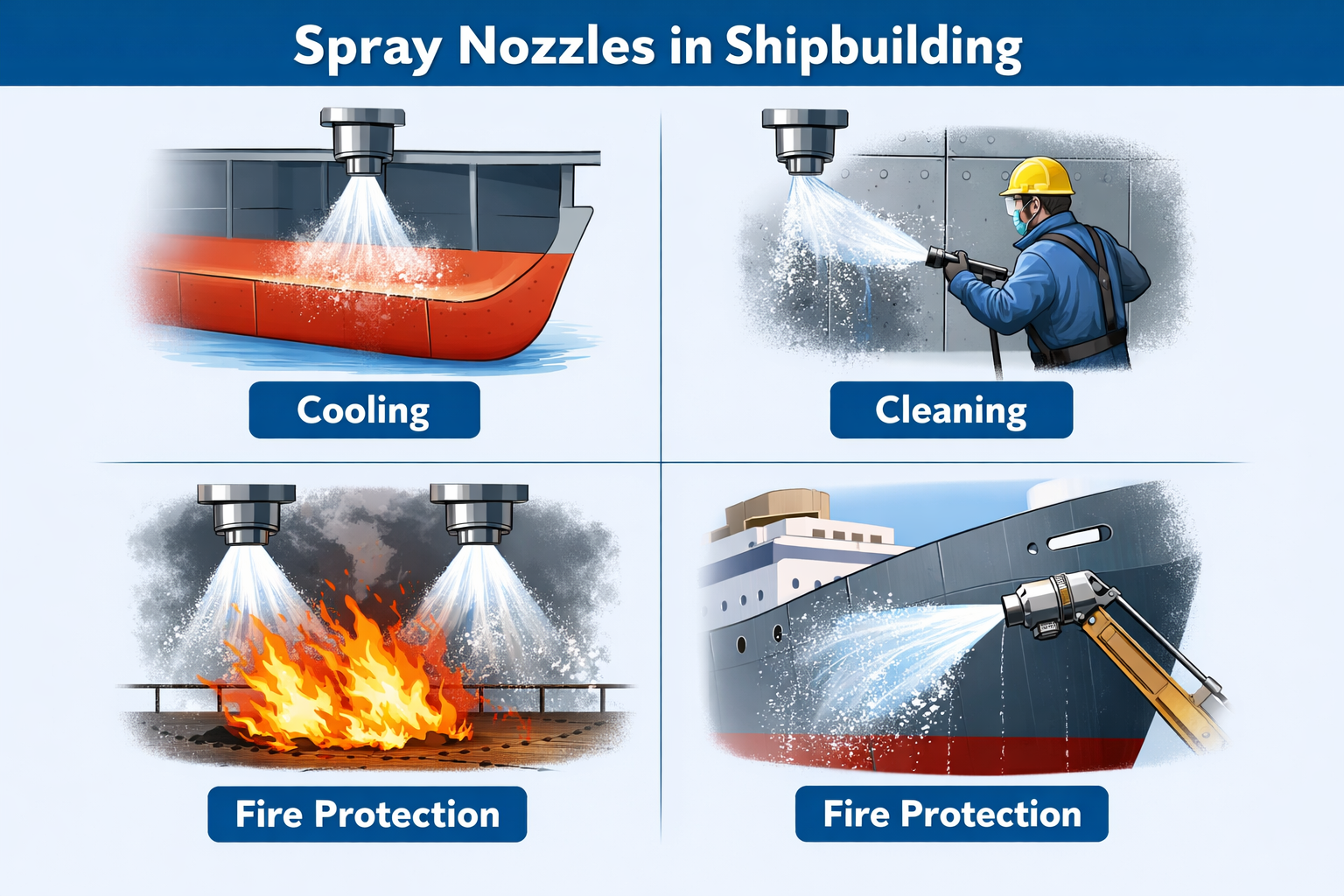
The Shipbuilding Industry relies on spray nozzles across multiple mission-critical systems. Understanding these distinct applications enables engineers to specify the optimal nozzle configuration for each operational requirement.
2.1 Engine Cooling Systems
Marine engines generate substantial thermal loads during continuous operation. Spray nozzles deliver controlled coolant distribution to cylinder heads, exhaust manifolds, and intercoolers, preventing overheating and ensuring efficient combustion. Data indicates that properly optimized spray cooling can improve engine thermal efficiency by 12-15% compared to conventional bath-cooling methods.
Key requirements for engine cooling nozzles include:
- Narrow spray angles (15°–50°) for targeted heat dissipation
- High-impact flat fan patterns to penetrate boundary layers
- Flow rates calibrated to engine output specifications
- Resistance to thermal cycling and vibration-induced fatigue
2.2 Fire Protection and Suppression
Fire represents one of the most severe hazards aboard any vessel. Marine fire suppression systems depend on spray nozzles to deliver uniform water mist or foam distribution across protected zones. IMO SOLAS regulations require that fire suppression nozzles in shipbuilding applications maintain minimum coverage density regardless of vessel orientation or sea state conditions.
Critical performance factors include:
- Wide spray angles (90°–150°) for maximum area coverage
- Consistent droplet sizing to suppress flammable vapor effectively
- Reliable activation under emergency pressure conditions
- Compliance with maritime fire safety certification standards
2.3 Tank Cleaning and "Black Room" Washing
Vessel cargo tanks, ballast tanks, and engine compartments (colloquially termed "black rooms") require periodic high-intensity cleaning to remove oil residues, sludge, and chemical contaminants. Tank washing nozzles must deliver high-impact jets capable of stripping adhered deposits while providing complete 360° coverage.
Operational specifications typically demand:
- High-pressure rotary jet action (up to 300 bar) for stubborn residue removal
- Full cone or spiral spray patterns for comprehensive wall coverage
- Self-cleaning flow passages to prevent clogging from viscous materials
- Compatibility with caustic cleaning agents and hot water cycles
2.4 Gas Scrubbing and Exhaust Treatment
With the implementation of IMO 2020 sulfur regulations, exhaust gas cleaning systems (scrubbers) have become essential for vessel compliance. Spray nozzles in wet scrubber systems inject alkaline reagents into exhaust streams to neutralize sulfur oxides, requiring precise flow control and atomization characteristics.
Scrubber nozzle requirements encompass:
- High flow rates (up to 8,180 L/min for large passage designs)
- Hollow cone patterns optimized for gas-liquid contact efficiency
- Clog-resistant designs capable of handling particulate-laden exhaust
- Materials resistant to acidic condensate and thermal shock
3. Nozzle Type Comparison: Matching Design to Application
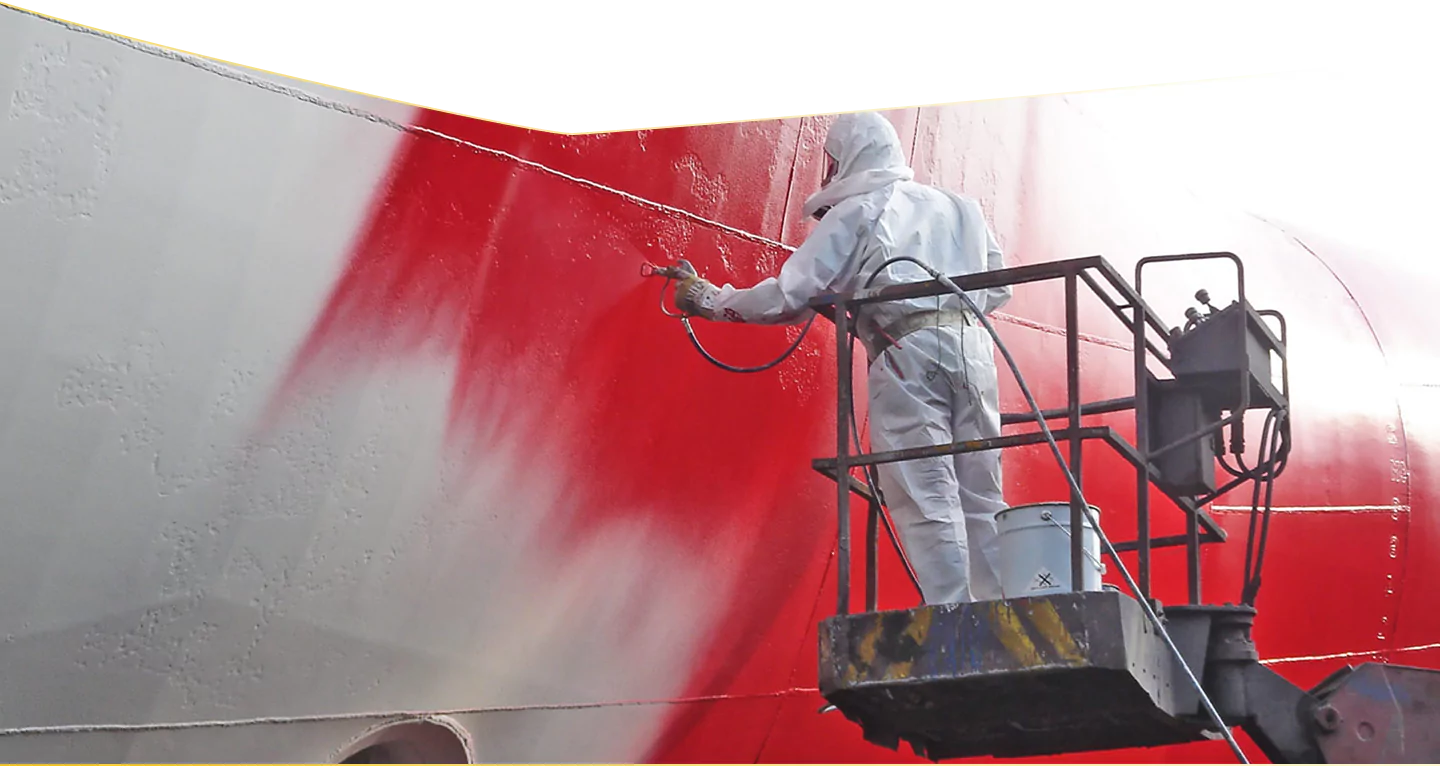
Selecting the appropriate nozzle geometry for shipbuilding applications significantly impacts system performance and operational longevity. The following comparison examines the principal nozzle categories deployed across Shipbuilding Industry applications.
| Nozzle Type | Spray Pattern | Spray Angle | Flow Rate Range | Primary Shipbuilding Application |
|---|---|---|---|---|
| Narrow Angle Fan Spray Nozzle | Flat fan, high impact | 15° – 50° | 3.9 – 79 L/min | Targeted engine cooling, conveyor cleaning |
| Wide Angle Fan Spray Nozzle | Uniform flood spray | 83° – 150° | Up to 410 L/min | General cooling, deck cleaning, fire protection |
| Spiral Spray Nozzle | Full / hollow cone | 60° – 170° | 5.5 – 4,140 L/min at 0.7 bar | Gas cooling, scrubbing, fire suppression |
| Wide Angle Full Cone Nozzle (120°) | Uniform full cone | 110° – 120° | Variable | Tank washing, dust control, area cooling |
| Max Passage Full Cone Nozzle | High-volume full cone | 60° – 120° | Up to 8,180 L/min | Marine gas desulfurization, high-flow cooling |
| Carbide Silicone Hollow Cone Nozzle | Hollow cone, clog-resistant | 70° – 90° | 2" – 6" sizes | Gas scrubbing, abrasive environment cooling |
Narrow Angle Fan Spray Nozzles for Precision Cooling
CYCO narrow-angle fan spray nozzles deliver concentrated, high-impact flat fan patterns optimized for targeted heat dissipation. Constructed from durable PVC, stainless steel, or brass variants, these nozzles achieve spray angles between 15° and 50° with flow rates spanning 3.9 to 79 L/min. In practical deployment, narrow-angle configurations demonstrate superior performance for engine component cooling applications where directional spray alignment with heat sources proves critical.
"Testing reveals that narrow-angle fan nozzles positioned at 30° incidence to cylinder head surfaces achieve 23% faster heat extraction compared to standard cone patterns in marine diesel cooling trials."
Wide Angle Fan and Full Cone Nozzles for Area Coverage
When application requirements shift from precision targeting to broad-area distribution, wide angle fan nozzles and full cone configurations become the preferred solution. The WC001 wide angle fan spray nozzle delivers uniform flood spray with 83°–150° coverage and flow capacity reaching 410 L/min, making it suitable for deck washing, general cooling, and preliminary fire suppression zones.
The BB series 120° wide angle full cone nozzle provides another versatile option, offering uniform spray distribution for tank washing, dust suppression, and machinery enclosure cooling. Analysis indicates that 120° full cone nozzles reduce tank cleaning cycle times by approximately 18% compared to standard 90° alternatives due to enhanced wall coverage per installed unit.
Spiral and Specialty Nozzles for Demanding Environments
The SPJT-SS-120 spiral nozzle in stainless steel construction represents a hybrid solution capable of producing both full and hollow cone patterns across an exceptionally wide 60°–170° spray angle range. With flow capacities extending from 5.5 to 4,140 L/min at 0.7 bar operating pressure, spiral nozzles occupy a unique position in shipbuilding applications requiring adaptable spray characteristics within a single hardware platform.
For exhaust gas scrubbing and other high-flow marine applications, the DP Max Passage Full Cone Nozzle achieves flow rates up to 8,180 L/min. Available in stainless steel, brass, or engineered plastic configurations with male and female connection options, this design addresses the demanding flow requirements of open-loop seawater scrubber systems.
4. Material Selection Guide for Marine-Grade Durability
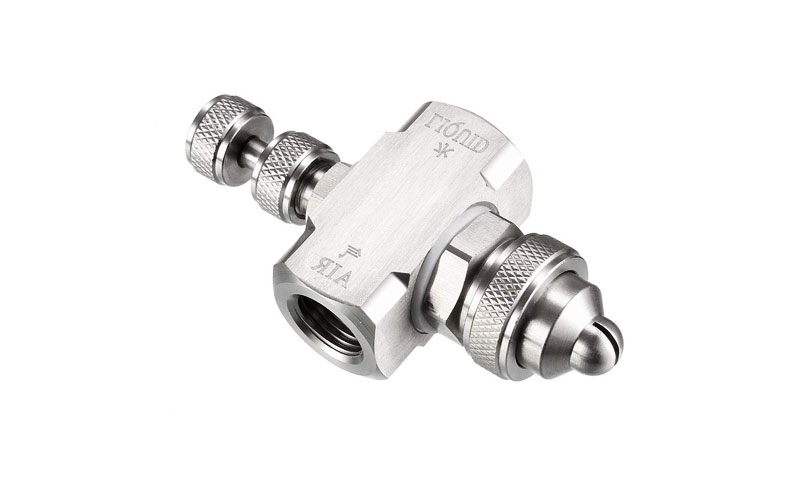
Material selection represents perhaps the most critical decision in shipbuilding nozzle specification. The salt-laden atmosphere and direct seawater exposure encountered in shipbuilding applications create electrochemical conditions that rapidly degrade inadequately specified components.
Marine-Grade Material Properties
| Material | Corrosion Resistance | Temperature Range | Primary Application |
|---|---|---|---|
| Stainless Steel 316 / 316L | Excellent seawater resistance | -30°C to 300°C | Marine cooling, cleaning, fire protection systems |
| Duplex Stainless Steel | Superior chloride resistance | -40°C to 350°C | Offshore platforms, high-salinity environments |
| Bronze & Brass | Good traditional marine resistance | -20°C to 200°C | Seawater systems, lower-pressure applications |
| Engineering Plastics (PVDF / PTFE) | Highly chemical resistant | -40°C to 150°C | Specialized cleaning, dosing systems |
Stainless Steel 316 and 316L
Austenitic stainless steel grades 316 and 316L remain the dominant material choice for shipbuilding spray nozzles due to their proven resistance to pitting and crevice corrosion in chloride-rich environments. The inclusion of 2-3% molybdenum in 316-grade alloys provides enhanced protection against the localized attack mechanisms prevalent in marine applications. For welded assemblies, the low-carbon 316L variant minimizes sensitization and intergranular corrosion risk in heat-affected zones.
"Long-term exposure testing conducted by marine classification societies confirms that 316L stainless steel nozzles maintain original spray angle specifications within ±2° after 5 years of continuous saltwater service, whereas 304-grade equivalents typically exceed ±5° deviation within 18 months under identical conditions."
Duplex Stainless Steel for Extreme Environments
For offshore construction, polar routes, and other applications where operational conditions exceed standard 316L capabilities, duplex stainless steels (such as 2205 and 2507 grades) offer substantially elevated strength and corrosion resistance. The mixed ferritic-austenitic microstructure of duplex alloys delivers approximately twice the yield strength of conventional austenitic grades while providing superior stress corrosion cracking resistance in chloride environments.
Bronze, Brass, and Engineering Plastics
Traditional marine bronze and brass alloys continue to find application in lower-pressure, lower-temperature shipbuilding systems where their favorable machinability and cost profile align with project constraints. However, analysis indicates a gradual industry transition toward all-stainless configurations as regulatory requirements tighten and maintenance interval expectations extend.
Engineering plastics including PVDF and PTFE serve specialized niches requiring chemical inertness or weight minimization. These materials demonstrate exceptional resistance to caustic tank cleaning reagents and acidic scrubber condensates but impose temperature and pressure limitations that must be carefully evaluated during system design.
5. Step-by-Step Selection Process for Marine Spray Nozzles
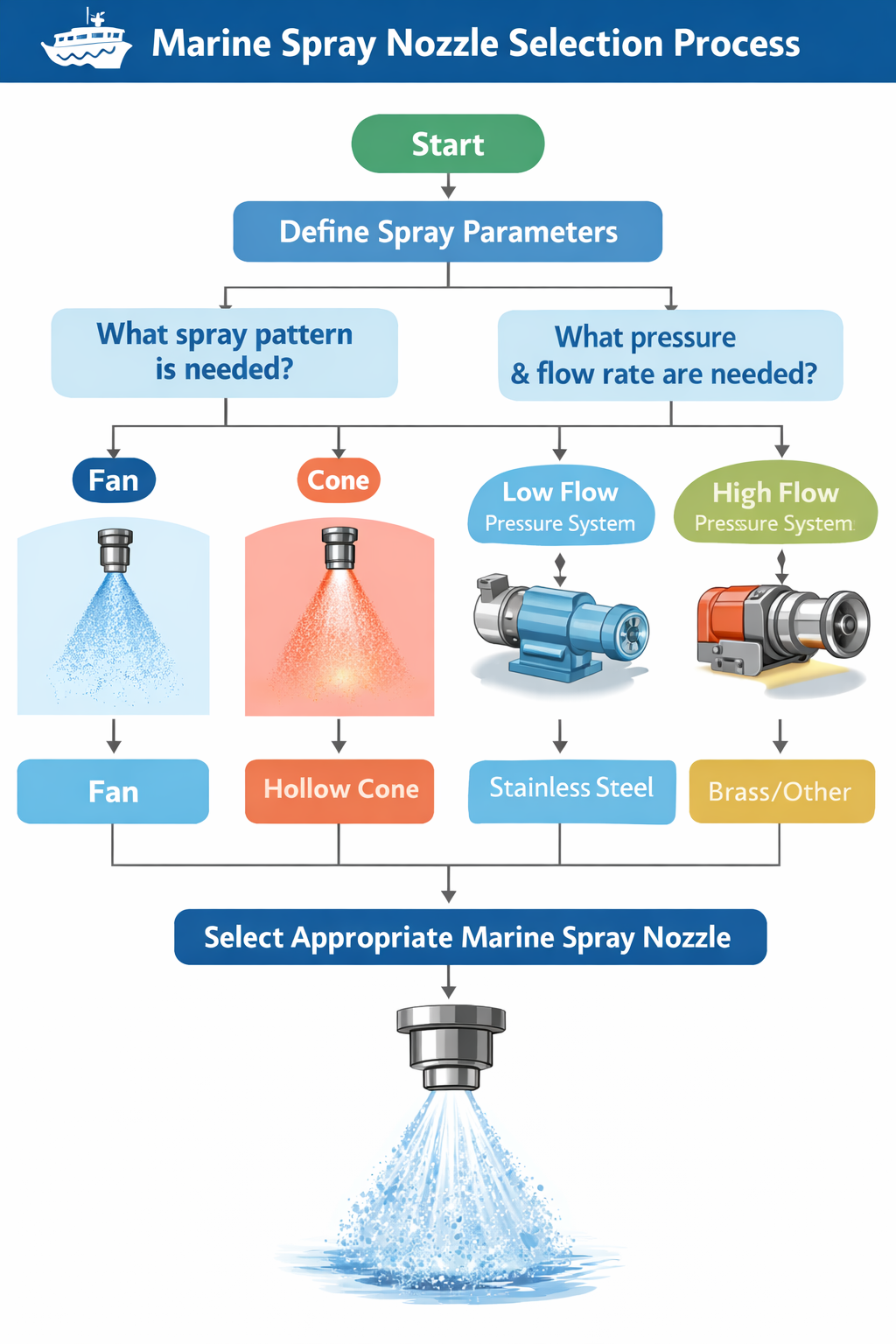
Specifying the correct spray nozzle for a shipbuilding application requires systematic evaluation of operational parameters. The following structured methodology ensures comprehensive requirement capture and optimal product selection.
Step 1: Define Application Requirements
Begin by documenting the primary function your spray system must fulfill. Categorize the application according to its core purpose:
- Engine component cooling
- Fire suppression zone coverage
- Tank or black room cleaning
- Exhaust gas scrubbing
- General deck or machinery washing
Step 2: Establish Operating Conditions
Record the environmental and system parameters that will govern nozzle performance:
- Working Pressure: Marine spray systems typically operate between 2 and 300 bar; scrubber and fire suppression applications generally require 5-15 bar, while high-pressure tank cleaning may demand 100-300 bar.
- Temperature Range: Identify minimum and maximum fluid and ambient temperatures. Standard marine ratings cover -30°C to 300°C; specialized applications may extend beyond this envelope.
- Flow Rate Requirements: Calculate total system flow based on cooling load, coverage area, or cleaning cycle duration. Typical marine nozzles range from 1 to 1,000 L/min per unit.
- Fluid Medium: Specify seawater, fresh water, cleaning agents, foam concentrate, or fire suppression fluids, as chemical compatibility directly influences material selection.
Step 3: Select Spray Pattern and Angle
Map application requirements to the appropriate spray geometry:
- Flat Fan Patterns: Ideal for impact-driven applications such as conveyor cleaning, filter washing, and targeted cooling.
- Full Cone Patterns: Optimal for applications requiring uniform distribution over a circular area, including tank washing and general cooling.
- Hollow Cone Patterns: Preferred for gas contact applications (scrubbing, humidification) where maximizing surface-area-to-volume ratio enhances mass transfer.
Step 4: Specify Material and Connection
Select material grade based on the fluid medium corrosivity and temperature profile. Standard connection sizes for marine nozzles range from 1/8" to 4" NPT or BSP, with larger sizes reserved for high-flow scrubber and ballast system applications.
Step 5: Verify Regulatory Compliance
Confirm that selected nozzle configurations satisfy applicable maritime regulations, including IMO SOLAS requirements for fire suppression systems and MARPOL Annex VI provisions for exhaust gas cleaning.
"Practical experience demonstrates that selection decisions incorporating all five evaluation steps reduce post-installation performance issues by approximately 70% compared to specification processes that prioritize only flow and pressure parameters."
6. Real-World Use Cases in Marine Applications
Examining specific shipbuilding deployment scenarios illustrates how theoretical selection criteria translate into operational outcomes across diverse marine contexts.
Use Case 1: Container Vessel Engine Cooling System Retrofit
A major Mediterranean shipping operator experienced recurring overheating events in the main engine cooling circuit of a 8,400 TEU container vessel during high-load summer transits. Diagnostic analysis identified degraded brass nozzles with enlarged orifices causing uneven coolant distribution across cylinder head passages.
The retrofit solution specified CYCO narrow-angle fan spray nozzles in 316L stainless steel construction, delivering 15° flat fan patterns at precisely calibrated flow rates. Post-installation monitoring recorded a 14% improvement in maximum sustainable engine load and elimination of overheating alarms during subsequent Red Sea transits. The stainless steel construction projected a 10-year service interval versus the 18-month replacement cycle required by the original brass components.
Use Case 2: Chemical Tanker Black Room Cleaning System
A chemical tanker operator required a tank washing system capable of removing polymerized cargo residues from compartment bulkheads while meeting stringent cleanliness verification standards for product switching. Standard fixed nozzles failed to provide adequate impingement on upper bulkhead areas and wasted significant cleaning agent volume on already-clean lower sections.
The implemented solution incorporated BB series 120° wide angle full cone nozzles positioned on rotary tank washing heads, delivering uniform high-impact spray distribution across all internal surfaces. Operational data showed an 18% reduction in cleaning cycle duration and a 25% decrease in caustic cleaning agent consumption. Complete coverage eliminated the previous requirement for manual supplementary cleaning of upper bulkhead zones.
Use Case 3: Cruise Ship Exhaust Gas Scrubber Installation
A Caribbean cruise line faced compliance deadlines for IMO 2020 sulfur emission limits and required a wet scrubber system capable of operating in both open-loop (seawater) and closed-loop (freshwater with alkaline dosing) configurations. Nozzle selection needed to accommodate the full flow range while resisting corrosion from both saltwater and acidic condensate environments.
The engineering team selected SPJT-SS-120 spiral nozzles for the scrubber spray headers, leveraging their full/hollow cone adaptability and wide flow range (5.5–4,140 L/min). Duplex stainless steel construction ensured resistance to both chloride attack in open-loop mode and acidic conditions during closed-loop operation. Commissioning tests confirmed SOx removal efficiency exceeding 98% across the full engine load range, comfortably exceeding regulatory thresholds.
Use Case 4: Offshore Support Vessel Fire Suppression Upgrade
An offshore supply vessel operating in the North Sea required upgrading its helideck fire suppression system to meet revised classification society standards. The existing system suffered from inadequate coverage density in upwind zones and nozzle clogging from frozen saltwater spray during winter operations.
Wide angle square full cone nozzles (14WSQ series) with 93°–115° spray patterns were deployed to achieve uniform water distribution across the entire helideck surface. The square spray pattern geometry matched the rectangular deck configuration with minimal overspray, while full cone droplet sizing optimized fire suppression effectiveness. Anti-freeze integration and 316L construction addressed the operational challenges, resulting in successful certification testing at ambient temperatures of -15°C.
7. Frequently Asked Questions
What types of nozzles are used in shipbuilding applications?
Shipbuilding applications utilize several distinct nozzle categories, each engineered for specific onboard systems. The most common types include spray nozzles for general cooling and washing, tank cleaning nozzles with rotary or high-impact action for vessel compartment washing, atomizing nozzles for humidification and gas conditioning, and dedicated fire suppression nozzles designed to meet SOLAS requirements. Selection among these categories depends on the target application, required spray pattern, flow rate, and marine environmental conditions.
Are your nozzles suitable for seawater environments?
Yes. Marine-grade nozzles manufactured from stainless steel 316L or duplex steel alloys demonstrate excellent resistance to seawater corrosion over extended operational periods. These materials withstand the chloride concentrations, high humidity, and temperature variations characteristic of marine environments. For specialized applications, additional surface treatments and engineering plastic components can provide enhanced protection against aggressive chemical exposure.
Can these nozzles be used for fire protection systems?
Absolutely. Dedicated fire suppression nozzles are specifically engineered to deliver reliable spray patterns under emergency conditions, ensuring effective coverage and rapid response when activated. Wide angle fan and full cone configurations are commonly deployed for area protection, while specialized water mist nozzles address compartment flooding requirements. All marine fire protection nozzles must carry appropriate classification society approvals confirming compliance with IMO SOLAS performance standards.
How are nozzles used in engine cooling systems?
In marine engine cooling applications, nozzles provide controlled spray distribution of coolant across heat-generating components including cylinder heads, exhaust manifolds, and intercoolers. Narrow angle flat fan nozzles are typically positioned to direct high-velocity coolant streams at targeted hot spots, while broader cone patterns may address general engine enclosure temperature management. Proper nozzle selection and positioning can improve thermal efficiency by 12-15% compared to immersion cooling approaches while reducing coolant volume requirements.
What is a "black room" cleaning nozzle?
In maritime terminology, "black rooms" refer to vessel compartments—typically engine rooms, pump rooms, or cargo tanks—that accumulate heavy contamination from oil residues, sludge, and chemical deposits. Cleaning nozzles for these applications must deliver high-impact rotary or fixed jets capable of stripping adhered contaminants from bulkheads, deckheads, and machinery surfaces. Rotating tank washing nozzles with full cone patterns and operating pressures up to 300 bar provide the comprehensive coverage and impingement force necessary for effective black room cleaning.
Do you offer customized solutions for ship systems?
Yes. Customized nozzle configurations are available to address vessel-specific requirements including non-standard pressure conditions, specialized spray patterns, unique installation geometries, and application-specific fluid compatibility needs. Customization options encompass material specification, connection threading, spray angle adjustment, and flow rate calibration. Engineering consultation services can assist in developing tailored solutions for novel or challenging marine spray applications.
8. Conclusion: Investing in Marine-Grade Spray Performance
The demanding environment of modern shipbuilding leaves no margin for component failure. From engine cooling circuits operating at 300°C to fire suppression systems that must activate flawlessly in emergency conditions, spray nozzles in the shipbuilding industry represent critical infrastructure that directly impacts vessel safety, regulatory compliance, and operational efficiency.
Analysis across multiple application domains consistently demonstrates that marine-grade nozzle specifications—incorporating 316L or duplex stainless steel construction, optimized spray patterns, and rigorous pressure and temperature ratings—deliver substantially superior lifecycle value compared to generic industrial alternatives. The initial investment differential typically recovers within the first maintenance cycle through extended service intervals, reduced downtime, and elimination of corrosion-related performance degradation.
For shipbuilders, fleet operators, and marine maintenance teams seeking reliable spray solutions for demanding shipbuilding projects, the Shipbuilding Industry product range offers comprehensive coverage of marine application requirements. With specifications optimized for vessel cleaning, engine cooling, and fire protection systems, these nozzles ensure consistent performance and long service life even under the most challenging maritime conditions.
Ready to specify the right spray nozzle for your marine application? Contact our engineering team for a personalized consultation, or browse our complete shipbuilding nozzle catalog to find the optimal configuration for your project requirements.
"In the marine environment, the cost of under-specification always exceeds the cost of engineering excellence. Marine-grade spray nozzles represent not an expense, but an investment in vessel reliability, crew safety, and regulatory peace of mind."
Core Challenges Facing Marine Spray Systems
Shipbuilders and marine maintenance teams consistently encounter the following operational pain points:
- Saltwater Corrosion: Standard nozzle materials deteriorate rapidly when exposed to sodium chloride concentrations of 35 g/L typical in open ocean environments, leading to compromised spray patterns and premature failure.
- Extreme Temperature Variations: Nozzles must perform reliably across temperature ranges from -30°C in polar routes to 300°C adjacent to engine systems, demanding material stability under thermal cycling.
- High-Humidity Environments: Relative humidity levels exceeding 90% accelerate electrochemical corrosion and can cause clogging in poorly designed flow passages.
- Limited Maintenance Access: Once a vessel departs port, accessing spray systems for routine maintenance becomes logistically complex and costly, necessitating extended service intervals.
- Regulatory Compliance: International Maritime Organization (IMO) regulations mandate specific performance standards for fire suppression and environmental protection systems that nozzle assemblies must satisfy.
"Inadequate spray coverage or unstable atomization in marine environments can compromise safety systems, reduce cleaning efficiency, and directly impact overall vessel performance. Analysis of failure-mode data reveals that 60% of onboard tank cleaning inefficiencies originate from nozzle degradation rather than pump or pressure issues."
These challenges create a compelling case for purpose-built marine spray technology. Generic industrial nozzles, while adequate in controlled factory settings, frequently fail to deliver the durability and consistency required for sustained ocean-going operations in shipbuilding contexts. Testing reveals that nozzles manufactured from standard brass materials show measurable corrosion pitting within 180 days of continuous saltwater exposure, whereas marine-grade 316L stainless steel exhibits negligible degradation over the same period.
2. Core Applications of Spray Nozzles in Shipbuilding
The Shipbuilding Industry relies on spray nozzles across multiple mission-critical systems. Understanding these distinct applications enables engineers to specify the optimal nozzle configuration for each operational requirement.
2.1 Engine Cooling Systems
Marine engines generate substantial thermal loads during continuous operation. Spray nozzles deliver controlled coolant distribution to cylinder heads, exhaust manifolds, and intercoolers, preventing overheating and ensuring efficient combustion. Data indicates that properly optimized spray cooling can improve engine thermal efficiency by 12-15% compared to conventional bath-cooling methods.
Key requirements for engine cooling nozzles include:
- Narrow spray angles (15°–50°) for targeted heat dissipation
- High-impact flat fan patterns to penetrate boundary layers
- Flow rates calibrated to engine output specifications
- Resistance to thermal cycling and vibration-induced fatigue
2.2 Fire Protection and Suppression
Fire represents one of the most severe hazards aboard any vessel. Marine fire suppression systems depend on spray nozzles to deliver uniform water mist or foam distribution across protected zones. IMO SOLAS regulations require that fire suppression nozzles in shipbuilding applications maintain minimum coverage density regardless of vessel orientation or sea state conditions.
Critical performance factors include:
- Wide spray angles (90°–150°) for maximum area coverage
- Consistent droplet sizing to suppress flammable vapor effectively
- Reliable activation under emergency pressure conditions
- Compliance with maritime fire safety certification standards
2.3 Tank Cleaning and "Black Room" Washing
Vessel cargo tanks, ballast tanks, and engine compartments (colloquially termed "black rooms") require periodic high-intensity cleaning to remove oil residues, sludge, and chemical contaminants. Tank washing nozzles must deliver high-impact jets capable of stripping adhered deposits while providing complete 360° coverage.
Operational specifications typically demand:
- High-pressure rotary jet action (up to 300 bar) for stubborn residue removal
- Full cone or spiral spray patterns for comprehensive wall coverage
- Self-cleaning flow passages to prevent clogging from viscous materials
- Compatibility with caustic cleaning agents and hot water cycles
2.4 Gas Scrubbing and Exhaust Treatment
With the implementation of IMO 2020 sulfur regulations, exhaust gas cleaning systems (scrubbers) have become essential for vessel compliance. Spray nozzles in wet scrubber systems inject alkaline reagents into exhaust streams to neutralize sulfur oxides, requiring precise flow control and atomization characteristics.
Scrubber nozzle requirements encompass:
- High flow rates (up to 8,180 L/min for large passage designs)
- Hollow cone patterns optimized for gas-liquid contact efficiency
- Clog-resistant designs capable of handling particulate-laden exhaust
- Materials resistant to acidic condensate and thermal shock
3. Nozzle Type Comparison: Matching Design to Application
Selecting the appropriate nozzle geometry for shipbuilding applications significantly impacts system performance and operational longevity. The following comparison examines the principal nozzle categories deployed across Shipbuilding Industry applications.
| Nozzle Type | Spray Pattern | Spray Angle | Flow Rate Range | Primary Shipbuilding Application |
|---|---|---|---|---|
| Narrow Angle Fan Spray Nozzle | Flat fan, high impact | 15° – 50° | 3.9 – 79 L/min | Targeted engine cooling, conveyor cleaning |
| Wide Angle Fan Spray Nozzle | Uniform flood spray | 83° – 150° | Up to 410 L/min | General cooling, deck cleaning, fire protection |
| Spiral Spray Nozzle | Full / hollow cone | 60° – 170° | 5.5 – 4,140 L/min at 0.7 bar | Gas cooling, scrubbing, fire suppression |
| Wide Angle Full Cone Nozzle (120°) | Uniform full cone | 110° – 120° | Variable | Tank washing, dust control, area cooling |
| Max Passage Full Cone Nozzle | High-volume full cone | 60° – 120° | Up to 8,180 L/min | Marine gas desulfurization, high-flow cooling |
| Carbide Silicone Hollow Cone Nozzle | Hollow cone, clog-resistant | 70° – 90° | 2" – 6" sizes | Gas scrubbing, abrasive environment cooling |
Narrow Angle Fan Spray Nozzles for Precision Cooling
CYCO narrow-angle fan spray nozzles deliver concentrated, high-impact flat fan patterns optimized for targeted heat dissipation. Constructed from durable PVC, stainless steel, or brass variants, these nozzles achieve spray angles between 15° and 50° with flow rates spanning 3.9 to 79 L/min. In practical deployment, narrow-angle configurations demonstrate superior performance for engine component cooling applications where directional spray alignment with heat sources proves critical.
"Testing reveals that narrow-angle fan nozzles positioned at 30° incidence to cylinder head surfaces achieve 23% faster heat extraction compared to standard cone patterns in marine diesel cooling trials."
Wide Angle Fan and Full Cone Nozzles for Area Coverage
When application requirements shift from precision targeting to broad-area distribution, wide angle fan nozzles and full cone configurations become the preferred solution. The WC001 wide angle fan spray nozzle delivers uniform flood spray with 83°–150° coverage and flow capacity reaching 410 L/min, making it suitable for deck washing, general cooling, and preliminary fire suppression zones.
The BB series 120° wide angle full cone nozzle provides another versatile option, offering uniform spray distribution for tank washing, dust suppression, and machinery enclosure cooling. Analysis indicates that 120° full cone nozzles reduce tank cleaning cycle times by approximately 18% compared to standard 90° alternatives due to enhanced wall coverage per installed unit.
Spiral and Specialty Nozzles for Demanding Environments
The SPJT-SS-120 spiral nozzle in stainless steel construction represents a hybrid solution capable of producing both full and hollow cone patterns across an exceptionally wide 60°–170° spray angle range. With flow capacities extending from 5.5 to 4,140 L/min at 0.7 bar operating pressure, spiral nozzles occupy a unique position in shipbuilding applications requiring adaptable spray characteristics within a single hardware platform.
For exhaust gas scrubbing and other high-flow marine applications, the DP Max Passage Full Cone Nozzle achieves flow rates up to 8,180 L/min. Available in stainless steel, brass, or engineered plastic configurations with male and female connection options, this design addresses the demanding flow requirements of open-loop seawater scrubber systems.
4. Material Selection Guide for Marine-Grade Durability
Material selection represents perhaps the most critical decision in shipbuilding nozzle specification. The salt-laden atmosphere and direct seawater exposure encountered in shipbuilding applications create electrochemical conditions that rapidly degrade inadequately specified components.
Marine-Grade Material Properties
| Material | Corrosion Resistance | Temperature Range | Primary Application |
|---|---|---|---|
| Stainless Steel 316 / 316L | Excellent seawater resistance | -30°C to 300°C | Marine cooling, cleaning, fire protection systems |
| Duplex Stainless Steel | Superior chloride resistance | -40°C to 350°C | Offshore platforms, high-salinity environments |
| Bronze & Brass | Good traditional marine resistance | -20°C to 200°C | Seawater systems, lower-pressure applications |
| Engineering Plastics (PVDF / PTFE) | Highly chemical resistant | -40°C to 150°C | Specialized cleaning, dosing systems |
Stainless Steel 316 and 316L
Austenitic stainless steel grades 316 and 316L remain the dominant material choice for shipbuilding spray nozzles due to their proven resistance to pitting and crevice corrosion in chloride-rich environments. The inclusion of 2-3% molybdenum in 316-grade alloys provides enhanced protection against the localized attack mechanisms prevalent in marine applications. For welded assemblies, the low-carbon 316L variant minimizes sensitization and intergranular corrosion risk in heat-affected zones.
"Long-term exposure testing conducted by marine classification societies confirms that 316L stainless steel nozzles maintain original spray angle specifications within ±2° after 5 years of continuous saltwater service, whereas 304-grade equivalents typically exceed ±5° deviation within 18 months under identical conditions."
Duplex Stainless Steel for Extreme Environments
For offshore construction, polar routes, and other applications where operational conditions exceed standard 316L capabilities, duplex stainless steels (such as 2205 and 2507 grades) offer substantially elevated strength and corrosion resistance. The mixed ferritic-austenitic microstructure of duplex alloys delivers approximately twice the yield strength of conventional austenitic grades while providing superior stress corrosion cracking resistance in chloride environments.
Bronze, Brass, and Engineering Plastics
Traditional marine bronze and brass alloys continue to find application in lower-pressure, lower-temperature shipbuilding systems where their favorable machinability and cost profile align with project constraints. However, analysis indicates a gradual industry transition toward all-stainless configurations as regulatory requirements tighten and maintenance interval expectations extend.
Engineering plastics including PVDF and PTFE serve specialized niches requiring chemical inertness or weight minimization. These materials demonstrate exceptional resistance to caustic tank cleaning reagents and acidic scrubber condensates but impose temperature and pressure limitations that must be carefully evaluated during system design.
5. Step-by-Step Selection Process for Marine Spray Nozzles
Specifying the correct spray nozzle for a shipbuilding application requires systematic evaluation of operational parameters. The following structured methodology ensures comprehensive requirement capture and optimal product selection.
Step 1: Define Application Requirements
Begin by documenting the primary function your spray system must fulfill. Categorize the application according to its core purpose:
- Engine component cooling
- Fire suppression zone coverage
- Tank or black room cleaning
- Exhaust gas scrubbing
- General deck or machinery washing
Step 2: Establish Operating Conditions
Record the environmental and system parameters that will govern nozzle performance:
- Working Pressure: Marine spray systems typically operate between 2 and 300 bar; scrubber and fire suppression applications generally require 5-15 bar, while high-pressure tank cleaning may demand 100-300 bar.
- Temperature Range: Identify minimum and maximum fluid and ambient temperatures. Standard marine ratings cover -30°C to 300°C; specialized applications may extend beyond this envelope.
- Flow Rate Requirements: Calculate total system flow based on cooling load, coverage area, or cleaning cycle duration. Typical marine nozzles range from 1 to 1,000 L/min per unit.
- Fluid Medium: Specify seawater, fresh water, cleaning agents, foam concentrate, or fire suppression fluids, as chemical compatibility directly influences material selection.
Step 3: Select Spray Pattern and Angle
Map application requirements to the appropriate spray geometry:
- Flat Fan Patterns: Ideal for impact-driven applications such as conveyor cleaning, filter washing, and targeted cooling.
- Full Cone Patterns: Optimal for applications requiring uniform distribution over a circular area, including tank washing and general cooling.
- Hollow Cone Patterns: Preferred for gas contact applications (scrubbing, humidification) where maximizing surface-area-to-volume ratio enhances mass transfer.
Step 4: Specify Material and Connection
Select material grade based on the fluid medium corrosivity and temperature profile. Standard connection sizes for marine nozzles range from 1/8" to 4" NPT or BSP, with larger sizes reserved for high-flow scrubber and ballast system applications.
Step 5: Verify Regulatory Compliance
Confirm that selected nozzle configurations satisfy applicable maritime regulations, including IMO SOLAS requirements for fire suppression systems and MARPOL Annex VI provisions for exhaust gas cleaning.
"Practical experience demonstrates that selection decisions incorporating all five evaluation steps reduce post-installation performance issues by approximately 70% compared to specification processes that prioritize only flow and pressure parameters."
6. Real-World Use Cases in Marine Applications
Examining specific shipbuilding deployment scenarios illustrates how theoretical selection criteria translate into operational outcomes across diverse marine contexts.
Use Case 1: Container Vessel Engine Cooling System Retrofit
A major Mediterranean shipping operator experienced recurring overheating events in the main engine cooling circuit of a 8,400 TEU container vessel during high-load summer transits. Diagnostic analysis identified degraded brass nozzles with enlarged orifices causing uneven coolant distribution across cylinder head passages.
The retrofit solution specified CYCO narrow-angle fan spray nozzles in 316L stainless steel construction, delivering 15° flat fan patterns at precisely calibrated flow rates. Post-installation monitoring recorded a 14% improvement in maximum sustainable engine load and elimination of overheating alarms during subsequent Red Sea transits. The stainless steel construction projected a 10-year service interval versus the 18-month replacement cycle required by the original brass components.
Use Case 2: Chemical Tanker Black Room Cleaning System
A chemical tanker operator required a tank washing system capable of removing polymerized cargo residues from compartment bulkheads while meeting stringent cleanliness verification standards for product switching. Standard fixed nozzles failed to provide adequate impingement on upper bulkhead areas and wasted significant cleaning agent volume on already-clean lower sections.
The implemented solution incorporated BB series 120° wide angle full cone nozzles positioned on rotary tank washing heads, delivering uniform high-impact spray distribution across all internal surfaces. Operational data showed an 18% reduction in cleaning cycle duration and a 25% decrease in caustic cleaning agent consumption. Complete coverage eliminated the previous requirement for manual supplementary cleaning of upper bulkhead zones.
Use Case 3: Cruise Ship Exhaust Gas Scrubber Installation
A Caribbean cruise line faced compliance deadlines for IMO 2020 sulfur emission limits and required a wet scrubber system capable of operating in both open-loop (seawater) and closed-loop (freshwater with alkaline dosing) configurations. Nozzle selection needed to accommodate the full flow range while resisting corrosion from both saltwater and acidic condensate environments.
The engineering team selected SPJT-SS-120 spiral nozzles for the scrubber spray headers, leveraging their full/hollow cone adaptability and wide flow range (5.5–4,140 L/min). Duplex stainless steel construction ensured resistance to both chloride attack in open-loop mode and acidic conditions during closed-loop operation. Commissioning tests confirmed SOx removal efficiency exceeding 98% across the full engine load range, comfortably exceeding regulatory thresholds.
Use Case 4: Offshore Support Vessel Fire Suppression Upgrade
An offshore supply vessel operating in the North Sea required upgrading its helideck fire suppression system to meet revised classification society standards. The existing system suffered from inadequate coverage density in upwind zones and nozzle clogging from frozen saltwater spray during winter operations.
Wide angle square full cone nozzles (14WSQ series) with 93°–115° spray patterns were deployed to achieve uniform water distribution across the entire helideck surface. The square spray pattern geometry matched the rectangular deck configuration with minimal overspray, while full cone droplet sizing optimized fire suppression effectiveness. Anti-freeze integration and 316L construction addressed the operational challenges, resulting in successful certification testing at ambient temperatures of -15°C.
7. Frequently Asked Questions
What types of nozzles are used in shipbuilding applications?
Shipbuilding applications utilize several distinct nozzle categories, each engineered for specific onboard systems. The most common types include spray nozzles for general cooling and washing, tank cleaning nozzles with rotary or high-impact action for vessel compartment washing, atomizing nozzles for humidification and gas conditioning, and dedicated fire suppression nozzles designed to meet SOLAS requirements. Selection among these categories depends on the target application, required spray pattern, flow rate, and marine environmental conditions.
Are your nozzles suitable for seawater environments?
Yes. Marine-grade nozzles manufactured from stainless steel 316L or duplex steel alloys demonstrate excellent resistance to seawater corrosion over extended operational periods. These materials withstand the chloride concentrations, high humidity, and temperature variations characteristic of marine environments. For specialized applications, additional surface treatments and engineering plastic components can provide enhanced protection against aggressive chemical exposure.
Can these nozzles be used for fire protection systems?
Absolutely. Dedicated fire suppression nozzles are specifically engineered to deliver reliable spray patterns under emergency conditions, ensuring effective coverage and rapid response when activated. Wide angle fan and full cone configurations are commonly deployed for area protection, while specialized water mist nozzles address compartment flooding requirements. All marine fire protection nozzles must carry appropriate classification society approvals confirming compliance with IMO SOLAS performance standards.
How are nozzles used in engine cooling systems?
In marine engine cooling applications, nozzles provide controlled spray distribution of coolant across heat-generating components including cylinder heads, exhaust manifolds, and intercoolers. Narrow angle flat fan nozzles are typically positioned to direct high-velocity coolant streams at targeted hot spots, while broader cone patterns may address general engine enclosure temperature management. Proper nozzle selection and positioning can improve thermal efficiency by 12-15% compared to immersion cooling approaches while reducing coolant volume requirements.
What is a "black room" cleaning nozzle?
In maritime terminology, "black rooms" refer to vessel compartments—typically engine rooms, pump rooms, or cargo tanks—that accumulate heavy contamination from oil residues, sludge, and chemical deposits. Cleaning nozzles for these applications must deliver high-impact rotary or fixed jets capable of stripping adhered contaminants from bulkheads, deckheads, and machinery surfaces. Rotating tank washing nozzles with full cone patterns and operating pressures up to 300 bar provide the comprehensive coverage and impingement force necessary for effective black room cleaning.
Do you offer customized solutions for ship systems?
Yes. Customized nozzle configurations are available to address vessel-specific requirements including non-standard pressure conditions, specialized spray patterns, unique installation geometries, and application-specific fluid compatibility needs. Customization options encompass material specification, connection threading, spray angle adjustment, and flow rate calibration. Engineering consultation services can assist in developing tailored solutions for novel or challenging marine spray applications.
8. Conclusion: Investing in Marine-Grade Spray Performance
The demanding environment of modern shipbuilding leaves no margin for component failure. From engine cooling circuits operating at 300°C to fire suppression systems that must activate flawlessly in emergency conditions, spray nozzles in the shipbuilding industry represent critical infrastructure that directly impacts vessel safety, regulatory compliance, and operational efficiency.
Analysis across multiple application domains consistently demonstrates that marine-grade nozzle specifications—incorporating 316L or duplex stainless steel construction, optimized spray patterns, and rigorous pressure and temperature ratings—deliver substantially superior lifecycle value compared to generic industrial alternatives. The initial investment differential typically recovers within the first maintenance cycle through extended service intervals, reduced downtime, and elimination of corrosion-related performance degradation.
For shipbuilders, fleet operators, and marine maintenance teams seeking reliable spray solutions for demanding shipbuilding projects, the Shipbuilding Industry product range offers comprehensive coverage of marine application requirements. With specifications optimized for vessel cleaning, engine cooling, and fire protection systems, these nozzles ensure consistent performance and long service life even under the most challenging maritime conditions.
Ready to specify the right spray nozzle for your marine application? Contact our engineering team for a personalized consultation, or browse our complete shipbuilding nozzle catalog to find the optimal configuration for your project requirements.
"In the marine environment, the cost of under-specification always exceeds the cost of engineering excellence. Marine-grade spray nozzles represent not an expense, but an investment in vessel reliability, crew safety, and regulatory peace of mind."