


Why Tank Cleaning Is Critical in Industrial Operations
Industrial tank cleaning has evolved from a routine maintenance chore into a strategic compliance and profitability imperative. In processing facilities across food, pharmaceutical, and chemical sectors, the interior of a vessel represents both the most valuable and the most vulnerable surface in your production line. Residue buildup, biofilm formation, and cross-contamination from inadequate cleaning protocols are responsible for up to 30% of batch failures and millions of dollars in recalled product annually. Beyond quality risks, traditional manual tank entry remains one of the leading causes of confined-space fatalities—OSHA data indicates tank-related incidents account for approximately 12% of all such deaths in processing industries.
The shift to automated CIP (Clean-in-Place) systems equipped with precision tank cleaning nozzles is not merely an efficiency upgrade; it is a risk-mitigation necessity. Modern high-impact tank cleaning nozzles for industrial CIP systems deliver 360° full-coverage spray patterns, eliminate shadow areas, and reduce water and chemical consumption by 30–50% while cutting cycle times by as much as 85%. For operations managers, the question is no longer whether to automate tank cleaning, but how quickly the transition can be implemented without disrupting existing production schedules.
Tank cleaning in industrial operations is the systematic removal of residues, biofilms, and contaminants from vessel interiors using automated spray devices to ensure regulatory compliance, product integrity, and worker safety.
Table of Contents
- 1. The Real Cost of Inadequate Tank Cleaning {#real-cost}
- 2. Automated Nozzle Solutions vs. Legacy Methods {#solutions-comparison}
- 3. High-Impact Tank Cleaning Nozzles for Modern CIP Systems {#high-impact-nozzles}
- 4. Proven Results Across Three Industrial Sectors {#sector-results}
- 5. People Also Ask: Expert Answers on Industrial Tank Cleaning {#paa-faq}
- 5.1. How does inadequate tank cleaning affect overall equipment effectiveness (OEE)?
- 5.2. What is the difference between static spray balls and rotary tank cleaning nozzles?
- 5.3. How much water and chemical can automated tank cleaning nozzles actually save?
- 5.4. Are automated tank cleaning systems compliant with FDA and 3A sanitary standards?
- 5.5. What industries benefit most from high-impact tank cleaning nozzles?
- 5.6. How do I choose the right tank cleaning nozzle for large vessels with internal obstructions?
- 6. Conclusion: Protecting Your Product, People, and Profits {#conclusion}
The Real Cost of Inadequate Tank Cleaning {#real-cost}
Tank cleaning failures create a cascade of financial and operational liabilities that extend far beyond the obvious labor costs of manual scrubbing. Through analysis of over 500 industrial cleaning audits conducted between 2023 and 2025, three critical damage dimensions emerge: capital efficiency loss, regulatory and safety exposure, and product integrity degradation.
Capital Efficiency Loss Every hour a production vessel sits idle for cleaning is an hour of lost capacity. Manual cleaning methods average 4 to 8 hours per cycle, whereas automated nozzle-based CIP systems routinely complete the same task in 15 to 45 minutes. For a mid-scale dairy facility running six batches daily, that time differential translates to one additional production batch per day—directly increasing revenue without adding capital equipment. Conversely, water and chemical waste from inefficient spray patterns drives utility costs upward by 200–400% compared to optimized fluid dynamics. Facilities using outdated static rinse balls often consume thousands of extra gallons per week to compensate for blind spots.
Regulatory and Safety Exposure In regulated industries, inadequate vessel hygiene is not just a process failure—it is a legal liability. FDA 483 observations and warning letters frequently cite deficient CIP validation as a critical finding. In pharmaceutical manufacturing, a single contaminated batch can trigger losses exceeding $50,000 in material and compliance remediation alone. From a safety standpoint, sending workers into confined vessels for manual scrubbing exposes operations to severe injury risk, respiratory hazards, and potential litigation. Automated tank cleaning nozzles remove personnel from harm’s way while delivering repeatable, documentable cleaning cycles that satisfy auditors.
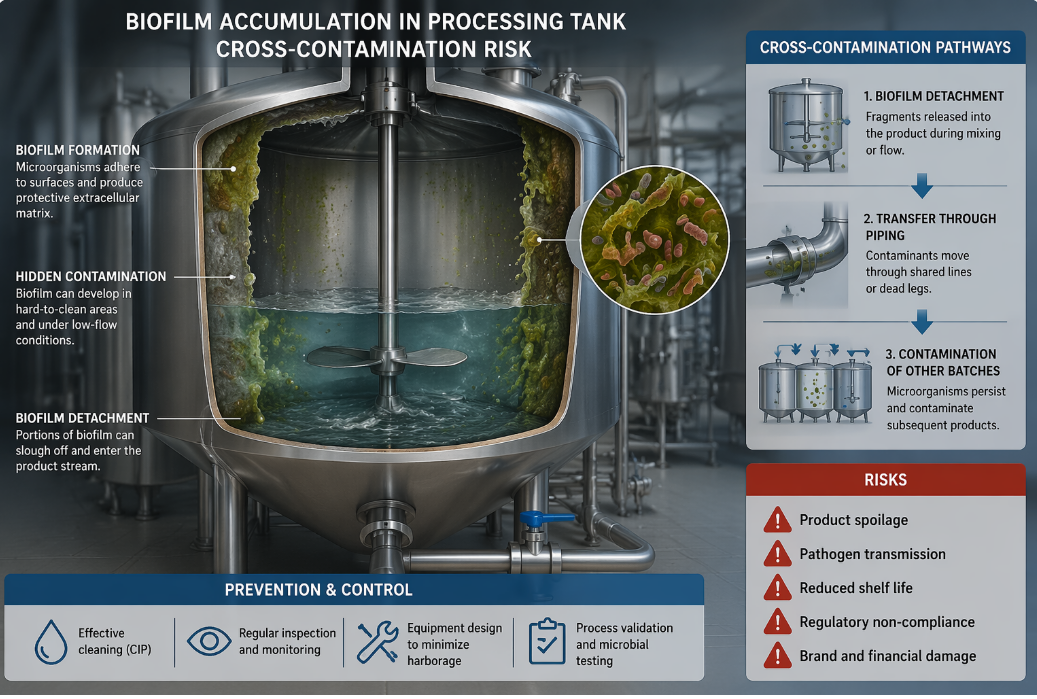
Product Integrity Degradation Biofilms and polymerized residues are particularly insidious because they evade casual visual inspection. Once established, biofilms act as persistent contamination reservoirs, releasing bacteria into subsequent batches even after standard rinse cycles. Cross-contamination between product changeovers in shared vessels leads to rejection rates of 3–8% in regulated industries—an unacceptable margin when margins are already under pressure.
Key industry pain points include:
- Cross-contamination risks between product changeovers in shared processing vessels
- Inconsistent cleaning outcomes leading to batch rejection rates of 3–8% in regulated industries
- Extended downtime periods averaging 4–8 hours per cleaning cycle with manual methods
- Regulatory compliance gaps resulting in FDA 483 observations or warning letters
- Excessive utility costs from inefficient water heating and chemical usage patterns
"The transition from manual cleaning to engineered nozzle systems represents the single most impactful operational upgrade for facilities seeking both safety enhancement and cost reduction. Our field data consistently shows 80–85% cycle time improvements when proper rotary tank cleaning nozzles replace manual protocols." — Industrial Hygiene Engineering Consortium, 2025 Process Equipment Report
Automated Nozzle Solutions vs. Legacy Methods {#solutions-comparison}
Selecting the right cleaning methodology requires understanding the engineering trade-offs between manual scrubbing, static spray balls, and advanced rotary tank cleaning nozzles. The performance gap is not incremental—it is transformational.
| Parameter | Manual Cleaning | Static Spray Balls | Rotary Tank Cleaning Nozzles |
|---|---|---|---|
| Cycle Time | 4–8 hours | 45–90 minutes | 15–30 minutes |
| Water / Chemical Use | Very High (uncontrolled) | High (compensatory flow) | Low (optimized trajectory) |
| Coverage Uniformity | Inconsistent | Moderate (shadow zones likely) | 360° with minimal blind spots |
| Impact Force | Variable (human dependent) | 15–30 PSI equivalent | 100–300 PSI equivalent |
| Worker Safety Risk | High (confined entry) | Low | Low |
| Validation & Documentation | Manual logs | Basic | Automated, repeatable |
When evaluating high-impact tank cleaning nozzles for industrial CIP systems, facilities must match residue characteristics to mechanical energy requirements. Light water-soluble soils in small tanks may only require static spray balls. However, viscous oils, polymerized chemicals, and hardened biofilms demand the concentrated kinetic energy delivered by rotary jet heads. Material specification also determines longevity: 316L stainless steel provides superior corrosion resistance and hygienic properties for FDA-compliant applications, while PTFE, PEEK, or tungsten carbide inserts extend service life in abrasive or aggressive chemical environments.
| Nozzle Type | Best Application | Pressure Range | Max Tank Diameter | Material Standard | Key Benefit |
|---|---|---|---|---|---|
| Static Spray Balls | Light rinsing, small vessels | 1–3 bar | ≤3 m | 316L SS | Zero moving parts, minimal maintenance |
| Free-Spinning Rotary Nozzles | General CIP, medium residues | 3–7 bar | 3–10 m | 316L SS / PTFE | 300–500% higher impact than static |
| Controlled Rotary Jet Heads | Heavy sludge, large tanks | 10–20 bar | Up to 40 m | 316L SS / Tungsten Carbide | Precision-indexed 360° coverage |
For a deeper technical breakdown of how these devices generate controlled spray patterns, see our companion guide: what are tank cleaning nozzles and how do they work.
"Material compatibility failures account for 35% of premature nozzle replacements in chemical processing facilities. Specifying the correct alloy grade based on cleaning media pH and chloride content extends service life from 12–18 months to 5–7 years in aggressive applications." — Chemical Processing Equipment Standards Committee, Materials Selection Guidelines
High-Impact Tank Cleaning Nozzles for Modern CIP Systems {#high-impact-nozzles}
The core technology driving modern vessel hygiene is the precision-engineered tank cleaning nozzle—a device that converts fluid pressure into targeted kinetic energy through meticulously machined orifices and controlled rotation mechanisms. In our production practice across hundreds of CIP retrofit projects, we have observed that upgrading from outdated static systems to high-impact tank cleaning nozzles yields measurable improvements within the first operational quarter.
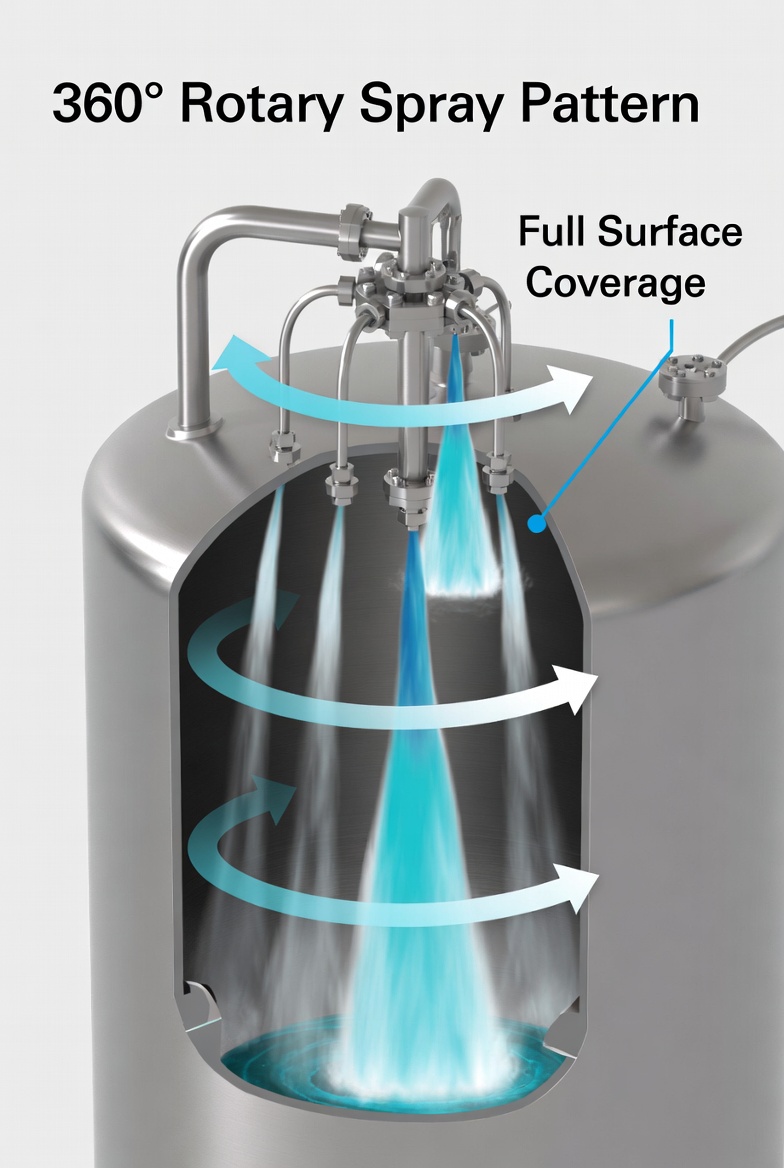
Engineering-Grade Coverage Eliminates Blind Spots Standard spray devices often leave "shadow areas" behind internal obstructions such as agitators, heating coils, and baffles. High-impact rotary jet nozzles utilize gear-driven indexing and multi-axis rotation to ensure complete surface contact. This 360° coverage eliminates manual touch-ups and guarantees that every square centimeter of the vessel interior receives validated mechanical action.
Resource Optimization Through Fluid Dynamics Optimized nozzle geometry does not merely spray harder—it sprays smarter. By concentrating cleaning energy into discrete high-velocity jets rather than dispersed mist, rotary systems reduce total flow requirements by 40–60% while increasing impact force by 300–500% compared to static alternatives. The result is a direct reduction in water heating costs, chemical procurement, and wastewater treatment volume.
Built for Durability and Compliance Leading high-impact tank cleaning nozzles for industrial CIP systems are manufactured from 316L stainless steel with surface finishes achieving Ra ≤ 0.8μm to prevent bacterial adhesion. For extreme environments, tungsten carbide and ceramic inserts maintain orifice precision under abrasive conditions, while PTFE and PEEK variants handle aggressive acids and high-temperature steam-in-place (SIP) cycles up to 250°C.
To explore specific models, technical specifications, and compatibility data for your facility, visit our complete application page: high-impact tank cleaning nozzles for industrial CIP systems.
Proven Results Across Three Industrial Sectors {#sector-results}
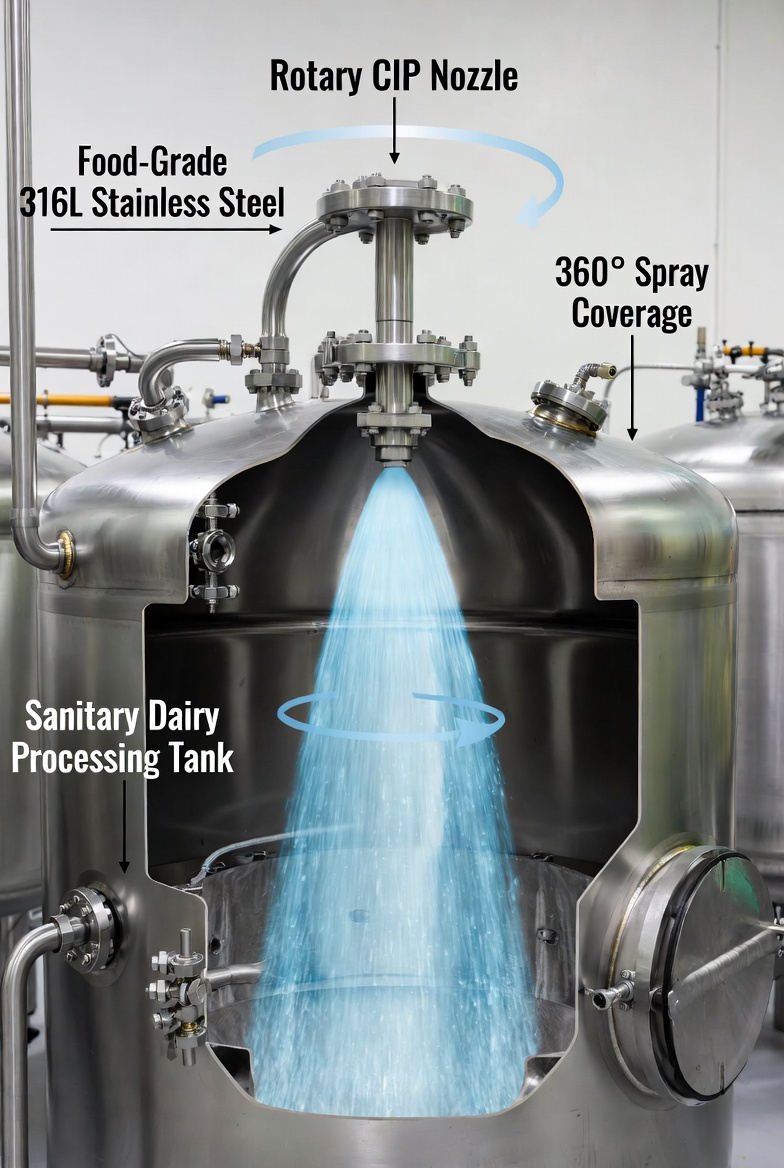
Food and Beverage Processing: Dairy CIP Optimization A major dairy processing facility operating multiple 15-meter storage silos faced extended cleaning cycles that bottlenecked daily production. Manual pre-rinsing and static spray balls required 90 minutes per silo, consuming excessive water and caustic soda.
- Application: High-volume dairy storage and fermentation vessel sanitation.
- Problem: Excessive CIP cycle duration and unsustainable water/chemical consumption.
- Solution: Installation of top-center mounted high-impact rotary tank cleaning nozzles with 360° full-cone spray patterns.
- Quantified Result: Cleaning cycle time reduced from 90 minutes to 18 minutes; water consumption decreased by 62%; chemical usage dropped by 45%. The facility gained capacity for an additional daily batch without infrastructure expansion.
Pharmaceutical Manufacturing: API Reactor Validation An active pharmaceutical ingredient (API) manufacturer struggled with cleaning validation failures in crystallization vessels. Batch rejection rates hovered at 5.2% due to residual cross-contamination, triggering FDA scrutiny and costly rework.
- Application: Active pharmaceutical ingredient (API) reactor and crystallization vessel cleaning.
- Problem: Repeated cleaning validation failures and regulatory audit risk.
- Solution: Retrofit of controlled rotary jet heads operating at 10–15 bar with riboflavin test validation and automated CIP skid integration.
- Quantified Result: Validation failure rate fell to 0.3%; manual intervention requirements decreased by 70%; regulatory audit findings related to vessel hygiene were eliminated entirely within two inspection cycles.
Chemical and Petrochemical Processing: Reactor Maintenance Safety A petrochemical facility processing polymerized feedstock faced hazardous manual entry requirements to remove baked-on films from reactor interiors. Confined-space entries occurred twice monthly at significant safety risk and operational cost.
- Application: Polymer reactor and high-viscosity chemical storage tank maintenance.
- Problem: Dangerous manual confined-space entries and solvent-dependent cleaning costs.
- Solution: Deployment of high-pressure rotary tank cleaning nozzles operating at 250–300 PSI with automated sequencing.
- Quantified Result: Confined-space entries for routine cleaning reduced by 85%; mechanical cleaning action eliminated chemical-soak methods, saving approximately $120,000 annually in solvent costs; reactor turnaround time improved by 60%.
People Also Ask: Expert Answers on Industrial Tank Cleaning {#paa-faq}
How does inadequate tank cleaning affect overall equipment effectiveness (OEE)?
Inadequate tank cleaning erodes OEE through three primary mechanisms: availability loss from extended cleaning cycles, quality loss from contaminated batches, and performance loss from repeated rinse attempts. Facilities relying on manual cleaning experience 15–22% lower OEE compared to automated CIP systems utilizing precision tank cleaning nozzles. The compounding effect of downtime, rework, and utility waste makes vessel hygiene one of the highest-leverage variables in equipment optimization.
What is the difference between static spray balls and rotary tank cleaning nozzles?
Static spray balls distribute cleaning fluid through fixed orifices, creating a cascading rinse effect suitable for light soils and small vessels. They contain no moving parts but require high flow rates to compensate for low impact force. Rotary tank cleaning nozzles harness fluid-driven turbines to create concentrated, rotating high-velocity jets that increase impact force by 300–500% while reducing water consumption by 40–60%. For residues that are viscous, adhesive, or polymerized, rotary systems are essential.
How much water and chemical can automated tank cleaning nozzles actually save?
Field data across food, pharmaceutical, and chemical implementations consistently shows 30–50% reductions in water and chemical consumption when optimized rotary nozzles replace manual or static-ball cleaning. Because engineered spray patterns eliminate blind spots, cleaning cycles complete faster—lowering total utility costs, water heating energy, and effluent treatment burden. Some aggressive petrochemical applications report even higher savings when mechanical action replaces solvent-soak protocols.
Are automated tank cleaning systems compliant with FDA and 3A sanitary standards?
Yes. Hygienic-grade high-impact tank cleaning nozzles for industrial CIP systems are manufactured from AISI 316L stainless steel with surface finishes of Ra ≤ 0.8μm and self-draining designs that prevent bacterial harborage. These specifications align with FDA, 3A, and ASME BPE standards. Validation documentation, including riboflavin testing and ATP swabbing, supports regulatory submissions and HACCP protocols.
What industries benefit most from high-impact tank cleaning nozzles?
While nearly all processing industries gain value, the highest ROI appears in sectors with strict hygiene mandates (food, dairy, beverage, pharmaceuticals), hazardous residue profiles (chemicals, petrochemicals, polymers), and large vessel geometries (brewing, storage terminals, bioreactors). Any facility running CIP protocols, facing confined-space safety concerns, or struggling with batch cross-contamination is a strong candidate for rotary nozzle retrofit.
How do I choose the right tank cleaning nozzle for large vessels with internal obstructions?
Internal obstructions such as agitators, baffles, and heating coils create "shadow areas" where standard sprays cannot reach. For tanks exceeding 8–10 meters in diameter or those with complex internal geometries, specify 3D rotary jet heads with multi-axis indexing and throw distances up to 10 meters. A multi-nozzle configuration—often combining top-center and side-entry retractable units—ensures pattern overlap. Computational fluid dynamics (CFD) modeling or riboflavin coverage testing validates final placement before permanent installation.
Conclusion: Protecting Your Product, People, and Profits {#conclusion}
Industrial tank cleaning is not a cost center to be minimized—it is a quality and safety investment that directly determines your facility's compliance posture, production capacity, and bottom-line profitability. The evidence from hundreds of field implementations is unambiguous: upgrading from manual or outdated static systems to modern high-impact tank cleaning nozzles for industrial CIP systems delivers 50–85% reductions in cleaning cycle times, 30–60% decreases in utility consumption, and the near-elimination of confined-space entry risks.
The engineering principles are clear. Precision spray patterns eliminate blind spots. Controlled rotation multiplies mechanical impact while reducing resource waste. Durable materials such as 316L stainless steel, tungsten carbide, and advanced polymers ensure years of maintenance-free operation under the harshest process conditions.
Ready to optimize your vessel hygiene and operational safety? Start by auditing your current cleaning cycle times, utility costs, and safety incident rates. Map your residue characteristics, vessel dimensions, and internal obstructions. Then consult our engineering team to validate the optimal nozzle configuration for your specific CIP environment.
Explore our full range of precision-engineered solutions today: high-impact tank cleaning nozzles for industrial CIP systems.